—
title: How to Clean Houseplant Leaves: The Right Way to Keep Plants Dust-Free
target: how to clean houseplant leaves
slug: how-to-clean-houseplant-leaves
cluster: house-plants
type: SEO Backbone
—
Dusty leaves aren’t just an aesthetic problem. Every particle that settles on your plant’s surface is sitting right on top of its stomata — the microscopic pores through which it breathes, transpires, and photosynthesizes. A layer of dust doesn’t just make your monstera look dull; it genuinely reduces the plant’s ability to function. That’s reason enough to make cleaning your monstera and every other houseplant part of your regular routine.
Why Dust on Leaves Matters More Than You Think
Plants are remarkably self-sufficient, but they depend on their leaves doing a lot of invisible work. Photosynthesis happens at the leaf surface. Gas exchange flows through the stomata. When dust accumulates, it acts like a filter that screens out light and clogs these openings.
Over time, dusty leaves can become:
- Weaker in growth — less energy produced means fewer leaves, smaller leaves, slower recovery from stress
- More vulnerable to pests — spider mites, mealybugs, and scale all breed faster on dirty, dusty foliage
- Prone to fungal issues — some fungal spores land on dusty leaves and find the reduced airflow welcoming
- Duller in appearance — even healthy plants look tired when their leaves are coated
The good news is that cleaning most houseplant leaves takes under ten minutes and requires no special equipment. You already have what you need.
The Four Cleaning Methods
1. Light Misting
Misting is the gentle option — useful for plants that love humidity and as a regular light refresh between deeper cleans. It works well for ferns, tropical plants, and any plant that thrives in moist air.
Use a spray bottle set to a fine mist. Spray from a distance so the water lands as a light, even coat rather than large drops that can pool and drip. You’re not soaking the leaves — you’re giving them a light rinse.
Don’t mist at night. Leaves that stay wet for hours are more susceptible to fungal problems. Morning is best, so the water has time to evaporate throughout the day.
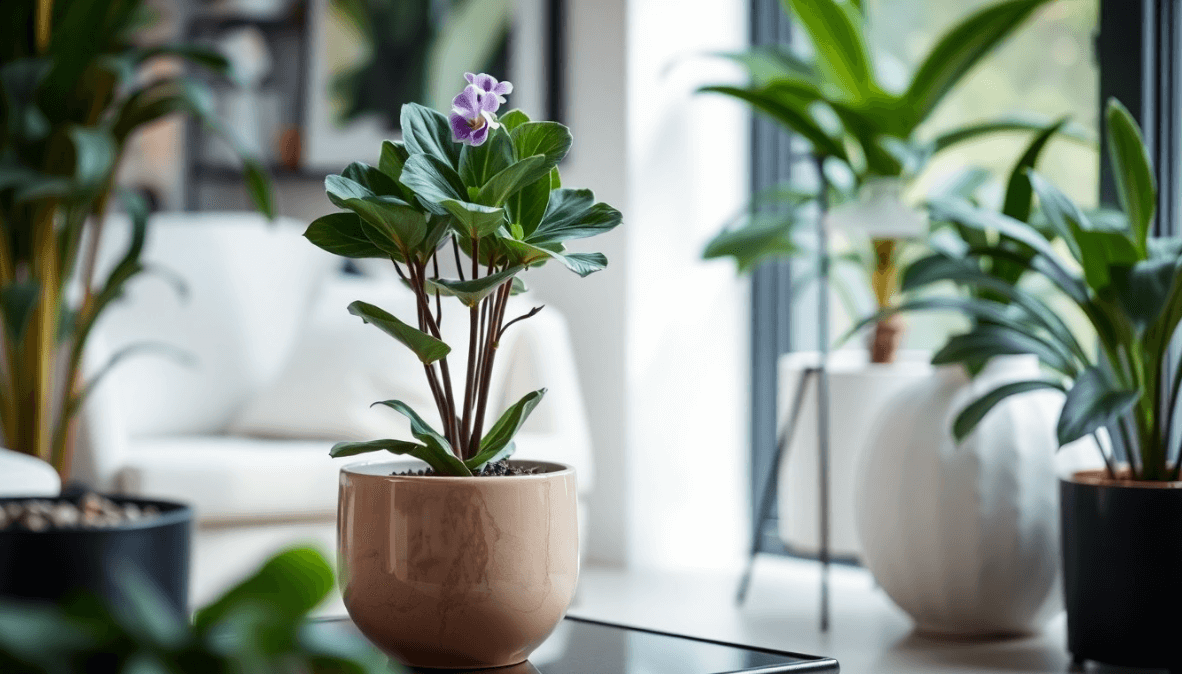
For plants with very fuzzy leaves — like African violets or begonias — skip the misting entirely. Water on fuzzy foliage can cause spotting. Wipe with a dry cloth instead.
2. Damp Cloth Wiping
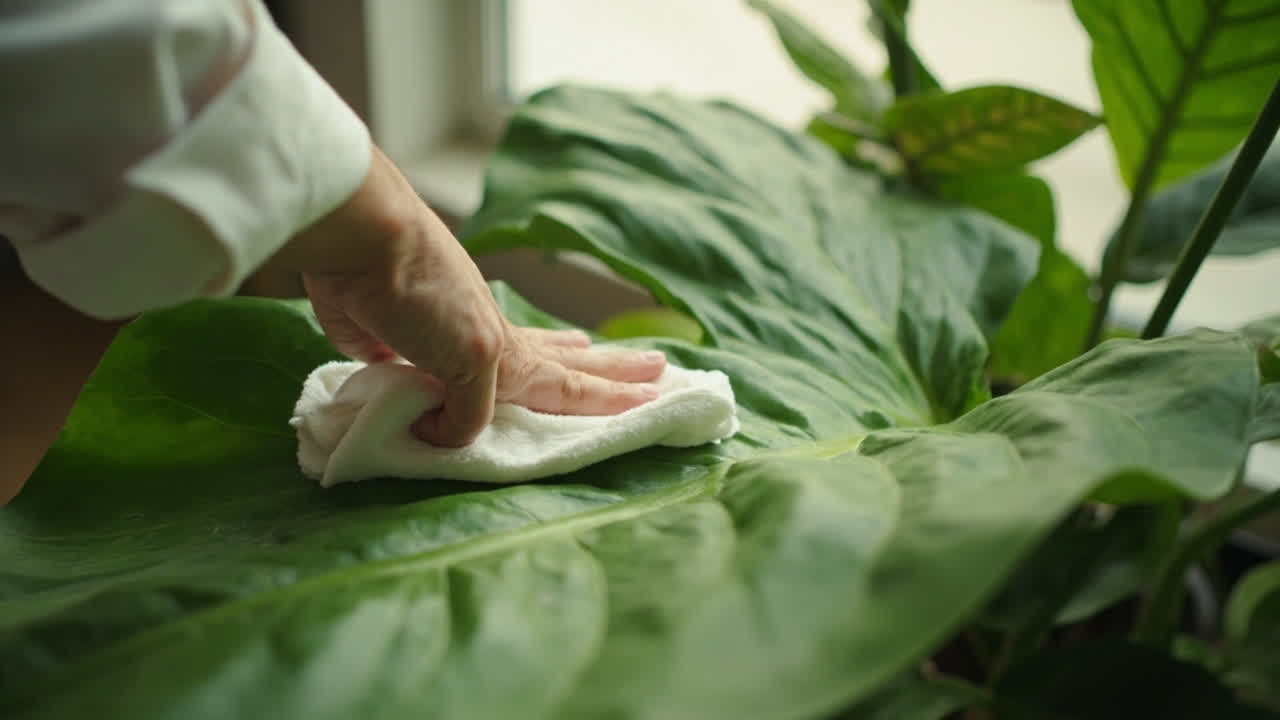
For most common houseplants, a soft, barely-damp cloth is the single most useful cleaning tool you own. This is the go-to method for monstera, pothos, philodendron, ficus, rubber plant, and similar broad-leaved plants.
Use clean, soft cloth — an old cotton t-shirt works well. Dampen it with room-temperature water and wring it out so it’s moist but not dripping. Gently wipe each leaf from the stem outward in one smooth motion, supporting the leaf with your other hand to avoid bending or breaking it.
This method removes dust effectively and lets you inspect each leaf as you go. You’ll often find early signs of pest activity this way — sticky residue, discoloration, or fine webbing that you’d miss on a dusty plant.
3. Shower or Rinse Method
For plants with many small leaves or for a periodic deep clean, the shower method is very effective. Move your plant to the bathroom or a covered outdoor area.
Use a gentle spray — not a high-pressure jet — and spray the plant all over, tops and undersides of leaves. Let the water run through the soil and drain fully before returning the plant to its spot.
Some plant parents like to use lukewarm water and mimic a light rain. Others simply give the plant a thorough rinse every few months as part of seasonal maintenance. Either way, this is the method that clears the most dust and debris in one go.
A few things to keep in mind: don’t shower plants that prefer dry conditions (succulents, cacti, snake plants), and always let the pot drain fully so the roots don’t sit in standing water. If you are propagating new plants or managing cuttings, keeping them clean from the start makes a measurable difference to their survival rate.
4. Leaf Shine Products
Commercial leaf shine products exist, and some work well — but many are formulated with silicone or petroleum-based ingredients that can cause buildup over time, leave a greasy film, or even clog stomata. If you want to use a leaf shine product, check the label carefully.
The safest options are natural ones: a tiny bit of neem oil diluted in water (used sparingly), or a mild mayonnaise wipe on large glossy leaves (yes, really — the oils in mayo can add a temporary shine on plants like fiddle leaf fig). Apply a very thin layer, let it sit for a minute, then buff gently with a soft cloth.
Never use leaf shine on plants with textured, matte, or hairy leaves. Never use it on young leaves that are still unfurling. And always test on a single leaf first if you’re trying a new product.
Which Method for Which Plant Type?
Not every plant responds well to the same treatment. Here’s a quick reference guide:
| Plant Type | Recommended Method | What to Avoid |
|---|---|---|
| Monstera, Philodendron, Pothos | Damp cloth wiping or gentle shower | Misting alone won’t clean thoroughly |
| Ficus / Rubber Plant | Damp cloth, occasional shower | Over-wetting soil; cold water |
| Ferns (Boston, Maidenhair) | Misting + light wiping | Shower or high-pressure spray |
| Snake Plant, ZZ Plant, Succulents | Damp cloth or dry brush | Heavy misting or sitting in water |
| Peace Lily, Anthurium | Damp cloth or shower | Leaf shine products (too glossy already) |
| Calathea, Maranta | Light misting + gentle wipe | Cold water; any oil-based products |
| African Violet | Dry soft brush or dry cloth | Any water on leaves |
| Fiddle Leaf Fig | Damp cloth, optional mayo buff | Shower; generic leaf shine sprays |
How Often Should You Clean Your Plants?
A good rule of thumb: check your plants once a week when you’re doing your regular watering round. If the leaves look visibly dusty, clean them.
For most households, a thorough wipe-down every two to four weeks is enough to keep stomata clear and photosynthesis running smoothly. Plants near busy roads, in rooms with lots of foot traffic, or in rooms with ceiling fans will accumulate dust faster.
After you’ve cleaned a plant, take a moment to notice how much more vibrant the leaves look. That difference is real — it’s your plant running at higher efficiency.
Quick Checklist Before You Start
- Use room-temperature water — cold water can shock tropical plants
- Support leaves while wiping — they’re more fragile than they look
- Clean the undersides too — dust and pests love the hidden side
- Check for early pest signs — sticky residue, discoloration, fine webs
- Let plants dry before returning them to their usual spot
- Don’t use leaf shine on young, unfurling leaves
Final Thought
Leaf cleaning isn’t a luxury or an aesthetic preference — it’s basic plant maintenance. Dust is a real, measurable drag on your plant’s health. A few minutes of wiping or a quick shower every few weeks is one of the highest-impact things you can do for indoor plants.
Your plants are depending on those leaves to do a lot of work. Keep them clean, and they’ll return the favor.
—
Turn any PDF statement into a clean sheet
Skip the typos and the hours of copying. Our converter handles any bank statement format and outputs Excel, CSV, or QBO for QuickBooks. No file retention, free to try.
Convert your statement