
If your homegrown oregano tastes like grass instead of the punchy, peppery herb you expected, the problem is almost certainly that you’ve been too kind to the plant. Oregano flavor isn’t a default setting — it’s a stress response. The compounds that make oregano taste like oregano (carvacrol and thymol) are defense chemicals the plant produces when conditions are slightly hostile: too much sun, not enough water, lean soil. Give oregano everything it wants and it rewards you with lush green leaves that taste like almost nothing.
There are four reasons oregano loses its flavor, and they interact: wrong variety (irreversible without replanting), too much water (the most common), too much fertilizer (the most counterintuitive), and harvesting at the wrong time (the most fixable). The complete oregano care guide covers the foundational growing conditions; this page focuses specifically on flavor. Start by crushing a leaf right now and smelling it. If the aroma is sharp and peppery, your variety is fine and the fix is cultural. If it smells mild and vaguely herbal, you may have an ornamental variety — and no amount of care will make it culinary-grade.
The Comfort Problem — Why Easy-Growing Oregano Tastes Like Nothing
Carvacrol and thymol — the two volatile oils responsible for oregano’s signature flavor — are secondary metabolites the plant produces under stress. In the wild, oregano grows on dry, rocky Mediterranean hillsides where water is scarce and UV exposure is intense. The plant synthesizes these phenolic compounds partly to reduce water loss through the leaf surface and partly to deter herbivores. When you water regularly and provide rich soil, you remove the stress signal — and the plant stops producing the chemicals that make it valuable.
Research published in the Journal of the Science of Food and Agriculture confirms this: oregano grown under moderate water stress (irrigated at 50% of field capacity) produces 40-60% higher total volatile-oil content than plants grown at full field capacity. The stressed plants are smaller, less lush, and significantly more flavorful. The mechanism is evolutionary — oregano doesn’t waste energy on defense compounds when conditions are comfortable.
The practical implication is direct: if you water oregano on the same schedule as your basil, mint, or parsley, you’re growing a green ornamental with minimal culinary value. Oregano needs to dry out between waterings — not just at the surface, but through the root zone. The plant should experience mild drought stress before each watering. That stress is what you taste.
Fix: extend your watering interval until the top three inches of soil are completely dry, and the leaves just begin to lose their firmness. Then water deeply and let it dry again. The plant will look slightly less perky between waterings — that’s the signal that volatile-oil production is ramping up.
Wrong Variety — When No Amount of Care Will Fix the Flavor
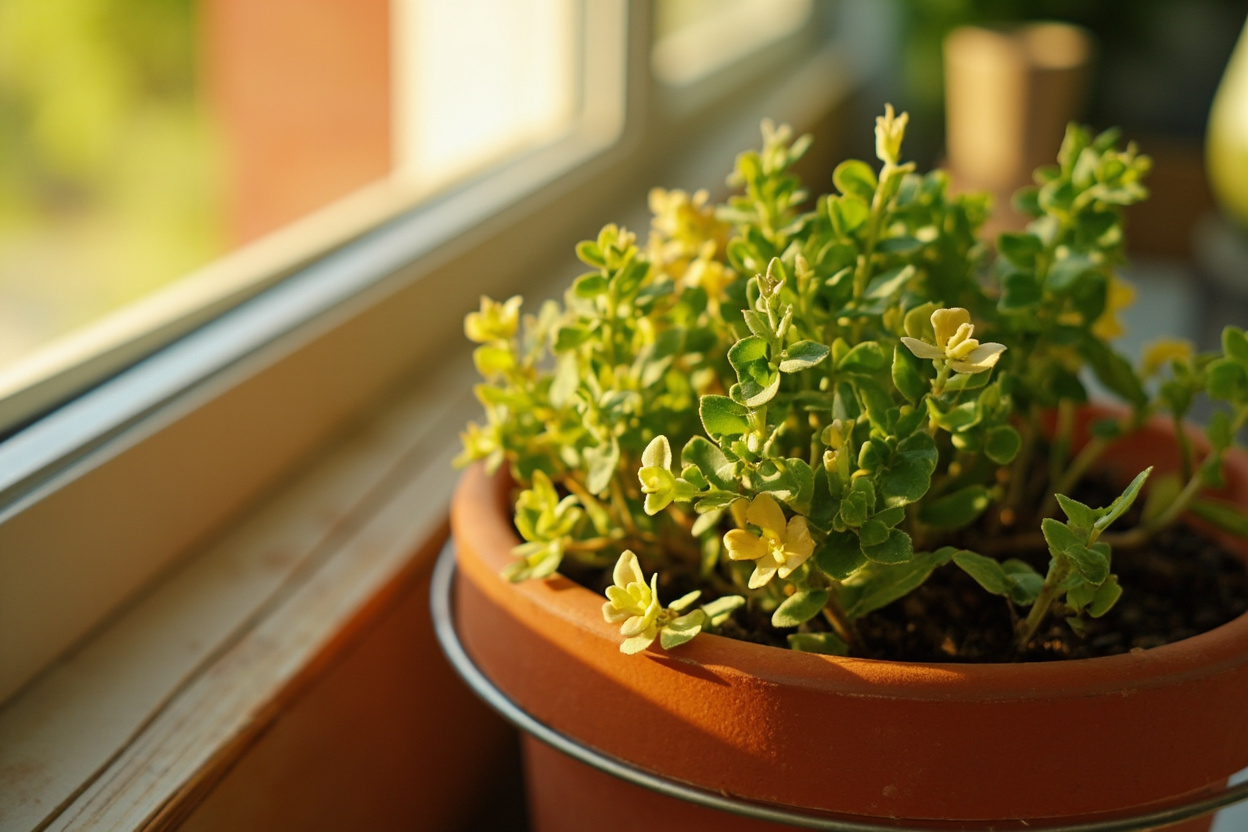
Not all plants sold as “oregano” produce culinary-grade leaves. The genus Origanum contains 45 species, and only a few are grown for cooking. Greek oregano (Origanum vulgare hirtum) and Italian oregano (O. × majoricum) are the standard culinary varieties — high in carvacrol, intensely aromatic, the flavor you expect in a marinara sauce. But many garden centers sell ornamental oregano varieties: ‘Aureum’ (golden oregano), ‘Kent Beauty’, ‘Compactum’, and ‘Nanum’. These are bred for foliage color, compact habit, or trailing growth — not for flavor.
The test takes five seconds. Crush a fresh leaf between your fingers and smell. Culinary oregano delivers a sharp, warm, peppery-medicinal punch that’s immediately recognizable. Ornamental oregano smells mild, vaguely herbal, or like a weak version of thyme. It’s not unpleasant — it’s just not the flavor you cook with. If your plant fails the smell test, the volatile-oil profile is genetically different, and no change in watering, sun, or harvesting will convert an ornamental variety into a culinary one.
The fix is replanting. Greek oregano is the most reliable culinary variety for most climates — hardy to USDA zone 4, intensely flavored, and widely available as seedlings or seed. Italian oregano is slightly sweeter and preferred for pizza and pasta sauces. The oregano varieties guide compares the top culinary and ornamental types side by side so you can buy with confidence. If you’re starting over, buy named culinary varieties from a herb specialist rather than a general garden center, where ornamental varieties are common.
Too Much Water and Fertilizer — The Flavor Dilution Effect
Overwatering doesn’t just suppress volatile-oil production — it actively dilutes the flavor you do have. When oregano receives excess water, cells expand rapidly, leaves grow larger, and the total water content per gram of leaf increases. The absolute amount of carvacrol per leaf may stay roughly the same, but it’s distributed through more water weight — so each bite delivers less flavor. The leaves look healthy and abundant but taste watery and bland.
Excess nitrogen from fertilizer compounds the problem. Nitrogen pushes rapid vegetative growth, and the plant allocates resources to leaf production rather than secondary metabolism. Research from UC Davis shows that high-nitrogen herbs have lower concentrations of essential oils per unit of dry weight. Worse, excess nitrogen shifts the chemical profile: carvacrol production drops relative to less aromatic compounds. You get bigger, greener, faster-growing oregano that tastes progressively weaker.
Penn State Extension’s herb trials consistently show that unfertilized herbs outperform fertilized herbs in blind flavor panels. The lean-soil herbs are smaller and less visually impressive, but the flavor intensity is markedly higher. For oregano specifically, the guidance is: no fertilizer in garden soil, and at most one half-strength liquid feed per year in containers. If you’ve been feeding regularly, stop now and flush the soil with plain water to leach accumulated nutrients.
The recovery timeline is three to four weeks. After you stop feeding and reduce watering, the plant will shift from growth mode to defense mode. New leaves will be smaller, darker, and significantly more aromatic. The change is visible and measurable — not subtle. Getting the soil mix and container drainage right from the start prevents the waterlogging that suppresses oil production in the first place.
Harvesting at the Wrong Time — When and How to Pick for Maximum Flavor
Even a perfectly grown, correctly stressed, culinary-variety oregano plant will taste bland if you harvest at the wrong time. Volatile-oil concentration in oregano leaves follows a predictable seasonal curve: it rises through spring, peaks just before flowering, and drops sharply once flowers open and seed production begins. After flowering, the plant redirects energy from leaf defense chemistry to reproduction, and the remaining leaves lose intensity.
Within each day, the pattern is similar. Volatile-oil concentration is highest in the morning, after dew has dried but before midday heat drives evaporation. By early afternoon, a measurable fraction of the lighter volatiles has evaporated from the leaf surface. Harvest between 8 and 10 a.m. for peak flavor. If you must harvest later, the difference is real but not catastrophic — the heavier compounds (carvacrol, thymol) remain stable throughout the day.
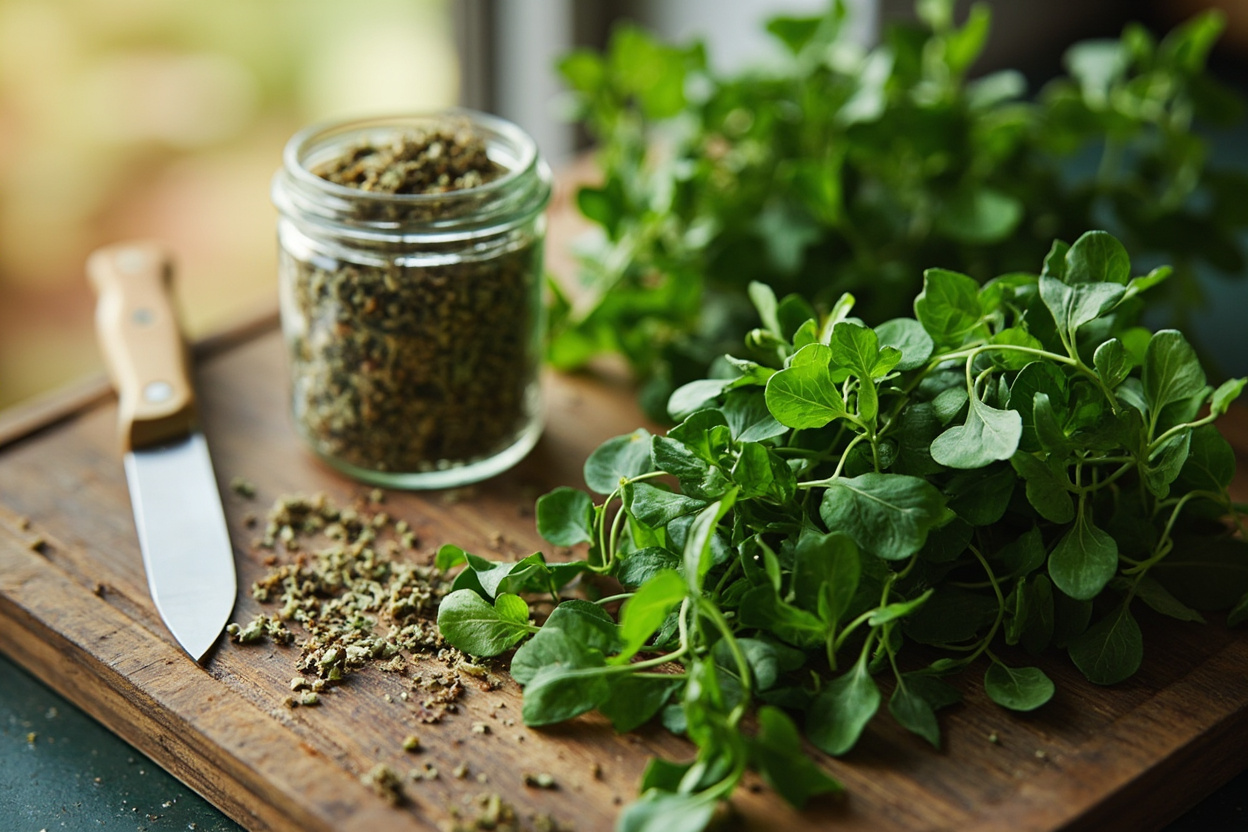
Cut outer stems 4-6 inches long, leaving the central woody framework intact. Never strip a stem to the base — leave at least two sets of leaves below the cut so the plant can photosynthesize and regrow. Harvest from the outside in, taking the oldest stems first. The pruning and harvesting guide covers the full technique including how much to take without weakening the plant. Fresh-cut oregano peaks within two hours of harvest; for long-term storage, hang stems upside down in a warm, dry, dark space for one to two weeks until crisp, then strip the leaves and store in an airtight jar away from light.
The pre-flower window is your target. Watch for bud formation at the stem tips in late spring and early summer. Once buds appear, harvest within a few days — before they open. That’s the moment of maximum flavor.
How to Fix Bland Oregano — A 4-Week Flavor Recovery Plan
Week one: stop fertilizing entirely. Extend your watering interval until the top three inches of bone-dry soil is your trigger, not a calendar schedule. Move the plant to the sunniest location you have access to — eight or more hours of direct sun on the leaves, not filtered or indirect light. These three changes together signal mild stress, and the plant responds by increasing volatile-oil production within days.
Weeks two and three: maintain the reduced watering. The plant may look slightly less vigorous — growth slows, leaves may be smaller. That’s the goal. New growth will have a noticeably sharper aroma when crushed. Watch for the first sign of bud formation at the stem tips. When buds appear, you’re approaching the harvest window.
Week four: harvest just before buds open, in the morning after dew dries. Crush a leaf and compare it to your earlier harvest. The difference should be significant — sharper, more peppery, more complex. If the flavor is still weak, the most likely remaining cause is wrong variety, and the only fix is to plant a named culinary variety next season.
Long-term, oregano flavor improves with plant age. A second-year plant typically out-flavors a first-year plant because the established root system cycles through wet-dry stress more naturally, and the woody base produces more intensely flavored new growth. If you’re starting from scratch, the oregano propagation guide covers the fastest way to establish new plants from cuttings. And getting the light and watering balance right from day one sets the foundation for intense flavor. Don’t pull up your oregano after one season — let it overwinter and come back stronger.
Turn PDF Bank Statements Into Workable Spreadsheets
Your bank statement is a mess of numbers, but your books shouldn't be. Use our converter to get Excel, CSV, or QBO files — ready for QuickBooks.