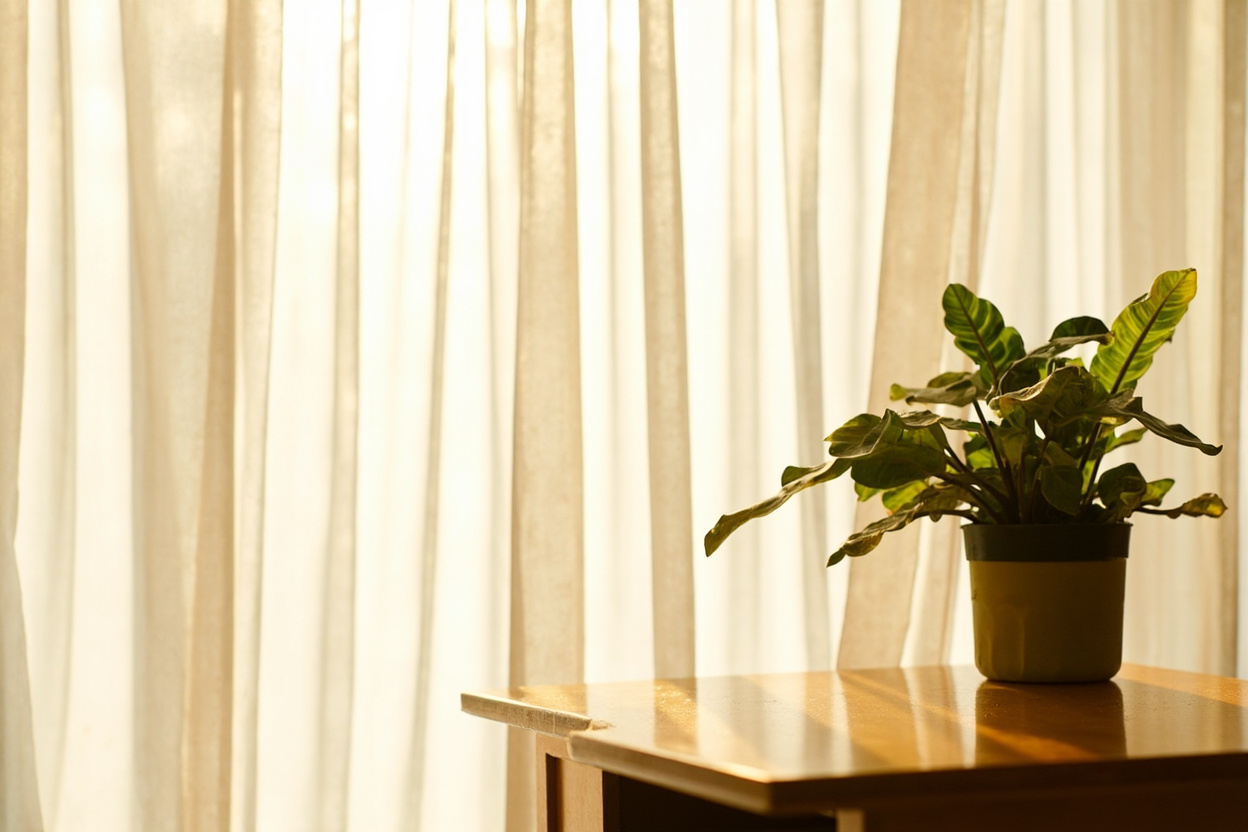
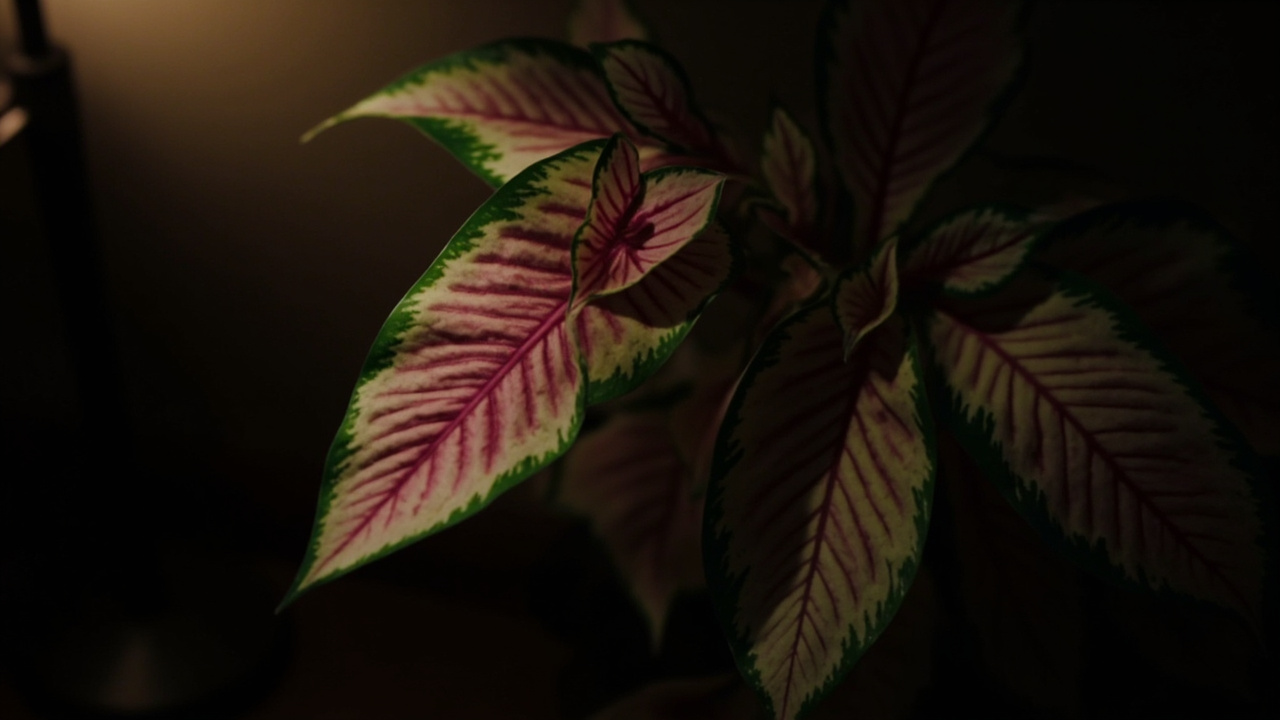
A prayer plant is the rare houseplant that shows the reader what it needs in real time. Every evening the prayer plant folds its leaves, palm to palm. Every morning it unfolds them, flat to the light, in the same five-minute window. That daily rhythm is nyctinasty — a circadian movement driven by the pulvinus at the base of each petiole.
Brown leaf tips are the prayer plant reading your tap water. Curling leaves are the prayer plant reading your humidity. The prayer plant wants to tell you what is wrong — but the signals only mean something if you know what a healthy prayer plant looks like first.
This guide pairs each baseline — light, water, humidity — with the signal the prayer plant sends when it drifts. It assumes one Maranta leuconeura in a 4-to-6-inch pot in a typical apartment.
The prayer plant belongs to Marantaceae, the same family as the calathea — both share humidity and light needs, but only the prayer plant nyctinastically folds at night. For the sibling genus, see calathea plant care.
What Makes the Prayer Plant Different: The Daily Leaf-Folding Rhythm
The prayer plant’s daily rhythm is mechanical, not magical. The pulvinus at the base of each prayer-plant leaf is a small motor: cells on one side swell with potassium ions during the day and dump them at night, swinging the leaf 30–60 degrees between flat and vertical. This movement happens in every healthy prayer plant, and it stops within 24 hours if the prayer plant is dying.
The signal has a temperature floor. The prayer plant’s nyctinasty works only above 13°C (55°F). Below 13°C the pulvinus stiffens and the rhythm stops.
Recovery takes 4–6 weeks of steady warmth.
Missouri Botanical Garden notes that the prayer plant loses rhythmic movement in cold drafts before it shows any other symptom. This is why a prayer plant bought from a cold delivery truck looks “dead” for the first month indoors.
The signal also has a light floor. The prayer plant unfolds within 5 minutes of indirect light reaching 50–80 lux. A prayer plant in a windowless room stays folded all day because the pulvinus never gets the trigger.
No prayer plant — not even the most shade-tolerant Maranta cultivar — thrives in a windowless room indefinitely. Expect the prayer plant in a windowless room to lose color within 6–8 weeks even with grow lights, because the rhythm is part of what the prayer plant uses to maintain leaf green.
Light for the Prayer Plant: Bright Indirect Without the Burn
The prayer plant is a low-light plant in the strict sense: it survives at 100 lux and grows at 250–500 lux. But “survives” is not “thrives.” A prayer plant in indirect east or north light, at 6–8 hours per day, produces a new leaf every 4–6 weeks during active growth. The same prayer plant in a deeper corner, at 50–80 lux, may sit for 3 months without a new leaf and still look healthy — the leaf-folding still happens, the variegation still holds, the prayer plant is just not growing.
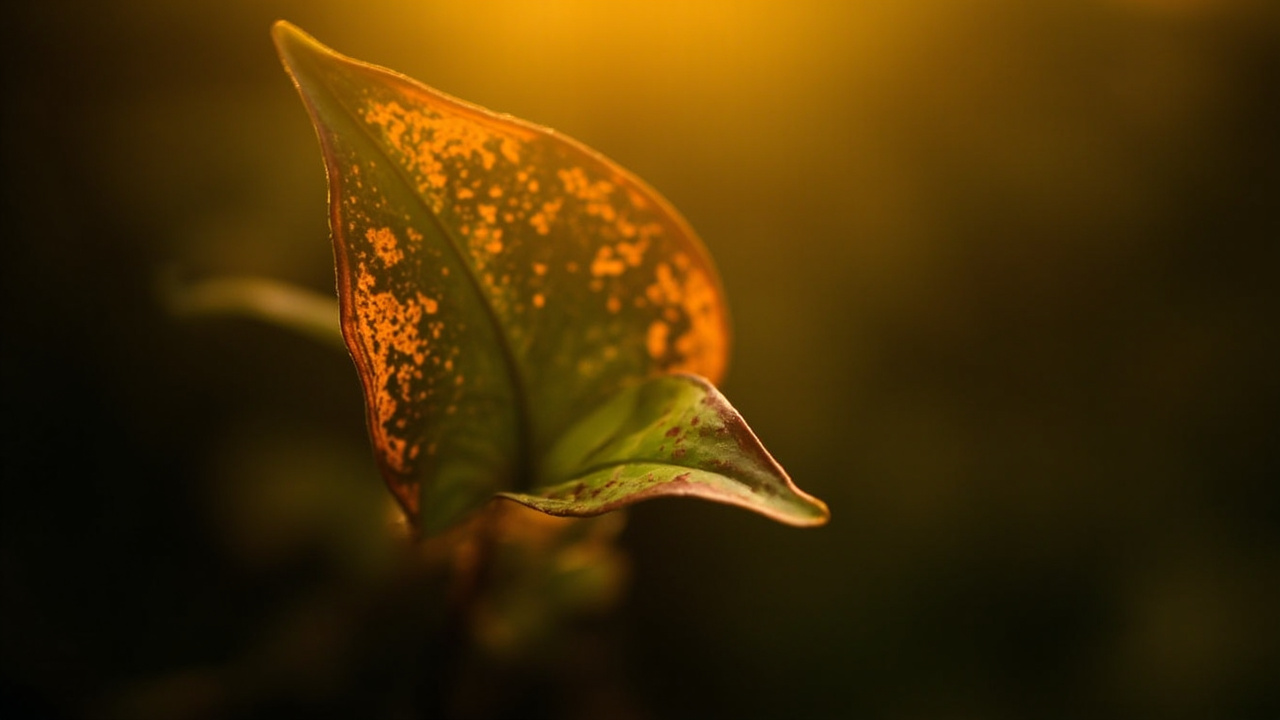
The wrong-light signals are predictable and named. A prayer plant in too-bright light bleaches out: the green fades to pale yellow, the variegation disappears, and the leaf edges curl down within 48 hours. A prayer plant in too-little light stretches: the internodes lengthen, the variegation darkens toward solid green, and the leaf-folding rhythm slows to a 30-minute window instead of the typical 5.
The right location for the prayer plant is one of three, ranked by IFAS Extension: an east-facing window with a sheer curtain (best), a north-facing window with no curtain (good), or a south-facing window set 2–3 meters back from the glass (acceptable). For the prayer plant in a low-light situation, the cluster low light plants for bedroom page ranks 8 species that survive north-facing windows — the prayer plant is one of them, alongside the calathea and the pothos.
For a focused read on the prayer plant in dim conditions — what 100 lux actually looks like, how to read the leaf-fold slowing as a light signal, and the move-closer pattern that brings a static plant back into growth — the prayer plant low light guide walks through the floor-lux numbers, the placement map, and the leaf-by-leaf checklist that turns a surviving plant into one that pushes a new leaf every 4–6 weeks.
Water for the Prayer Plant: The Fluoride-and-Chlorine Trap
The single most common reason a prayer plant dies indoors is also the least-discussed: fluoride in tap water. The prayer plant accumulates fluoride in the leaf tips because fluoride binds to calcium in the leaf tissue and never leaves.
The accumulation looks like dry, brown, crispy tips that progress inward over weeks, even when the prayer plant is otherwise healthy. Missouri Botanical Garden lists fluoride toxicity as the leading cause of indoor prayer plant decline.
The fix is mechanical: do not water the prayer plant with tap water. Use rainwater, distilled water, or filtered water with the fluoride removed.
The cost is real — $1–$3 per gallon for distilled — but a prayer plant on distilled water holds its variegation and grows new leaves where the same prayer plant on tap water drops leaves and browns at the tips within 6–8 weeks. Expect tip recovery within 4–6 weeks of switching, because the prayer plant stops accumulating but does not un-accumulate.
The watering cadence is the second piece. The prayer plant wants soil that is consistently moist, never wet. Water when the top 1–2 cm (0.5 inch) feels dry — about every 5–7 days in summer, every 7–10 days in winter.
Water at room temperature. Cold water shocks the prayer plant’s roots within minutes and browns the leaf edges the same day. Cornell horticulture extension notes that root temperature below 15°C (59°F) blocks water uptake in tropical foliage plants — the prayer plant is one of the most sensitive.
Humidity for the Prayer Plant: 60% as the Floor
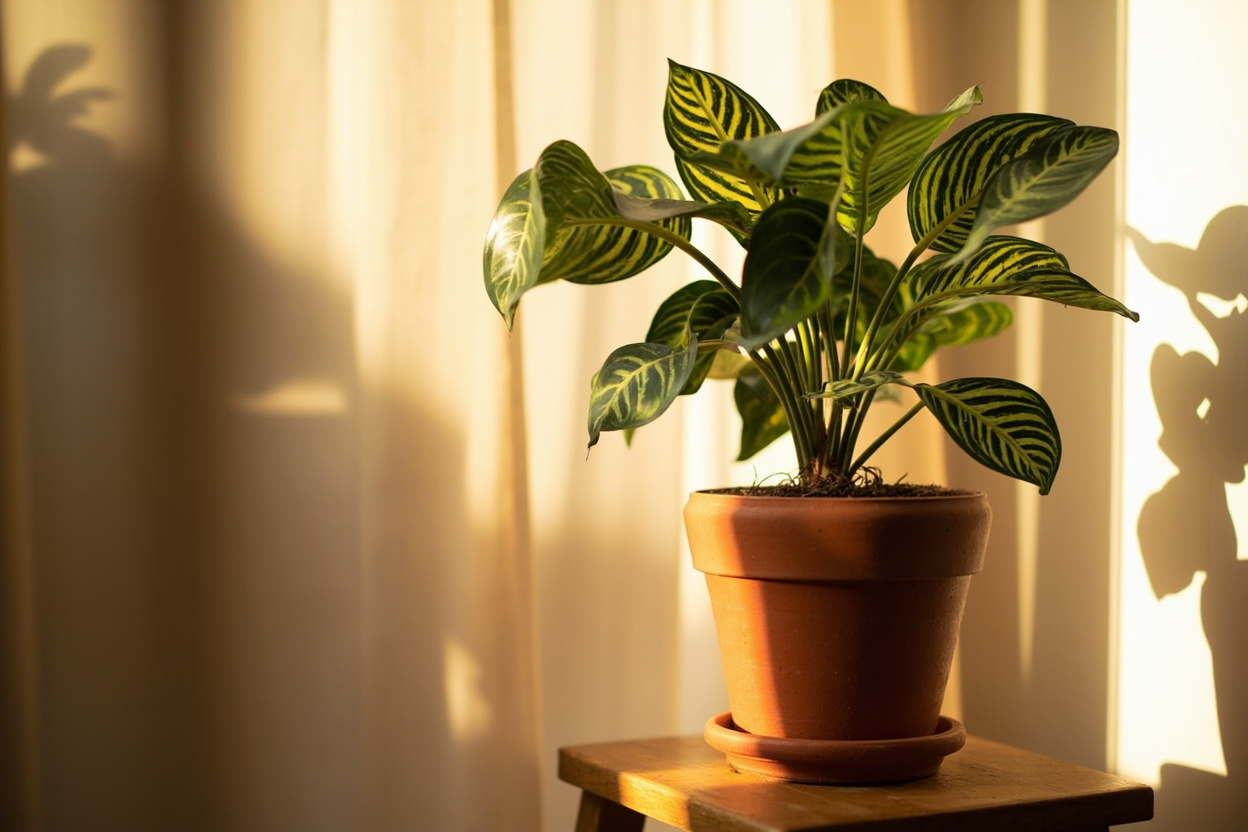
The prayer plant is honest about humidity. A prayer plant in 60% relative humidity unfolds smoothly, holds variegation, and pushes new leaves every 4–6 weeks. The same prayer plant in 30% relative humidity — typical of a heated apartment in winter — curls its leaf edges inward within 48 hours as a water-conservation move, then browns at the tips within 2 weeks.
Four ways the prayer plant reader can hit the 60% threshold without a greenhouse. A pebble tray under the prayer plant pot, filled to just below the pot base, raises local humidity by 5–10% within the 30-cm zone. Grouping the prayer plant with two or three other tropical houseplants raises humidity by 5–15% through transpiration.
A bathroom location, where humidity naturally hits 70–90% during a shower, holds the prayer plant long-term. A humidifier set to 60% at room scale holds steady.
The trade-offs are real. A humidifier costs $30–$80 upfront plus $5–$10 monthly electricity. A pebble tray is free but only helps the prayer plant, not the reader. A bathroom location forces the reader to give up counter or shelf space.
The honest read: the prayer plant’s 60% humidity floor is the single hardest requirement for most apartments, and no amount of perfect light or water makes up for the prayer plant sitting at 30% RH for the winter.
Propagation: Division and Stem Cuttings the Prayer Plant Tells You When
The prayer plant tells the reader when to propagate. Active growth — when the prayer plant pushes a new leaf every 4–6 weeks, when stems elongate, when the variegation is sharpest — is the propagation window. Outside active growth, the prayer plant cuttings root slowly and the parent prayer plant sulks for months.
Division is the most reliable method. Remove the prayer plant from its pot, gently separate the root mass into two or three sections each with stems and roots, and repot each section in fresh soil.
Expect the parent prayer plant to skip one leaf cycle (4–6 weeks) before resuming growth. Expect each division to push its first new leaf within 4–6 weeks if the active-growth timing was right.
Stem cuttings root in water within 4–6 weeks if the cut is taken just below a node — the swollen bump where the leaf meets the stem. Submerge the node, change the water every 5–7 days, and wait until the cutting shows 3–5 cm of new white root before potting. The prayer plant cutting wilts visibly for the first 48 hours after potting, which is normal. For a step-by-step walkthrough covering timing, node selection, and rooting conditions, the cluster propagate house plants guide covers houseplant propagation broadly.
The Five Failure Signals Every Prayer Plant Sends First
The prayer plant fails slowly, in five named patterns, and the reader can reverse all of them if the cause is caught early. Each signal below is paired with the one first action to take, before the next watering.
Brown leaf tips. Cause: fluoride in tap water or low humidity. First action: switch to distilled water and raise humidity to 60%.
The prayer plant stops accumulating fluoride within 2 weeks. Tip recovery on existing brown takes 4–6 weeks. New growth comes in green.
Curling leaf edges. Cause: humidity below 40% or underwatering. First action: check the soil moisture at 2 cm depth.
If the soil is dry, water thoroughly. If the soil is wet, raise humidity by grouping or pebble tray. The prayer plant uncurls within 24–48 hours once the trigger is resolved.
Yellowing lower leaves. Cause: overwatering — the soil stays wet, the roots suffocate. First action: stop watering for 7 days, then resume only when the top 1 cm of soil dries.
Persistent yellowing means root rot: remove the prayer plant from the pot, trim dark/mushy roots, repot in fresh dry mix.
Leaf drop without yellowing. Cause: cold draft OR a sudden move to a lower-light location. First action: relocate the prayer plant away from the draft source and into the brightest indirect light the room offers. The prayer plant regrows leaves within 6–10 weeks if rhizomes are intact.
Spider mites or fungal leaf spots. Cause: dry air for spider mites; overhead water for fungal spots. First action: rinse the prayer plant leaves in room-temperature water, increase airflow, and treat with neem oil if mites persist. The ASPCA confirms the prayer plant is non-toxic to cats and dogs, which makes the pet safe low light plants list short on Marantaceae — only the calathea and the prayer plant qualify among houseplants.
Choosing a Prayer Plant
The prayer plant you bring home from a nursery or a plant shop is one of three purchase paths, and the path matters more than the species name on the label. Big-box stores sell the prayer plant as a starter in a 4-inch pot, often with two to three stems and a root-bound base — the cheaper plants are younger and need a repot in the first 6 months. Specialty shops and online sellers (like Costa Farms and Bloomscape) ship larger, established plants in 6-inch pots with fuller foliage, at a price premium of roughly $10–$15 over the starter. Cutting-grown vs. tissue-cultured plants: the cutting-grown plant has stronger variegation; the tissue-cultured plant is cheaper but loses variegation over 18 months. For the full comparison — including the cultivar-by-cultivar rundown of ‘Kerchoveana’, ‘Erythroneura’, and ‘Massangeana’ — see the prayer plant buying guide.
Care Vocabulary
A few terms come up again and again when reading about the prayer plant, and they are worth pinning down before the reader starts comparing advice across blogs. Pulvinus, nyctinasty, variegation, fluoride burn, humidity tray, pebble tray, division propagation, and marantaceae — each has a precise meaning that matters when you read a care guide and try to translate it to your own plant. The prayer plant care glossary defines the vocabulary used across this site and across the broader Marantaceae care community.
Why the Prayer Plant Wins for Bedrooms, Bathrooms, and Pet Homes
The prayer plant is one of the few houseplants that fits three of the hardest rooms in a home at the same time: a north-facing bedroom, a windowless bathroom, and a living room with a cat. The prayer plant survives low light, tolerates the humidity a shower produces, and is on the ASPCA non-toxic list for cats and dogs. IFAS Extension ranks the prayer plant in its top-10 indoor foliage plants for “low-light performance plus pet safety” — a thin list most apartment readers struggle to fill.
The honest trade-off: the prayer plant asks for daily attention in the form of a glance at the leaves. The prayer plant does not forgive a 2-week vacation without setup.
The reader who wants a set-and-forget floor plant should pick a pothos or a ZZ plant instead. The reader who notices the prayer plant folded flat at 11 PM and unfolded by 8 AM will keep one for years.
For readers who like the prayer plant but want to compare across genera, the cluster calathea plant care page covers the closest Marantaceae sibling — same humidity, same light, opposite nyctinasty rhythm. The prayer plant remains the only houseplant the reader can read every morning without touching it.
For a side-by-side comparison with the closely related calathea, including how to tell the two genera apart and which care routine each requires, see the prayer plant vs calathea comparison guide.
Turn PDF Bank Statements Into Workable Spreadsheets
Your bank statement is a mess of numbers, but your books shouldn't be. Use our converter to get Excel, CSV, or QBO files — ready for QuickBooks.
Try It Free Now