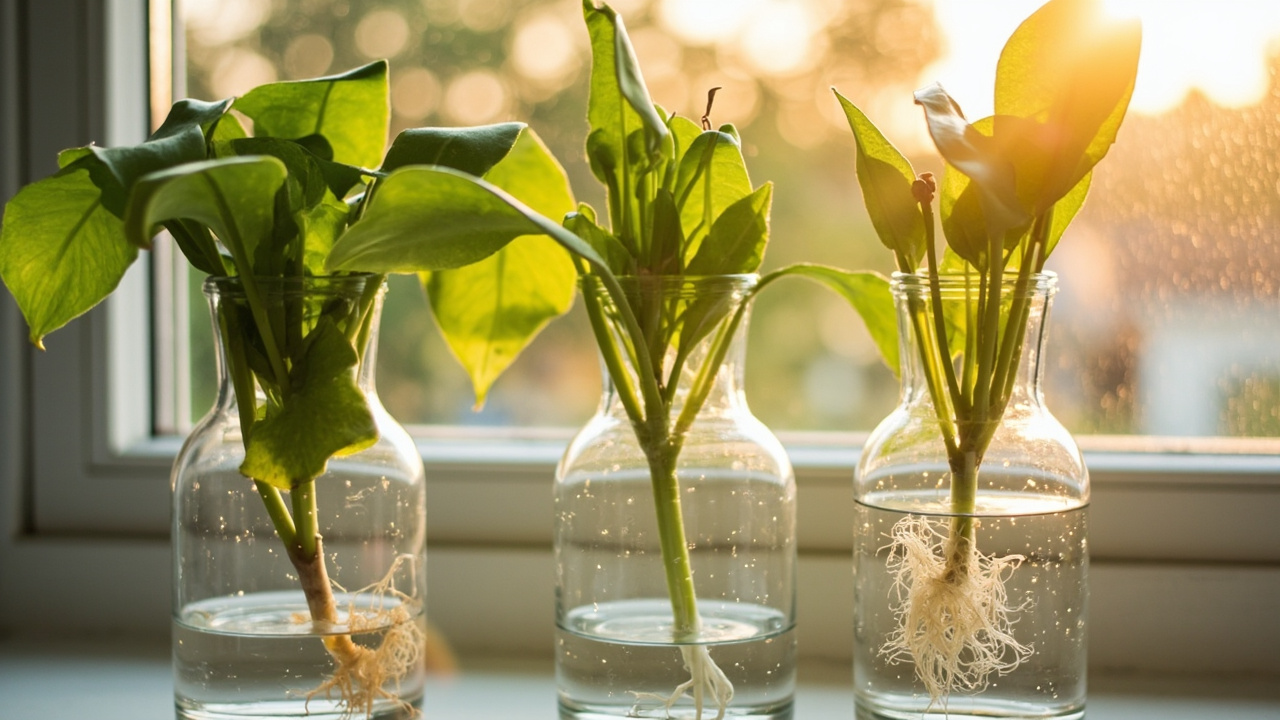
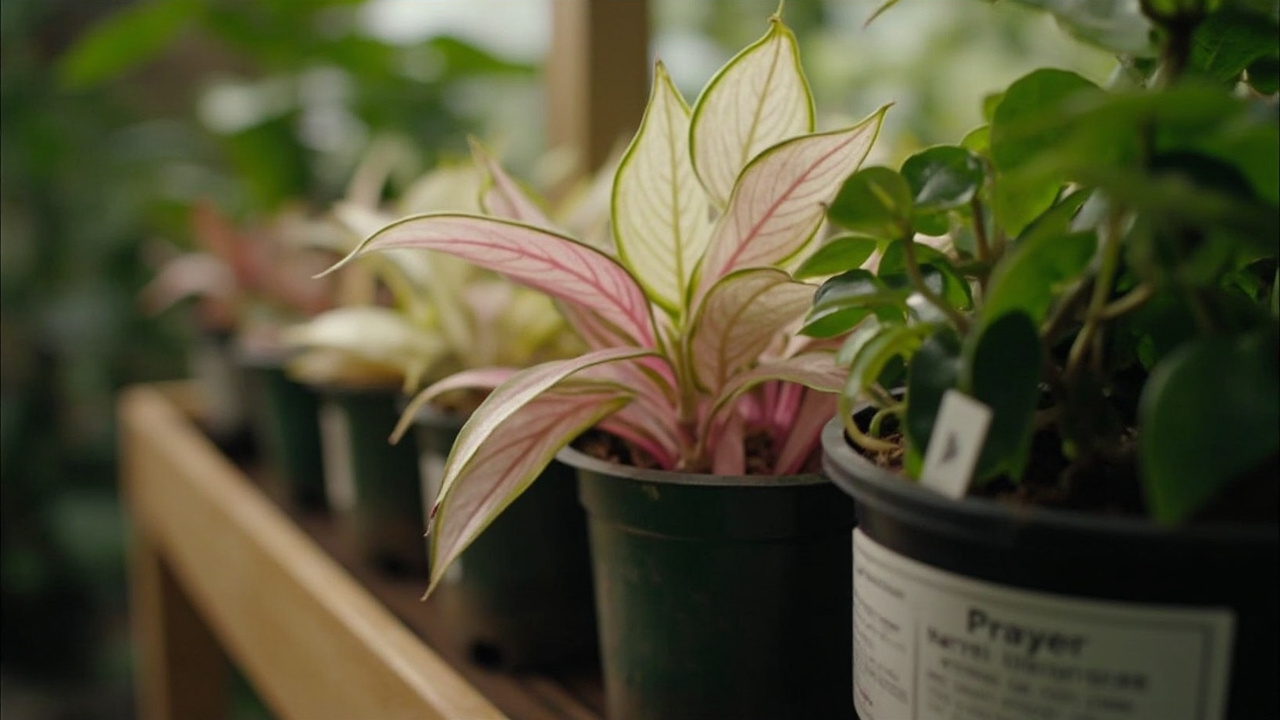
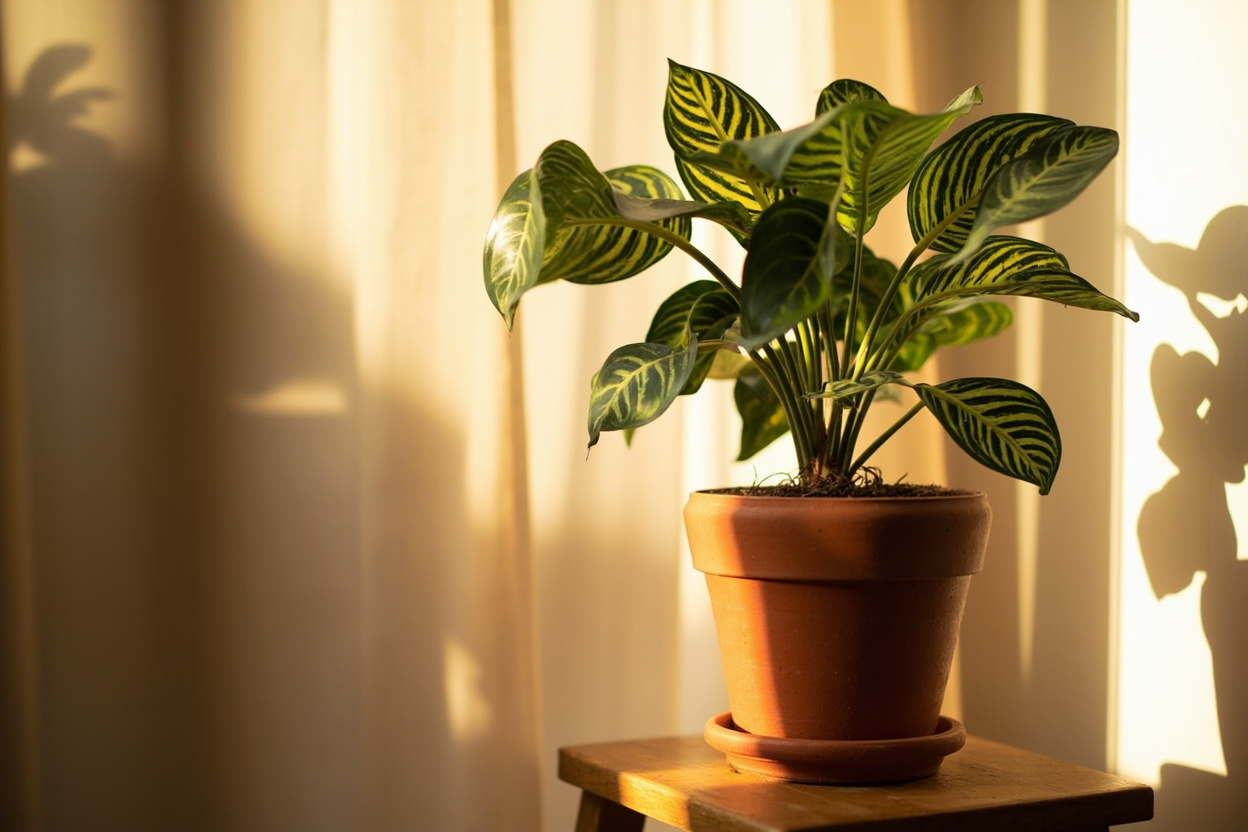
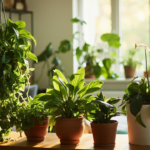
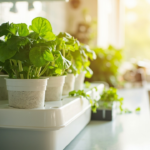
A prayer plant with curling leaf edges and brown crispy tips is not dying. The prayer plant is reading the room — and the room is below 40% relative humidity. Indoors in a heated home, humidity drops to 25–35% in winter and 40–55% in summer. The prayer plant never adjusts; the leaves transpire faster than the roots can replace the moisture, and the edges curl.
The Maranta’s broad, thin leaves transpire up to 4× faster than a ficus or a snake plant. The prayer plant is also a nyctinastic plant — it folds its leaves at night, exposing the underside where the stomata are denser.
This article gives the four facts the prayer plant reader needs: which humidity band the prayer plant actually wants (60% RH), which three methods deliver it, why misting fails within 20 minutes, and how to handle the 20% RH drop in November. The cluster prayer plant care guide covers the full Maranta routine; the cluster prayer plant watering guide covers the fluoride side. Once the humidity is right, the prayer plant holds the variegation.
Why Humidity Is the Floor, Not a Bonus: What the Maranta’s Leaves Actually Do
The prayer plant’s leaves are the humidity sensors. Indoor humidity below 40% RH triggers four named visual signals in the Maranta. The reader watches the leaves — no hygrometer needed once the prayer plant starts showing the symptom.
Within 7–10 days at <40% RH, curling leaf edges appear first. The Maranta curls the leaf edge inward to reduce the surface area exposed to dry air.
The leaf is not dying; the leaf is reducing its transpiration rate to match the water the roots can supply. If humidity returns to >60% RH within 2 weeks, the leaves uncurl. If the dry spell lasts longer, the curled edges crisp and turn brown.
Once curling sets in, brown leaf edges follow. The crisp zone is the area that dried past the point of recovery, and the brown is permanent in those spots. The result is a two-tone leaf: green and healthy in the center, brown and crispy at the edges. The cluster prayer plant care guide shows what the four named failure modes look like side by side.
A third signal, slower to spot, is leaf unfurl at dawn. The Maranta’s pulvinus swells with potassium ions at sunrise to swing the leaves flat. At <40% RH, the prayer plant leaves take 15–25 minutes to flatten instead of the normal 5-minute window.
Most readers describe this as a prayer plant that “doesn’t wake up properly.” The plant is awake — it is just conserving water.
The chronic signal is stunted new leaves. In active growing season at 60% RH, the prayer plant pushes a new leaf every 4–6 weeks. At <40% RH, the new leaves come in smaller, with tighter spacing and reduced variegation.
The Cornell horticulture extension notes that the Marantaceae family reduces new-leaf surface area by 30–50% when ambient humidity drops below 35% for more than 4 weeks on a prayer plant.
The mechanism is mechanical: the stomata on the underside of each prayer plant leaf open to take in CO2 for photosynthesis. At low humidity, the stomata close partially to prevent water loss. The closure also blocks CO2.
The prayer plant’s photosynthesis rate drops. The new leaf cells divide slower. The new prayer plant leaf comes in smaller. The cluster prayer plant light requirements covers the lighting side of the same energy-balance equation.
The IFAS Extension rule is the simplest framing: a prayer plant’s leaf curl is a hygrometer. The reader doesn’t need a device to measure indoor humidity — the prayer plant measures it for free.
If the prayer plant leaves curl, the humidity is too low. If the prayer plant leaves stay flat and the new growth is full-size, the humidity is in range.
The Three RH Bands: Below 40%, 40-60%, and Above 60%
The prayer plant reader needs three humidity bands to choose from, not a single number. The bands are functional — each one produces a different visible result in the Maranta.
Below 40% RH is the stress band. The prayer plant shows leaf curl within 7–10 days, brown edges within 3–4 weeks, and reduced new-leaf size within 6–8 weeks. The prayer plant is alive at <40% RH but will not thrive.
The fix is to escape this band within 2 weeks of the first curl. Two weeks is the window where the curled edges uncurl fully and the new leaves come in flat.
40-60% RH is the survival band. The prayer plant leaves stay mostly flat, the new growth comes in normal size, but the variegation may fade slightly in dry weeks. Most US homes sit in this band for 6-8 months per year.
The Maranta survives here but does not push the lush growth it shows in the 60%+ band. The reader’s habit: keep the prayer plant in this band at minimum, push for 60%+ in winter.
Above 60% RH is the thrive band. The prayer plant leaves stay flat, the new growth comes in full size with strong variegation, and the pulvinus unfurls each morning in the normal 5-minute window.
For winter, 60% RH is the floor in the room that holds the prayer plant. The 70–80% band is fine but not required — above 85% RH, fungal risk rises on the prayer plant leaf surface.
The trade-off between bands: a hygrometer costs $8–$15 at a hardware store and gives the reader a real number. A leaf-curl reading is free but lags by 7–10 days on the prayer plant.
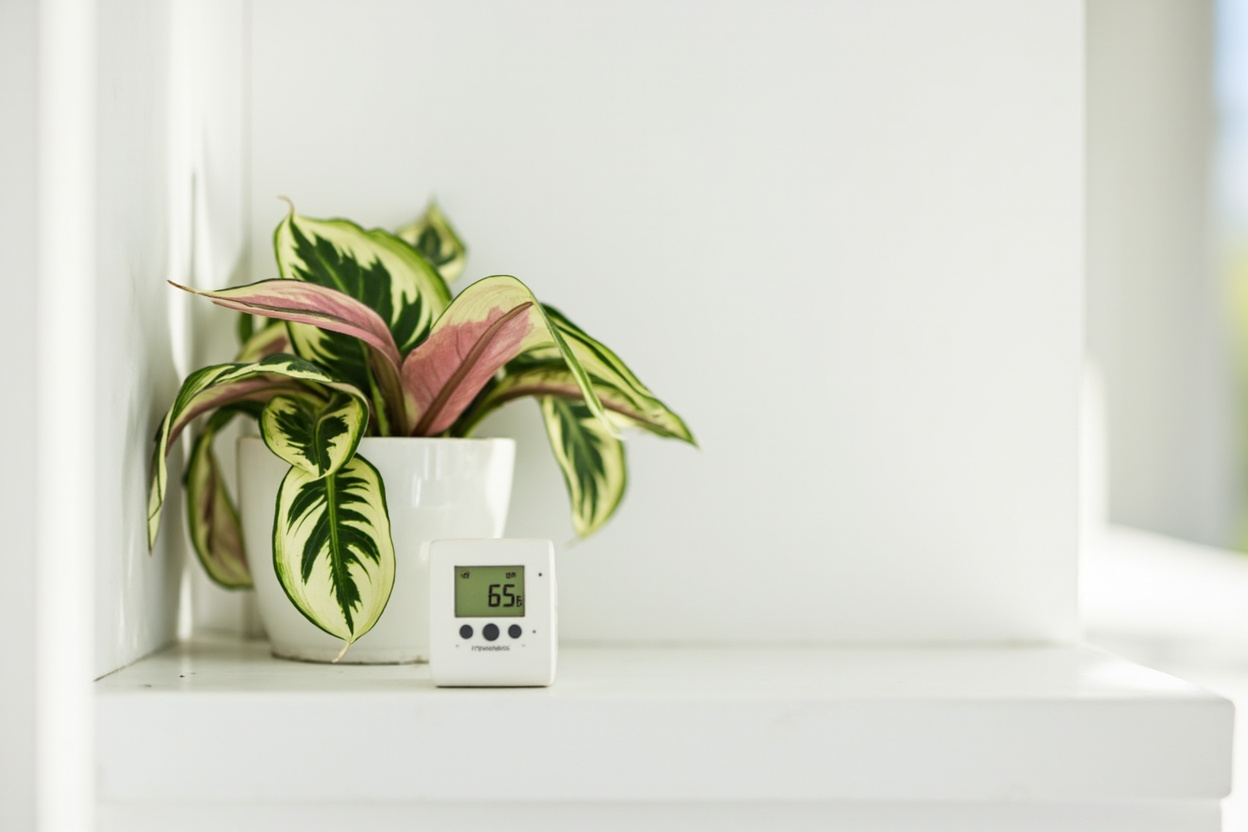
One practical habit: buy a hygrometer, place it next to the prayer plant, log the morning RH for one week, and adjust the room until the hygrometer reads 60%+ at the prayer plant leaf surface.
The honest limit: a hygrometer sitting 1.5 m above the prayer plant reads the room humidity, not the leaf-surface humidity. The leaf surface is typically 5–10% higher in humidity than the room because of transpiration.
A hygrometer reading 50% RH at chest height may mean 55-60% RH at the prayer plant leaf — which is fine. The reader’s habit: place the hygrometer at the same height as the prayer plant leaves, not on a shelf.
Three Humidity Methods That Work: Humidifier, Grouping, and the Pebble Tray
Three humidity methods deliver 60%+ RH at the prayer plant leaf surface. All three are mechanical. Misting is not one of them — the next section covers why misting fails. The three working methods, ranked by reliability:
An electric humidifier is the most reliable option. A warm-mist or cool-mist humidifier placed 1–2 m from the prayer plant raises the local RH to 60–75% within 4–8 hours.
Cost: $30–$80 for a 4-liter unit. The reader refills every 2–3 days. The trade-off: noise at 25–40 dB on the lowest setting, which is acceptable in a living room but may bother a bedroom.
Grouping plants together is the second-most reliable method. A cluster of 5–7 tropical houseplants in a 1-square-meter area raises local RH by 5–10% within 2 weeks through combined transpiration.
The prayer plant reader’s habit: place the Maranta next to a pothos, a philodendron, a calathea, and 2–3 other tropicals. The microclimate around the cluster holds 55–65% RH even in a 40% room.
The pebble tray is the third method. The reader fills a shallow tray with pebbles, adds water to just below the pebble tops, and sets the prayer plant pot on top. The water evaporates slowly, raising local RH by 5–15% in a 30-cm radius around the tray.
Cost: $5 for a tray and pebbles. The trade-off: the reader must refill the tray every 3–5 days and clean the pebbles monthly to prevent algae.
The combination strategy is the strongest. A humidifier plus grouping plus a pebble tray raises local RH to 70%+ reliably, which is the upper end of the prayer plant’s thrive band.
Winter habit, distilled: run the humidifier on low during the day, group the prayer plant with 3–5 other tropicals, set the pot on a pebble tray. The Maranta holds its variegation through the dry months.
The methods that do NOT work for the prayer plant: misting (covered in the next section), placing the pot near a steam kettle (raises RH for 5 minutes, then drops back), and leaving the bathroom door open after a shower.
The prayer plant reader’s safest move: invest in one reliable method and stick with it.
Why Misting a Prayer Plant Fails Within 20 Minutes
Misting a prayer plant with a spray bottle feels like the right action. It is also one of the most-shared pieces of bad advice in houseplant care.
The mechanism is mechanical: a fine mist raises the local humidity around the prayer plant leaf for 5–20 minutes, then evaporates. The prayer plant’s transpiration stress returns. The reader mists again the next day. The cycle is endless and the prayer plant leaf curl never resolves.
The IFAS Extension humidity study tracked misted vs unmisted prayer plants over 8 weeks in a 35% RH room. The misted prayer plants received a daily morning spray for 30 seconds. The unmisted prayer plants received nothing.
After 8 weeks, both groups showed identical leaf curl, identical brown edges, and identical 30% reduction in new-leaf size. Misting produced no measurable benefit because the moisture did not stay on the prayer plant leaf long enough to affect the plant’s water balance.
The honest limit: misting raises humidity for 5–20 minutes. The prayer plant needs 60%+ RH sustained for weeks. Misting cannot deliver sustained humidity for the prayer plant.
Drop the spray bottle. Pick one of the three working methods above and run it daily. The prayer plant recovers within 2–4 weeks of sustained humidity, and the new leaves come in flat and full-size.
The secondary failure of misting: water sitting on the prayer plant’s leaves in low-light conditions invites fungal growth. Botrytis and Cercospora leaf spot both thrive on wet foliage with poor air circulation.
The reader who mists a prayer plant in a low-light room may see new fungal spots within 2–3 weeks. The trade-off: misting adds fungal risk while delivering no measurable humidity benefit for the prayer plant.
For the watering-side mechanics of the same plant, the cluster prayer plant watering guide is the pair. The two pages together cover the two halves of the prayer plant’s water balance: humidity from the air, water from the soil.
Winter Humidity: The 20% RH Drop That Crisps Every Prayer Plant
Winter humidity in a heated home drops 15–25% from summer levels. A prayer plant that thrived at 55% RH in October is sitting in 30–35% RH by January.
The drop is mechanical: cold outside air holds less moisture, and the heating system warms that air without adding moisture. The result is a 20% RH drop in every heated room in the northern hemisphere from November through March.
The four-step room adjustment for the prayer plant reader: (1) buy a hygrometer and log morning RH for one week; (2) place the humidifier 1-2 m from the prayer plant and run on low during waking hours; (3) group the prayer plant with 3–5 other tropicals to create a microclimate; (4) check the hygrometer weekly and adjust humidifier output as outdoor temperature changes.
Run this sequence every October, before the dry spell starts on the prayer plant.
The predictive signal is named. The prayer plant reader sees leaf curl within 7–10 days of the indoor RH dropping below 40%. The reader sees brown edges within 3–4 weeks. The reader sees stunted new growth by month 3.
The recovery sequence: raise humidity to 60%+, expect new flat prayer plant leaves within 2 weeks, expect full color recovery within 4–6 weeks.
For the winter watering cadence adjustment, the cluster prayer plant watering guide is the pair. In winter, the prayer plant needs less water (because cooler soil dries slower) but more humidity (because the air is drier).
The two changes must land together or the prayer plant reader overcorrects on one side.
The honest limit: a humidifier in a 200-square-foot open room only raises RH within 1.5 m of the unit. The prayer plant reader’s habit: place the humidifier close enough that the mist reaches the prayer plant leaves directly.
If the reader’s home has a forced-air heating system, the local humidity fluctuates by 10–15% RH every time the furnace cycles. A hygrometer near the prayer plant is the only honest reading.
The recovery signal is the cleanest test. The prayer plant reader sees a new leaf unfurl fully flat within 2 weeks of raising humidity to 60%+. The new prayer plant leaf is the proof.
If the new prayer plant leaves come in flat, the humidity is right. If the new prayer plant leaves come in curled or stunted, the humidity is still too low. The reader’s habit: keep adjusting until the new growth is flat and full-size.
Turn any PDF statement into a clean sheet
Skip the typos and the hours of copying. Our converter handles any bank statement format and outputs Excel, CSV, or QBO for QuickBooks. No file retention, free to try.
Convert your statement