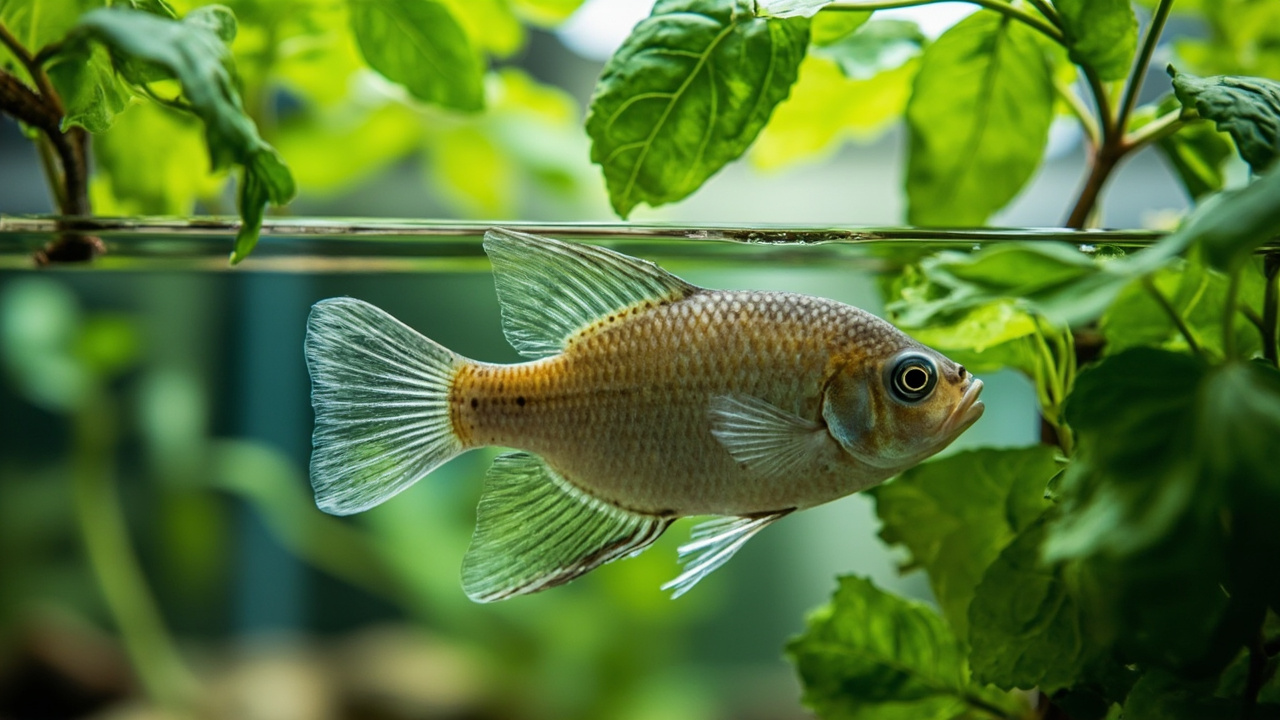
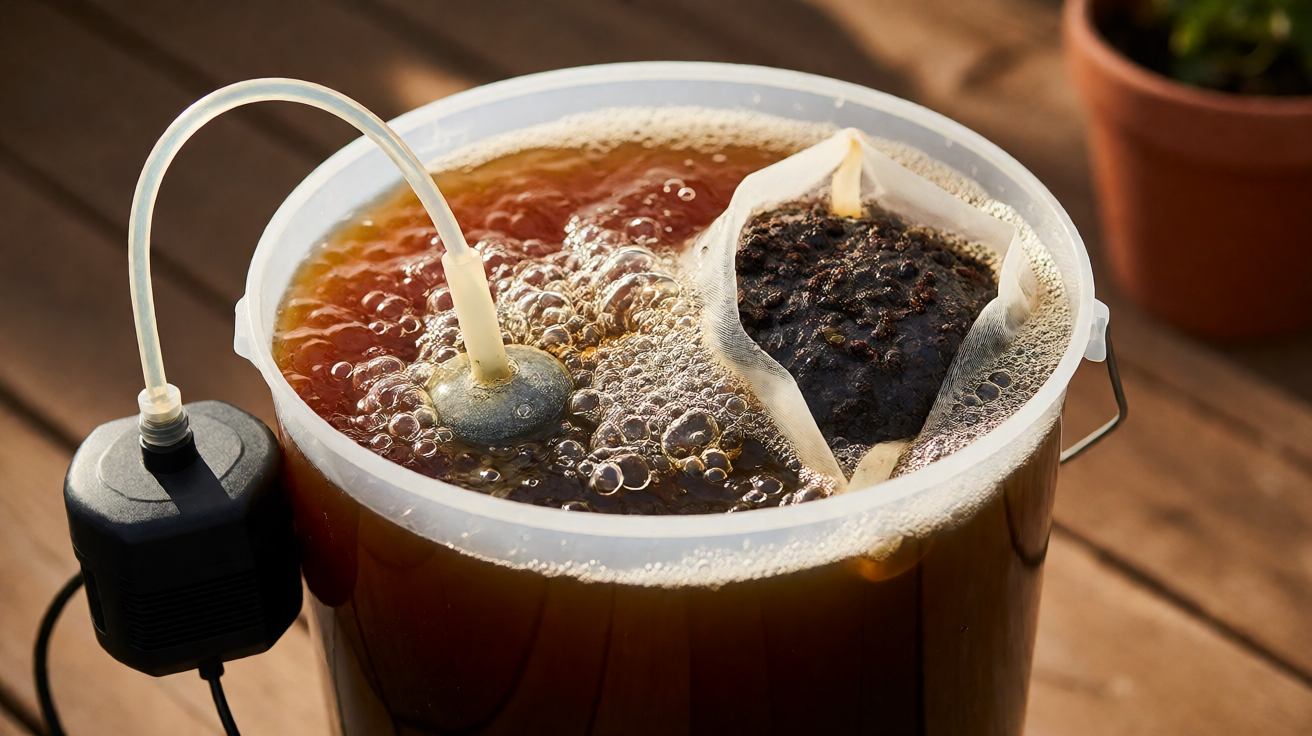
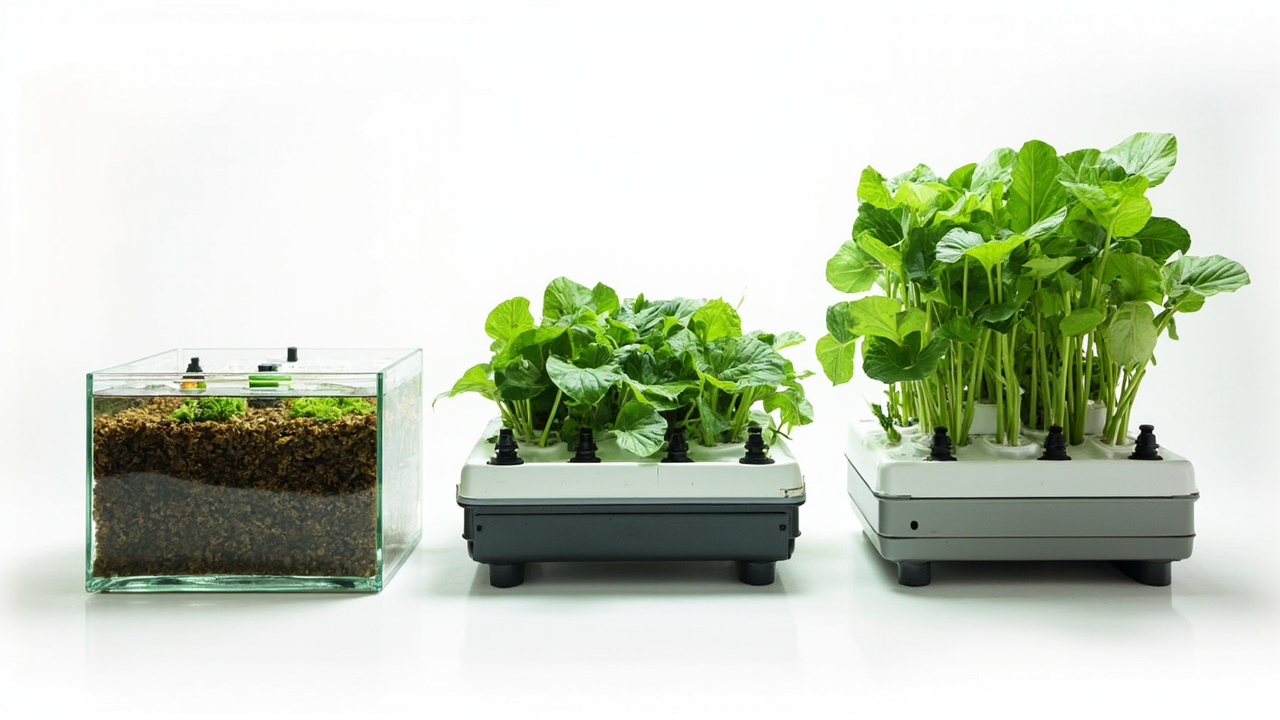
A small aquaponic system looks foolproof on a product page: tank, pump, grow bed, one goldfish. In an apartment, that small aquaponic system usually dies by week three.
The failure is a nitrogen cycle that had no room to stabilize. The biofilter — the wet surface where nitrifying bacteria colonize — collapses below a 20-gallon floor because surface area shrinks faster than volume does.
Ammonia from one goldfish hits 1–2 ppm within seven days in a 5-gallon tank. By day 21, the small aquaponic system is dead. IFAS Extension sets 50 liters (about 13 gallons) as the biology floor and recommends 75 liters (20 gallons) for beginners because ammonia spikes flatten above that line.
Three apartment constraints define what is actually buildable: 20 gallons of water minimum, one outlet within 2 meters, and either a balcony rated for 40 kg/m² or a ground-floor space that can absorb a 90 kg spill. This article gives you three real small aquaponic system profiles, the cycling timeline that eats your first month, and one honest case for choosing hydroponics instead.
Why Small Aquaponic Systems Scale Differently: The 20-Gallon Floor
The aquaponic loop works because of a three-part biological chain: fish produce ammonia, bacteria convert ammonia to nitrite, then to nitrate, and plants absorb the nitrate. Each link of this chain needs enough surface area to do its job.
Halve the fish-tank volume, and the small aquaponic system loses more than half its stable biofilter — because nitrifying bacteria colonize tank walls, grow media, and any wet surface, and smaller tanks have less wall per gallon. Cornell Small Farms recommends 1 inch of fish per 7 gallons as a stocking density, but the nitrogen cycle itself needs space independent of how many fish you add later.
Temperature compounds the biofilter problem. Nitrosomonas and Nitrobacter replicate fastest between 24–30°C (75–86°F). Below 18°C (64°F), their replication rate drops below the ammonia production of a modest bioload.
A 5-gallon tank swings 3–5°F (1.5–3°C) overnight in a typical apartment. A 20-gallon tank buffers the same swing to under 1°F. This is why the small aquaponic system on a countertop crashes in February even when the room feels warm — the system is biofilter-bottlenecked, not human-care-bottlenecked.
The bottom line is direct: a small aquaponic system under 20 gallons will not forgive missed testing, pump failures, or temperature swings the way a 50-gallon system will. If you cannot commit to weekly ammonia and nitrite checks during the first eight weeks, expect the small aquaponic system to lose fish before it stabilizes.
Three Real Aquaponic System Profiles for Apartments and Balconies
The three small aquaponic system profiles below assume one outlet within 2 meters, hard water under 250 ppm TDS, and either a balcony rated for 40 kg/m² or a ground-floor space. Stocking assumes the 1-inch-fish-per-7-gallons beginner rule. For species-specific stocking, see the cluster fish selection for small tanks guide.
Profile A: Countertop Media Bed (20–30 gallons)
Profile A is a 20-gallon long aquarium with a flood-and-drain media bed on top. A bell siphon drains the bed every 15–20 minutes. One submersible pump at 150–200 L/h lifts water from tank to bed. The grow bed holds 40 liters of expanded clay.
Trade-off: lowest cost ($150–$250 new, $100–$150 used), smallest footprint (30×45 cm). The cost is highest failure sensitivity.
One dead fish or one overfeeding takes 24–48 hours to register as an ammonia spike because the small aquaponic system has no water-mass buffer.
Fish load: 6–8 small white cloud minnows or zebra danios. Plant load: 4–6 herbs — basil, mint, cilantro, leaf lettuce. Power draw: 25–35 W. Noise at 1 meter: 35–45 dB.
Profile B: Vertical Tower Hybrid (30–50 gallons)
Profile B is a 30–50 gallon sump on the floor with 2–4 vertical NFT grow towers mounted above. Fish load scales to 10–15 tilapia fingerlings or goldfish. The towers grow 20–30 leafy greens in parallel.
A 400 L/h pump circulates water from sump to tower tops. The media bed is replaced with a moving-bed biofilter inside the sump.
Trade-off: medium cost ($300–$500 new), 60×60 cm footprint plus 1.5–1.8 m vertical, medium failure sensitivity. Battery backup is recommended because pump failure above the towers drains the upper grow zones in under 2 hours.
Power draw: 40–55 W. Noise at 1 meter: 40–50 dB. Most beginners regret not starting with Profile B because the moving-bed biofilter cuts cycling time by 1–2 weeks.
Profile C: Stub IBC Balcony System (55–100 gallons)
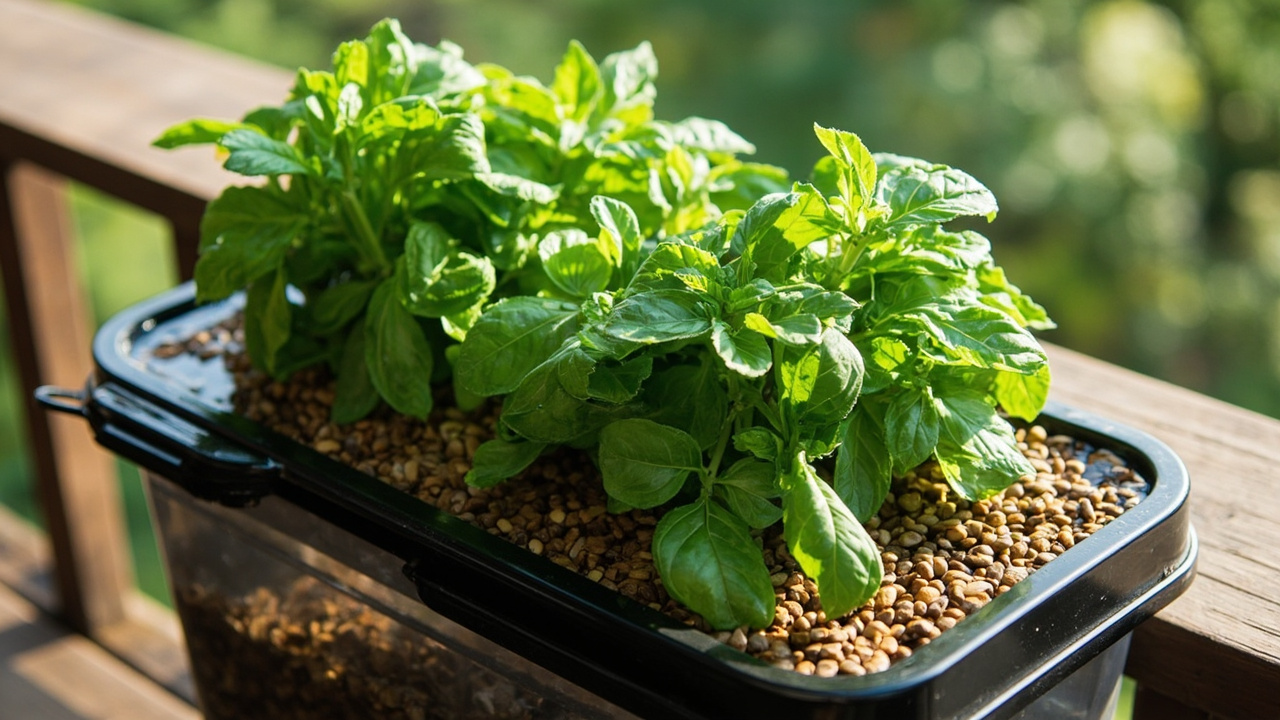
Profile C is an intermediate bulk container cut in half. The bottom half becomes the fish tank (about 75 gallons / 285 L). The top half, inverted, becomes the grow bed (about 8 gallons of media). One 600–800 L/h pump lifts water from tank to bed.
Trade-off: lowest failure sensitivity of the three profiles because a missed pump cycle or a dead fish takes 48–72 hours to measurably shift ammonia. Fish load: 15–25 tilapia, koi, or catfish depending on climate.
Plant load: 15–20 mixed plants in 25 cm media depth. Footprint: 120×60 cm at 90 kg/m².
Power draw: 50–70 W. Noise at 1 meter: 40–50 dB. Build cost: $200–$400 used.
| Metric | Profile A Countertop |
Profile B Vertical Tower |
Profile C IBC Balcony |
|---|---|---|---|
| Volume | 20–30 gal (75–115 L) | 30–50 gal (115–190 L) | 55–100 gal (210–380 L) |
| Footprint | 30 × 45 cm | 60 × 60 cm | 120 × 60 cm |
| Fish load | 6–8 small fish | 10–15 fingerlings | 15–25 adults |
| Build cost | $150–$250 | $300–$500 | $200–$400 |
| Power draw | 25–35 W | 40–55 W | 50–70 W |
| Noise @ 1 m | 35–45 dB | 40–50 dB | 40–50 dB |
| Failure sensitivity | Highest | Medium | Lowest |
Cycling: The 4-to-8-Week Bacterial Colonization Phase
Fishless cycling is the unglamorous step that decides whether the small aquaponic system lives or dies. You add pure ammonia to the tank with no fish present, and you wait for nitrifying bacteria to colonize the biofilter.
Expect this to take 4–6 weeks at 24–28°C with bottled bacterial inoculant, or 6–8 weeks without. During week 2–3, ammonia will spike to 1–3 ppm before falling. That is normal because the Nitrosomonas colony is establishing.
Once ammonia and nitrite both read 0 ppm and nitrate reads 5–20 ppm, the small aquaponic system is cycled and ready for fish.
The most common mistake is adding fish during the week-2 ammonia spike because the test reads “dangerous” and the impulse is to “do something.” The right action is to keep dosing ammonia and waiting — because removing the ammonia source will starve the bacteria you are trying to grow. For a step-by-step walkthrough including the inoculant choice and the test kit you actually need, see the cluster beginner system build guide.
Noise, Smell, and Electricity: The Three Apartment Killers
A pump is the simplest metric for the small aquaponic system. Most submersible pumps in the 200–600 L/h range produce 45–55 dB at 1 meter in open air. Mounted on a hard surface against a wall, structure-borne vibration adds another 5–10 dB.
Silicone isolator mounts reduce vibration by 3–5 dB. If your apartment ambient drops below 35 dB at night, a Profile A small aquaponic system will be audible 10 feet away. A thicker-walled apartment may still let Profile B and Profile C bleed through.
IFAS Extension recommends placing the pump on a foam mat or rubber pad to dampen wall-borne vibration.
Smell is the early-warning indicator you want from the small aquaponic system, not the enemy. A cycled small aquaponic system smells faintly of pond water — earthy but not foul. When the smell shifts toward ammonia or rotten eggs, the biofilter is failing.
Common causes: overfeeding, a dead fish, a pump stopped for more than 8 hours, or a power outage you did not notice. Test ammonia on first detectable odor. If it reads above 0 ppm and smells sharp, perform a 25% water change.
Electricity is the least-discussed killer of a small aquaponic system. A continuous 25–70 W load costs $3–$8 USD per month at average US rates. The real failure point is the power outage.
Profile A without backup circulation loses dissolved oxygen in 4–6 hours. Profile C holds fish for 12–24 hours without circulation because the water mass buffers. If your building has weekly or monthly power interruptions, expect the small aquaponic system to fail within hours — get a battery backup sized for 8 hours of pump runtime, or choose hydroponics instead. For the longer list of failure modes — pH crashes, chlorine poisoning, temperature kill — see the cluster common aquaponics problems page.
When Hydroponics Wins and Aquaponics Does Not
Choose a small aquaponic system only if all three hold. You can support the 90 kg floor load. You are home 5+ days per week for checks. Managing fish appeals, rather than adds stress.
If any of the three fails, a drip-system raft or Kratky-method hydroponic container will out-produce your small aquaponic system for the first 6 months. Hydroponics skips the 4-to-8-week nitrogen cycling period entirely. The FAO Small-Scale Aquaponic Production reference notes this trade-off: aquaponics trades time for fertilizer-free plant nutrition in mature systems — but the trade does not pay off at apartment scale for the first six months.
Many apartment growers start with a small aquaponic system for the lifestyle image, then switch to hydroponics after the first fish loss. That is a reasonable transition.
The landlord does not care about your nitrogen cycle. The 20 gallons of water on your floor are a real liability waiting to happen at the worst moment. For the side-by-side comparison across cost, yield, maintenance, and noise, see aquaponics vs hydroponics.
From PDF to Excel in one click
Forget retyping line by line. Upload any bank statement, get a spreadsheet you can actually use. Your files are never stored, and you can test the converter with 3 free conversions.
Try it free