Angel wing begonias are among the most distinctive houseplants you can grow indoors. Their elongated, wing-shaped leaves — covered in silver or bronze polka dots — give them an architectural quality that most other begonias can’t match. Under good conditions, they grow tall, branching stems that can reach 3 to 5 feet indoors, making them a genuine presence in a room rather than a windowsill afterthought.
Care-wise, angel wing begonias want the same core conditions as most begonias — bright indirect light, consistent moisture without sogginess, and above-average humidity — but they’re slightly more forgiving on light than rex begonias, and their tall growth habit creates one specific care need that rex varieties don’t: structural support. If you’ve seen a begonia flopping open like an umbrella, it was almost certainly an angel wing that outgrew its support.
The closely related Begonia maculata — sometimes called the polka dot begonia — shares the cane begonia lineage and much of the same care framework. The two are often confused because both have spotted leaves, but maculata has larger, more dramatically silver-spotted leaves and a more compact growth habit. This guide covers angel wing begonias specifically; maculata has its own dedicated page on Aqualogi.
Here’s how to give angel wing begonias the conditions they need to grow into the tall, striking specimens they’re capable of becoming.
What Makes Angel Wing Begonias Different
Angel wing begonias belong to the cane begonia group — a category defined by their tall, bamboolike stems that grow in distinct sections with visible knuckle-like nodes at each joint. The stems are technically called canes, and they give the plant its architectural structure: tall, slightly arching canes that branch at the nodes as the plant matures.
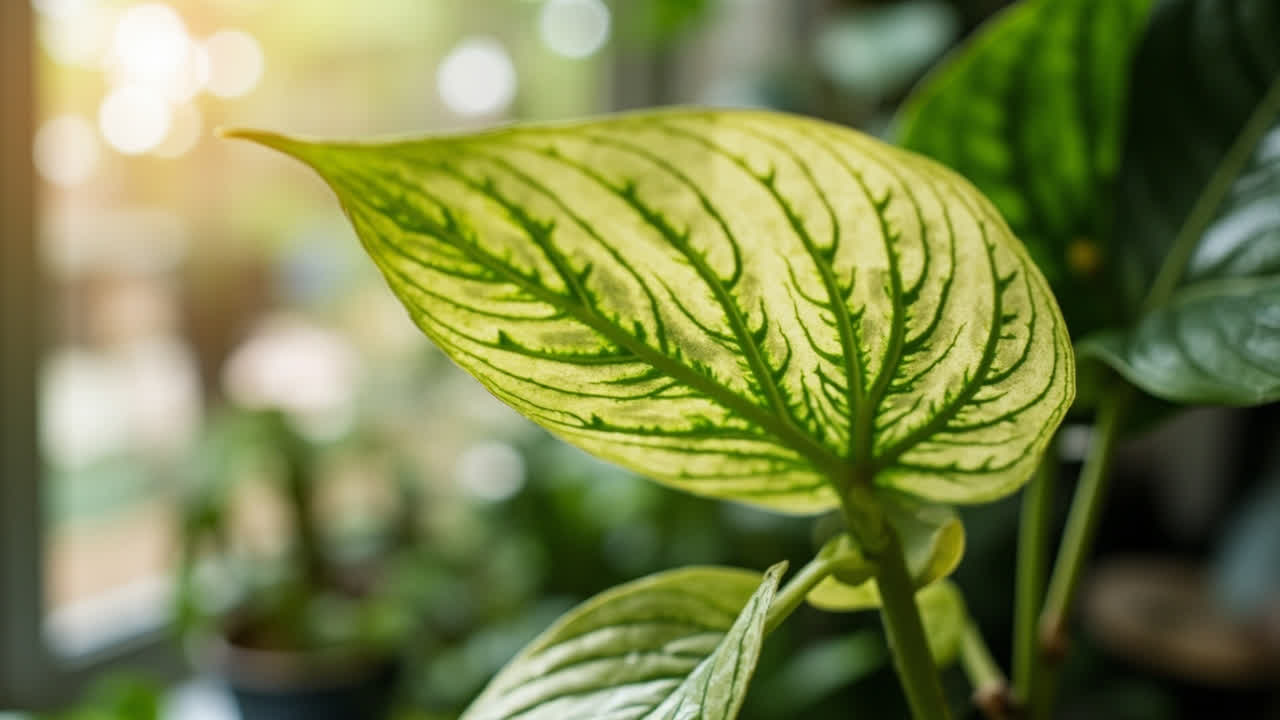
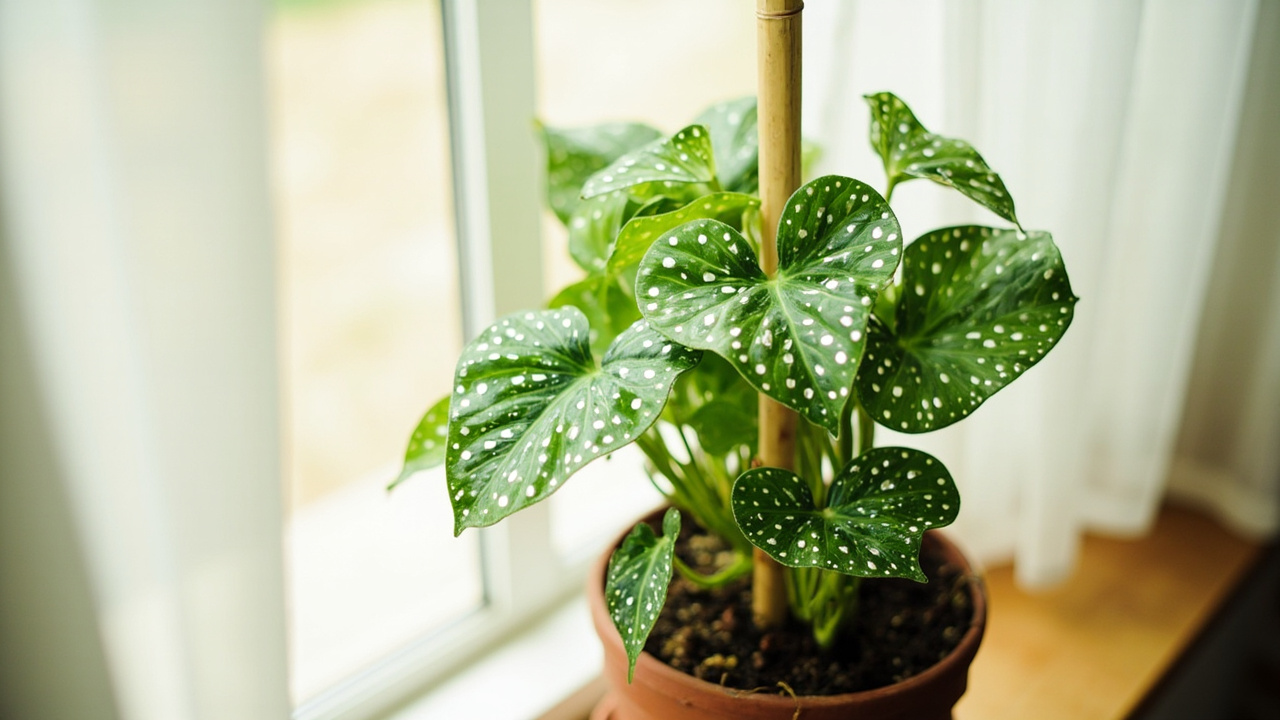
The “angel wing” name comes from the leaf shape — elongated, pointed leaves with a curved, winglike silhouette. The polka dot pattern (silver or bronze depending on the cultivar) adds to their ornamental appeal. Begonia coccinea is considered one of the parent species of many modern angel wing hybrids, which explains why you’ll see that botanical name attached to some cultivars.
The growth habit is the key thing that sets angel wings apart from other indoor begonias: they grow up and out, reaching 3 to 5 feet indoors under good conditions. This means they need more vertical space than rex or rhizomatous begonias, which stay relatively flat and rosette-like. It also means they eventually need support — either from a stake, a moss pole, or by growing against a structure.
For a full comparison of cane begonias against other begonia types, see the compare all begonia types and varieties guide.
Light: Bright and Indirect Is the Goal
Angel wing begonias need more light than most other begonia types — they sit in the upper part of the indirect-light spectrum. They will survive in medium light, but they’ll become leggy, produce smaller and less dramatically colored leaves, and may stop blooming entirely.
The practical window guide: an east-facing or west-facing window is ideal — both give several hours of good light without the intensity of midday sun. A south-facing window works too, but keep the plant 2 to 3 feet back from the glass or filter the light with a sheer curtain. Direct midday sun will bleach the leaves, cause crispy brown edges, and can scorch the foliage permanently.
The telltale sign that angel wings aren’t getting enough light is leggy growth — stems that stretch toward the window with widely spaced leaves and increasingly pale coloring. If you see this, move the plant closer to a better light source. Leggy growth is reversible in terms of future growth, but the existing elongated stems won’t contract; prune them back once the plant is in better light and it will branch more compactly from that point.
The other side of the light equation: more light means faster growth and higher water demand. Plants in brighter positions will dry out more quickly and may need watering more frequently. For the broader light requirements framework that applies to all begonias, see the general begonia light requirements guide.
Watering: Consistent Moisture Without Sogginess
The top inch of soil is your cue: when the top inch feels dry to the touch, water thoroughly until you see drainage from the bottom of the pot, then stop. This is the standard approach for most indoor begonias, and angel wings are no exception.
Where angel wings differ is in their sensitivity to extended drought. While they can recover from an occasional missed watering, prolonged dryness — where the soil stays dry for days at a time — causes the leaves to lose turgor and develop crispy edges. The plant will also drop leaves as a survival response. On the flip side, letting the pot sit in a saucer of water for hours after watering is a reliable way to trigger root rot, which is the number one killer of angel wing begonias.
Seasonal adjustments matter: in summer with higher temperatures and faster growth, you may be watering twice a week. In winter with lower light and slower growth, once a week or less is often enough. Always check the soil before watering rather than following a fixed schedule — the plant will tell you what it needs.
Humidity: Recreating a Brazilian Understory
Angel wings are native to the Brazilian rainforest, where they grow in the understory — bright but filtered light, consistently humid air. This lineage means they want indoor humidity in the 50 to 70 percent range. Most homes in temperate climates sit at 30 to 50 percent, especially in winter when heating dries the air.
The symptoms of low humidity are specific: crispy leaf edges first, then progressive browning, followed by leaf drop starting at the lower portions of the plant. You may also see the leaf edges curl inward as the tissue dries out.
Practical ways to raise humidity for angel wings:
- Humidity tray: Place the pot on a tray of pebbles or stones with a shallow layer of water beneath the pot (the pot sits on the stones, not in the water). Evaporation raises the humidity immediately around the plant.
- Room humidifier: The most consistent solution for multiple plants or in dry climates. Set it to maintain 50 to 60 percent and position it so the output isn’t directly on the foliage.
- Grouping: Plants transpiration raises ambient humidity in their immediate vicinity. Grouping several tropical plants together creates a microclimate that’s more humid than the room average.
- Misting: Avoid misting directly on begonia leaves — the moisture sitting on foliage is a primary vector for powdery mildew and bacterial leaf spot. If you mist, do it from a distance and only in the morning so the leaves dry before evening.
For more detail on begonia humidity requirements and practical methods, see the begonia humidity guide.
Staking, Pruning, and Managing Tall Growth
This is where angel wing begonias differ most visibly from other houseplant begoninas. Once a cane reaches 18 to 24 inches, it needs support. The stems are jointed and relatively brittle at the nodes; an unsupported cane can snap in a draft or when the weight of the foliage becomes too much.
The standard support method is a bamboo stake or a thin wooden dowel driven into the soil next to the main stem, with the cane loosely tied to the stake using soft plant ties, twine, or velcro plant straps. As the plant grows taller, add additional ties. For a more natural look, a moss pole allows the plant to root into the pole as it grows, creating a self-supporting column — this works particularly well for plants that are already quite tall.
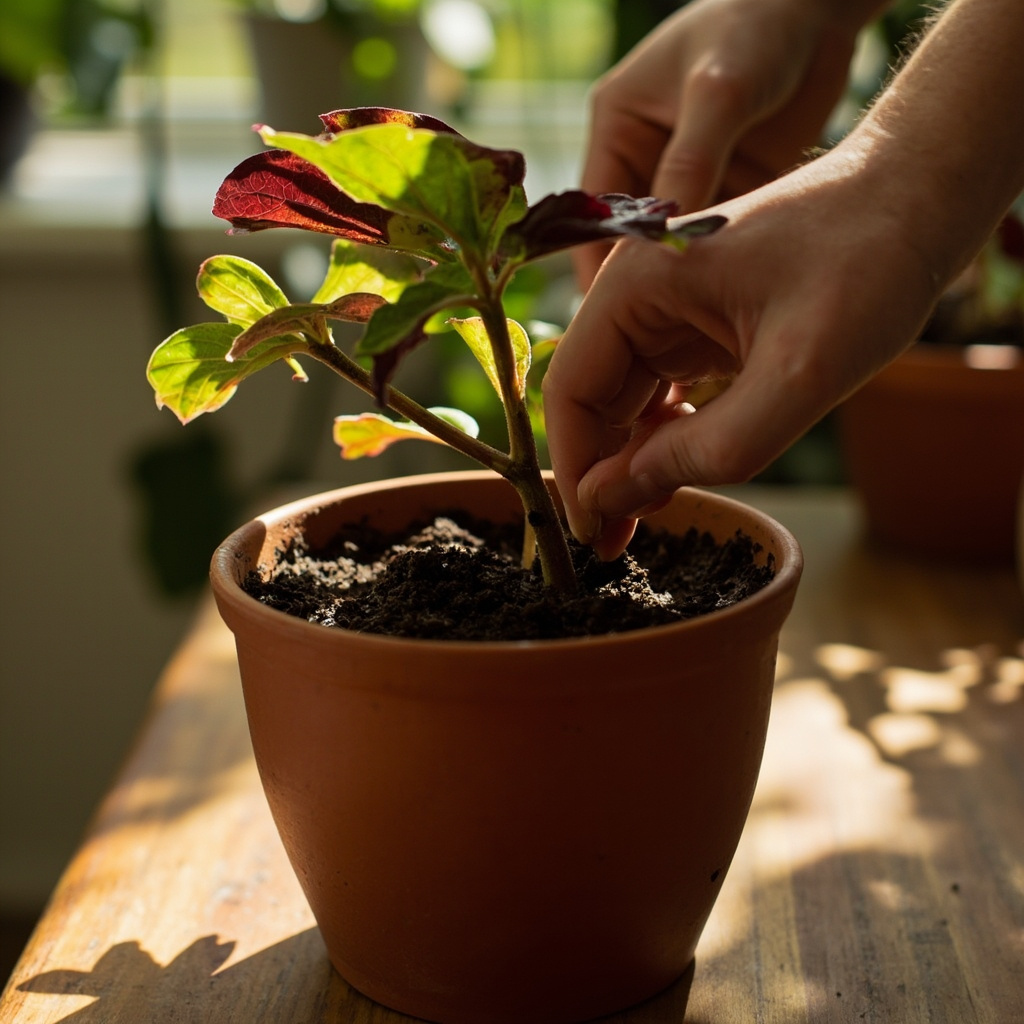
Pruning keeps angel wings compact and encourages branching, which creates a fuller, more bushy plant rather than a single tall cane. The best time to prune is early spring, just as new growth begins. Cut back any leggy or overly long canes by about one-third — the cut should be made just above a node, where new branches will emerge. Pinching the growing tip of a young plant encourages lateral branching from the start.
Don’t be afraid to prune angel wings — they’re vigorous growers and bounce back quickly from cuts. Every cut you make will stimulate two or more new branches at that node, creating a denser plant over time.
Common Problems and When to Act
Most angel wing problems fall into a handful of well-defined categories. Knowing which one applies tells you what to do next.
- Leggy growth: Too little light. Move to a brighter position and prune back the leggy stems. New growth will be more compact.
- Leaf drop: Usually caused by cold drafts (the plant is temperature-sensitive — keep it away from open windows in cold weather and air conditioning vents), low humidity, or a sudden change in conditions. Check the environment first.
- No blooms: Angel wings bloom prolifically when happy, producing cascading clusters of pink, red, or white flowers. Lack of blooms usually means insufficient light or a plant that hasn’t reached maturity yet. Move to brighter light and be patient.
- Powdery mildew: A white powdery coating on leaves and stems, caused by still humid air without air circulation. Improve airflow around the plant, remove affected leaves, and treat with a fungicide if needed.
- Crispy edges: Almost always low humidity. Raise humidity using the methods above and remove badly affected leaves — they won’t recover.
For a comprehensive diagnostic guide covering all begonia problem types, see the diagnosing begonia problems page.
Turn That PDF Into a Spreadsheet in Minutes
You've seen how to do it manually — now let the tool handle the heavy lifting. Upload your bank statement and get Excel, CSV, or QBO in a few clicks.
Try It Free