Begonias need 50 to 70 percent relative humidity to thrive indoors. Most homes sit at 30 to 40 percent, and that gap is the single most common reason begonia leaves turn crispy at the edges. If your begonia looks healthy one week and ragged the next, the air around it is almost certainly too dry.
Begonias come from tropical forest understories where humidity rarely drops below 60 percent. Their leaves are thin, broad, and lose moisture fast through transpiration when the surrounding air is dry. Unlike succulents that store water in their tissues, begonias have no built-in reservoir. They depend on the air around them, and heated or air-conditioned homes work against that need year-round.
The good news is that you do not need to turn your living room into a greenhouse. A few targeted adjustments can raise the humidity around your begonia into the 50 to 70 percent range without causing the fungal problems that come with wet leaves. Here is what works, what does not, and how to tell the difference before real damage sets in.
The Ideal Humidity Range for Begonias
Most begonia types perform best between 55 and 65 percent relative humidity. Below 50 percent, transpiration outpaces the roots’ ability to replace lost moisture, and leaf edges begin to dry out. Above 70 percent with poor air circulation, you risk powdery mildew and botrytis, especially on rex begonias with their fuzzy leaf surfaces.
The practical target is simple: keep humidity above 50 percent and below 70 percent, with gentle air movement. A small digital hygrometer placed near the plant removes guesswork. If your home runs at 35 percent in autumn, you need to add roughly 20 to 30 points of humidity at plant level, and that requires a method that actually moves moisture into the air rather than just slowing its loss.
Understanding the mechanism helps. As humidity drops, the vapor pressure deficit between leaf tissue and surrounding air increases. The plant loses water faster through its stomata, and the roots cannot keep up in dry soil conditions. The result is tissue death at the leaf margins, the thinnest and most exposed part of the blade. Raising humidity reverses that gradient.
Why Most Homes Are Too Dry for Begonias
Central heating drops indoor humidity to 20 to 30 percent in winter, sometimes lower in well-sealed rooms. Air conditioning has the same effect in summer, pulling moisture from the air as it cools. Even in temperate climates, indoor humidity routinely falls below 40 percent for several months of the year.
Crispy leaf edges can appear within days of turning on the heating for the first time in autumn. Begonias placed near radiators, heating vents, or south-facing windows with direct sun through glass lose moisture even faster. The damage is cumulative: once leaf tissue dies, it does not recover, and the plant redirects energy to new growth while older leaves become increasingly unsightly.
If you are not measuring humidity, you are guessing. A hygrometer costs less than a replacement begonia and tells you exactly when to act.
Signs Your Begonia Needs More Humidity
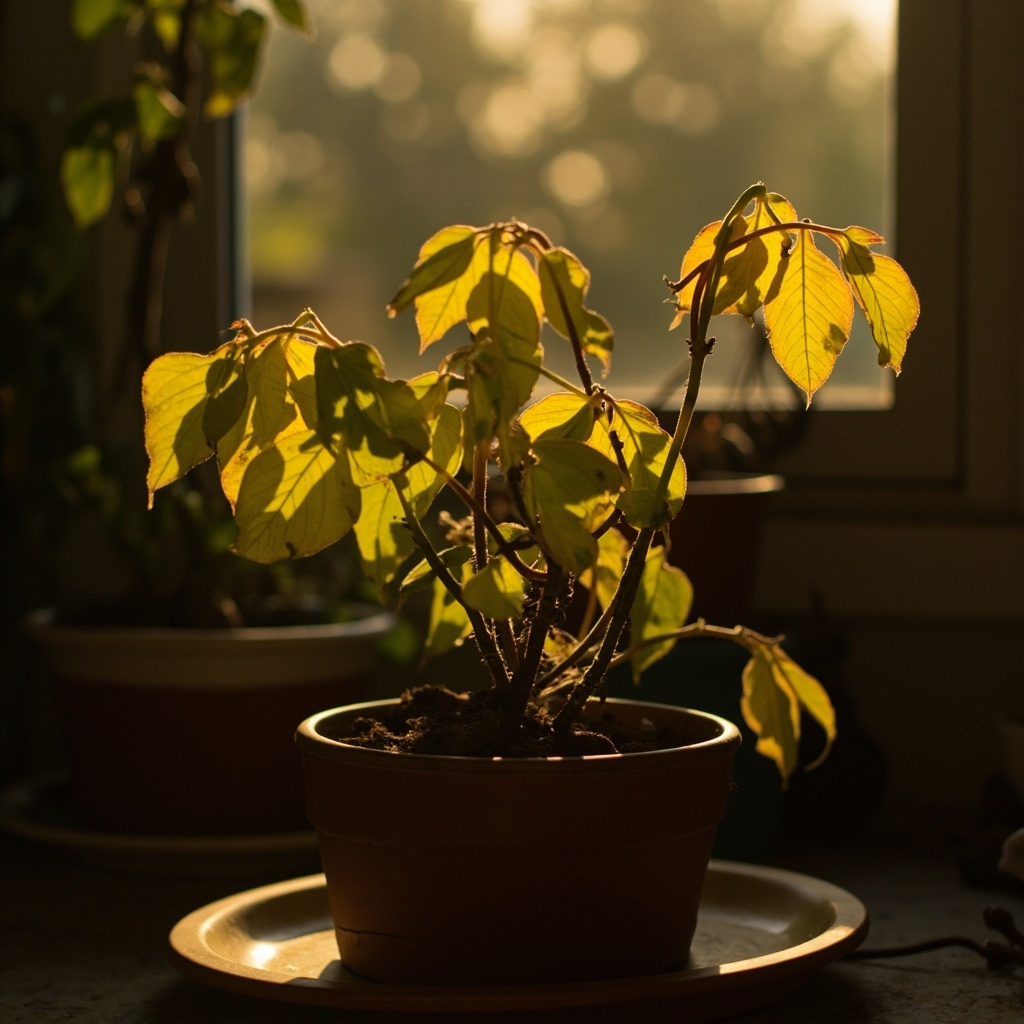
The earliest symptom is crispy, brown leaf edges on new leaves, which appear first because young tissue has the thinnest cuticle and loses moisture fastest. Older leaves follow, with tips turning brittle and curling inward. In severe cases, new shoots abort and flower buds drop before opening.
Low humidity damage can look like underwatering because both cause crispy edges. The distinction is in the soil: an underwatered begonia has dry soil all the way through, while a humidity-stressed begonia may have adequately moist soil but still show leaf damage. Check the soil before adjusting your watering schedule, because overwatering a humidity-stressed plant leads to root rot, a far harder problem to fix.
For a closer look at humidity stress alongside other issues, see our common begonia problems and fixes.
How to Raise Humidity Around Your Begonia
Four methods work reliably. Choose one based on your space, budget, and how dry your home gets.
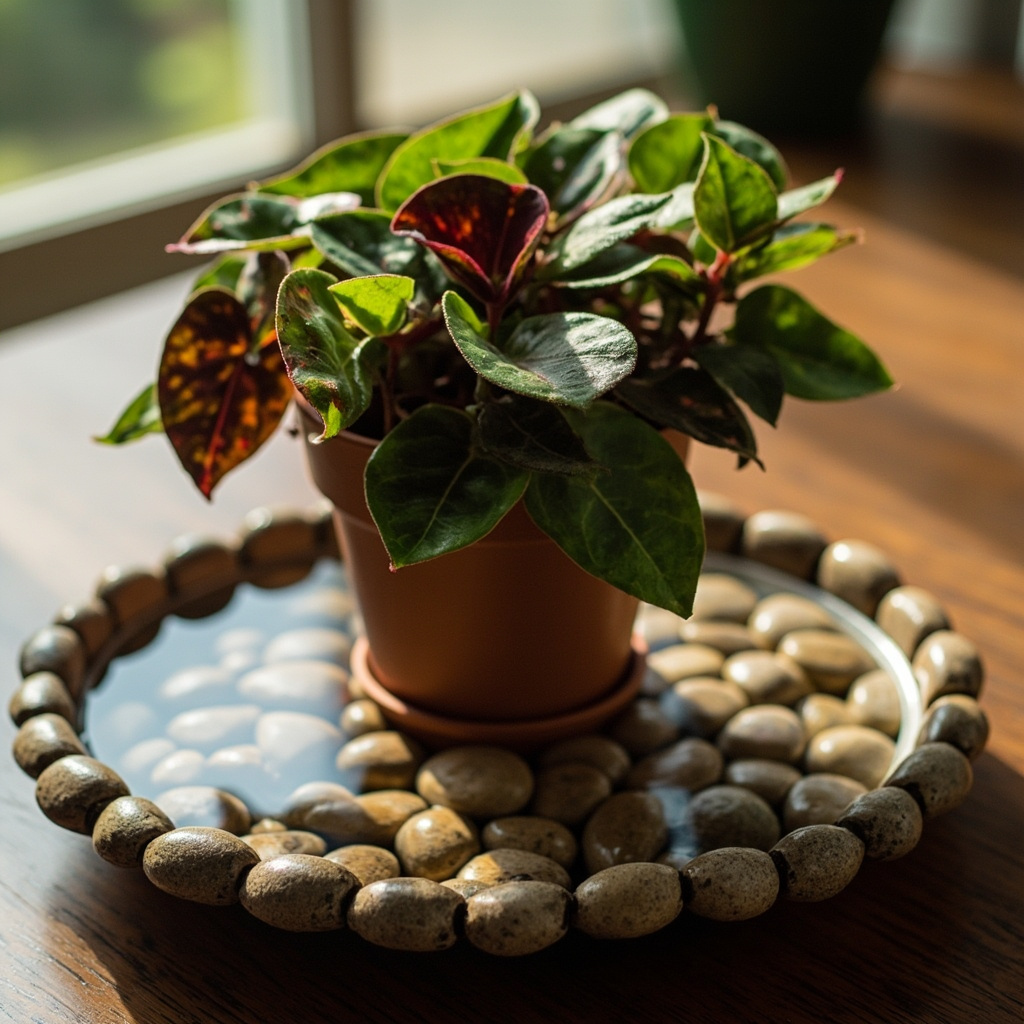
Pebble Tray
Fill a shallow tray with pebbles or clay pellets, add water to just below the pebble surface, and set the begonia pot on top. The pot base must sit above the water, not in it, to avoid wicking moisture into the root zone. As water evaporates from the tray, it raises local humidity 5 to 10 percent within 6 inches. This is the simplest, cheapest method and works well for a single plant in a moderately dry room.
Grouping Plants
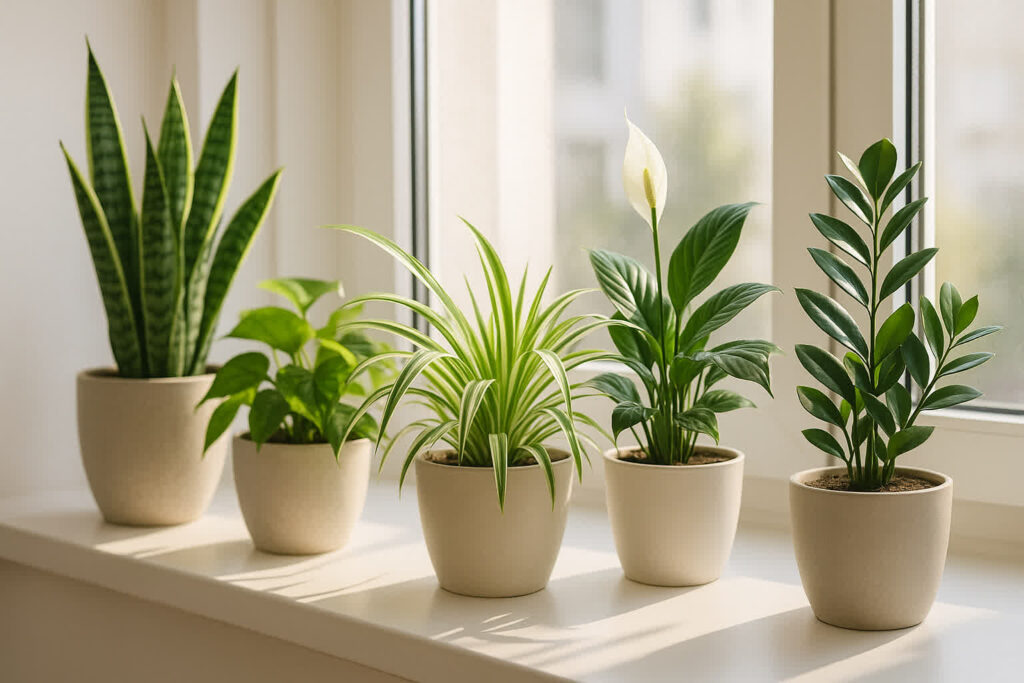
Place three to four humidity-loving plants close together. Each plant transpires, and the shared air between them holds more moisture than the surrounding room. Grouping raises humidity 5 to 10 percent in the immediate cluster. It is not enough in a very dry room, but it helps and costs nothing.
Humidifier
A cool-mist humidifier is the most effective method, especially in winter when indoor humidity drops below 30 percent. Set it to maintain 55 to 60 percent and place it within 3 to 4 feet of the begonia. A humidifier gives you precise control and benefits every tropical plant in the room. The downside is cost and the need to clean the unit weekly to prevent mold and bacteria.
What to Avoid
Misting begonia leaves feels intuitive but causes more harm than good. Water droplets on leaves, especially the fuzzy surfaces of rex begonias, create the perfect environment for powdery mildew and botrytis. Misting also raises humidity for only a few minutes before the water evaporates, giving you a brief spike followed by a return to baseline. Skip the spray bottle and use a pebble tray or humidifier instead.
Humidity Needs by Begonia Type
Not all begonias demand the same humidity level. Rex and rhizomatous types are the most sensitive, while wax begonias tolerate drier air better than most.
| Type | Ideal Humidity | Minimum Tolerated | Notes |
|---|---|---|---|
| Rex Begonia | 55–70% | 50% | Fuzzy leaves are prone to mildew above 70%; needs gentle airflow |
| Rhizomatous | 55–65% | 45% | Thick rhizomes store some moisture; more forgiving than rex |
| Angel Wing / Cane | 50–65% | 45% | Taller canes lose less leaf area proportionally; moderate needs |
| Wax Begonia (B. semperflorens) | 45–60% | 40% | Most tolerant; grows slower below 50% but survives |
| Maculata (Polka Dot) | 55–65% | 50% | Thin leaves show edge damage quickly; keep above 50% |
For a full breakdown of each type, see our begonia types and varieties guide.
Winter Humidity Challenges
Winter is the hardest season for begonias. Central heating drops humidity within hours of switching on, and the drop is often steep, from 45 percent down to 25 percent overnight. Begonias that thrived in autumn suddenly develop crispy edges and drop lower leaves.
Move begonias away from radiators, heating vents, and drafty windows. A pebble tray or humidifier becomes essential in heated rooms, not optional. If you group several plants together and run a humidifier nearby, you can maintain a stable microclimate through the driest months without any leaf damage.
Reduce watering slightly in winter because growth slows and the soil stays moist longer, but do not let the plant dry out completely. The goal is to match water uptake to the slower winter rate while keeping the air around the leaves in the 50 to 60 percent range. Check your hygrometer weekly and adjust your humidifier or tray as needed.
From Bank Statement to QuickBooks-Ready File
That manual cleanup you just read about? This tool skips it. Turn your PDF into QBO for QuickBooks without storing your data anywhere.
Start Converting