Watering is where most begonias are lost. The line between too much and too little is narrow, and the symptoms can look deceptively similar — wilting can mean the soil is waterlogged OR bone dry. The rule that removes the guesswork: water your begonia when the top inch of soil feels dry to your fingertip. Then water thoroughly until it drains from the bottom, and never let the pot sit in standing water.
This “top inch dry” method works because it gives the roots what they need — a wet-dry cycle. During the wet phase, the thick, fleshy roots absorb water and dissolved nutrients. During the dry phase, oxygen returns to the root zone, which is just as critical. When the soil stays wet all the time, oxygen disappears and root rot sets in, often before you notice anything wrong above the surface.
The exact frequency depends on your pot, your soil, your home temperature, and the season. A begonia in a 6-inch terracotta pot on a warm, bright windowsill might need water every 5 to 7 days in summer. The same plant in a 10-inch glazed pot in a cool room might go 10 to 14 days. Do not water on a schedule — check the soil. The finger test is more reliable than any moisture meter for container plants.
The “Top Inch Dry” Rule
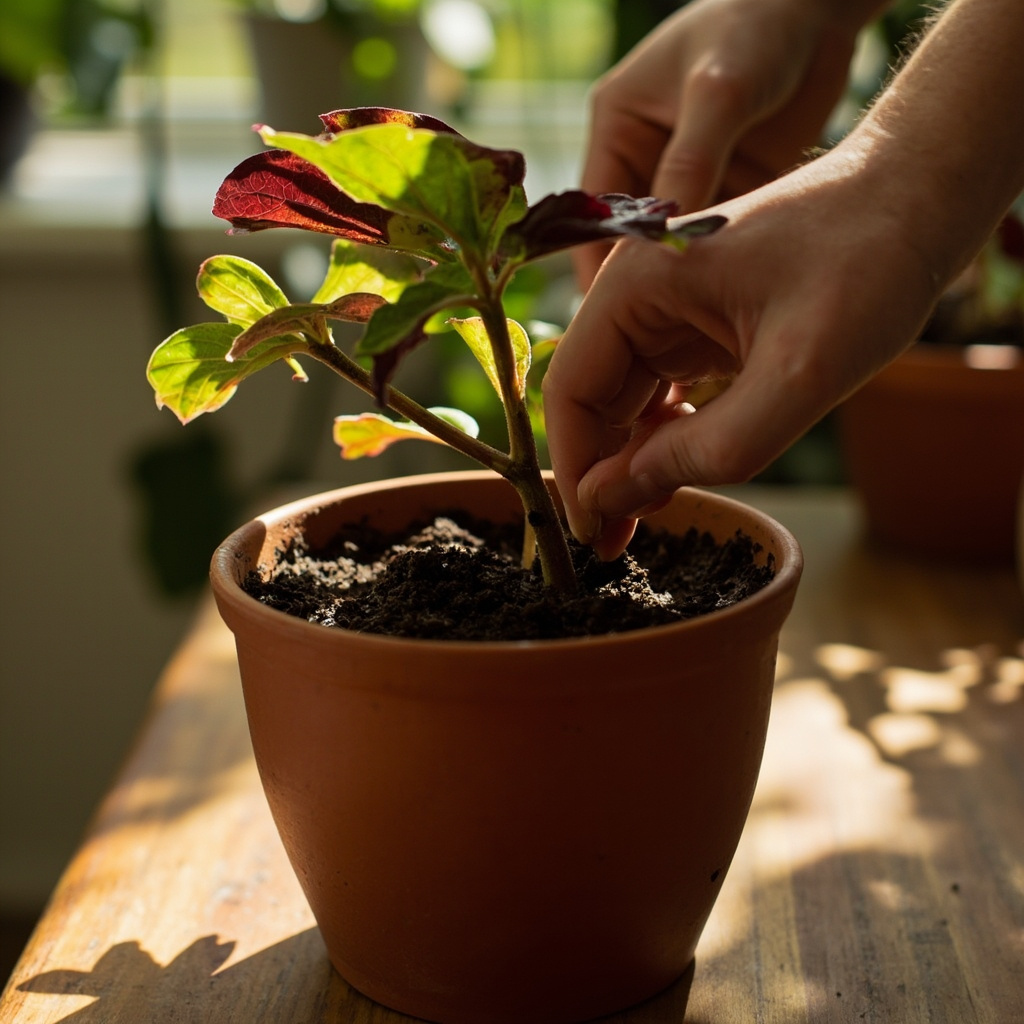
Insert your finger into the soil up to the first knuckle — roughly 1 inch. If the soil feels cool and slightly damp at that depth, wait. If it feels dry or barely moist, water. For smaller pots where a full finger depth is too deep, use a wooden chopstick or skewer: insert it into the soil, leave it for 30 seconds, and pull it out. If the lower portion of the wood is damp or has soil clinging to it, the moisture level is fine.
This method works for all begonia types. Rex begonias in small pots may dry out every 4 to 5 days in warm weather. Cane types in larger pots might go 7 to 10 days. The key is consistency — a begonia that dries out completely and then gets flooded, dries out and gets flooded, is under more stress than one that stays evenly moist. Aim for steady, moderate moisture rather than dramatic swings between wet and dry.
How to Water a Begonia Properly
When it is time to water, do it slowly and thoroughly. Pour water evenly over the soil surface until it begins to drain from the bottom of the pot. This usually takes 15 to 30 seconds of slow pouring for a 6-inch pot. After draining, empty the saucer within 15 to 20 minutes. A begonia sitting in water for hours is a begonia developing root rot.
Shallow watering — giving the plant just enough to wet the surface — is a common mistake. It encourages roots to grow toward the surface instead of filling the pot, which makes the plant less stable and more vulnerable to drying out. Thorough watering ensures the entire root zone gets moisture. You know you have done it right when water flows freely from the drainage holes.
Water temperature matters more than most people think. Cold water shocks begonia roots, especially in winter. Use room-temperature water — let tap water sit for 30 minutes before using if you want to let chlorine dissipate. In most municipal water systems, tap water is fine for begonias. If you have very hard water (white crust on pots or faucets), the mineral buildup can accumulate in the soil over time; flush the pot with plain water once a month to leach out excess salts.
Signs Your Begonia Is Overwatered
Overwatering kills more begonias than any other single cause. The symptoms develop gradually, which is why they are easy to miss until the damage is advanced.
The first sign is yellowing lower leaves — not just one or two old leaves dropping naturally, but several leaves turning soft and yellow at the same time. Unlike the crisp yellow of underwatering, overwatered leaves feel limp and mushy. The stem base may soften or darken. If you notice wilting despite the soil feeling wet, that is a strong signal: the roots can no longer take up water because they are rotting.
To confirm, gently remove the plant from the pot and check the roots. Healthy begonia roots are pale tan or white and firm. Rotted roots are dark brown or black, mushy, and break apart easily. They often smell sour. If you catch it early — just a few roots affected — trim the damaged roots, repot in fresh dry mix, and reduce watering frequency. If most of the root system is gone, the plant may not recover. Our article on begonia root rot causes and fix covers treatment in detail.
Signs Your Begonia Is Underwatered
Underwatering is less dangerous than overwatering but still causes real damage. The most obvious sign is crispy brown leaf edges — the tips and margins of leaves turn brown, dry, and papery. Unlike the soft yellow of overwatering, underwatered leaves feel dry and brittle. Older leaves are affected first because the plant sacrifices them to protect new growth.
Begonias that dry out completely may wilt dramatically — the entire plant droops, leaves and stems going limp. This looks alarming, but begonias recover from wilting faster than most houseplants if you catch it in time. Water thoroughly and the plant usually perks up within a few hours. If the soil has dried so much that it has become hydrophobic (water runs straight through without absorbing), submerge the entire pot in a bowl of water for 10 to 15 minutes to re-wet the root ball from the bottom.
Repeated underwatering causes cumulative stress. The plant drops leaves to reduce its water needs, and new leaves emerge smaller each time. A begonia that has dried out multiple times will be stunted compared to one that has had consistent moisture.
Seasonal Watering Adjustments
Watering frequency changes with the seasons, and adjusting is essential. During the active growing season (March through September), begonias produce new leaves and stems rapidly. They use more water, so you will water more often — typically every 5 to 7 days for a 6-inch pot in a warm, bright location.
From October through February, begonias slow down or go semi-dormant. Growth stops or becomes very slow, and water use drops significantly. Stretch the watering interval to 10 to 14 days, and always check the soil before watering. Overwatering during dormancy is the fastest way to lose a begonia — the roots sit in wet soil with almost no uptake, and rot sets in within days.
If you are going away for a week or two during the growing season, your begonia will be fine without watering as long as you water thoroughly before leaving and the pot is not in direct sun. For longer absences, ask someone to check every 5 to 7 days, or set up a simple wicking system: one end of a cotton string in the soil, the other in a jar of water. The soil draws moisture as needed.
Water Quality and Begonias
Most tap water is fine for begonias, but there are two situations to watch. Hard water — water with high mineral content — leaves white deposits on the pot rim and soil surface over time. These salts can build up and burn root tips, causing brown leaf edges that look like low humidity. If you see white crusting, scrape off the deposits and flush the soil with distilled or rainwater.
Chlorinated water is rarely a problem at municipal levels, but if you are sensitive to it, let water sit in an open container for 24 hours before using. The chlorine dissipates naturally. For most growers, this step is unnecessary — begonias are not notably sensitive to chlorine at normal tap-water concentrations.
If you have a water softener that uses sodium-based ion exchange, do not use that water for begonias. The sodium concentration is too high and will damage the roots over time. Use unsoftened tap water or rainwater instead. For how soil choice affects watering frequency, see our guide to the well-draining soil for begonias.
From PDF to Excel in one click
Forget retyping line by line. Upload any bank statement, get a spreadsheet you can actually use. Your files are never stored, and you can test the converter with 3 free conversions.
Try it free