Begonias are one of the largest flowering plant genera on earth — over 2,000 species and thousands of hybrids — and they bring something most houseplants cannot: foliage that looks like it was designed by an artist. Leaves in deep burgundy with silver spirals, lime-green with chocolate margins, copper with pink undersides. The variety is staggering, and it is exactly why beginners get confused about care.
The good news: beneath all that diversity, most indoor begonias want the same core conditions. Bright indirect light, soil that stays lightly moist but never soggy, and humidity above what the average home provides. Get those three things right and your begonia will produce new leaves steadily from spring through fall. The #1 mistake is treating all begonias the same — a rex begonia and a cane begonia look nothing alike, but their care framework is closer than you think.
This guide covers what every indoor begonia needs, where the types differ, and how to adjust for your specific home. Think of it as the foundation — the linked pages go deeper on each care attribute, common problems, and individual varieties.
Understanding Begonia Types (What You Are Actually Growing)
Before diving into care specifics, it helps to know which broad category your begonia falls into. The genus splits into several groups, and while the care framework below applies to all of them, the details — especially around humidity and light — shift depending on type.
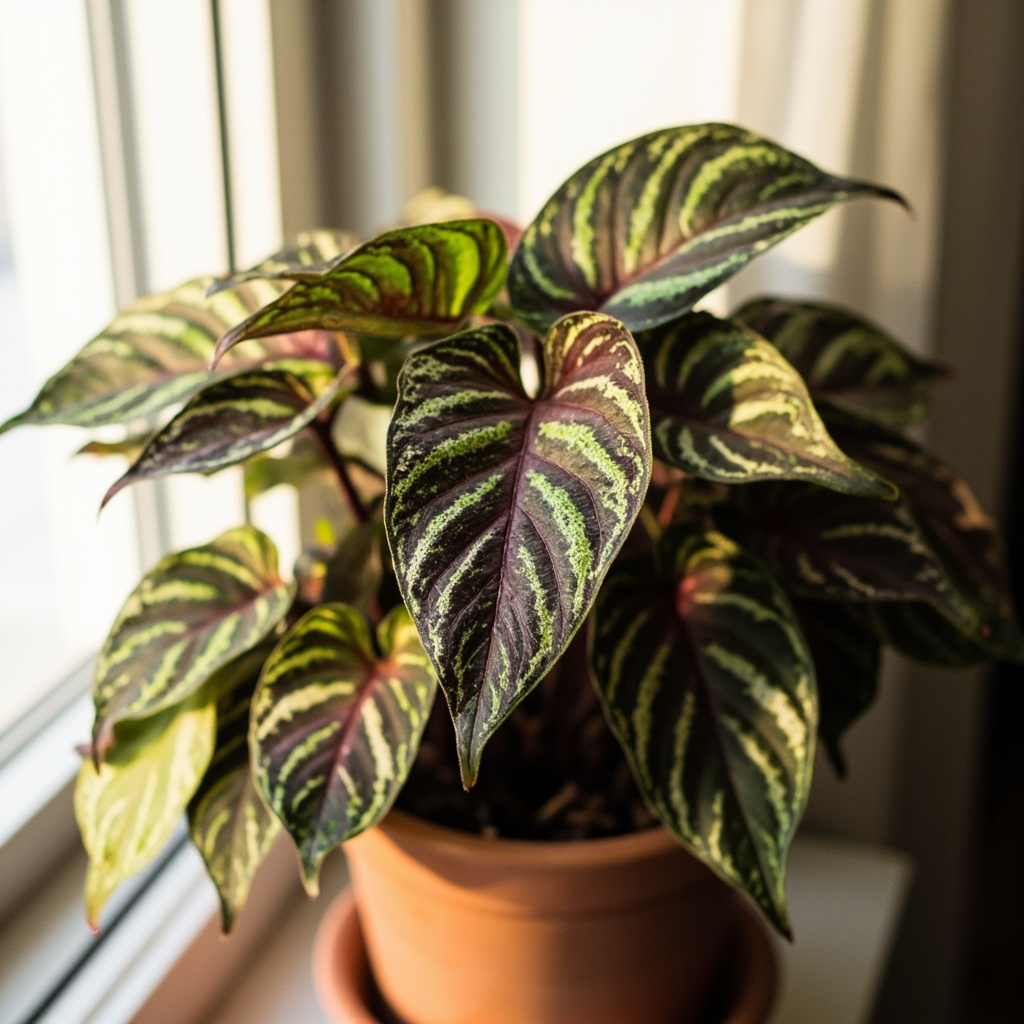
Rhizomatous and Rex Begonias are grown for their extraordinary foliage. Rex begonias are a subgroup of rhizomatous types, with fuzzy stems and leaves that shimmer in metallic purples, silvers, and greens. They stay compact, spreading via thick rhizomes at or just below the soil surface. These are the most common indoor begonias and the ones most people picture when they hear the name.
Cane (Angel Wing) Begonias grow upright on tall, jointed stems that resemble bamboo. Their leaves are often long and pointed, sometimes with polka-dot patterns. They can reach 3 to 5 feet indoors over time and need slightly more light than rhizomatous types to avoid leggy, thin-stemmed growth.
Wax (Fibrous) Begonias have rounded, waxy leaves and clusters of small pink, red, or white flowers. They are the most forgiving group and the ones most often sold as bedding plants, but they also make solid indoor specimens if you have a bright enough spot.
Tuberous Begonias are primarily outdoor plants grown for their large, showy flowers. They go dormant in winter and are rarely kept as year-round houseplants, so this guide focuses on the first three groups.
Light: The Single Most Important Factor
Begonias need bright indirect light — the kind you get near an east-facing window or a few feet back from a south or west window with a sheer curtain filtering the rays. Direct sun through glass scorches their leaves within hours, creating crispy brown patches that never heal. Too little light, on the other hand, produces pale, leggy stems and faded color, especially in rex and other highly patterned varieties.
In practical terms, place your begonia where you could comfortably read a book at midday without turning on a lamp. That is roughly 200 to 400 foot-candles of light — enough for lush growth without the burn. A north-facing window alone is usually too dim for anything except the most tolerant rhizomatous types. If that is all you have, a simple LED grow light on a timer for 10 to 12 hours a day makes a noticeable difference within two to three weeks.
Watch the plant, not just the spot. If new leaves emerge smaller and paler than older ones, or if the colorful patterns start fading to plain green, the light is too low. If you see brown, papery patches on the leaves closest to the window, pull the plant back a foot or add a curtain. These signals are more reliable than any light meter app on your phone. For a deeper dive into window placement and grow-light setup, see our detailed light requirements for begonias.
Watering: Keeping the Balance
Watering is where most begonias are lost. These plants want consistent moisture without wet feet — a narrow window that shifts with pot size, temperature, and season. The rule that works for most indoor begonias: water when the top inch of soil feels dry to your fingertip. Then water slowly until it drains from the bottom, and empty the saucer after 15 to 20 minutes so the pot never sits in standing water.
Overwatering kills begonias faster than anything else. When the soil stays saturated, oxygen disappears from the root zone and the thick, fleshy roots begin to rot. The first sign is usually yellowing lower leaves that feel soft rather than crisp. By the time the plant wilts despite wet soil, the damage is already advanced. If you suspect overwatering, check the roots — healthy begonia roots are pale and firm; rotted ones are dark brown, mushy, and smell sour.
Underwatering is less deadly but still costly. Begonias that dry out completely develop crispy leaf edges and may drop leaves in protest. Rex types are especially dramatic about it — one missed watering cycle and the leaf margins turn brown and papery. The fix is straightforward: water thoroughly, and check your begonias every 5 to 7 days during the growing season. In winter, when growth slows, stretch the interval to 10 to 14 days. Our complete begonia watering guide covers seasonal adjustments and how to tell when your specific type needs water.
Humidity and Temperature: Recreating the Tropics
Begonias come from tropical and subtropical forests where humidity rarely drops below 50%. Most homes sit at 30 to 40 percent relative humidity in summer and even lower in winter when heating runs. That gap is the single biggest reason begonias struggle indoors, and it is the one most people overlook.
Target 50 to 70 percent humidity for best results. Rex begonias are the most demanding — below 50 percent, leaf edges crisp and new shoots may die back before they unfurl. Cane and wax types tolerate 40 to 50 percent but grow more slowly and produce smaller leaves. Practical ways to raise humidity: group several plants together, set the pot on a pebble tray filled with water (pot above the waterline, not in it), or run a small humidifier nearby. Avoid misting — the water droplets evaporate within minutes and can leave mineral spots on the leaves. Worse, water sitting on fuzzy rex-begonia leaves invites powdery mildew.
Temperature is simpler. Begonias thrive between 65 and 75°F (18–24°C) — the same range most people find comfortable. They tolerate brief dips to 55°F (13°C) but will drop leaves if exposed to cold drafts or temperatures below 50°F (10°C). Keep them away from air-conditioning vents in summer and radiators in winter. A steady temperature matters more than hitting a precise number — rapid swings from hot to cold stress the plant and trigger leaf drop.
Soil and Potting: Getting the Foundation Right
The right soil mix prevents more begonia problems than any other single factor. Standard bagged potting soil is too dense and holds too much water for begonias. What they need is a mix that retains moisture while staying airy — one that lets the thick, fleshy roots breathe.
A reliable mix combines organic matter for water retention with inorganic components for drainage and aeration. Think light and fluffy, not dense and heavy. The ideal pH is slightly acidic, between 5.5 and 6.5. For pot material, terracotta works well because it wicks excess moisture through the walls, but it also dries faster — which means more frequent watering. Plastic or glazed ceramic retains moisture longer, which helps in dry homes but requires more discipline to avoid overwatering. Whatever you use, drainage holes are non-negotiable. For the exact recipe and component breakdown, see our guide to the best soil mix for begonias.
Feeding: Less Is More
Begonias are light feeders compared to fast-growing tropicals like hibiscus or mandevilla. Overfeeding causes salt buildup in the soil, which burns the root tips and shows up as brown, crispy leaf edges that look like underwatering. The fix is to feed at half the strength the fertilizer label recommends, and only during the active growing season.
Apply a balanced water-soluble fertilizer diluted to half strength every 4 to 6 weeks from March through September. A formula like 10-10-10 or 20-20-20 at half dose works well. Stop feeding entirely from October through February — begonias slow down or go semi-dormant in shorter days, and feeding during this period just accumulates salts in the soil. If you see a white crust on the soil surface or pot rim, that is salt buildup; flush the soil with plain water and skip the next two feedings. Our begonia fertilizing schedule covers type-specific adjustments and what to do if you overfeed.
Common Problems: What to Watch For
Even with good care, begonias occasionally send distress signals. Here is how to read the most common ones:
- Yellow lower leaves — usually the first sign of overwatering. Check the soil moisture and root health. If the soil is soggy, let it dry out and reduce frequency.
- Crispy brown leaf edges — most often low humidity or inconsistent watering. Check the humidity level first; if it is below 45 percent, that is your culprit.
- Powdery white coating on leaves — powdery mildew, a fungal issue that thrives in stagnant air and wet leaf surfaces. Improve air circulation immediately and remove affected leaves.
- Leaf drop — can mean overwatering, underwatering, cold draft, or a sudden change in light. Check the soil first, then review recent environmental changes.
- Pale, small new leaves — not enough light or depleted soil. If the light is adequate, it may be time to repot with fresh mix.
Most begonia problems trace back to one of three root causes: too much water, too little humidity, or too little light. Fix the underlying condition and the plant usually recovers within a few weeks. For a full diagnostic walkthrough, visit our page on diagnosing common begonia problems.
Choosing Your Begonia: A Quick Orientation
If you are buying your first begonia, the type you choose should match your home conditions:
- Low to medium light, dry air — go with a rhizomatous type like a rex begonia, but plan to add a pebble tray or humidifier. Cane types will stretch and thin in low light.
- Bright indirect light, average humidity — cane (angel wing) begonias excel here. They grow faster and tolerate slightly drier air than rex types.
- Bright light, want flowers — wax (fibrous) begonias bloom reliably indoors and are the most forgiving of the three main groups.
- Small space, tabletop — compact rex varieties like ‘Escargot’ or ‘Tiger Kitten’ stay under 12 inches and make excellent desk plants.
For a full breakdown of varieties and which ones suit which homes, see our begonia varieties and types compared. Once you know your type, the care specifics in the linked pages will keep it thriving for years.
Turn That PDF Into a Spreadsheet in Minutes
You've seen how to do it manually — now let the tool handle the heavy lifting. Upload your bank statement and get Excel, CSV, or QBO in a few clicks.
Try It Free