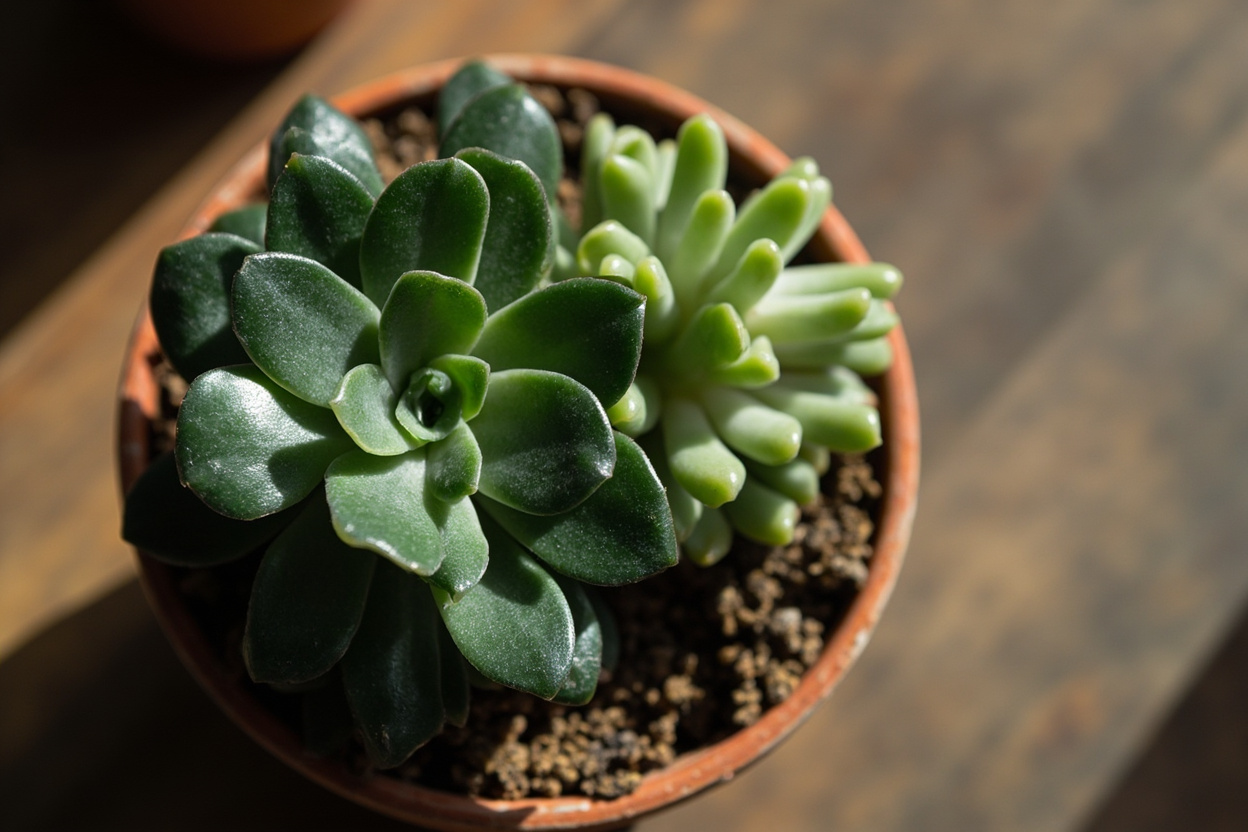
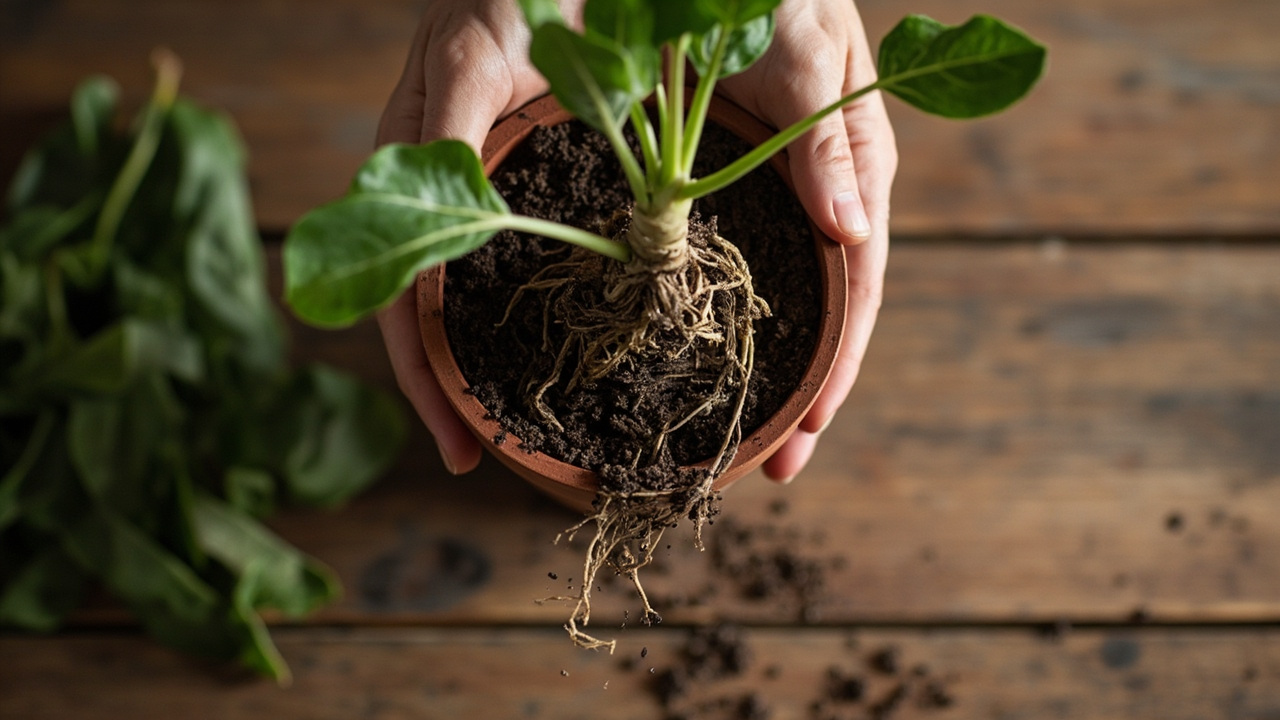
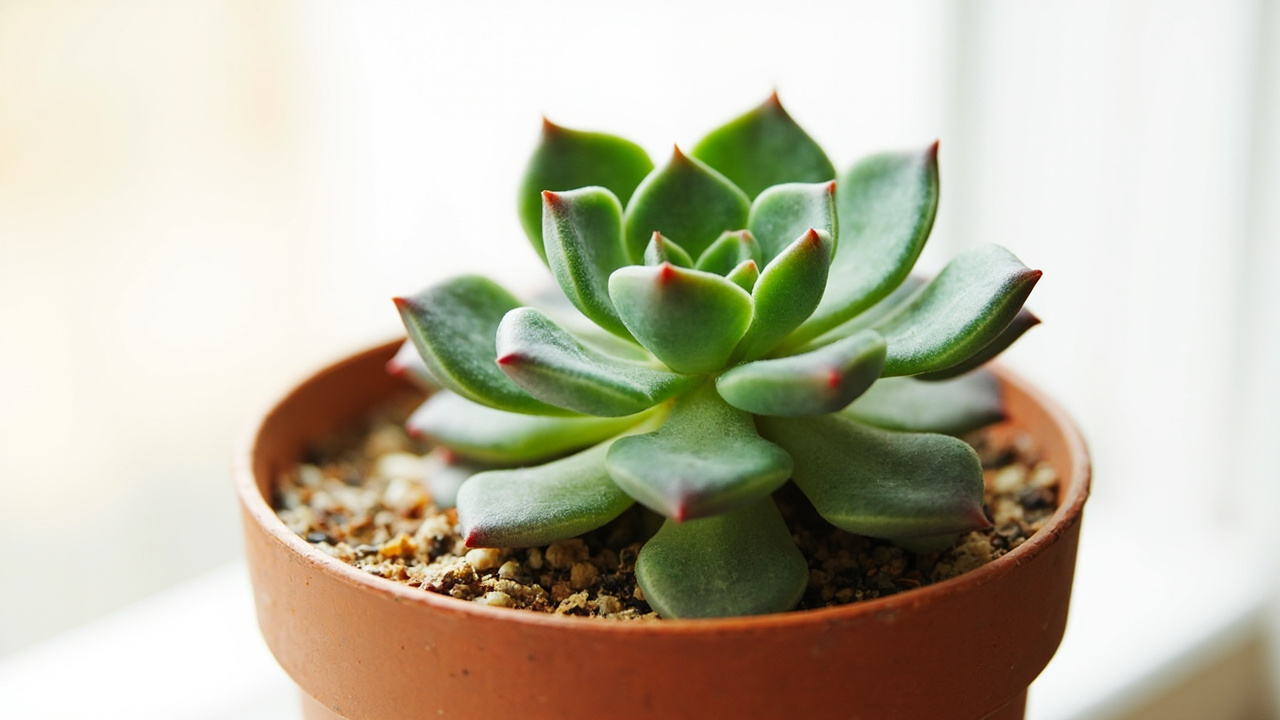
Most succulents need a minimum of 4–6 hours of bright indirect light or 2–4 hours of direct sun every day. Below that threshold, they begin to etiolate — stretching toward the light source with elongated stems, wider leaf spacing, and faded color. Etiolation is permanent on existing tissue. You cannot reverse it. The stretched stem will never compact again, which is why getting light right from the start matters more than any other care variable.
Light is the primary energy source for all plants, but for succulents it also controls their physical form. Adequate light keeps rosettes tight, stems short, and colors vivid — the reds, purples, and pinks that stress pigments produce in response to high light. Insufficient light produces the opposite: pale, leggy growth that topples under its own weight. For succulents using CAM photosynthesis, light drives the daytime carbon fixation that fuels everything else. Without enough of it, the plant survives on stored water and energy but never grows robustly.
This guide covers the exact light levels common succulents need, which window direction works for which species, how to recognize and prevent both etiolation and sunburn, and how to set up grow lights when natural light is not enough.
The Light Threshold: How Much Is Enough
There is a difference between the light a succulent survives in and the light it thrives in. Most common succulents — echeveria, jade, sedum, graptoveria — survive in 3 hours of bright indirect light but need 4–6 hours to maintain compact growth and full color. Haworthia, gasteria, and sansevieria tolerate lower light (2–3 hours of bright indirect) because they evolved under scrub and tree cover in habitat. Cacti and most thick-leaved succulents from open deserts need the full 4–6 hours of direct sun or the equivalent in grow light intensity.
The consequence of chronic low light is not just etiolation. Low-light succulents also use water more slowly, which means the soil stays wet longer after each watering. This creates a compounding problem: insufficient light leads to overwatering (because the owner waters on schedule while the soil is still wet), which leads to root rot. The fix is always to address light first, then adjust watering to match. A succulent in adequate light with a proper succulent care guide framework is far more resilient than one in low light with perfect watering.
Window Guide: North, East, West, South
Window direction determines both light intensity and duration. This guide assumes Northern Hemisphere orientation; reverse south and north if you are in the Southern Hemisphere.
South-Facing
The brightest and most consistent light. Suitable for all succulents, including cacti and full-sun species. Place plants within 30–60 cm of the glass for maximum intensity. In summer, midday sun through south glass can reach 32,000+ lux — enough to sunburn succulents that were previously in lower light. Acclimate gradually (see H2 #4). The trade-off: south-facing windows can overheat in summer, and the intense light accelerates soil drying, meaning more frequent watering.
West-Facing
Strong afternoon sun, typically 2–4 hours of direct light. Good for most succulents except the most shade-tolerant. Afternoon sun is more intense than morning sun at the same angle, so west-facing windows deliver more total light energy than east-facing ones. Position plants 30–90 cm back from the glass. Works well for jade, echeveria, and most rosette types.
East-Facing
Gentle morning sun, 2–3 hours of direct light before the sun moves overhead. This is the best position for haworthia, gasteria, and other understory succulents that burn in harsh afternoon sun. Also works for echeveria in hot climates where afternoon sun through west glass is too intense. East-facing windows are the lowest-risk option for beginners — it is harder to sunburn a plant in morning light.
North-Facing
The weakest option. In the Northern Hemisphere, north-facing windows receive no direct sun — only ambient reflected light. This is enough for sansevieria and zz plants but not for most succulents. Echeveria and jade will etiolate within weeks in a north-facing window. If this is your only option, use a grow light (see H2 #5). The honest trade-off: no amount of care compensates for fundamentally insufficient light. A grow light is not optional in this situation.
Seasonal shifts matter. A south-facing window that provides perfect light in summer may deliver 50 % less intensity in winter due to the lower sun angle. Move plants closer to the glass in winter and watch for the first signs of etiolation as your signal to supplement. The watering guide covers how to adjust watering as light levels change through the year.
Etiolation: The Stretching You Cannot Reverse
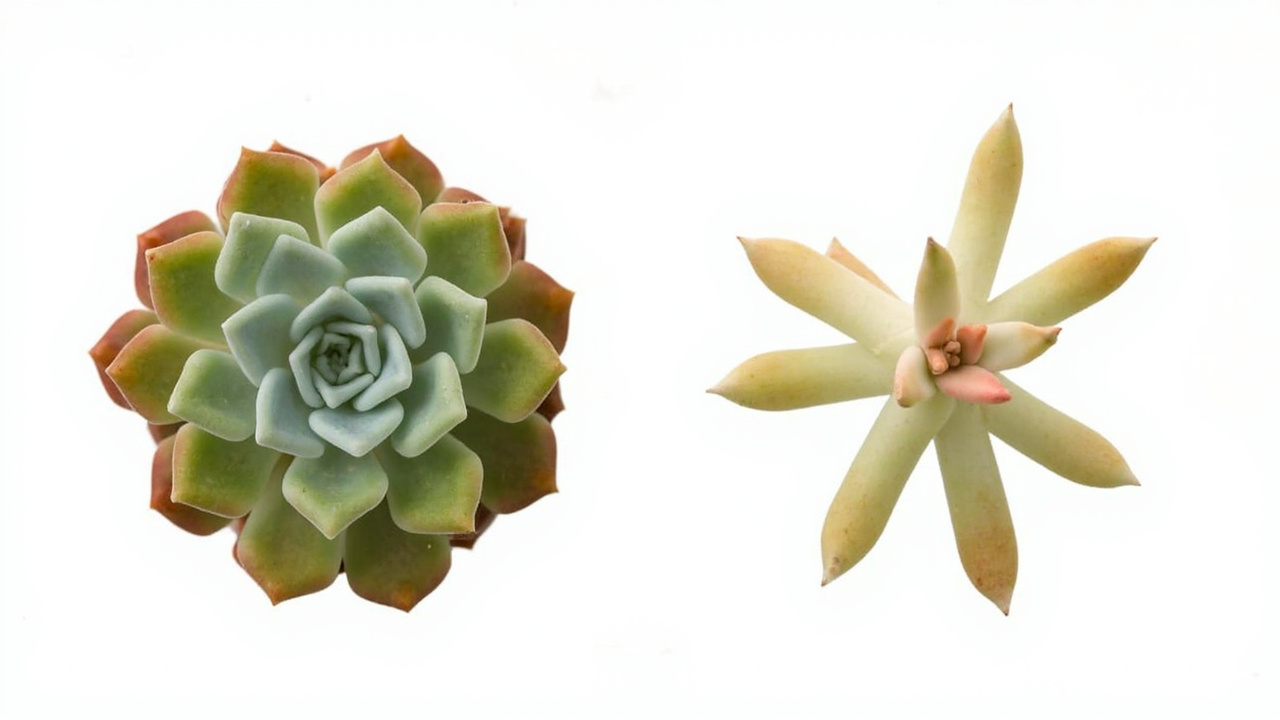
Etiolation is a photomorphogenic response. When a succulent detects low light, it produces more auxin, a growth hormone that elongates cells on the shaded side of the stem. The result is rapid upward growth with widely spaced leaves, a thinner stem, and a paler overall color. The plant is trying to grow tall enough to reach better light. In habitat, this might work. Indoors, it just produces a weak, top-heavy plant that cannot support itself.
The mechanism is triggered by the ratio of red to far-red light. In shade, far-red light dominates, and the plant interprets this as “I am being shaded by other plants — grow taller.” In direct or bright indirect light, red light dominates and the plant interprets this as “I have enough light — grow compact.” This is why moving an etiolated plant to a brighter window does not fix the existing stretch. The elongated stem stays elongated. New growth from the crown will be compact, but the bare stem below it remains.
The failure mode is gradual. Etiolation happens over weeks, and because the plant still looks alive and is visibly growing, many owners do not notice until the lean is obvious. Compare your plant to reference photos of the same species grown in adequate light at least monthly. If the center of the rosette is tightening and new leaves are the same size as older ones, light is sufficient. If new leaves are smaller and more widely spaced, increase light immediately.
The only corrective action for a severely etiolated succulent is beheading: cut the rosette from the stretched stem, let the wound dry for 2–3 days, and place it on dry gritty soil to reroot. The remaining stem will often produce offsets. For the soil side of recovery, a well-draining soil requirements mix helps the rerooted cutting establish faster.
Sunburn and Light Acclimation
Too much light too fast causes sunburn. The symptoms are white, tan, or brown patches on the upper surfaces of leaves that face the light source. Unlike etiolation, sunburn does not affect the whole plant — it appears on the most exposed leaves first. The damaged tissue does not heal, but the plant recovers if the underlying cells are still alive and new growth is normal.
The mechanism is photobleaching and thermal damage. Chlorophyll breaks down faster than the plant can replace it when light intensity exceeds what the leaf cells are adapted to handle. In severe cases, the leaf tissue dies entirely and dries to a papery scar. Succulents that have been grown indoors or in a nursery under shade cloth are most vulnerable because their leaf cells have adapted to lower light levels.
The acclimation protocol: move a plant to brighter light in stages over 7–14 days. Start with 1–2 hours of direct sun (or the equivalent distance from a grow light) and increase by 30 minutes every 2–3 days. Watch for bleaching or white patches on the most exposed leaves. If you see the first signs of burn, hold at the current level for another week before increasing. The plant will produce new sun-adapted leaves that tolerate higher intensity. This is the same process nurseries use when hardening off plants, and it works for indoor succulents just as reliably. For diagnosing sunburn versus other common problems, the problems guide covers the visual differences.
Grow Lights: The Indoor Supplement
When You Need a Grow Light
If your only window is north-facing, if you have fewer than 4 hours of natural light in winter, or if you are growing light-hungry species like cacti and most echeveria, a grow light is not optional. It is the difference between a plant that survives and one that thrives. Grow lights are also useful for maintaining a collection through dark winters in northern latitudes where daylight drops below 8 hours.
Setup Guide
Full-spectrum LED grow lights are the standard for indoor succulent growing. They produce the red and blue wavelengths plants use most efficiently, generate minimal heat, and last 30,000–50,000 hours. For most home setups, a 15–30 watt LED panel or bulb is sufficient for 3–6 plants.
Position the light 15–30 cm above the plant canopy. Closer than 15 cm risks heat damage even with LEDs; farther than 30 cm drops intensity below the useful threshold for most succulents. A full-spectrum LED at 20 cm distance typically delivers 10,000–15,000 lux, which is adequate for most succulents. Cacti and full-sun species benefit from 25,000+ lux, which requires either a higher-wattage light or closer positioning.
Use a timer. Manual on-off cycles are unreliable and lead to inconsistent growth. The honest trade-off with grow lights: they work, but they are not a perfect substitute for sunlight. Colors may be slightly less vivid, and growth will be slower than a south-facing window in summer. They are, however, vastly better than a dark corner.
Photoperiod
Most succulents do well with 10–12 hours of grow light per day. This mimics the photoperiod of their active growing season and gives the plant enough dark time for the CAM nighttime CO₂ uptake cycle. Do not run grow lights 24 hours a day — succulents need a dark period for respiration and metabolic recovery. Set a timer for 12 hours on, 12 hours off, or 14/10 in summer and 10/14 in winter to approximate natural seasonal variation.
For a practical reference on how light interacts with other care variables, the jade plant light requirements guide covers the same principles applied to Crassula ovata, one of the most light-tolerant indoor succulents.
From Bank Statement to QuickBooks-Ready File
That manual cleanup you just read about? This tool skips it. Turn your PDF into QBO for QuickBooks without storing your data anywhere.
Start Converting