Feed tomatoes at planting with a balanced fertilizer, then switch to a phosphorus-rich feed when flowers appear. That is the core schedule. Too much nitrogen gives you a massive, dark green plant with almost no fruit. Too little and the plant stalls. The right feed at the right time is the difference between a productive plant and a leafy disappointment.
Over-fertilizing is more common than under-fertilizing, and the symptom is always the same: lush foliage, few flowers, and little fruit. The plant is getting plenty of nitrogen but not enough phosphorus to support fruiting. Once you understand the NPK ratio and the timing, the schedule is straightforward.
The NPK Basics for Tomatoes
Every fertilizer label shows three numbers — for example 10-10-10 or 5-10-5. These represent the percentage of nitrogen (N), phosphorus (P), and potassium (K) by weight. Nitrogen drives leaf and stem growth. Phosphorus supports root development, flowering, and fruiting. Potassium strengthens cell walls and improves disease resistance.
Tomatoes need all three, but the ratio changes through the season. At planting, a balanced fertilizer (equal N-P-K) supports overall establishment. Once flowers appear, the plant needs more phosphorus relative to nitrogen to set and develop fruit. The NPK ratio guide explains how to read labels and choose the right product for each stage.
Feeding at Planting Time
Mix a balanced slow-release fertilizer into the soil at planting time. For organic growers, a handful of bone meal (high in phosphorus) and kelp meal (trace minerals) worked into the planting hole gives the seedling a strong start. For synthetic fertilizers, a teaspoon of 10-10-10 per plant, mixed into the bottom of the planting hole and covered with a layer of soil before setting the transplant, prevents root burn.
Do not overdo it at planting. The seedling is small and does not need much. Excess fertilizer in the planting hole burns young roots and sets the plant back. A light feeding now, followed by regular feeding once the plant is established, produces better results than a heavy dose upfront.
The soil requirements guide covers the compost and organic matter that form the nutritional foundation fertilizer builds on.
Switching to Bloom Feed When Flowers Appear
The most important fertilizing decision is the switch from nitrogen-rich to phosphorus-rich feed when the first flower clusters appear. Before flowering, the plant is building structure — stems, leaves, and roots. Nitrogen supports this vegetative growth. But once flowers open, the plant’s priority shifts to fruit production, and phosphorus becomes the limiting nutrient.
Switch to a fertilizer with a higher middle number — something like 5-10-5 or 3-8-6. Apply every two to three weeks during the fruiting season. Organic options include bone meal, fish emulsion, or a tomato-specific organic fertilizer. Synthetic options include any bloom-boosting formula.
The risk of too much nitrogen at this stage is real. If you continue feeding a high-nitrogen fertilizer after flowering, the plant keeps producing leaves and stems at the expense of fruit. You get a tall, bushy plant with few tomatoes. If your plant looks spectacular but is not setting fruit, cut back on nitrogen immediately.
When to Stop Fertilizing
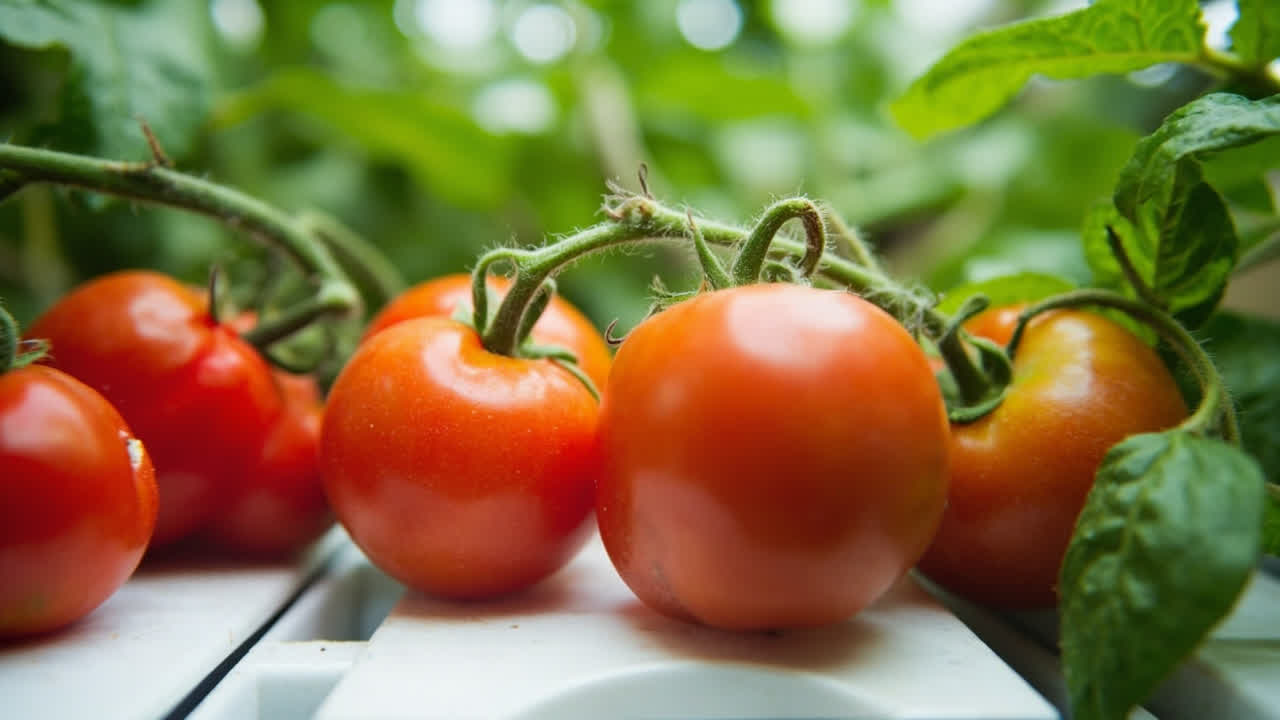
Stop fertilizing 6 weeks before your expected first frost. Late-season feeding pushes the plant to produce new growth and flowers that will not have time to ripen before cold weather kills the plant. You want the plant to focus its energy on ripening the fruit it already has, not on new growth.
In practice, this means the last feeding is typically in mid-to-late summer in most climates. After that, let the plant finish what it started. If you are growing indeterminate varieties in a greenhouse or warm climate, you can continue feeding as long as the plant is actively producing.
Signs of over-fertilizing include dark green, almost black foliage, leaf curl, and white salt crust on the soil surface. If you see these signs, flush the soil with clean water and skip the next two feedings. The blossom end rot guide covers the most common nutrient-related fruit problem.