Palm brown tips usually mean the leaflets are losing water faster than the roots can replace it, or the roots are stressed by uneven watering, salt buildup, or rot. A few dry brown tips on an otherwise green indoor palm are common; brown tips plus yellowing, soft bases, or collapsing fronds point to a deeper root-zone problem.
The useful question is not just “Why are the tips brown?” It is where the browning appears, how fast it is spreading, and what the potting mix feels like. Tip-only browning usually starts with dry air, underwatering, or mineral salts. Whole fronds turning yellow or brown usually means the roots are not functioning properly.
This guide keeps the job diagnostic. It helps you separate cosmetic tip burn from a palm that needs a rescue protocol, so you can adjust the right condition instead of cutting every brown tip and repeating the same mistake.
Brown Tips Are A Pattern, Not A Single Diagnosis
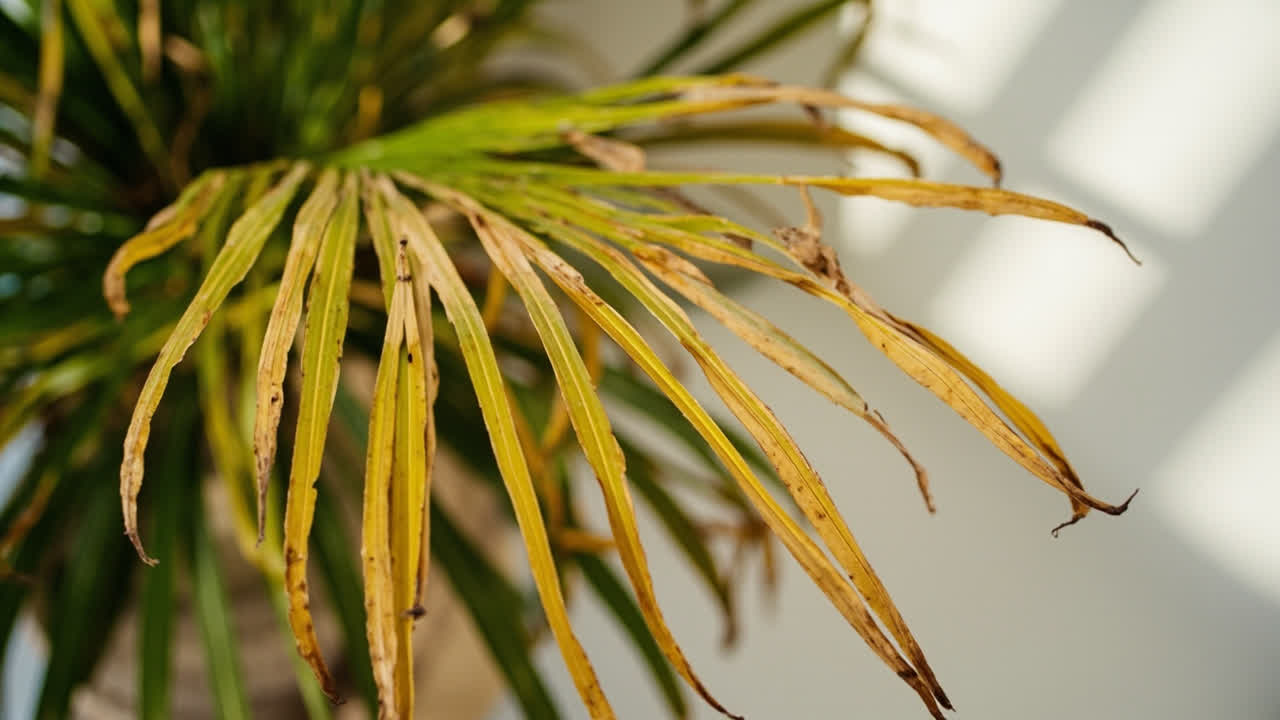
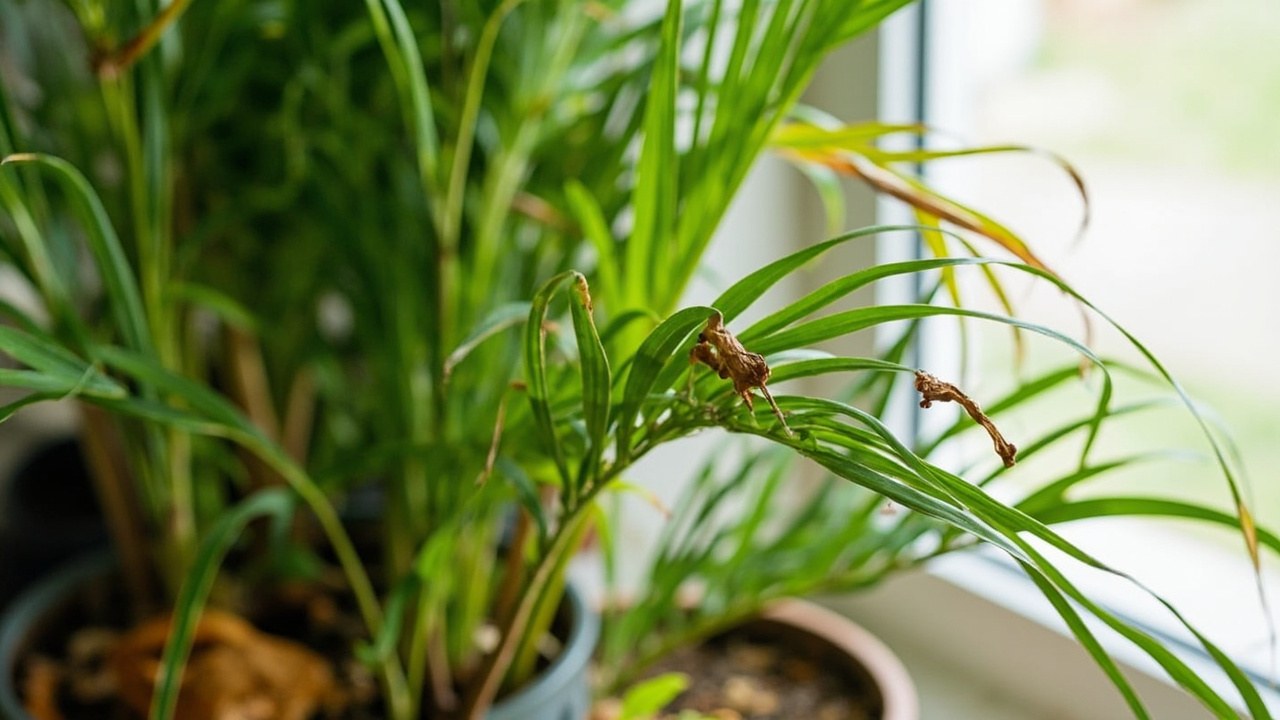
Brown tips are dead tissue at the end of palm leaflets. They appear there first because the tip is the farthest point from the root system and the first place to show a water-delivery problem. Once that tissue turns brown, it will not turn green again.
The pattern matters. A palm with green fronds and small crispy tips is usually dealing with dry air, inconsistent watering, or salt buildup. A palm with brown tips, yellow lower fronds, soft stems, or a sour smell from the potting mix is dealing with root stress and needs a more serious check.
The palm plant care guide covers the full growing setup. Here, the focus is narrower: reading the brown-tip pattern before it becomes a dying-palm situation.
The 4-Cause Brown-Tip Diagnostic
Start by matching the visible pattern to the most likely cause. One symptom alone is not enough; the right diagnosis is the one that matches the leaf tips, the potting mix, and the speed of decline.
| Pattern | Most likely cause | What confirms it |
|---|---|---|
| Fine crispy tips on many otherwise green leaflets | Dry air | Plant sits near heat, AC, or a very dry window area. |
| Brown tips with drooping fronds and a very light pot | Underwatering | Mix is dry 2 inches down and pulling from the pot edge. |
| Brown tips plus white crust on soil or pot rim | Salt buildup | Hard water or frequent fertilizer has left deposits. |
| Brown tips plus yellow fronds, soft bases, or sour smell | Root rot | Pot stays wet and heavy for more than a week. |
If two causes seem possible, check the root ball before changing everything at once. Palms respond slowly, and changing light, water, fertilizer, and humidity in the same week makes it harder to know what worked.
Dry Air Brown Tips
Dry air causes the neatest brown-tip pattern: the ends of many leaflets turn tan or brown while the rest of the frond stays green. This is common in heated winter rooms, beside air-conditioning vents, and near bright windows where the leaf surface dries faster than the roots can keep up.
Most indoor palms prefer humidity above about 40 percent, and many look better closer to 50 percent. That does not mean the plant needs a greenhouse. It means the worst placement is directly beside a heater, dehumidifier, or drafty vent where the air constantly strips moisture from the leaflet edges.
The fix is placement first: move the palm away from forced air, group it with other plants, and use a pebble tray or room humidifier if the room stays dry for weeks. Misting gives a brief cosmetic lift, but it does not change the room humidity long enough to prevent new brown tips.
Water-Stress Brown Tips
Water stress can mean too little water or too much water, which is why brown tips are often misread. Underwatered palms have a light pot, dry mix, crispy tips, and fronds that fold or droop. Overwatered palms have a heavy pot, damp mix, yellowing lower fronds, and sometimes a stale or sour smell from the pot.
The root mechanism is different in each case. In underwatering, the root ball dries so far that the plant cannot move enough water to the leaf tips. In overwatering, roots lose oxygen and begin to rot, so the plant cannot move water even though the pot is wet. The leaves can look thirsty in both cases, but adding water only helps one of them.
- If the pot is light and dry: water thoroughly until a little drains, then check again in two days.
- If the pot is heavy and wet: stop watering, increase light and airflow, and inspect the root zone if yellowing spreads.
- If the surface is dry but the pot is heavy: wait. The lower root ball is still wet.
The honest trade-off is that palms recover slowly. Correct watering can stop new damage within a few weeks, but the existing brown tips remain visible.
Salt Buildup And Water Quality Brown Tips
Salt buildup creates brown tips on otherwise firm, green growth. The clues are a white crust on the soil surface, a pale rim around the pot, darkened root tips, or a history of frequent fertilizer. Hard tap water can add to the same problem, especially in small pots that are watered often but rarely flushed.
Flush the potting mix with room-temperature water every 6 to 8 weeks during active growth. Use roughly two pot volumes of water, pour slowly through the mix, and let the pot drain fully afterward. This washes out some dissolved salts instead of letting them concentrate around the roots.
Do not fertilize a palm that already has fresh brown tips and dry potting mix. Fertilizer applied to a dry root ball can burn fine root tips and make the problem worse. Water first, let the plant stabilize, then resume feeding lightly.
When Brown Tips Mean Root Trouble
Brown tips become urgent when they appear with yellowing fronds, soft stems, a sour smell, fungus gnats, or a pot that stays wet for more than seven days. That combination means the root system may be losing function, not just reacting to dry air.
The escalation pattern is usually fast: one or two brown tips become yellow lower fronds, then several fronds collapse or turn dull gray-green. If the mix smells stale or the bases feel soft, stop routine care adjustments and inspect the roots. Healthy roots are firm and pale or tan; rotted roots are dark, soft, and stringy.
When the plant has that root-trouble pattern, use the save a dying palm protocol instead of only trimming tips. Tip trimming is cosmetic; root recovery is what decides whether the plant keeps producing new fronds.
What Will And Will Not Turn Green Again
Brown palm tips will not turn green again. You can trim the dead ends with clean scissors, following the natural leaflet shape and leaving a thin brown edge so you do not cut into living tissue. The important signal is not the old tip; it is whether new fronds emerge clean.
After a correction, expect two to four weeks before the decline slows and six to ten weeks before new growth gives a fair verdict. A working fix produces firm new fronds, fewer fresh brown tips, and a pot that dries at a predictable pace. If new fronds are still browning or lower fronds keep yellowing, the original diagnosis was incomplete.
The practical expectation is steady improvement, not reversal. Old damage stays visible, but new growth should look cleaner when the cause has been corrected.
From PDF to Excel in one click
Forget retyping line by line. Upload any bank statement, get a spreadsheet you can actually use. Your files are never stored, and you can test the converter with 3 free conversions.
Try it free