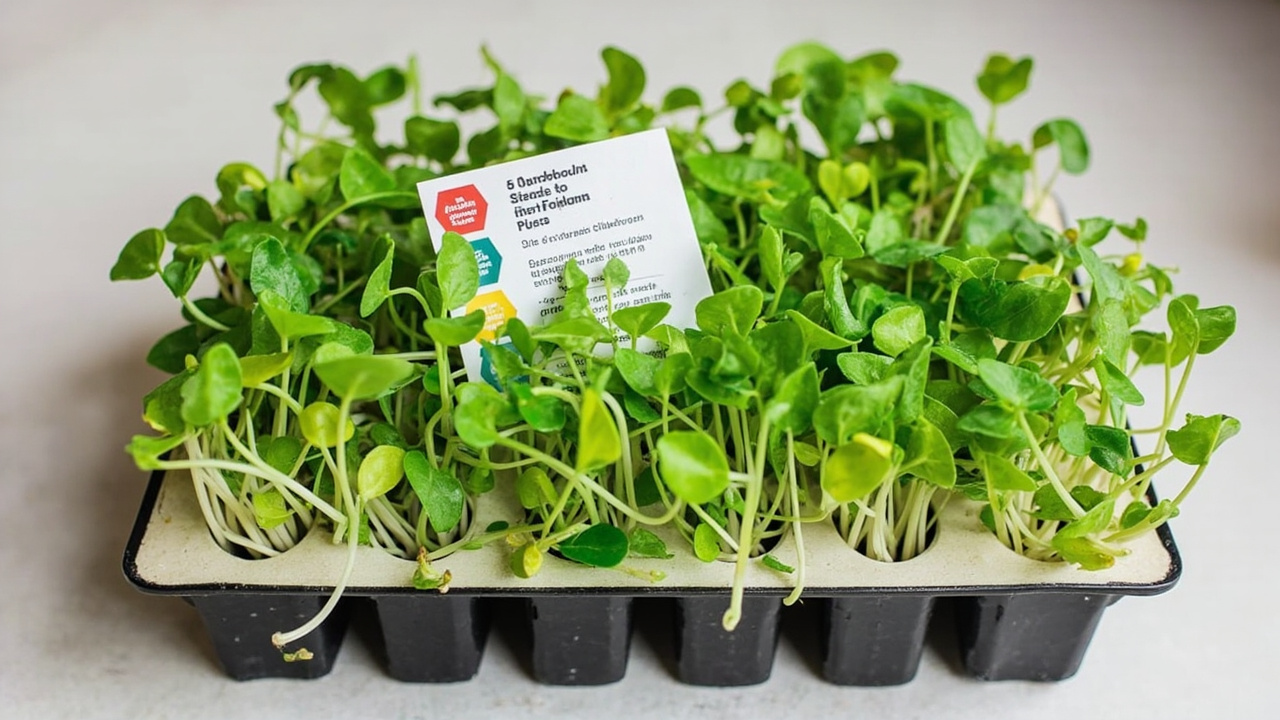
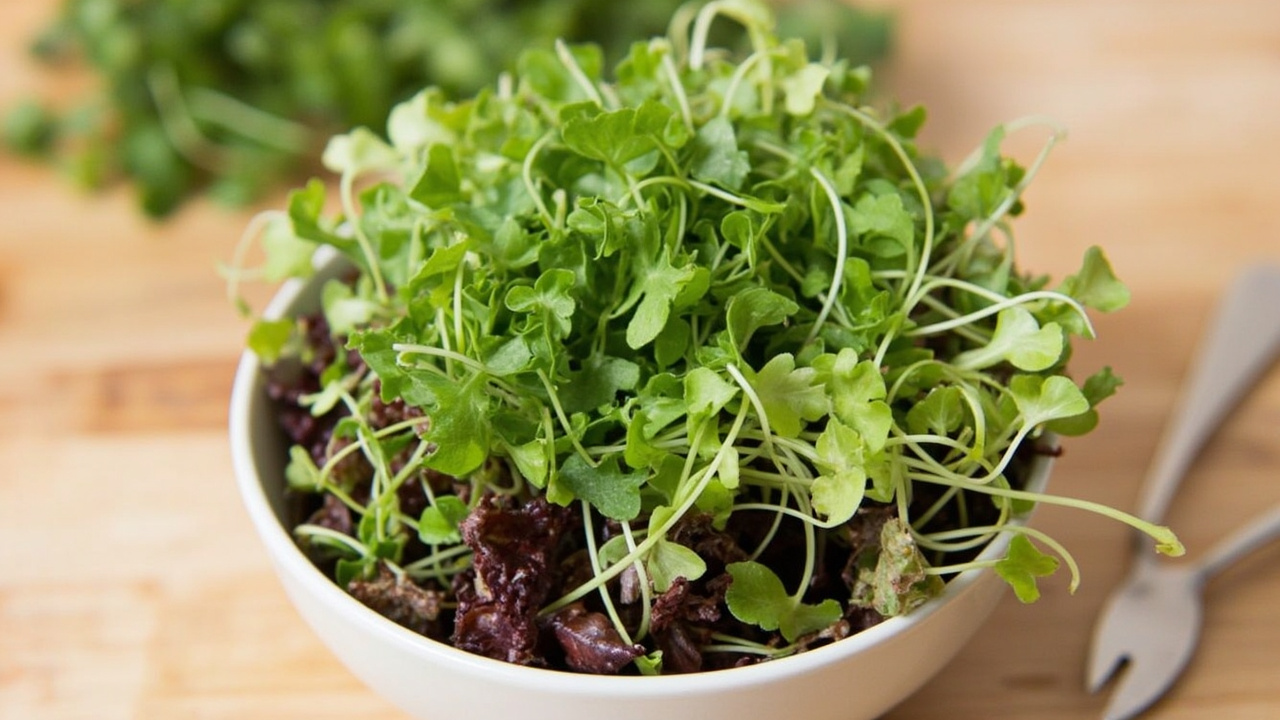
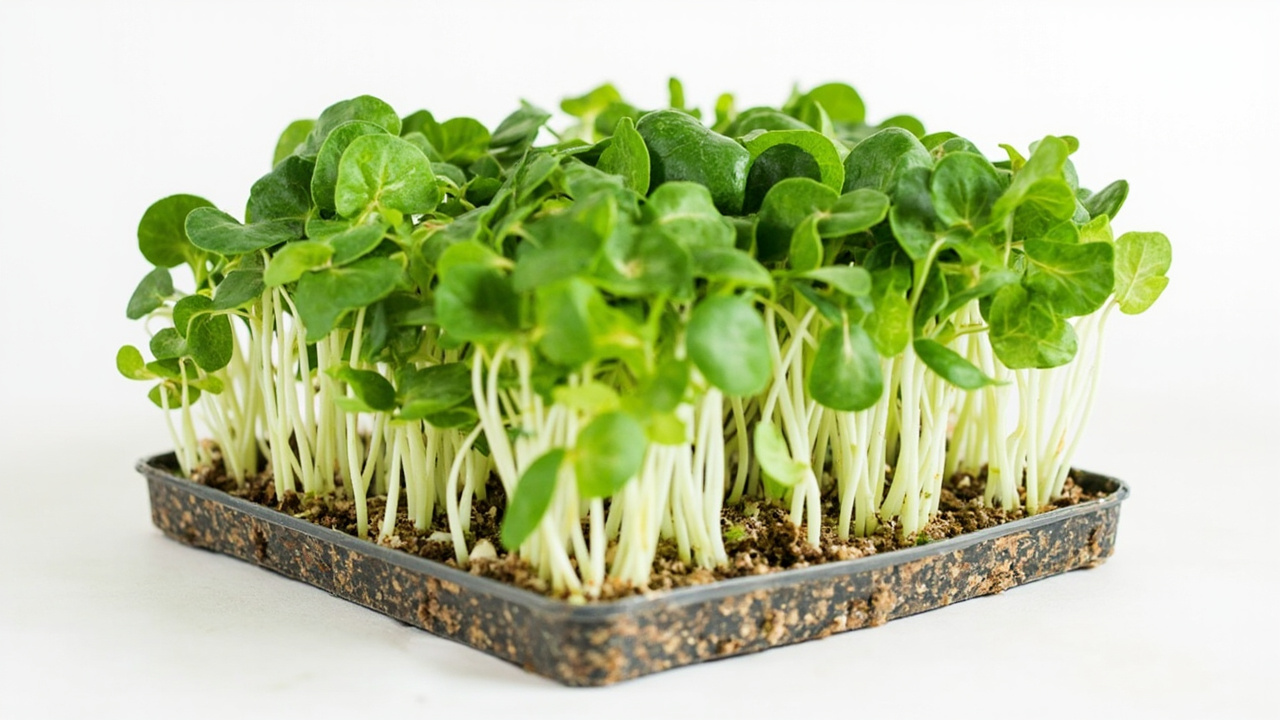
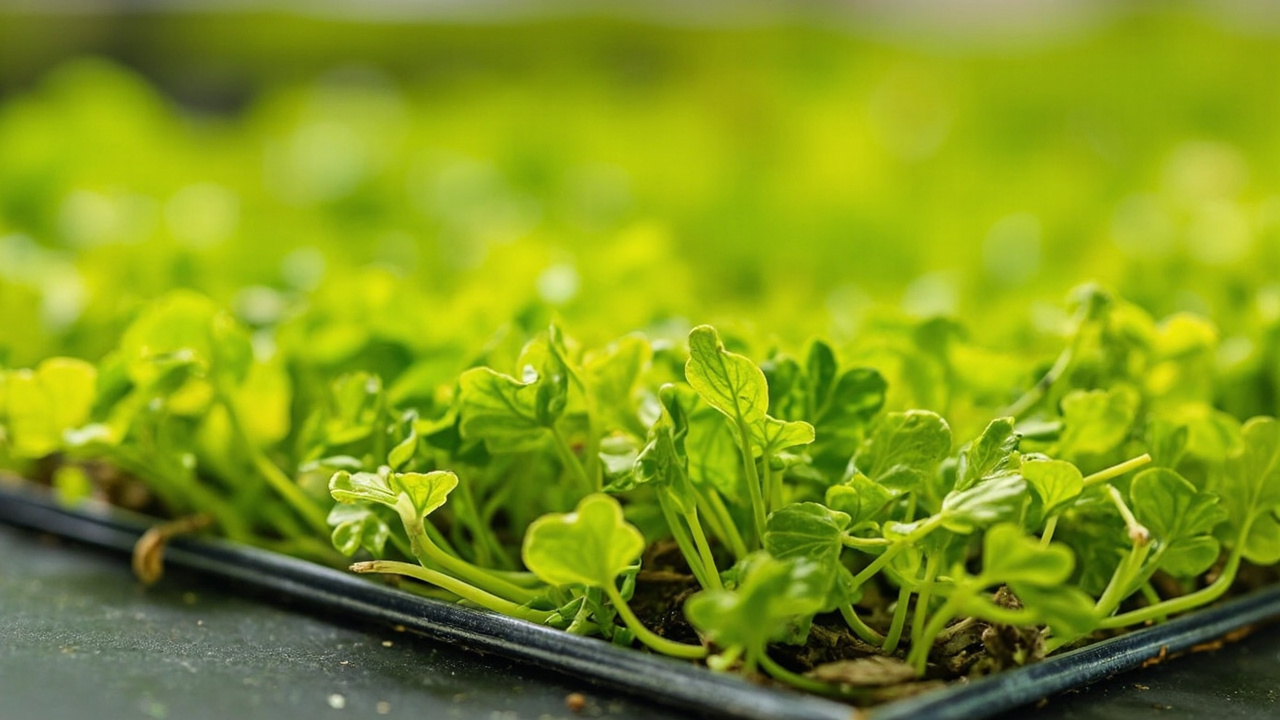
Yellow microgreens can be normal if they have just come out of blackout. Seedlings grown in darkness are often pale yellow until light triggers greening. If they stay yellow after a day or two in bright light, the tray is telling you something about light, water, seed vigor, or harvest timing.
The useful question is not simply “Why are they yellow?” It is “When did they turn yellow?” A tray that is yellow right after uncovering is different from a tray that yellows after a week under light.
Yellow Right After Blackout Can Be Normal
This is the normal transition after the covered step in how to grow microgreens. During blackout, seedlings stretch upward using stored seed energy. They have not yet had enough light to develop strong green color.
Most healthy trays begin greening within 12 to 24 hours after moving into bright light. If stems are upright and the tray smells fresh, give it light before assuming failure.
Weak Light Keeps Microgreens Pale
Persistent pale growth should be checked against microgreens light requirements. Weak light causes seedlings to stretch, lean, and stay lighter than they should. A windowsill can be bright to your eyes but still too weak or one-sided for dense microgreens.
The mechanism is simple: after germination, seedlings need light to build chlorophyll and sturdy tissue. If light is too far away, too brief, or too uneven, the crop keeps spending energy on height instead of color and strength.
Water Stress Can Turn Trays Yellow
Moisture problems usually trace back to the rhythm in the microgreens watering guide. Underwatered trays dry at the root tips, causing stalled, pale, or crisp seedlings. Overwatered trays suffocate roots and may turn yellow with a stale smell.
The honest trade-off is that both extremes can look weak. Use tray weight, surface moisture, smell, and stem firmness together. If the surface is glossy and the tray feels heavy, do not add more water. If the medium is pulling from the edges and stems are wilting, water from below.
Old Seed And Weak Germination
Weak seed from the start belongs in the same diagnostic branch as the microgreens seeds guide. Old or poorly stored seed may germinate unevenly, grow slowly, and produce pale seedlings that never catch up.
If the tray is patchy and yellow from the beginning, compare it with a fresh seed lot before blaming the medium or light. Seed vigor is invisible until the tray starts.
Yellowing Near Harvest
Older trays should be compared with the cues in when to harvest microgreens. If a dense canopy has been held too long, lower leaves and stems may yellow where light and airflow cannot reach.
At that stage, waiting for more size can reduce quality. If the greens still smell fresh and feel crisp, harvest promptly. If they are slimy, sour, or collapsing, discard the tray.
What To Change On The Next Tray
- Uncover 12 to 24 hours earlier if stems were long and pale.
- Move the light closer or run it 12 to 16 hours per day.
- Bottom-water, then drain excess after 10 to 20 minutes.
- Use fresher seed if germination was weak or patchy.
- Harvest sooner if yellowing appeared in an older crowded tray.
If the tray also stalled, use microgreens not growing to diagnose the earlier failure point. Yellowing is not one problem; it is a timing clue.
Turn That PDF Into a Spreadsheet in Minutes
You've seen how to do it manually — now let the tool handle the heavy lifting. Upload your bank statement and get Excel, CSV, or QBO in a few clicks.
Try It Free