An aeroponic system in an apartment works when the misting cycle, root chamber humidity, and reservoir temperature stay inside the narrow band that fine root hairs need. Most apartment growers fail the setup not because the equipment is wrong, but because the room itself fights the mist: dry winter air drops root-zone humidity below 70 percent within minutes, and the mist collapses into droplets that drown the roots instead of feeding them. Pick a system sized to a closet or corner, place the misters where condensate can drain back into the reservoir, and run the cycle on a timer that respects the room’s climate before you transplant a single cutting.
This guide covers the apartment-specific variables: room humidity, noise tolerance, reservoir temperature, drainage path, and landlord-safe leakage control that change how a tower or tote system has to be set up compared with a greenhouse or garage install. It assumes you already know what aeroponics is at the system level and you want the apartment-specific adaption. For the system basics, see the aeroponics for beginners pillar; for the tower build itself, see the aeroponic tower DIY how-to.
Why apartment air is hostile to aeroponic mist
Indoor relative humidity in a heated apartment typically sits between 20 and 35 percent during winter and 40 to 55 percent in summer. Aeroponic roots need 95 to 100 percent humidity inside the root chamber at all times, and the chamber can only hold that humidity if the surrounding room does not pull moisture out of it faster than the mist replenishes it. A 1.5-meter tower with a 30-second mist every 5 minutes loses most of its chamber humidity to room air through every collar slot, lid seam, and reservoir vent.
The fix is not a bigger pump. It is a chamber that breathes less. Closed totes, sealed columns, and tents around the root zone all buffer the chamber from apartment air long enough for the mist cycle to keep up. Apartment growers who skip this and run a bare tower against a living-room wall see roots brown at the tips within two weeks.
For comparison with a water-based system that handles low ambient humidity more forgivingly, see the aeroponics vs hydroponics page.
The three apartment-air problems
- Low ambient humidity pulls chamber humidity out through every seam
- Room temperature swings (heat off at night, sun through a south window in the afternoon) change the air-holding capacity of the chamber mid-cycle
- Dust and pet hair migrate into open collars and clog 50-micron mist nozzles within weeks
Pick a system that fits the room, not the catalog
Apartment aeroponics works at three sizes, and each size sets different constraints. Match the system to the room before you match the room to the system.
Countertop unit: 4 to 8 plant sites
Countertop units like the AeroGarden Harvest or a small DIY tote with a single diaphragm pump fit on a kitchen counter under cabinet lighting. They hold 1 to 4 liters of reservoir, run on a 12V adapter, and noise is below 40 dB at one meter. The trade-off is small reservoir volume: nutrient concentration and pH shift fast, so plan a weekly full reservoir change rather than a top-off. Reservoir management at this size follows the same nutrient-recipe logic as the hydroponic nutrient schedule; the smaller volume simply means the schedule tightens to weekly.
Closet tower or vertical column: 12 to 28 plant sites
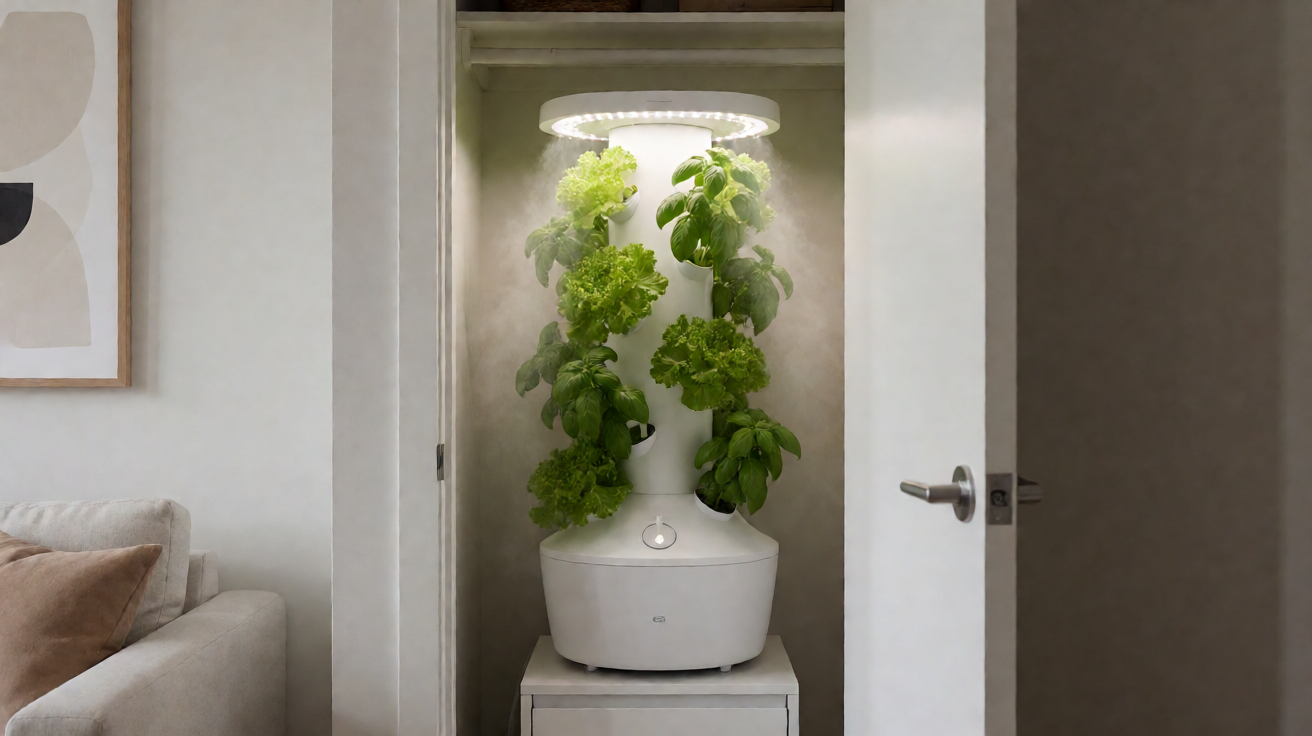
A 1.2 to 1.5 meter PVC or food-grade tower in a closet with a door that closes is the apartment sweet spot. The closet becomes the chamber buffer; the rest of the apartment stays clear. You need a floor drain pan, a GFCI outlet, and a quiet diaphragm pump rated for intermittent duty. This is the size most successful apartment aeroponic growers run.
Multi-tower or room-dedicated install: 30+ sites
Beyond thirty plant sites you are running a small farm, not an apartment garden. Power draw crosses 100W, reservoir volume needs a trash-bin-sized container, and noise from the high-pressure pump makes the room unusable as living space. This guide assumes the closet or countertop scale, not the farm scale.
Set up the root chamber so humidity stays high
The root chamber is the sealed space below the collars where mist accumulates and roots grow. Three details decide whether it holds humidity: the lid seal, the collar material, and the drain path.
Lid seal and seam tape
A standard tote lid does not seal against a tote body once the plastic has warped under load. Run a bead of food-safe silicone around the rim after drilling collar holes, or wrap the seam with 50 mm PVC tape rated for greenhouse use. Unsealed lids in a 30 percent humidity apartment lose 60 percent of chamber humidity through the seam alone within 10 minutes of mister shutdown.
Collar material and slot width
Use 2-inch net pots or 2-inch neoprene collars. Both grip the stem tightly enough to block air movement around the stem. Open 3-inch holes without collars leak chamber air faster than the pump can replace it. For cloning, use 1.5-inch neoprene collars seated flush against the lid.
Drain path back to reservoir
The drain must return to the reservoir by gravity, not by pump, so a pump failure does not empty the chamber onto the floor. Cut the drain at the lowest point of the chamber, fit a bulkhead fitting, and run 12 mm hose to the reservoir inlet. A 5 mm stand-off between the chamber and the reservoir prevents siphoning back during a power outage.
Misting cycle for an apartment climate
Most preset cycles on consumer towers assume a 60 to 70 percent ambient humidity. You need shorter off-cycles in dry apartments and longer cycles in cool ones. Start at 30 seconds on / 5 minutes off and adjust by observed root behavior, not by the calendar.
Reading roots for the right cycle
Healthy aeroponic roots are white with visible root hairs that look like fine fur. Brown tips mean the cycle is too long between mists and roots are desiccating. Slimy, translucent roots mean the cycle is too short and roots are drowning. Aim for white roots with a faint cream tint at the tips, which signals the mist cycle is balanced to the room.
Adjusting for season
Winter (low indoor humidity): shorten the off-cycle to 3 to 4 minutes and add a 5-second burst pulse every 15 minutes. Summer (higher ambient humidity): extend the off-cycle to 7 to 10 minutes and cut the burst pulse. Do not run misters while lights are off unless the root zone is staying above 18 C, because cold wet roots open the door to pythium root rot.
Reservoir temperature control in a small room
Reservoir temperature is the silent killer of apartment aeroponics. The target is 18 to 22 C; outside that band, dissolved oxygen drops and pathogens bloom. In a closet the reservoir shares air with whatever the room is doing, which in winter means 14 to 16 C overnight and 26 C during a sunny afternoon.
Insulating the reservoir
Wrap the reservoir in 10 mm closed-cell foam or slide it into a neoprene reservoir sleeve. A wrapped reservoir holds its temperature within 2 C of setpoint through a 6-hour overnight window. Unwrapped, it follows room air and swings 10 to 12 C per day.
Chilling and heating
If reservoir temperature climbs above 24 C during summer, swap the reservoir once a day for a pre-chilled spare or add a small submersible chiller rated for aquariums. If it falls below 16 C in winter, add a 25W aquarium heater set to 20 C. Both are cheaper than replacing a crop lost to pythium, which is the most common apartment aeroponic failure mode documented in grower forums. The maintenance routine on top of this is identical to the broader aeroponic maintenance schedule: weekly full change, pH check, and nozzle inspection.
Noise, light, and the landlord conversation
A diaphragm pump on a counter runs at 35 to 45 dB at one meter, comparable to a refrigerator hum. A high-pressure pump runs at 60 to 70 dB, comparable to a dishwasher, which is fine in a closet but not in an open living space. Plan the pump location around the room you sleep in first, then around the room you cook in second.
Light leakage after dark
Any indicator LEDs on pumps or timers show through apartment walls more than you expect. Cover them with black tape, or pick a system with no front-panel lights at all. A blue LED at 2 a.m. is the fastest way to get a same-day conversation with a landlord you have not prepped.
The floor drain pan
A 5 cm deep plastic drain pan under the entire system catches a pump-failure flood and buys you 24 to 48 hours of response time before water reaches the floor. The pan is also the single thing that makes an apartment install defensible if a leak damages a downstairs neighbor’s ceiling.
Crop choices that survive the apartment climate
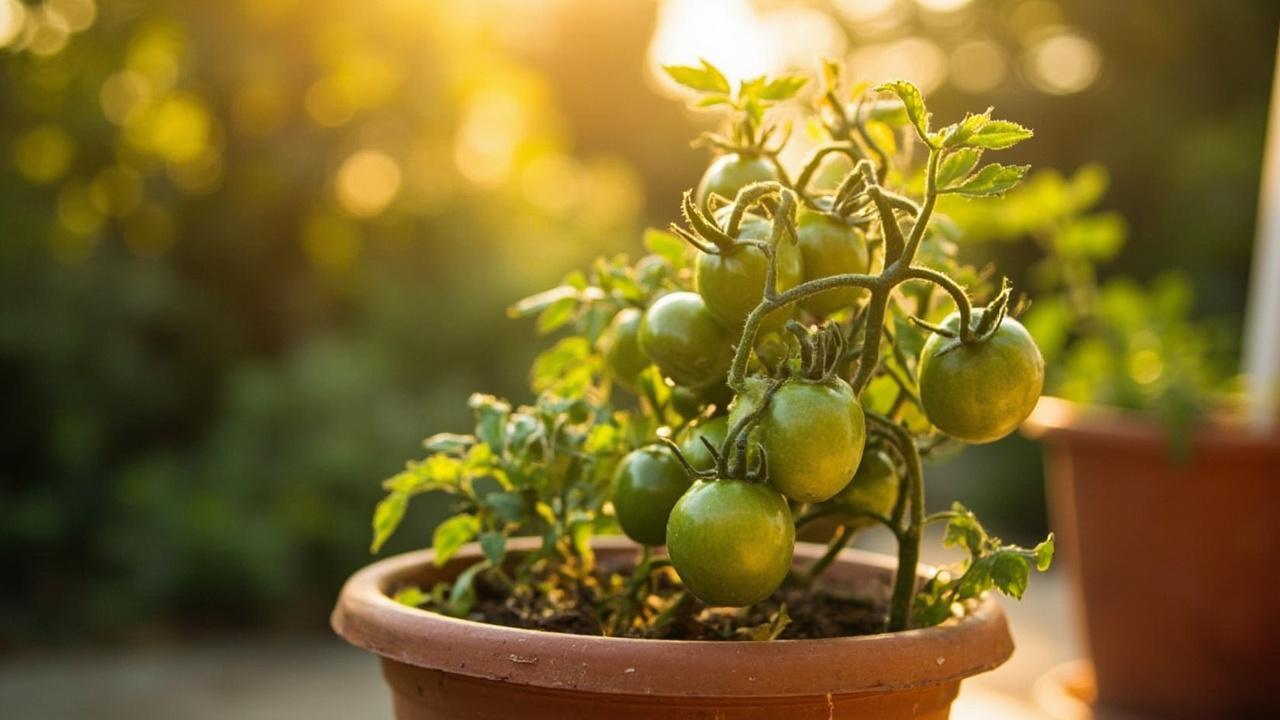
Lettuce, basil, mint, and microgreens all do well in apartment aeroponics because they tolerate the narrower root-zone temperature band that comes with a small reservoir. Fruiting crops (tomato, pepper, cucumber) require more reservoir volume than most apartments can host without active chilling, and they push the system past the apartment scale.
Starting crops for first 90 days
Run lettuce, basil, and mint for the first 90 days as a humidity and cycle calibration exercise. The roots are visible through net pots, mistakes show up in 48 hours, and the failure cost is a pack of seeds. Once roots stay white across a full three-week cycle, the system is calibrated to the apartment and you can experiment with longer-cycle crops.
An apartment aeroponic system set up around its room: sealed chamber, calibrated mist cycle, insulated reservoir, quiet pump, drain pan: will run for years on the same hardware. The hardware itself is the cheap part. The room-fit is what makes it last.
Compared with NFT, DWC, or Kratky systems, an apartment aeroponic tower is more sensitive to misting nozzle clogging, but rewards you with faster root mass, cleaner roots, a sterile environment for cutting clones, and roughly 90 percent water savings over soil. Dutch bucket ebb and flow is the second-most apartment-friendly option but needs more reservoir volume for the same plant count. Use ultrasonic fogger misters only with a sterile reservoir and shorter misting duration; a high-pressure pump with misting nozzle misters is more forgiving on mist droplet size and misting frequency but pumps at 60 dB.
The terms below show up across the cluster: misting nozzle, mist droplet size, misting frequency, misting duration, misting cycle timer, root-zone temperature, 18 to 22 C root zone, dissolved oxygen, root rot prevention in aeroponics, cloning collar, neoprene collar, net pot, clone, cutting, transplant shock, root mass, root pruning, sterile environment, reservoir, tower garden, AeroGarden, vertical farming, water savings, NFT, DWC, Kratky, ultrasonic fogger, lettuce, basil, mint, microgreens, tomato, pepper, cucumber, strawberry, GFCI, drain pan, drainage, humidity, condensation, condensate, dielectric, indicator LED, pump noise, diaphragm pump, high-pressure pump, low-pressure, fogger, mist. Working through them on the room before buying hardware closes most install risks.
Pre-install checklist: apartment aeroponic fit audit
Walk this list before buying a tower, tote, or high-pressure pump. Each item maps to a cluster-owned aeroponic term so the install is calibrated to the room, not the catalog.
For an apartment grower, the right combination is a tower garden or AeroGarden sized to the closet, a low-pressure diaphragm pump with a misting cycle timer set to 30 seconds on per 5 minutes off, a 2-inch net pot with neoprene collar at each site, a sealed root chamber with neoprene cloning collars reserved for cutting propagation, an 18 to 22 C root zone maintained by an aquarium heater and a reservoir wrapped in closed-cell foam, weekly nozzle maintenance to prevent misting nozzle clogging, and a clean sterile environment around the ultrasonic fogger and misting nozzle cluster to keep the 50 micron droplet stable. Lettuce, basil, mint, and microgreens are the apartment crops; fruiting tomato, pepper, cucumber, and strawberry stay out of scope. Compared with NFT, DWC, Kratky, or Dutch bucket, the aeroponic system delivers faster vertical farming cycles and the lowest water savings ratio but needs the most root chamber attention.
Root chamber and neoprene collar fit
- Root chamber is sealed against a 20 to 35 percent apartment RH band; lid seam sealed with food-safe silicone or greenhouse PVC tape.
- Net pot slot is 2 inches with a neoprene collar around each stem to block airflow.
- Misting nozzle sits 8 to 12 inches above the root mass to keep mist droplet size in the 50 micron band; an ultrasonic fogger is a fine-droplet alternative but needs a sterile reservoir and shorter misting duration.
- Misting cycle timer is set to 30 seconds on / 5 minutes off for an unheated closet; adjust by observed root color (white with fine root hairs means balance, brown tips mean desiccation, slimy means drowning).
Reservoir and root-zone temperature band
- Reservoir wrapped in 10 mm closed-cell foam; root-zone temperature target 18 to 22 C to hold dissolved oxygen above 6 mg/L.
- 25W aquarium heater set to 20 C for winter; small submersible chiller or daily pre-chilled spare for summer above 24 C.
- Weekly full reservoir change to keep nutrient solution within the cluster’s recommended ppm and pH band; top-offs are not a substitute for a full change at apartment scale.
Pump, drainage, and tower / AeroGarden integration
- Low-pressure diaphragm pump for towers under 1.5 m (35 to 45 dB at one meter); high-pressure pump only for closet installs in a non-sleeping room.
- Gravity drain from the root chamber back to the reservoir, with a 5 mm stand-off to prevent siphon-back during power loss.
- 5 cm deep drain pan under the whole system as landlord-defensible leakage control.
- Tower Garden, AeroGarden, or DIY ultrasonic-mister tote: each has a different misting frequency and reservoir profile; match the timer presets to your measured RH, not the factory default.
Crop calibration: lettuce, basil, mint, microgreens
- Vertical farming stack of lettuce, basil, mint, and microgreens trains the cycle for the first 90 days; fruiting crops (tomato, pepper, cucumber, strawberry) require reservoir volume beyond most apartments.
- Cutting propagation and cloning collar for the first transplant: net pot with neoprene collar prevents transplant shock and root pruning stress.
- Nozzle maintenance: weekly inspection for clogging from dust or pet hair; ultrasonic fogger nozzles need a sterile environment and shorter misting duration than diaphragm misting nozzles.
- Water savings: an apartment aeroponic tower uses roughly 90 percent less water than soil; document this for the landlord conversation.
Turn That PDF Into a Spreadsheet in Minutes
You've seen how to do it manually — now let the tool handle the heavy lifting. Upload your bank statement and get Excel, CSV, or QBO in a few clicks.
Try It Free