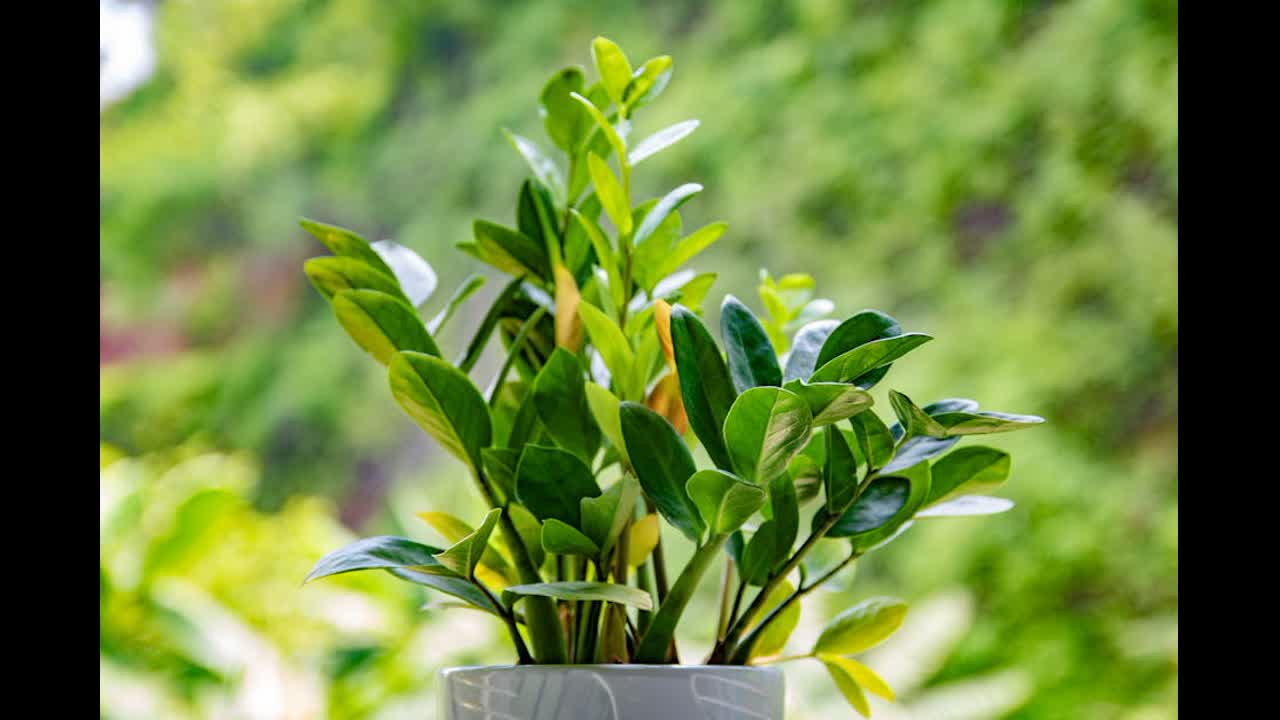
Most ZZ plant care guides make humidity sound like a careful science. They list exact ranges, suggest misting rituals, and recommend humidifiers as if the plant cannot survive without them. The honest reality is simpler: average household humidity is usually enough.
The ZZ plant (Zamioculcas zamiifolia) comes from dry, rocky parts of East Africa. Its thick, waxy leaves and water-storing rhizomes are built to handle months of dry air, not just dry soil. A typical living room at 40 to 50 percent relative humidity sits right in the plant’s comfort zone. Most homes do not need any extra effort to keep a ZZ happy.
What does matter more than humidity is avoiding the few situations that genuinely do stress a ZZ — cold drafts, soggy soil, and very low light. If you take care of those, the air around the plant is the least of your concerns.
What Humidity Means for a ZZ Plant
Humidity is the amount of water vapor in the air. Plants lose water through their leaves through a process called transpiration, and the rate of that loss changes with the humidity around them. In very dry air, a plant loses water faster. In very humid air, it loses water more slowly.
For tropical plants with thin, soft leaves, this matters a lot. Their leaves brown at the edges in dry air, and they need genuinely high humidity to thrive. A ZZ is the opposite end of that spectrum. Its leaves are thick and waxy, and the plant has a built-in reservoir underground. It can sit in a dry room for weeks without showing any sign of stress.
What that means in practice is that you do not need to mist a ZZ, group it with other plants to create a humidity pocket, or run a humidifier for it. The effort is not harmful, but it solves a problem the plant does not have.
The Humidity Range That Works
Zamioculcas grows well across a wide humidity range. Anywhere from about 30 percent to 60 percent relative humidity is fine. Most homes sit in that range for most of the year without any intervention.
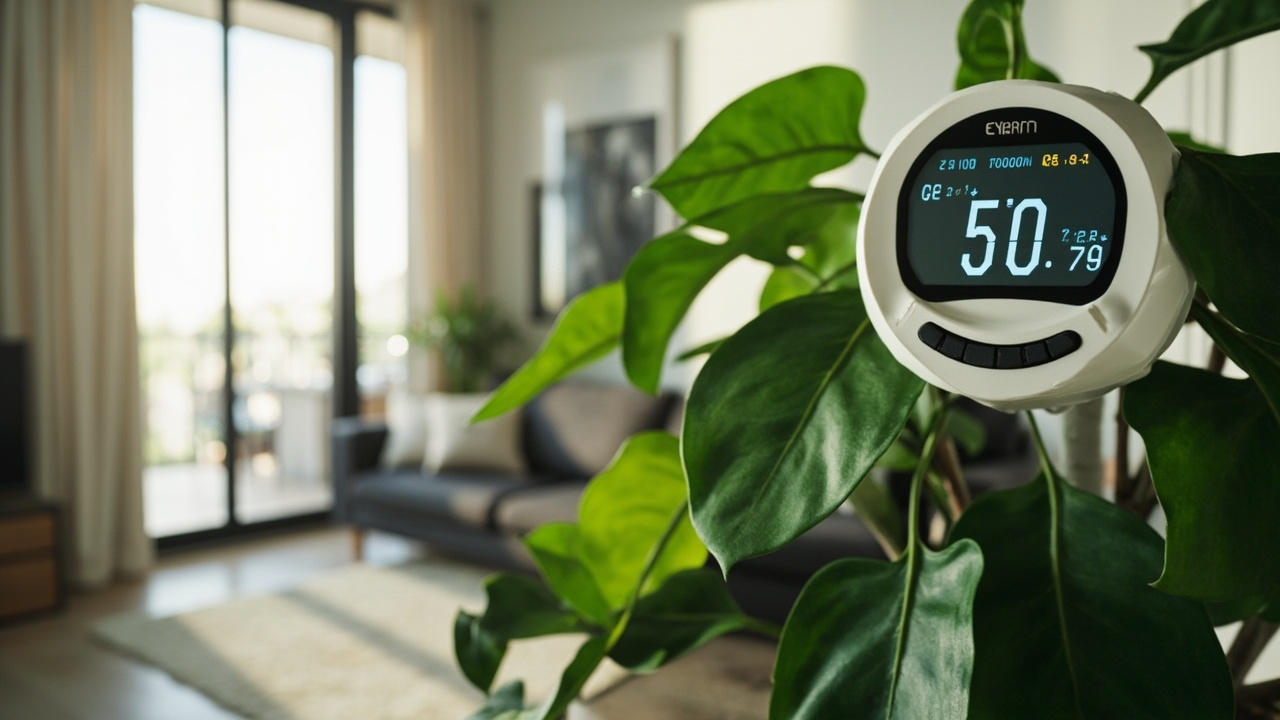
If you are curious about your actual number, a small digital hygrometer costs very little and is useful for any houseplant collection. Place it next to the ZZ for a day or two to see what the plant is actually experiencing. Most readings will be in the 35 to 55 percent range, which is comfortably within the plant’s range.
There is a point in winter when indoor humidity can drop into the 20s in some climates, especially with forced-air heating. Even then, a ZZ usually tolerates it. The first signs of very low humidity, if they appear, are subtle — slightly dull leaf color, or the tips feeling a little papery. If you see those, the answer is usually to add general humidity to the room (a humidifier, a kettle on the stove, grouping plants together) rather than to mist the ZZ directly.
Why Misting a ZZ Does Not Really Help
Misting tropical plants like ferns or calatheas makes some sense because those plants respond to small bumps in humidity. A ZZ does not, and there are two reasons to skip it.
The first is that the effect is too small to matter. A few seconds of mist raises humidity right around the leaves for a few minutes, then the room air absorbs it back. The plant’s long-term humidity is still the room’s humidity, not the mist.
The second is that water sitting on the leaves is a minor risk. ZZ leaves are waxy and tend to shed water, but if water pools in the nook where a leaflet meets a stem, it can invite fungal spots over time. Not common, but also not helpful. Misting a ZZ is one of those well-meaning habits that adds a small risk for no real gain.
If you want to do something proactive for humidity, a small humidifier in the room during dry winter weeks is the more useful option. It raises the air humidity the plant actually lives in rather than giving the leaves a quick spritz they do not need.
When Higher Humidity Is Worth Considering
There are a few situations where humidity does deserve attention for a ZZ, even though the plant tolerates a lot. The first is a heated indoor space that runs very dry in winter. A small humidifier or grouping the plant with several others can lift the room humidity a few points, which helps the plant and the people living in the space.
The second is a propagation setup. ZZ cuttings and leaves being rooted in water or soil benefit from higher humidity because they do not yet have roots to take up water. A clear plastic cover or a propagation box that holds humidity around the cutting is genuinely useful during this stage. The ZZ plant propagation page covers the routine in detail if you are starting new plants.
The third is a ZZ that has just been moved or repotted. A newly repotted plant is under a small amount of stress, and slightly higher humidity in the room can help it settle. This is not a long-term requirement — once the plant is established, normal household humidity is fine.
When Lower Humidity Is Actually a Problem
Very low humidity combined with very high light is the one combination that can show up in ZZ leaves. The plant transpires faster than the rhizome can keep up, and the leaf edges may start to crisp or curl slightly. This is rare, but if you notice it, the most likely cause is the plant sitting in a sunny, dry window where the air is unusually hot and parched.
The fix is not to mist — it is to move the plant a few feet back from the window or to a slightly less exposed spot. Light and humidity work together; the more light, the more water the plant uses, and dry air makes that harder. The light requirements page covers the balance in more detail.
Cold drafts are a more common and more serious problem than dry air for a ZZ. A plant sitting next to a window that gets cold at night, or under an air conditioner vent, will show stress in its leaves long before humidity ever becomes a factor. Move the plant away from cold air, and the leaves recover. The temperature tolerance page is the right next read for that problem.
How Humidity Interacts With Watering
Humidity and watering are connected because the plant uses water from both the soil and the air. In a humid room, a ZZ uses water from the soil more slowly. In a dry room, it pulls a little more from the soil to make up for the faster transpiration. The difference is small for a ZZ because of its thick leaves and stored water, but it is real.
The practical takeaway: in winter, when indoor humidity tends to drop and growth slows, the soil dries out more slowly. Water less often, not more. Wait for the soil 2 inches (5 cm) down to dry before watering. If you are unsure, the watering guide walks through the soil test in detail.
If you do decide to add a humidifier to the room, remember to keep an eye on the soil. Higher humidity can mask a ZZ that is drinking less than it used to, and overwatering becomes more likely if you water on a fixed schedule. Always check the soil first.
Reading Your ZZ’s Leaves for Humidity Clues
Leaf color and texture are the easiest way to see how the plant is handling its environment. Glossy, deep green leaves that stand up well off the rhizome are a sign the plant is happy. Slightly dull color, papery tips, or leaflets that feel thinner than usual suggest the plant is working harder than it needs to.
But before reaching for humidity, rule out the bigger causes first. Overwatering causes more leaf problems on a ZZ than humidity ever does. Cold exposure does too. Check the soil moisture, the room temperature, and the light the plant is getting. The full care guide walks through the routine, and the common problems page is the diagnostic hub when something is clearly off.
The Short Version
A ZZ plant does not need high humidity. Average household humidity between roughly 30 and 60 percent is fine. Misting does not really help. A small humidifier is the only tool that meaningfully changes room humidity, and it is usually not needed for a ZZ at all.
What the plant actually cares about is well-draining soil, a thorough watering followed by a long rest, and a stable spot out of cold drafts. Get those right and humidity will not be on your list of concerns. For the rest of the care routine, the ZZ plant care guide is the right starting point, and the watering guide covers the part of the routine that matters most.
Turn any PDF statement into a clean sheet
Skip the typos and the hours of copying. Our converter handles any bank statement format and outputs Excel, CSV, or QBO for QuickBooks. No file retention, free to try.
Convert your statement