If your calathea is drooping, you do not have a problem yet — you have a question. Calathea leaves move on their own every single day, and the first job is to learn what that daily movement is, and what it is not. Once you can tell nyctinasty from a real droop, the rest of the diagnosis is mostly about timing: when in the day the droop appears, how fast it appeared, whether the petioles are firm or limp, and whether the soil is wet or dry. That small set of observations will name the cause before you reach for the watering can.
Calathea (the prayer plant family, recently reclassified as Goeppertia) is famous for being “dramatic.” Most of that drama is normal. Some of it is a real distress signal. This page is built to help you separate the two, name the four real reasons a calathea’s leaves drop, and route you to the right fix on the right page — because a Problem page names the pain, it does not perform the full rescue. That is the job of the Solution page.
What “drooping” actually looks like on a calathea
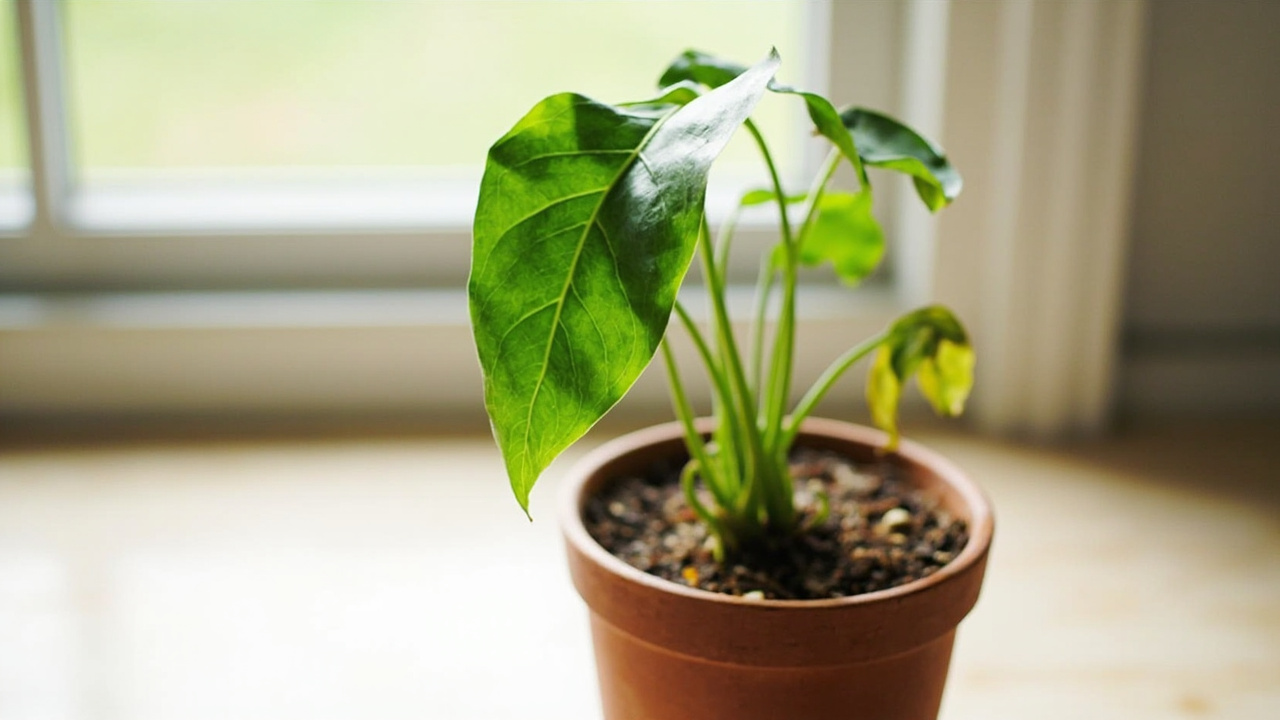
A drooping calathea has leaf blades that have lost their usual horizontal or upward posture and are hanging downward, often with the petioles — the slender stalks connecting the leaf blade to the central crown — bending or curling under the weight. The petiole is the diagnostic handle here: in a healthy calathea the petiole is firm, slightly springy, and holds the leaf blade out at its own angle. In a real droop the petiole goes soft, and the leaf blade hangs from it like a flag on a wet rope.
That distinction matters because calathea leaves also move up and down on a healthy daily cycle. A leaf standing tall at noon may have folded up by 9 p.m. That is not drooping. That is the plant doing its job.
Nyctinasty: the daily leaf movement that is not a problem
Nyctinasty is the botanical term for a plant’s daily, light-driven leaf movement, and calathea is one of the best-known examples, which is why the group earned the common name “prayer plant.” In the evening the leaf blades rise and fold together, almost like hands pressed at the chest; in the morning they lower and open again. The movement is driven by changes in turgor pressure at a specialized joint called the pulvinus, at the base of each petiole, and it follows the light cycle, not the watering schedule.
Nyctinasty is healthy behavior. It tells you the pulvinus is working and the petioles are turgid. A calathea that has stopped doing its daily lift is a more concerning calathea than one that is moving on schedule. So before you diagnose drooping, watch the plant across a full day. If the leaves fold up at night and open by morning, what you are seeing is nyctinasty, and the plant is fine. Once you have ruled that out, the droop is one of four real causes.
The four real causes of calathea drooping
All four real causes produce a leaf that hangs, but they differ in three diagnostic details: timing (when in the day the droop appears), speed (how fast it appeared), and soil state (wet or dry when you check). The four real causes are underwatering, overwatering with root rot, cold shock, and severe transplant shock. A fifth — humidity collapse in dry indoor air — can mimic drooping but rarely produces a true limp droop. Check the four in the order below.
Underwatering: the most common and the most reversible
An underwatered calathea droops fast — often within hours of the soil drying through — and the soil is light, dry, and pulling away from the pot rim. The petioles go soft, the leaf blades hang, and the whole plant looks deflated. The full watering protocol — including how to bottom-water a dried-out rootball and what counts as “dry enough to water” — lives on the calathea watering guide.
The diagnostic signature is dry soil plus fast onset: a plant that goes from perky to droopy across one afternoon, with a noticeably lighter pot and bone-dry soil an inch down. An underwatered calathea with no root damage recovers quickly — usually within hours of a proper soak, fully upright again the next morning, with its nyctinastic cycle intact.
Overwatering and root rot: the same look, a different fix
An overwatered calathea with root rot droops the same way to the eye — soft petioles, hanging leaf blades — but the soil is wet, often days after watering, and the pot feels heavy. The onset is also slower, over a day or two rather than hours, because rot has to develop at the root tip before the leaves lose support.
The fix is not “water less next time.” Root rot means tissue is dying in the root zone, and the leaves are drooping because the roots can no longer pull water up, even though the soil is wet. If you are seeing wet soil and drooping leaves at the same time, stop watering and route to the dying-calathea rescue protocol for root inspection, the right soil mix, and when a repot is the right call. This page names the cause — it does not perform the rescue.
Cold shock: the one that happens overnight
Cold shock is the easiest cause to identify by timing, because it almost always appears after a specific event: a window left open on a cold night, a plant moved outside for a summer evening and forgotten, an air-conditioning vent pointed at the pot, or a delivery in late autumn. The droop appears within hours of the cold exposure, often with a grayish, washed-out look to the leaf blade or sudden leaf drop rather than a slow decline.
Calathea is a tropical understory plant built for 65°F to 80°F (18°C to 27°C), and exposure below about 55°F (13°C) can shock the leaf tissue fast. The full tolerance window is on the calathea temperature tolerance page.
The diagnostic signature is sudden droop plus a known cold event. Move the plant to a stable warm spot, keep the soil on the dry side of normal for a week, and resist the urge to repot or fertilize while the leaf tissue recovers.
Severe transplant shock: the droop that follows a repot
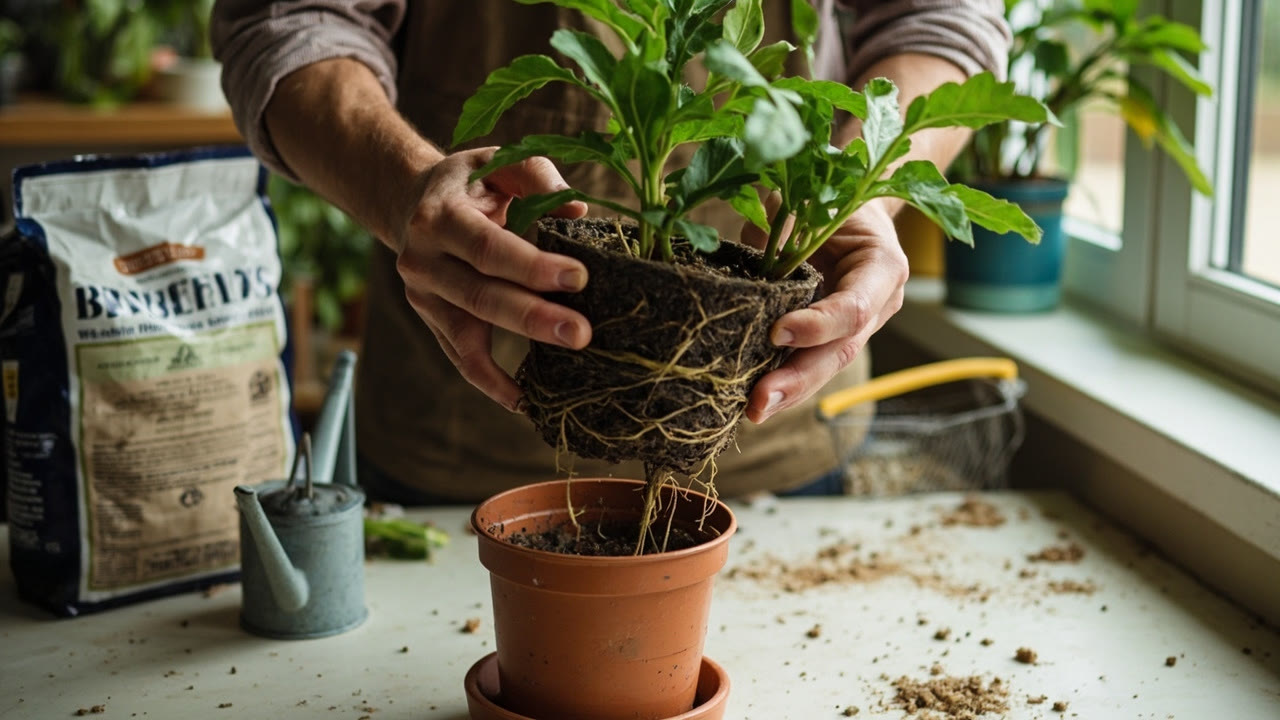
Transplant shock droop shows up in the days following a repot, a division, or a move to a new location, and it is the only cause where the droop is the expected outcome of a known action. The root hairs — the tiny feeder roots that do most of the water uptake — were damaged or disturbed, and the plant temporarily cannot support its full leaf canopy. The petioles stay mostly firm, the leaves droop rather than collapse, and the soil moisture is usually fine.
The recovery window is two to four weeks for a routine repot and up to six weeks for a division. The full protocol is on the calathea repotting guide, including why you should not fertilize a stressed calathea and how to tell normal post-repot wilt from a real problem. If the petioles are going soft, route to the rescue protocol.
How to read the droop in under a minute
Use this quick check in order. It will name the cause before you do anything else. The treatment lives on the linked pages.
- Watch the plant for a full day first. If the leaves fold up at night and open by morning, you are looking at nyctinasty, and there is no problem to fix.
- Check the soil moisture. Insert a finger one inch (2.5 cm) into the soil. If it is dry and the pot feels light, the cause is underwatering. If it is wet and the pot feels heavy days after watering, the cause is overwatering with possible root rot.
- Check the petioles. Firm petioles with droopy blades point to transplant shock or a mild cold event. Soft, bending petioles with hanging blades point to a water problem — too little, or too much with rot.
- Match the timing. Droop that appeared within hours of a cold night, a draft, or an open window is cold shock. Droop that appeared within days of a repot or move is transplant shock. Droop that appeared in the last 24 hours with no other event is almost always a water problem.
- Check the air. A calathea in a very dry room — below about 40% relative humidity — can show soft leaf edges and a slightly tired posture that looks like a droop but is not. If humidity is the only suspect, the humidity requirements page covers the realistic options for indoor air, including which humidifier sizes actually move the needle in a 200-square-foot room.
For completeness: a calathea kept in dim conditions can also develop a soft, leggy, under-supported look some readers mistake for drooping. The leaves are not hanging — they are reaching. That is a light problem, not a droop.
What to do once you have named the cause
The treatment is the Solution page’s job, not this one’s. The quick map:
- Underwatering — the calathea watering guide covers how to soak a dried-out rootball, what counts as a proper drink, and when to expect the leaves to lift.
- Overwatering with rot — the dying-calathea rescue protocol walks through root inspection, the right soil mix, and when a repot is the right call.
- Cold shock — the temperature tolerance page covers the safe window, the warning signs of a chill, and how to harden a calathea back to health.
- Transplant shock — the repotting guide covers the post-repot window, the no-fertilizer rule, and when droop is no longer normal.
What a healthy calathea droop is not
A calathea that is moving on its daily nyctinastic cycle, with firm petioles and new growth from the center, is not drooping — even if a single older leaf sags on a heavy day. A calathea that bounces back within hours of a proper watering is drying out between drinks, a rhythm problem, not a droop. A calathea recovering from a known cold event or a recent repot is on a recovery curve, and a few days of slow lift is the right outcome.
What is not normal is a calathea that has stopped its daily movement, that is dropping leaves rather than folding them, or whose petioles have gone from firm to soft across a day or two with no change in watering. Once you have named the cause — and the soil check, the petiole check, and the timing check will name it — the fix lives one click away on the right Solution page, and the plant is back to its drama in a few weeks.
Read also: why houseplant leaves droop, which separates thirst from root failure before you touch the soil.
Turn any PDF statement into a clean sheet
Skip the typos and the hours of copying. Our converter handles any bank statement format and outputs Excel, CSV, or QBO for QuickBooks. No file retention, free to try.
Convert your statement