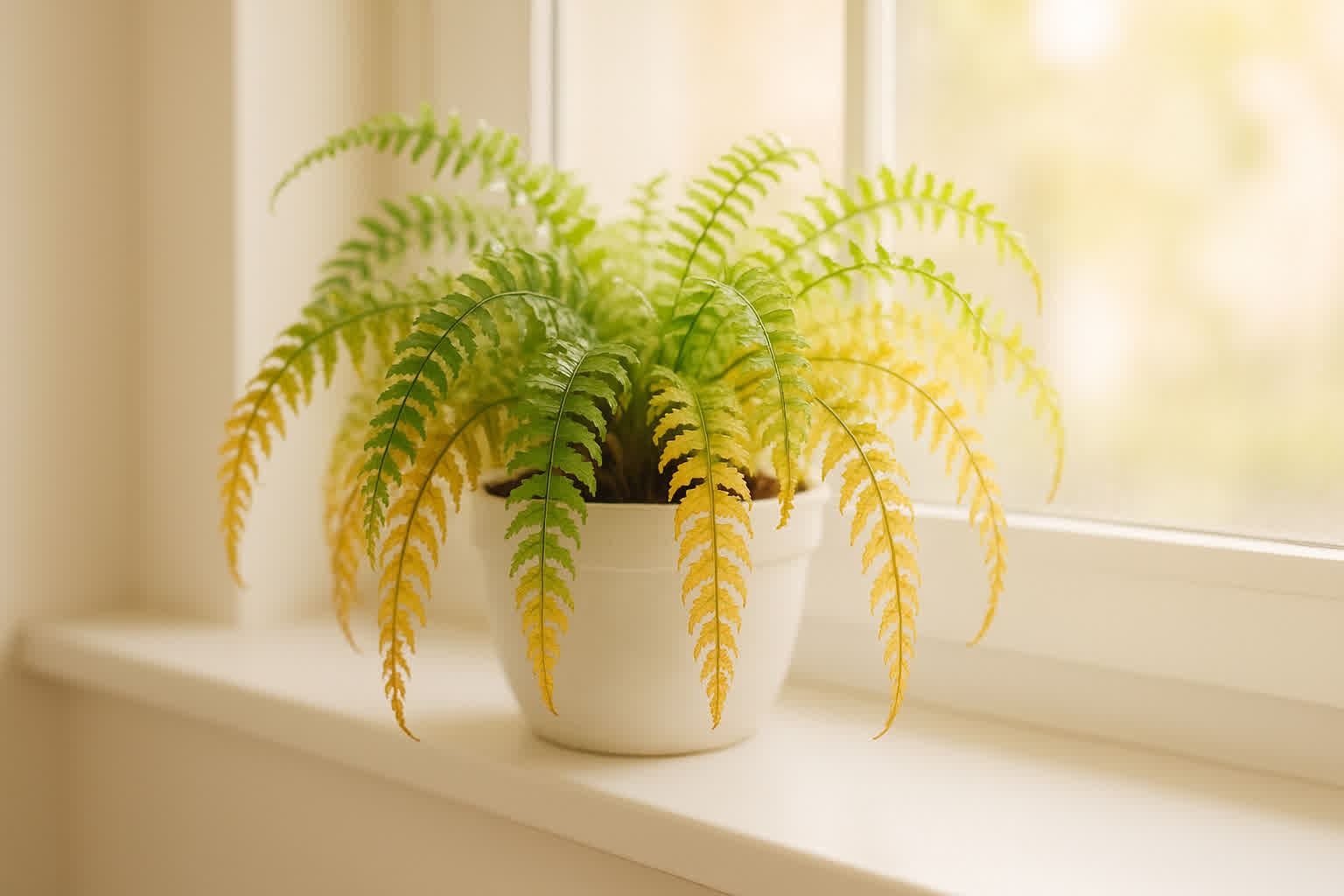
Yellow fronds on a fern are one of the first signs that something in the growing conditions needs correcting. They are not always a death sentence — most of the time yellowing is reversible if you catch it before the roots are damaged. The key is identifying the cause before you take the wrong action, because the wrong fix is often worse than doing nothing.
Most plant problems have one dominant cause. Yellowing is an exception: it has several common causes that look similar on the surface but require opposite treatments. Treating a fern for overwatering when it actually needs more water is one of the most common ways a fern goes from slightly yellow to completely dead. This guide walks through how to tell the difference and what to do about each cause.
What Yellowing Actually Means : The Mechanism
Yellow fronds mean the leaf tissue is breaking down chlorophyll — the green pigment that allows the leaf to photosynthesize. In ferns, this happens when the plant either cannot produce chlorophyll fast enough (because something is blocking the system) or is actively pulling nutrients back from old fronds to support new growth. These are fundamentally different processes that require different responses.
The two most important diagnostic clues are where the yellowing starts (oldest fronds at the base, or newer fronds at the center) and whether the newest growth is also affected. These two clues alone will tell you the cause in most cases.
Overwatering : The Most Common Cause
Yellowing from overwatering usually starts on the oldest fronds at the outer edges and progresses inward. The fronds yellow evenly rather than in spots, and the soil stays wet for four or more days after watering. The base of the fronds near the soil may turn dark and soft rather than pale yellow.
What happens next: if the soil does not dry within three days of watering, the roots are sitting in waterlogged conditions and beginning to rot. Rotting roots cannot absorb water or nutrients, which causes the yellowing. The plant looks like it needs more water (because the soil is wet but the roots cannot use it), and beginners often water again — making the problem worse.
The fix: stop watering immediately. Place the fern in bright, indirect light with good air circulation to help the soil dry faster. Do not water again until the top inch of soil is dry. If the pot does not have drainage holes, repot into one that does. If roots have begun to rot (mushy, dark, smelly), you will also need to treat the root issue.
Underwatering : Often Confused With Overwatering
Yellowing from underwatering also affects the oldest fronds first, but it looks different. Underwatered fronds yellow and then become dry and crispy at the edges before they yellow completely. The soil pulls away from the sides of the pot, feels light when you lift it, and the fronds lose their turgor — they droop and soften rather than holding their arch.
The key difference from overwatering: the soil is dry, not wet, and the fronds are dry-crispy at the edges rather than soft at the base. Underwatering causes yellowing because the plant conserves resources by abandoning its oldest fronds first. This is a survival mechanism, not a disease.
The fix: water thoroughly by soaking the root ball in a bowl of room-temperature water for 15 minutes, then let it drain completely. This rehydrates the root ball more effectively than top-watering alone. Expect the fronds to firm up within 24 hours. If they do not recover within two days, the roots may have dried to the point of damage and you will need to take more aggressive recovery steps.
Nutrient Deficiency : Especially After Long Periods Without Fertilizer
Yellowing from nutrient deficiency shows a specific pattern: the oldest fronds turn yellow uniformly while the newest fronds at the center remain green and healthy. This happens because the plant is pulling nitrogen and other mobile nutrients from the oldest tissue and directing them to the new growth, which is where they are most needed for continued growth.
This is common in ferns that have been in the same pot for more than a year without repotting or fertilizing. Ferns in a soilless potting mix typically exhaust available nutrients within six to eight months. After that, the plant relies entirely on what you provide through fertilizer.
The fix: apply a diluted liquid fertilizer at half the recommended strength (ferns are sensitive to full-strength fertilizer — burning the roots is a real risk). Use a balanced fertilizer (such as 10-10-10) diluted to half strength, applied to moist soil. Do not fertilize a dry fern. Within three to four weeks, the yellowing on the oldest fronds will stop spreading, though the already-yellow fronds will not turn green again — they need to be removed by hand once new growth confirms the problem is corrected.
Seasonal Dormancy : Natural Yellowing in Fall and Winter
Ferns slow their growth in fall when light levels drop and temperatures cool, particularly in homes with heating that reduces humidity. Older fronds yellow and may die back naturally over winter. This is normal and expected — the plant is not dying, it is resting. New fronds will emerge from the center when light increases again in spring.
What distinguishes natural dormancy from a problem: new growth continues from the center even as old fronds yellow. The fronds yellow evenly and from the base outward, not in spots or from the tips. The soil dries at a normal rate and there is no odor from the root ball.
The fix: reduce watering frequency in fall and winter to match the slower growth rate. Do not fertilize during the dormant season. Remove dead fronds by cutting at the base — this prevents fungal issues from developing on decaying material. Once spring arrives and new growth is visible, resume normal watering and fertilizing.
How to Read the Signs Correctly
Before taking action, answer three questions in order. First: is the soil wet or dry? If wet and heavy four days after watering, the cause is overwatering. If dry and light, it is likely underwatering or nutrient deficiency. Second: are the yellow fronds at the base (oldest) or center (newest growth)? Oldest fronds yellowing means it is most likely overwatering, underwatering, or natural dormancy. Newest fronds yellowing means it is a more serious root or nutrient issue. Third: is new growth appearing from the center? If yes, the plant is healthy enough to be growing and the yellowing is almost certainly environmental or nutritional. If no new growth is appearing, the roots are likely compromised and need investigation.
When in doubt, always investigate the roots before treating the yellowing. Gently slide the plant out of its pot and examine the root ball. White, firm, fibrous roots indicate healthy root function. Brown, mushy, or smelly roots indicate rot and need to be trimmed back before repotting.
When Yellowing Means It Is Time for Root Treatment
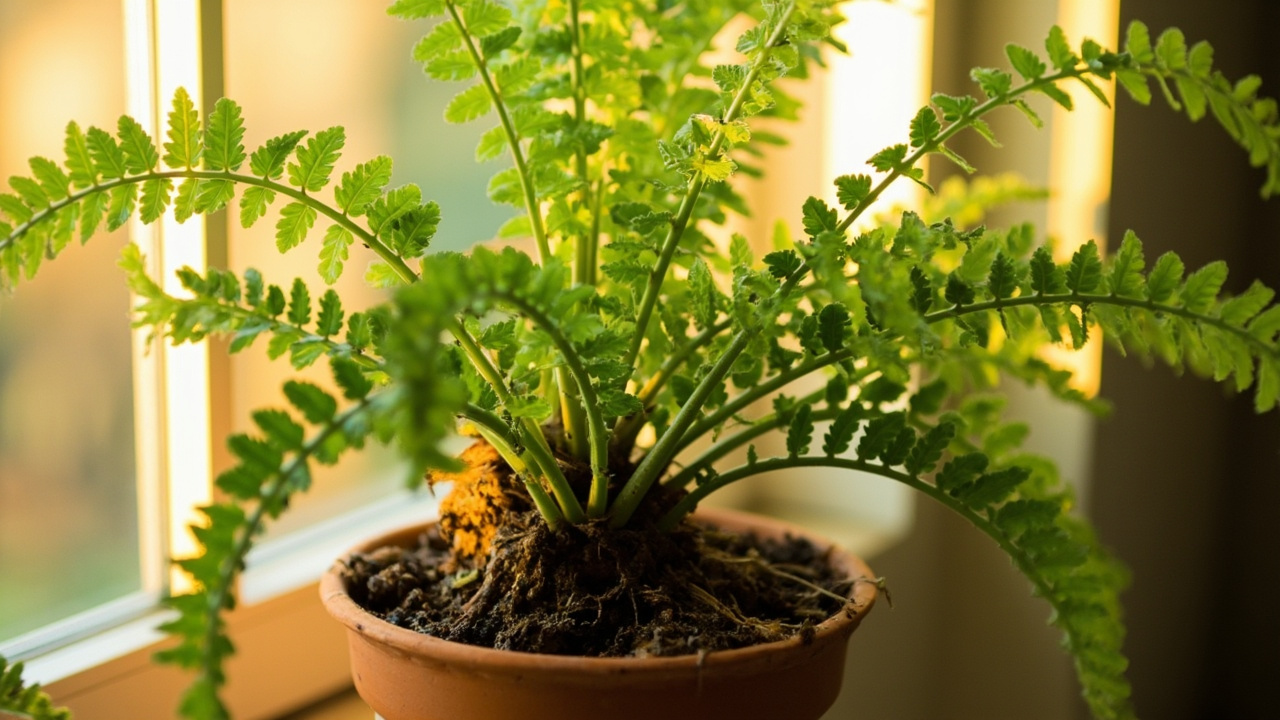
Yellowing that is accompanied by a musty smell from the soil, fronds that yellow and then turn black and mushy at the base, or fronds that yellow very quickly (within days rather than weeks) usually means the roots are rotting. This requires removing the plant from the pot, trimming all brown and mushy roots back to white firm tissue, and repotting in fresh, dry, well-draining mix. Do not water for one week after this treatment, then resume with careful, measured watering. The recovery timeline is four to six weeks before new green fronds emerge from the center.
For more detail on saving a fern with advanced decline, see our guide to saving a dying fern. For ongoing care that prevents yellowing from recurring, the fern plant care guide covers watering schedule, humidity management, and fertilizing specifics in detail.
From Bank Statement to QuickBooks-Ready File
That manual cleanup you just read about? This tool skips it. Turn your PDF into QBO for QuickBooks without storing your data anywhere.
Start Converting