TITLE: Monstera Aerial Roots: What They Are and How to Manage Them
TARGET: monstera aerial roots
CAT: 225
—
You’ve noticed them — those thick, pale, slightly unglamorous stems shooting out from your Monstera’s stem at odd angles. They dangle. They wander. Sometimes they root into the soil; sometimes they just hang there looking confused. You’re not sure whether to cut them, guide them, or pretend they don’t exist.
Here’s the short answer: aerial roots are a sign your Monstera is healthy and trying to climb. The longer answer is more interesting — and more useful.
What Are Aerial Roots, Exactly?
Aerial roots are specialized root structures that grow above the soil line. Monstera deliciosa is a climbing arum (Araceae family) — in the wild, it uses these roots to anchor itself to tree bark and pull itself upward toward better light. The roots don’t need soil. They absorb moisture from the air and can anchor into any moist surface they find.
What this means for your houseplant: your Monstera is hardwired to want something to climb. Without a moss pole or trellis, those roots are just searching. They’ll attach to nearby pots, furniture, or nothing at all.
Are They Normal?
Yes — and the more your Monstera grows, the more you’ll see. Young Monsteras produce them earlier than you might expect. A plant with multiple aerial roots is not unhealthy; it’s expressing its natural growth habit.
The only time aerial roots become a problem is when they start causing damage — cracking wallpaper, penetrating grout, or wrapping around furniture in ways that leave marks. For most indoor Monsteras, this isn’t an issue unless the plant is very large and very close to walls.
Should You Cut Them Off?
In most cases, no. Cutting aerial roots removes a functional part of the plant. If the root is attaching to something you care about (a wall, a piece of furniture), you can redirect it rather than remove it.
That said, there are a few legitimate reasons to trim:
- The root has dried out completely and is brittle — a clean cut is fine
- The root is wrapping around another plant and causing competition
- You are propagating a cutting and want to encourage below-soil root growth instead
When you do cut, use sterile scissors or a sharp knife. Cut as close to the stem as possible without damaging the node. A small amount of root die-back after cutting is normal.
The exception: propagation
If you are taking a stem cutting for propagation, you can remove aerial roots from the cutting — but don’t throw them away. Aerial roots on a cutting dramatically speed up establishment in soil or water. The cutting already has a head start on root development, which means less transplant stress and faster new growth. If you want to learn the full propagation process, see our guide to propagating Philodendron — the same technique applies to Monstera.
How to Manage Aerial Roots Without Damage
There are three main approaches:
1. Guide them into the pot or moss pole
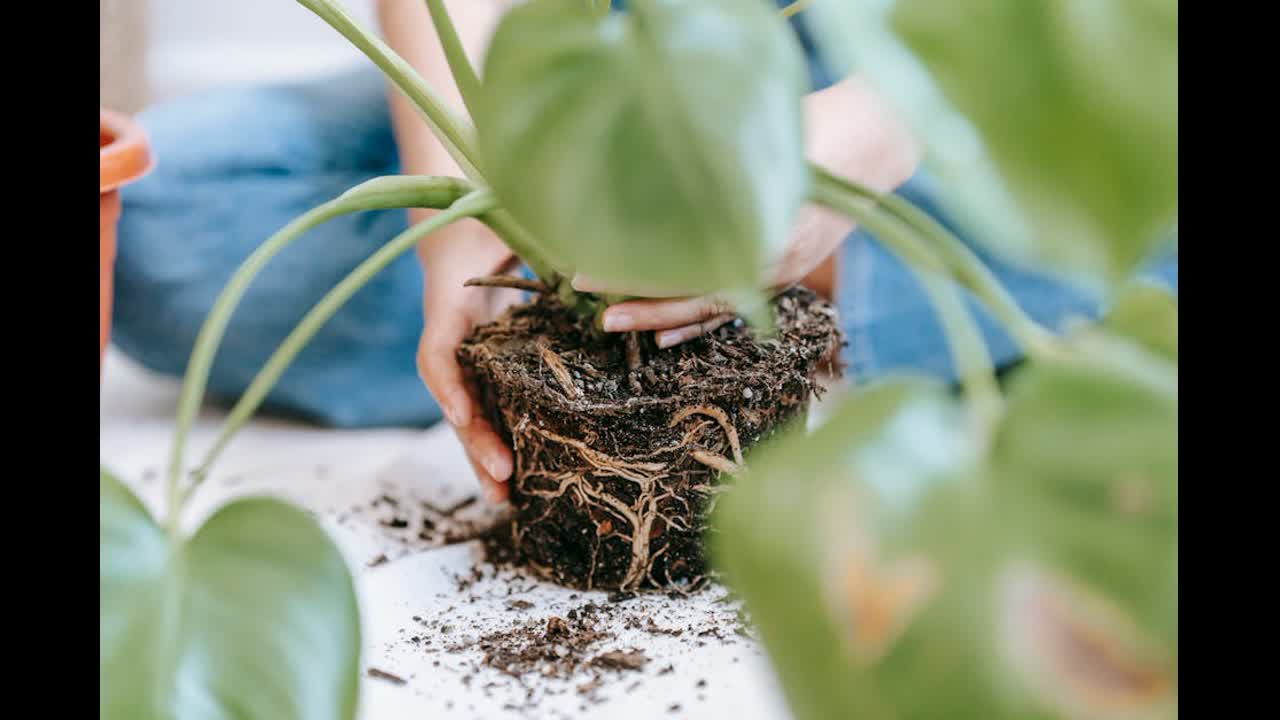
If your Monstera is in a pot, gently redirect aerial roots toward the soil surface. They will root into the substrate if it stays moist, which benefits the plant. You can loosely tie them to a moss pole with plant-safe twine — this mimics their natural climbing behavior and supports larger leaves. For a complete overview of Monstera care including potting mix and watering, see our Monstera Deliciosa care guide.
2. Use a moss pole or wooden support
Moss poles are the most effective way to manage aerial roots for big Monsteras. The roots attach to the moss, the plant climbs, and the leaf size often increases because the plant is growing in its preferred orientation. You’ll see bigger, more fenestrated leaves within a few months of giving the plant something to climb.
If you don’t want a moss pole, a plain wooden stake works too. The roots will attach to it over time.
3. Let them be : with protection
For Monsteras that are positioned away from walls and furniture, leaving aerial roots completely alone is fine. They won’t hurt the plant. You may want to occasionally wipe them with a damp cloth to remove dust — they do collect it.
What Happens If You Remove Too Many?
A Monstera with all its aerial roots removed will not die immediately. But it loses a significant auxiliary water and nutrient uptake system. In dry indoor environments — especially in winter with heating on — this can accelerate leaf yellowing and slow growth.
If you’ve been aggressively removing aerial roots and your Monstera is struggling, stop cutting and let the next set of roots grow freely. The plant will recover.
Aerial Roots vs. Underground Roots: The Difference
A common point of confusion: aerial roots and the roots growing in the pot serve different functions. Underground roots are for uptake from soil. Aerial roots absorb moisture from humid air and can also anchor the plant to surfaces. For comparison with another humidity-loving plant, see our Peace Lily brown tips guide, which covers how humidity affects leaf health in tropical houseplants.
Both systems are active and important. A Monstera with healthy aerial roots and healthy below-soil roots is getting double the water and nutrient access — which is why these plants grow so vigorously when conditions are right.
The humidity connection
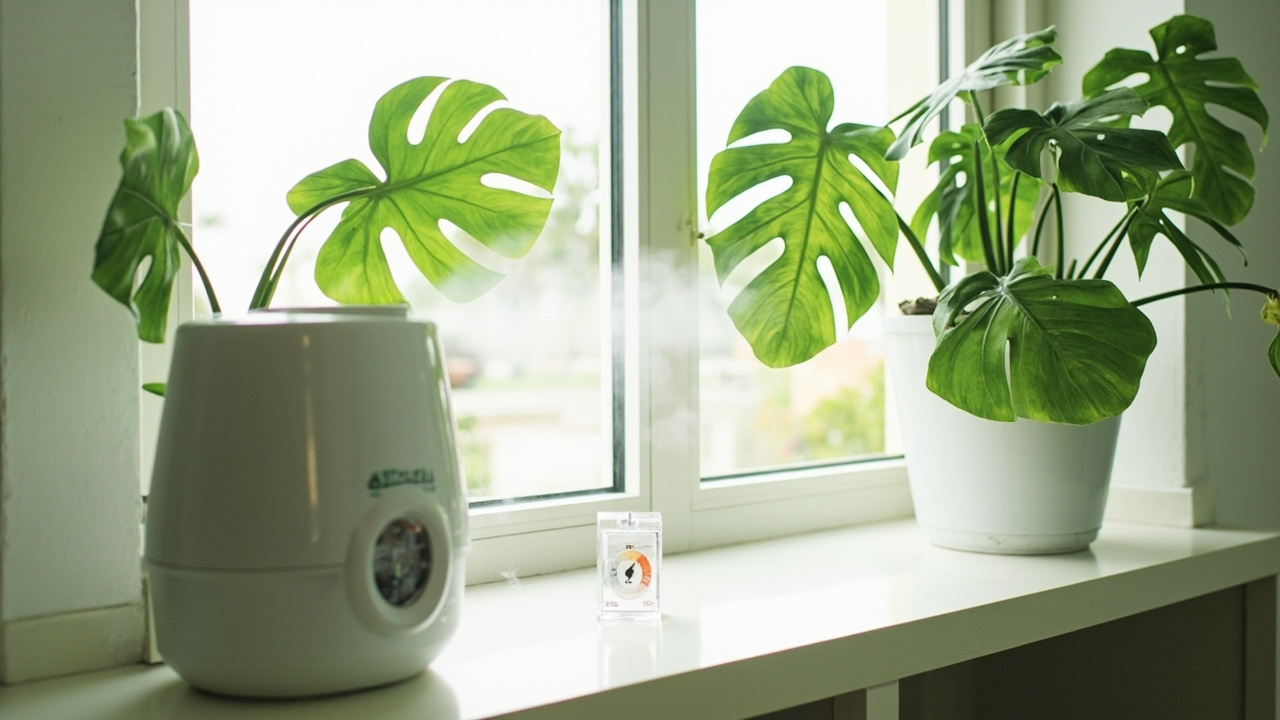
If your aerial roots are drying out, browning, and becoming brittle, it’s usually because the air is too dry — not because the plant is unhealthy. Increasing humidity to 60% or higher will keep them pliant and active. A pebble tray, humidifier, or regular misting (if your indoor conditions warrant it) all help. Compare this to snake plant humidity needs, which are much lower — Monsteras want significantly more moisture in the air.
Worth noting: misting the roots directly rather than just the leaves is more effective for aerial root health. They are designed to absorb moisture.
The Takeaway
Aerial roots on your Monstera are not a problem to solve. They are a feature of the plant doing exactly what it’s supposed to do. The choices are simple: give it something to climb, redirect the roots somewhere useful, or let them exist in open air. Cutting them is only necessary in specific situations — damage prevention, propagation, or severe dryness causing die-back.
Your Monstera is climbing. The only decision is whether you want to help it do that, or just watch it try.
From PDF to Excel in one click
Forget retyping line by line. Upload any bank statement, get a spreadsheet you can actually use. Your files are never stored, and you can test the converter with 3 free conversions.
Try it free