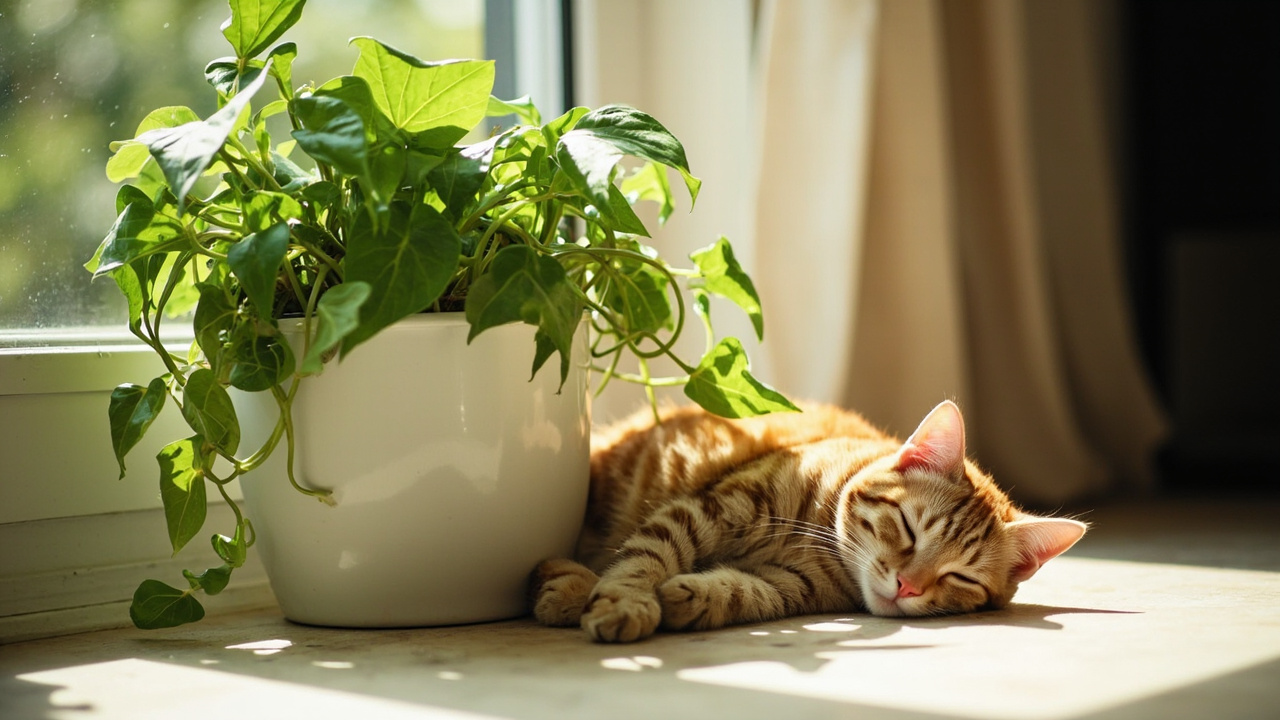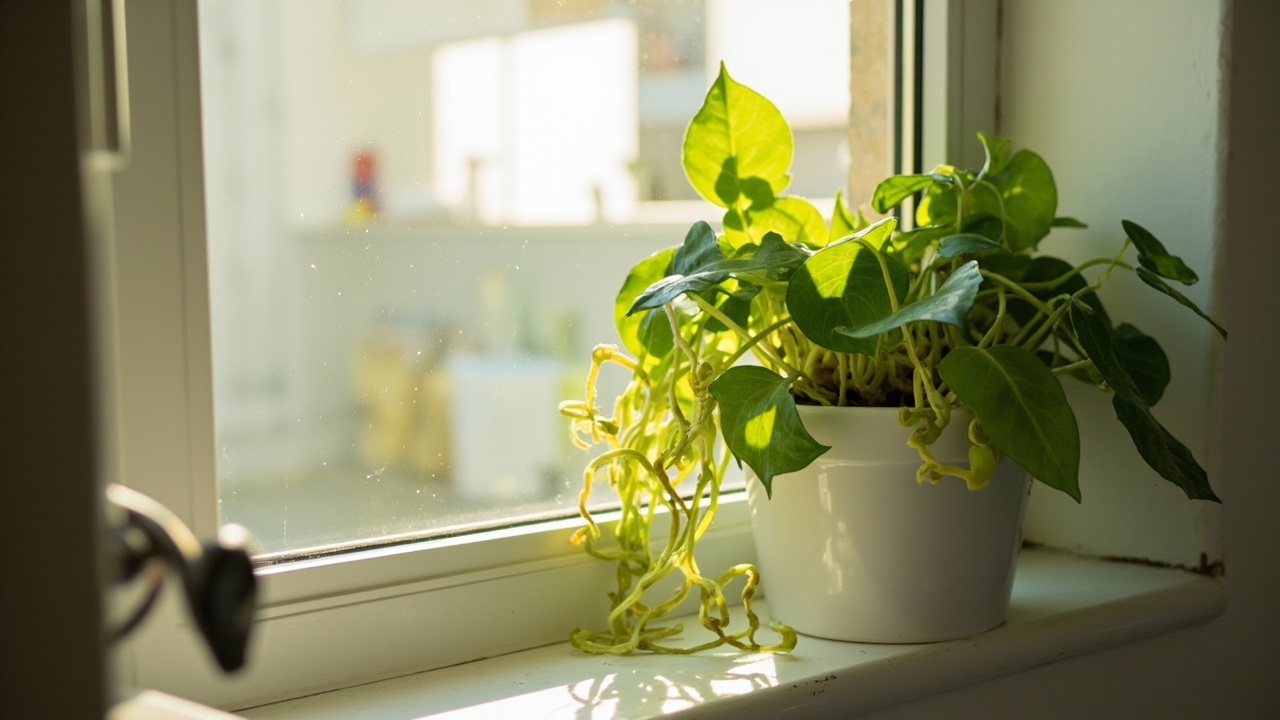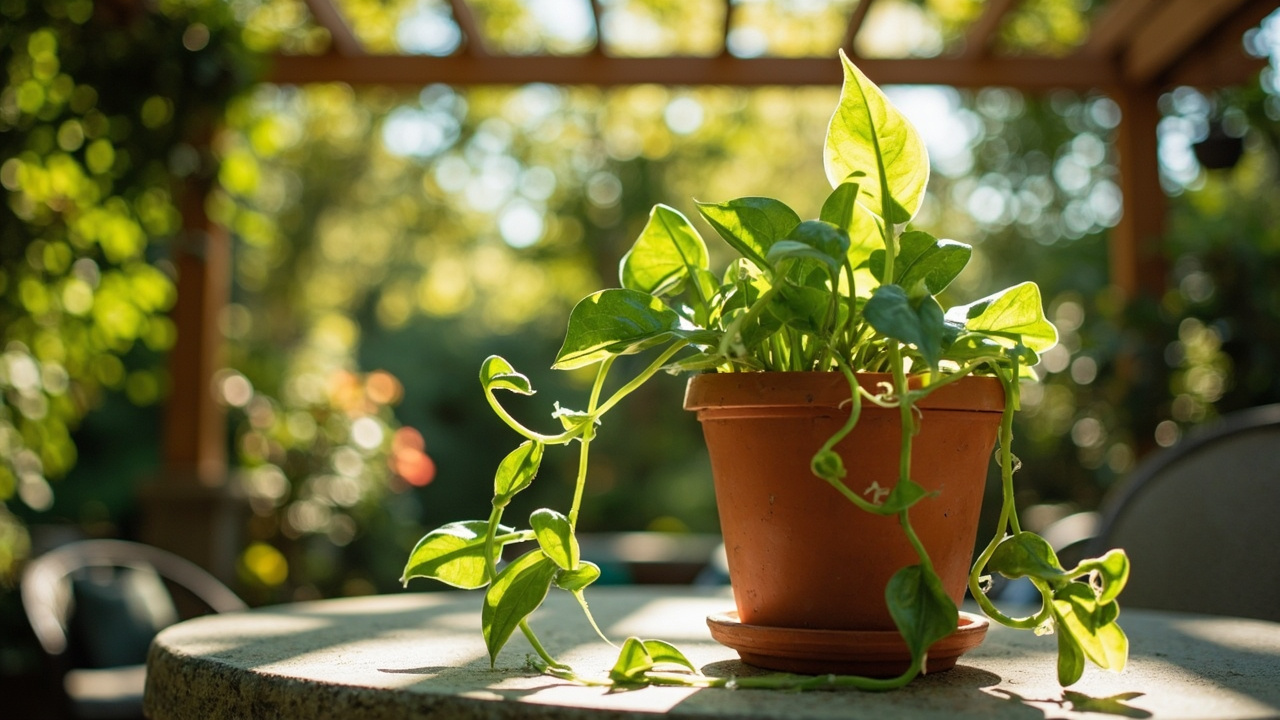

Money plants are pothos — and pothos comes in more varieties than most people realise. Not just the three supermarket varieties with their green-and-gold leaves, but a range of leaf shapes, colors, patterns, and growth habits that suit different spaces. The care guide covers keeping all of them healthy whatever the variety.
If you’ve been keeping the same variety for years, you might not know what’s available. The money plant world is bigger than it looks from the garden centre shelf.
What Defines a Pothos Variety
Each pothos variety has a characteristic leaf shape, variegation pattern, and growth rate. Variegation stability depends on light — the same plant looks different in low light versus bright indirect. That change isn’t the plant misbehaving, it’s the plant responding to its conditions.
Variegation Fundamentals
Variegated sections of a pothos leaf have less chlorophyll than solid green sections. In low light, the plant prioritises green leaf area to maintain energy production. This means variegated varieties all become less variegated over time in dim conditions. Move them to brighter light and new growth comes back with more white or yellow sections. The light guide covers why this happens and how to reverse it.
This matters when choosing a variety: if your space has low light and you’re not planning to use grow lights, a heavily variegated variety will slowly green out. A darker, more stable variety will look better in that environment.
The Reliable Standard Varieties
Golden Pothos (Epipremnum aureum ‘Golden’)
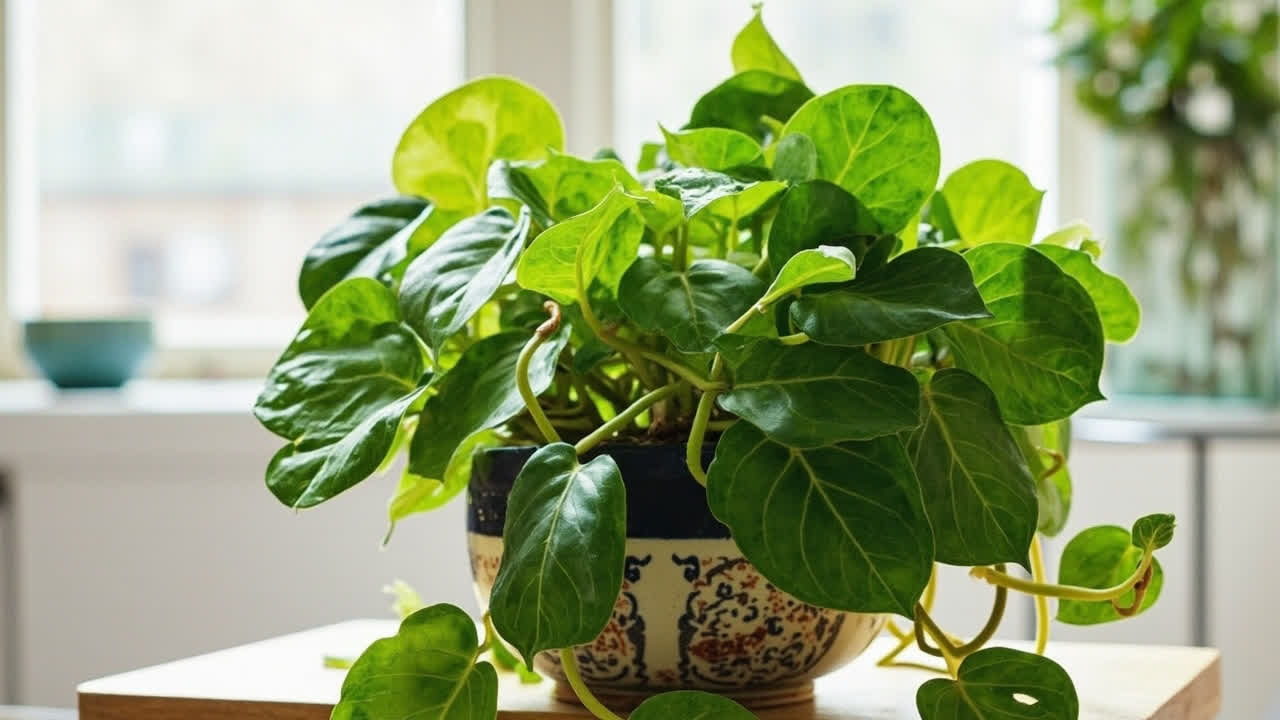
The original and the most common money plant. Heart-shaped green leaves with yellow-gold streaks and marbling. Grows fast, scrambles for metres if given the space, and handles low light better than almost any other variegated houseplant.
Growth habit: trailing or climbing. Light: low to bright indirect. Difficulty: virtually unkillable. The one to start with if you’re new to pothos — the propagation guide works reliably on this variety too. For display options including climbing training, the display guide has the full setup.
The variegation is stable in good light — you’ll see plenty of gold throughout the leaves. In low light, the gold sections shrink and the leaves come in more solid green. This is normal and reversible by moving the plant.
Marble Queen (Epipremnum aureum ‘Marble Queen’)
The most heavily variegated standard variety — white and cream streaks on green leaves, giving a marbled appearance across the entire leaf surface. Higher white content means more light needed for the plant to sustain that variegation.
Growth habit: trailing, somewhat slower than golden. Light: medium to bright indirect — not low light. Difficulty: easy in right conditions, tends to revert to green in insufficient light. If your marble queen is producing all-green leaves, move it closer to a window. The watering guide has the seasonal schedule for this variety.
Marble queen is the variety most likely to disappoint in dim rooms because it genuinely needs more light than the others to express its characteristic variegation. In a bright room, it’s one of the most striking pothos varieties you can grow.
Neon Pothos (Epipremnum aureum ‘Neon’)
A solid chartreuse-green leaf with no variegation — the brightest, most electric green in the pothos family. The color is genuine, not a variegation pattern, so it doesn’t change based on light the way marble queen does.
Growth habit: trailing, compact and tidy. Light: low to bright indirect. Difficulty: easy, slightly more sensitive to water quality than other varieties. Fluoride and chlorine cause tip burn on neon pothos more than on other varieties — use filtered or left-out overnight water if your tap water is heavily chlorinated. The problems guide covers tip burn diagnosis.
Neon is the variety that looks most “alive” — that bright, almost phosphorescent green gives a room an energy that darker pothos varieties don’t match. It’s particularly good for spaces with a lot of artificial light where variegated varieties would struggle.
The Specialty Varieties
Pothos N’Joy (Epipremnum aureum ‘N’Joy’)
A relatively recent introduction with green leaves edged in white — the white sections are on the margins rather than streaked through the leaf. The contrast between the deep green centre and the clean white edges makes this one of the most distinctive-looking pothos varieties.
Growth habit: trailing, moderate growth rate. Light: bright indirect — needs more light than golden to maintain the white variegation, similar to marble queen. Difficulty: moderate. The care guide has the baseline for keeping n’joy healthy.
N’Joy is still establishing itself as a widely available variety. It’s harder to find in garden centres than the big three, more expensive, and more rewarding for collectors who appreciate the distinctive leaf shape and pattern.
Pothos Pearls and Jade
A newer variety with green and white marbling combined with a slightly different leaf shape — somewhat narrower and more pointed than the standard heart shape. The combination makes it look more delicate than it actually is.
Growth habit: trailing. Light: medium to bright indirect. Difficulty: moderate — slower growing and more particular about light than the standard varieties. More expensive and less widely available.
Manjula Pothos (Epipremnum aureum ‘Manjula’)
Similar to marble queen in its heavy variegation but with a slightly different pattern — the white and cream sections tend to concentrate in the centre of the leaf rather than being evenly distributed. The result is a cloudier, softer look than the sharp contrast of marble queen.
Growth habit: trailing, slower. Light: bright indirect. Difficulty: moderate — the high white content means low light causes reversion quickly. One of the more temperamental pothos varieties to keep looking its best.
Cebu Blue Pothos (Epipremnum aureum ‘Cebu Blue’)
Not a variegated variety — this one has solid blue-green leaves that develop a silvery metallic sheen in good light. The leaves are narrower than typical pothos and have a subtle shimmer that makes the whole plant look like it’s catching light from unusual angles.
Growth habit: climbing — this is one of the pothos varieties that genuinely climbs well if given a support. Light: medium to bright indirect. Difficulty: easy, and the non-variegated nature means it maintains its appearance in lower light without reverting.
Cebu Blue is the pothos for people who want something visually distinct but not variegated. It looks almost like a different plant from the standard money plant, which makes it useful for variety in a collection.
Less Common and Collector Varieties
Silver Satin Pothos (Scindapsus pictus)
This one is technically not an Epipremnum aureum — it’s a Scindapsus — but it’s grown, sold, and cared for exactly like pothos, which is why it ends up in the same category. The leaves are dark green with silver-grey speckling, which gives it a matte, velvety look compared to the shinier leaves of standard money plants.
For display options, the display and training guide covers hanging versus climbing and which positions work best for each variety.
The distinction between Scindapsus and Epipremnum matters mostly to botanists. In practice, silver satin pothos grows in very similar conditions to standard money plants and can be treated with the same watering approach.
Global Green Pothos
A newer variety with green leaves that have a darker green variegation pattern — less contrast than marble queen or n’joy, more subtle. The variegation is more stable in varying light conditions than the high-contrast varieties, which makes it easier to keep looking consistent.
Growth habit: trailing. Light: low to bright indirect. Difficulty: easy — the soil guide covers the drainage mix that keeps global green performing.
Choosing the Right Variety for Your Space
Low Light Rooms
Golden pothos and neon pothos perform best. Cebu blue and global green also handle dim conditions well without losing their characteristic appearance.
Avoid: marble queen, n’joy, manjula in genuinely low-light rooms — they will gradually lose their variegation and disappoint.
Bright Rooms with Natural Light
Any variety works here. This is where marble queen, n’joy, and manjula look their best and express their full variegation. If you’ve got good windows, use them.
Offices and Artificial Light
Neon pothos and golden pothos handle fluorescent office lighting well — the solid-color varieties maintain their appearance under artificial light more reliably than heavily variegated ones.
Beginners and Busy People
Start with golden pothos. It’s the most forgiving variety in the least demanding conditions. Once you’ve built confidence with that, move to marble queen or neon.
What Nobody Tells You About Pothos Varieties
All pothos varieties are the same species — Epipremnum aureum — with the exception of silver satin which is Scindapsus pictus. The variety names are cultivar names, not separate species. They all have the same care requirements in terms of watering and temperature, with variation mainly in light needs based on variegation level.
This means: the care guide for money plants applies to all the varieties above. Water when the top inch is dry. Keep in bright indirect for variegated types, accept lower light for solid green types. The differences are cosmetic — the underlying plant care is the same.
From Bank Statement to QuickBooks-Ready File
That manual cleanup you just read about? This tool skips it. Turn your PDF into QBO for QuickBooks without storing your data anywhere.
Start Converting