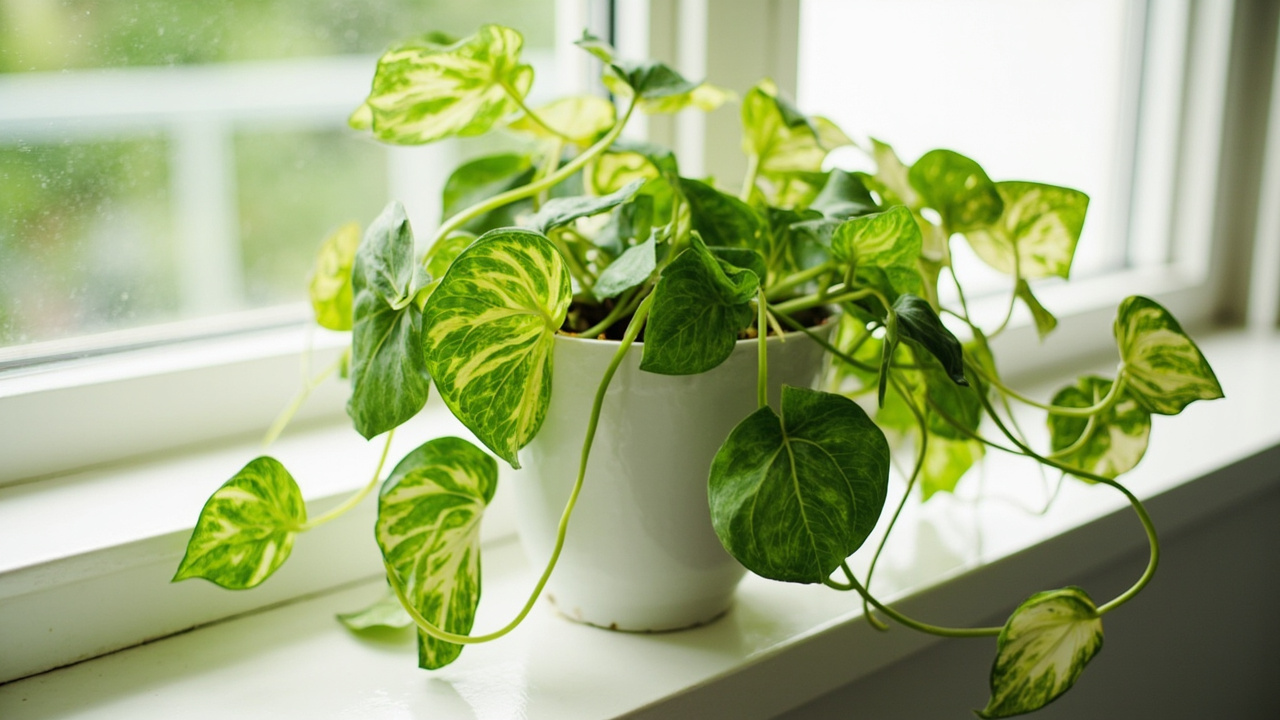

Money plants are indoor plants — they’re tropical understory plants that evolved in consistent warmth and filtered light, and they don’t handle cold the way some more hardy houseplants do. That said, money plants can spend summer months outdoors in the right conditions, and many people successfully move them outside for the warm season and bring them back inside before temperatures drop.
Money plants are indoor plants — they’re tropical understory plants that evolved in consistent warmth and filtered light, and they don’t handle cold the way some more hardy houseplants do. The care guide covers the baseline temperature requirements.
The light guide explains why direct sun is the problem it is for this plant.
The question of whether a money plant can live outside isn’t a simple yes or no. It’s about when, where, and how.
The Temperature Problem
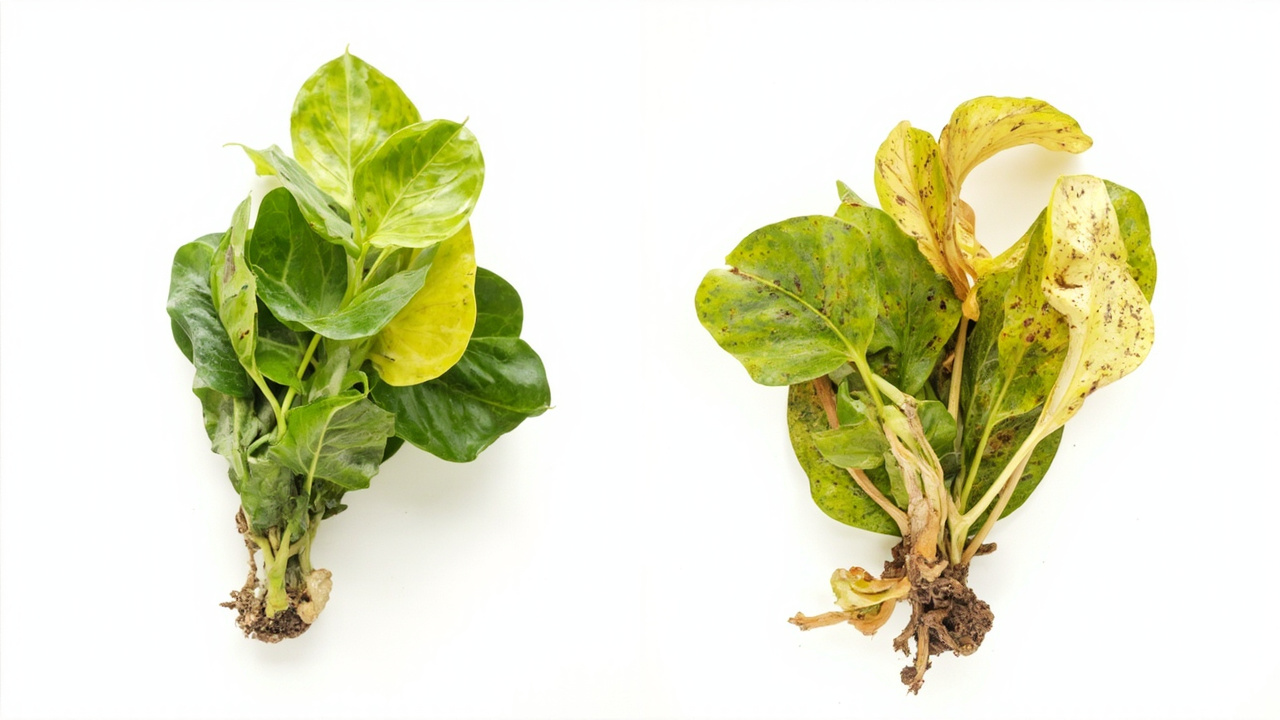
Money plants are not frost-tolerant. They are not cold-hardy. The moment temperatures approach 50°F / 10°C or below, the plant begins to experience stress. Below 45°F / 7°C, damage occurs. Below freezing, the plant dies. This isn’t a plant that shrugs off cold nights — it requires protection from anything below roughly 55°F / 13°C on a sustained basis.
In most temperate climates, this means money plants can only safely be outdoors from roughly late spring through early autumn — typically May through September, depending on your local climate. Even in those months, nights below 55°F / 13°C cause stress that accumulates and eventually shows up as slow growth, yellowing leaves, and eventually damage.
The practical rule: money plants go outside when nighttime temperatures are consistently above 55°F / 13°C, and they come back inside before the first autumn cold arrives. In zone 8 and warmer (parts of the US, Mediterranean climates, subtropical regions), this window is longer. In northern Europe or northern US, the window is shorter or outdoor placement may not be worthwhile at all.
Where to Place Money Plants Outdoors
Full Shade / Dappled Light
Money plants are forest floor plants — they never grow in full sun in their natural habitat. Direct outdoor sun, even in temperate climates, will burn money plant leaves within hours. The afternoon sun in summer is intense enough to cause leaf scorch on even the most robust specimens.
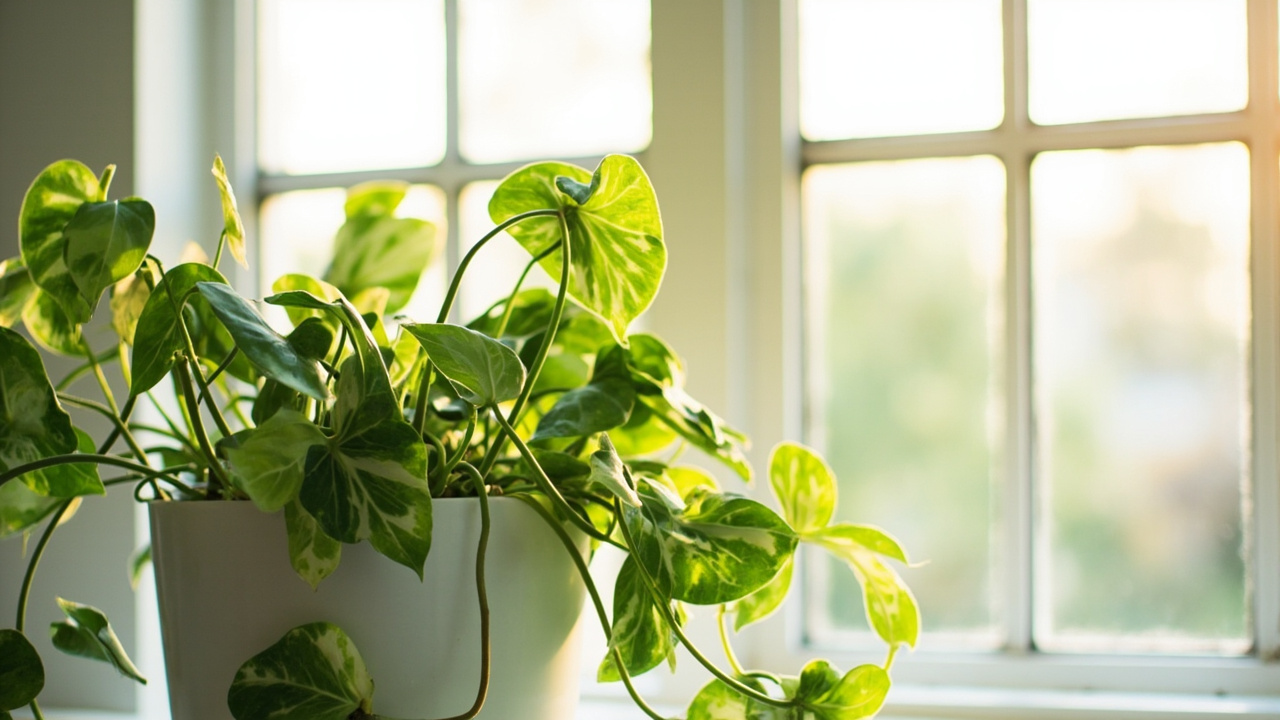
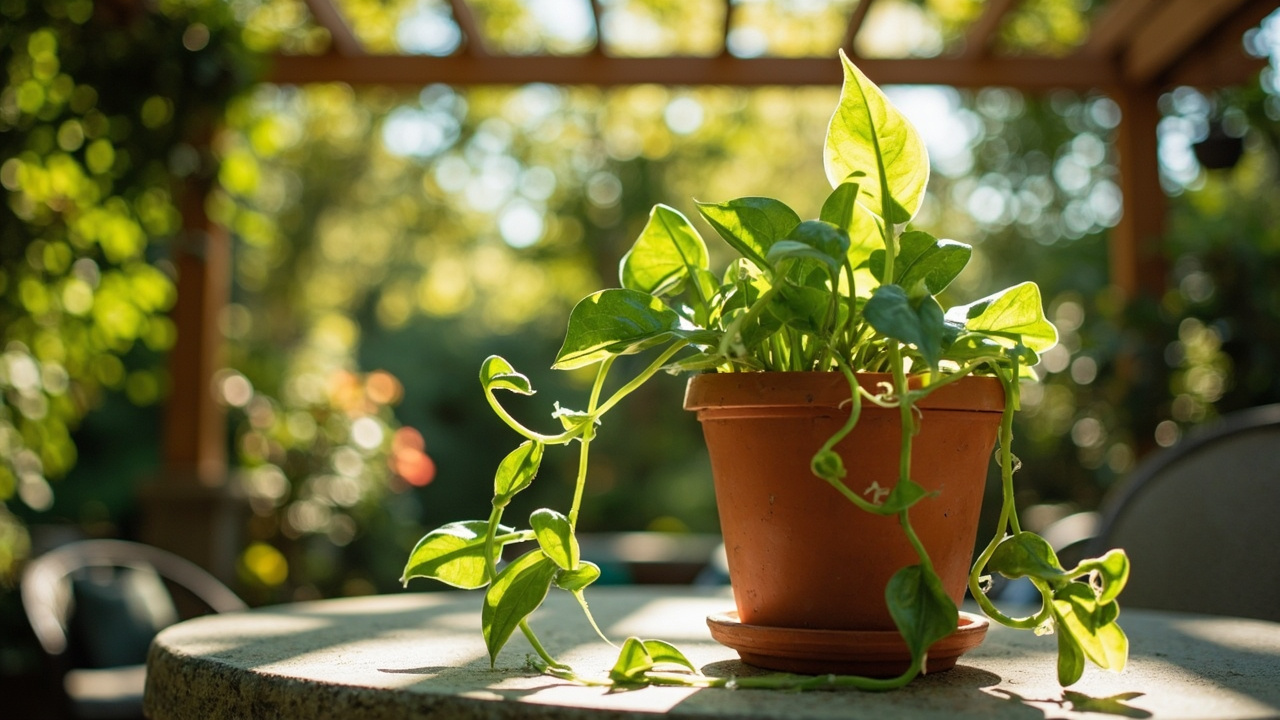
The right outdoor position: full shade under a covered patio, covered deck, or beneath a tree canopy. Bright dappled light that moves across the space during the day is ideal — similar to the light beneath a tree canopy in a tropical forest. A north-facing spot under a covered structure that gets no direct sun at all is also fine.
Brighter indirect light than normal indoor conditions is beneficial — money plants respond to the increased light outdoors with more vigorous growth and larger leaves. But the light must be indirect. Direct sun outdoors burns worse than direct sun through a window because the intensity is higher without window glass filtering.
Sheltered from Wind
Wind is the other outdoor risk factor. Money plant vines are flexible and snap in strong wind. Outdoor placement should be sheltered — against a wall, under a covered structure, or in a spot where wind is blocked by other elements. Open patios with no wind protection are not suitable for trailing money plants unless the pot is very heavy and the vines are short enough not to catch the wind.
Rain and Moisture
Money plants handle occasional rain if they’re in fast-draining soil and the pot has drainage holes. Sustained rain — several days of constant precipitation — is more problematic. A pot left in heavy rain without drainage will become waterlogged and develop root rot within days. If outdoor placement includes any chance of the pot sitting in water, elevate the pot on pot feet or bricks to ensure drainage holes don’t sit in pooled water.
The Transition Between Indoors and Outdoors
Moving a money plant directly from an indoor environment to full outdoor conditions shocks it, even when the outdoor conditions seem suitable. The change in light intensity is abrupt — indoor light levels are typically 500-2000 lux, while outdoor shade might be 10,000-20,000 lux. That’s a 5-10x increase that the plant’s metabolic system needs time to adjust to.
The right transition: start moving the plant outdoors for a few hours each day in spring, gradually increasing the time outside over 2-3 weeks. This allows the plant to photoadapt without stress. After the transition period, the plant can stay outdoors permanently during the warm season.
The same applies in reverse in autumn — don’t bring a plant that’s been outdoors all summer directly into a heated interior. Move it to a cooler transitional space (porch, unheated conservatory) for a couple of weeks before bringing it into the main indoor environment. This mimics the gradual temperature and light change it would experience in nature.
Summer Outdoor Care
Money plants outdoors in warm weather grow significantly faster than they do indoors. The increased light, airflow, and natural temperature variation stimulate more vigorous growth than most indoor environments provide. During the outdoor season, expect the plant to produce substantially more growth than it would indoors — potentially twice as much vine extension over the same period.
This means more frequent watering is needed outdoors. In a warm summer with the plant in good light, the soil may dry out every 2-3 days rather than every 7-10 days. Check the soil more frequently and water accordingly. Also expect to fertilise more — the plant is using more energy and will deplete nutrients faster.
Bringing the Plant Back Inside
Watch the overnight temperature forecast from late summer onwards. Once night temperatures start approaching 55°F / 13°C with any regularity, it’s time to bring the plant inside. Don’t wait for visible cold damage — by the time yellowing leaves and slow growth appear, the plant has already been stressed and will need time to recover indoors.
Before bringing inside: check for pests. Outdoor conditions expose money plants to sap-sucking insects like spider mites, scale, and mealybugs that may not be present on the indoor plant. Inspect the vines, the undersides of leaves, and the soil surface. Treat pests before bringing inside or you’ll be dealing with an indoor infestation all winter.
The Honest Verdict
Money plants can live outside during warm months, and many people successfully move them to shaded patios, covered decks, and sheltered garden spaces for the summer. The growth improvement is noticeable — the plant responds to better light and natural conditions in a way that indoor positions rarely match.
The limits are real: no frost, no direct sun, no wind exposure, and no prolonged rain. If your outdoor space offers filtered light, shelter from cold and wind, and a warm season long enough to make the transition worthwhile, outdoor placement works well. If it doesn’t, the plant is better off staying indoors year-round.
Turn PDF Bank Statements Into Workable Spreadsheets
Your bank statement is a mess of numbers, but your books shouldn't be. Use our converter to get Excel, CSV, or QBO files — ready for QuickBooks.