
Money plants tolerate a lot of neglect, but overwatering creates conditions for root rot — and money plant root rot progresses faster than most people expect. The plant hides it underground until the damage is significant, which means by the time symptoms show above the soil, the roots are already compromised.
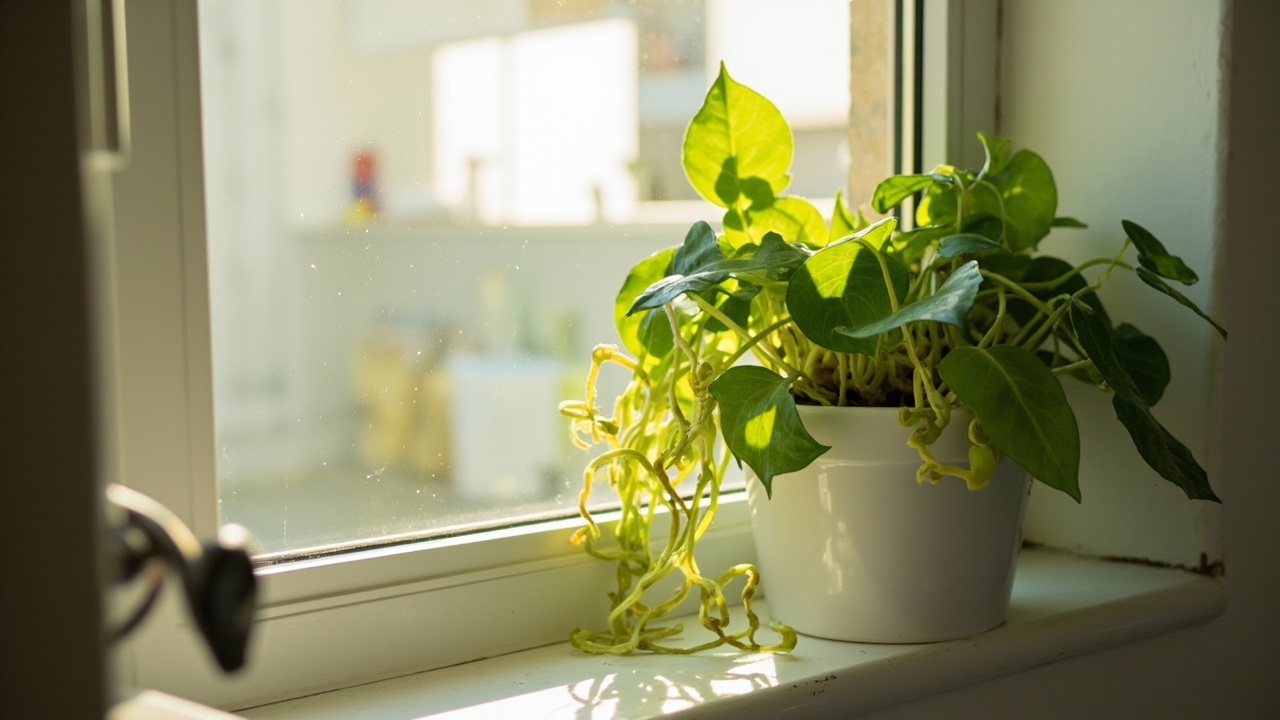
The key thing to understand: an overwatered money plant often looks like it’s underwatered. The leaves droop, the vines soften, and the natural response is to water more. This is exactly the wrong move, and it accelerates the problem.
What Root Rot Actually Is
Root rot happens when soil stays waterlogged long enough for anaerobic bacteria to build up and invade the root tissue. The roots — which need oxygen as much as they need water — begin to decompose. As roots die, they stop absorbing water and nutrients, and the plant’s above-ground parts start to decline even though the soil might feel damp.
The critical point: overwatering doesn’t cause root rot because there’s “too much water.” It causes root rot because water excludes oxygen from the root zone. A money plant in fast-draining soil that gets watered every day won’t develop root rot because the soil dries between waterings. A money plant in dense, moisture-retentive soil that gets watered once a week can develop root rot if the soil stays damp for 10+ days between waterings.
The Overwatered-Looking-Underwatered Problem
When root rot has damaged the roots, the plant can’t absorb water even though the soil is damp. This is why the symptoms are confusing: the plant shows classic underwatering signs — wilting, drooping, soft stems — but the soil is wet. If you add more water, you make the anaerobic conditions worse and speed the rot.
The fix when in doubt: check the roots directly. There’s no substitute.
How to Inspect the Roots
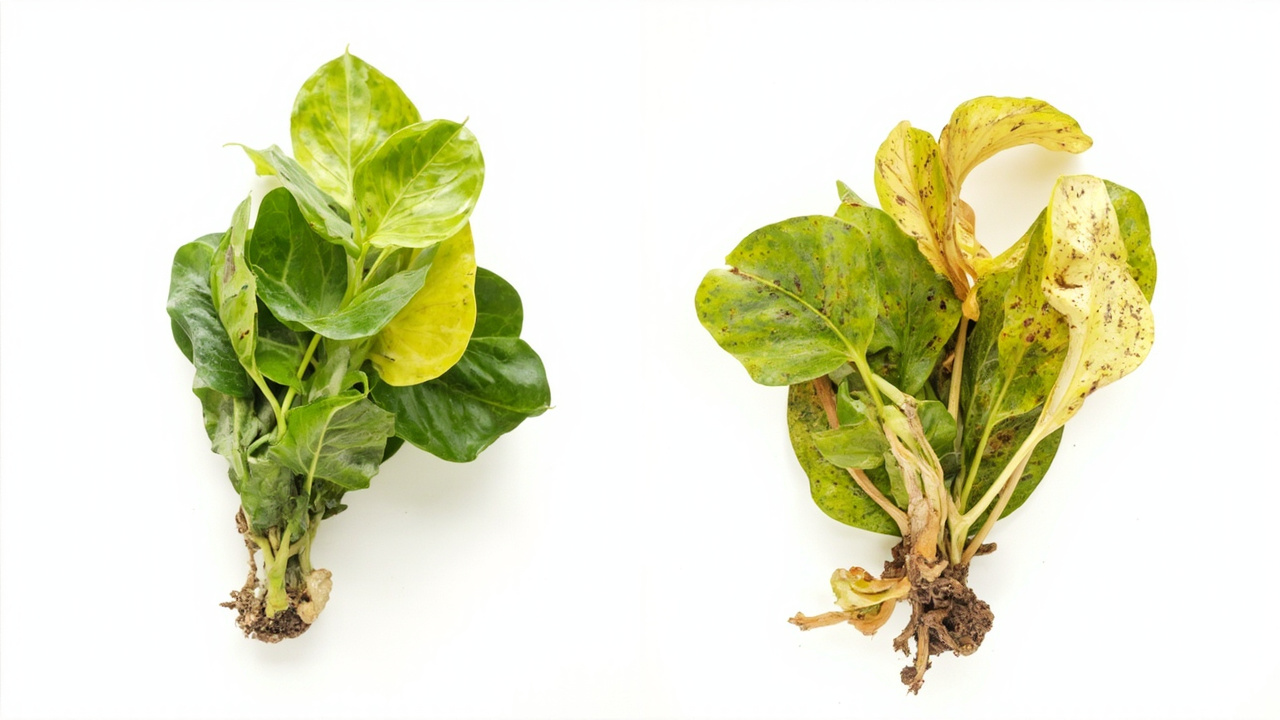
Tip the plant out of its pot. Healthy money plant roots are white to tan, firm, and somewhat wiry. They should feel alive and resilient. Rotted roots are dark brown to black, mushy when touched, and collapse easily under light pressure. They may smell sour.
If only the fine outer feeding roots are affected and the main structural roots are still firm, the plant will recover with treatment. If the main roots are soft and mushy throughout, recovery is more difficult but still possible if you catch it early enough.
How to Treat Root Rot in Money Plants
Step 1: Remove the Plant and Rinse
Gently tip the plant out of its pot and shake or rinse off all the soil. This soil harbours the anaerobic bacteria and must go. A gentle stream of water works well to clear the root ball.
Step 2: Cut Away Damaged Roots
With sharp scissors or pruning shears, remove every soft, dark, or mushy root. Work until you have only firm, light-colored roots remaining. Don’t be tentative — leaving damaged tissue in contact with healthy roots allows the rot to spread. Healthy roots should snap cleanly when pulled gently rather than bending.
Step 3: Let the Roots Air Dry
Set the plant on a dry surface for 24-48 hours before replanting. This allows the cut root ends to callous over, which is essential before introducing them to moisture again. Without this step, the cut tissue will immediately begin to rot in fresh soil.
Step 4: Repot in Fresh, Fast-Draining Mix
Use a completely fresh soil mix — never reuse the old soil. Add at least 30% perlite to your potting mix for money plants. Use a clean pot with drainage holes. The pot should be only slightly larger than the remaining root system.
Plant at the same depth as before. Water lightly once after repotting — just enough to dampen the soil. Then do not water again for 2-3 weeks. The plant needs time to regrow roots before it can handle moisture.
Step 5: Post-Treatment Care
Place in bright indirect light — not direct sun while recovering. Do not fertilize for at least 6-8 weeks. Water only when the top inch of soil is completely dry. Signs of recovery: new vine growth at the tips. This can take 4-6 weeks in good conditions.
Preventing Root Rot Going Forward
The prevention is entirely in watering habits and soil drainage. Water only when the top inch of soil is dry. Use a pot with drainage holes. Empty the saucer within 30 minutes of watering. Add perlite to the soil mix. The watering guide has the complete breakdown.
If you’ve had root rot once with a money plant, the soil mix needs to be adjusted permanently. Add more perlite. Consider a terra cotta pot rather than plastic — terra cotta dries faster and reduces the chance of repeat rot.
The single most effective habit: checking soil moisture before every watering. A moisture meter removes the guesswork. Water only when the soil is dry, not on a schedule.
From PDF to Excel in one click
Forget retyping line by line. Upload any bank statement, get a spreadsheet you can actually use. Your files are never stored, and you can test the converter with 3 free conversions.
Try it free