Caladiums present a watering paradox that catches almost every new grower: they want consistently moist soil, yet they are killed faster by overwatering than by almost any other mistake. Getting it right is not about following a fixed weekly schedule — it is about learning to read the soil, understanding how the plant’s tuber anatomy makes it especially sensitive to waterlogging, and adjusting your approach across the seasons.
Caladiums are frost-tender aroids whose tuber anatomy makes them uniquely sensitive to watering mistakes. The tuber stores carbohydrate reserves and each node along the rhizome can produce an offset or daughter plant.
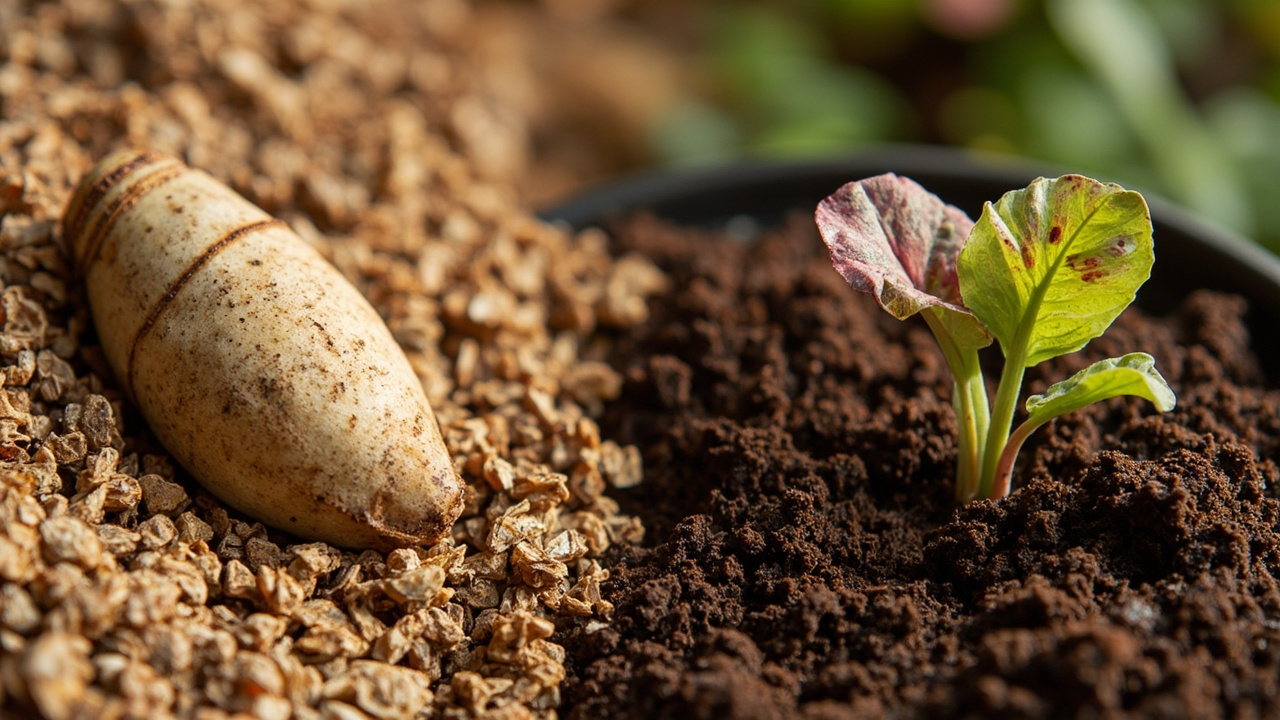
The reason Caladiums are particularly vulnerable to overwatering is their tuber. Unlike most houseplants, which have a fibrous root system that can recover from brief periods of saturation, a Caladium tuber sits in the soil and stores the plant’s energy reserves. When the soil stays wet for too long, the tuber becomes susceptible to Pythium and Phytophthora root rot — pathogens that thrive in waterlogged conditions and can destroy the plant below the soil line before any symptoms are visible above. This is not a theoretical risk; it is the most common cause of Caladium death in indoor cultivation. The tuber is the heart of the plant, and waterlogged soil suffocates it silently.
The core rule is simple: check the top inch of soil before every watering. If it feels dry to the touch, water thoroughly until it flows freely from the drainage hole. Then empty the saucer. If the top inch still feels moist, wait. This one habit prevents most Caladium watering problems. For a full overview of caladium care including this watering rhythm, see our caladium care guide.
How Often to Water Caladium
During the active growing season — roughly late spring through summer — most Caladiums need watering every 5 to 10 days. The exact interval depends on temperature, pot size, the moisture-retention properties of your soil mix, and the light levels the plant receives. A small pot in a hot, bright room dries out faster than a large pot in a cool, shaded corner.
The most reliable method is the finger test: insert your index finger into the top inch of soil. If it comes out dry, it is time to water. If there is any moisture remaining on your finger, wait and check again in a day or two. A moisture meter gives the same information in a more precise form if you prefer an instrument reading.
As temperatures drop in autumn and daylight shortens, the plant’s water needs decrease. Reduce frequency gradually as growth slows. By the time the leaves begin to yellow and the plant shows signs of dormancy, watering should be reduced to a bare minimum — just enough to prevent the tuber from completely desiccating. Caladiums are frost-tender aroids that cannot tolerate cold, so keep the plant above 15°C (60°F) year-round indoors.
The Right Watering Method
When you water a Caladium, water thoroughly. Add water slowly to the soil surface until it flows freely from the drainage hole at the base of the pot. This ensures the entire root zone and the soil around the tuber receive moisture. A shallow watering that only dampens the top centimetre encourages shallow root growth and leaves the lower root zone dry.
The saucer management rule is non-negotiable for Caladiums: empty the saucer within 30 minutes of watering. Standing water around the base of the pot keeps the soil saturated at the very point where the tuber sits. This extended saturation is precisely what creates the conditions for root rot to develop. A terracotta saucer is preferable to a plastic one because terracotta absorbs some water and reduces the time the pot sits in a puddle.
Caladium Watering by Season
Caladium watering needs change significantly across the year, and matching your approach to the plant’s natural growth cycle is one of the most effective things you can do for its long-term health.
During spring and summer — the active growing season — Caladiums absorb water rapidly as they produce new leaves. This is when they are most susceptible to drought stress and when underwatering becomes a real risk. Check the soil every few days in hot weather and water whenever the top inch is dry. Sunlight intensity drives transpiration rates — more bright indirect light means the soil dries faster and the plant drinks more. The photoperiod also matters: longer days in summer extend the active growth window and keep the crown and axillary buds producing new foliage that demands consistent moisture.
As autumn arrives and daylight shortens, growth slows and the plant’s water requirements drop. This is the time to reduce watering frequency proactively. Continuing to water at summer levels during autumn is a common mistake that increases the risk of the tuber rotting just as the plant is trying to rest. Ease back on frequency gradually. The shortening photoperiod is the primary signal that triggers this seasonal shift — caladiums read daylength the way they read temperature, and both together determine when the crown enters its dormant phase.
During dormancy, watering is minimal: enough to prevent the tuber from drying out completely, roughly once every 3 to 4 weeks depending on the storage conditions. The temptation to keep watering to prevent dormancy should be resisted — the dormancy cycle is natural and healthy for the plant. For a full guide to the dormancy period and what to expect, see our caladium dormancy care article.
Active Growth (Spring-Summer)
Water every 5 to 10 days. Check the top inch of soil every 2 to 3 days in hot weather. Watch for the first signs of drooping — Caladiums communicate water stress quickly through leaf turgor loss, and they usually recover within hours of a thorough watering. The bright indirect light conditions the plant receives also affect transpiration rates — more light means faster drying.
Slowing Down (Autumn)
Reduce watering to every 10 to 14 days. Let the soil dry out more between waterings than in summer. Watch for the natural yellowing and collapse of leaves as the plant prepares for dormancy — this is not a problem to solve, it is the expected seasonal transition. Daylength drives this senescence signal more than temperature does.
Dormant (Winter)
Water roughly once every 3 to 4 weeks. The goal is to keep the tuber from completely desiccating, not to support active growth. If you lift and store the tuber in dry peat or vermiculite, do not water at all until spring. The dormant tuber is a storage organ, not a growing one.
Diagnosing Overwatering vs Underwatering
The symptoms of overwatering and underwatering can look similar at first glance — both can cause wilting or a general decline in leaf quality. But the details are distinct enough to tell apart if you know what to look for.
- Overwatering shows as yellowing lower leaves (the oldest leaves first), stems that feel soft or mushy at the base, and soil that stays wet for more than a week after watering. The leaves may droop, but the soil will be obviously damp. The most serious consequence is root rot in the tuber, which can kill the plant even if the above-ground symptoms seem mild at first.
- Underwatering shows as leaves that droop, curl slightly inward, and develop dry, crispy brown edges or tips. The soil will be visibly dry — pulling away from the sides of the pot in extreme cases. Caladiums usually recover within hours of a thorough watering if the underwatering has not been prolonged.
The single most reliable diagnostic is the soil: if it is wet and the plant is wilting, suspect root rot and check the base of the plant. If the soil is dry and the plant is wilting, water immediately. Light levels affect how quickly soil dries — see our caladium light requirements guide for how to account for this.
Drainage: The Non-Negotiable
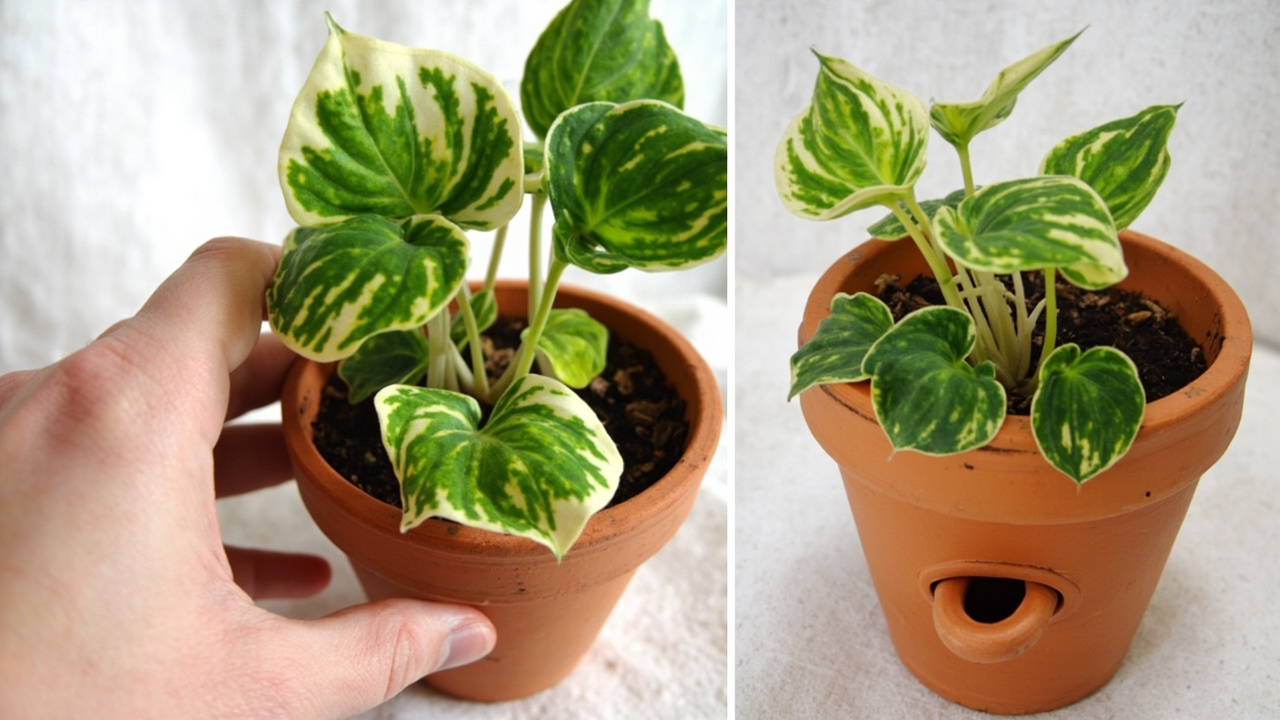
Drainage is the most important single factor in Caladium watering success. The Caladium tuber is a compact, energy-dense storage organ that sits at the centre of the root system. Unlike a fibrous root that can spread through the soil and escape a waterlogged zone, the tuber occupies a fixed position at the base of the pot. If the soil at the base of the pot stays saturated for more than a day or two, the tuber is directly exposed to the conditions that allow Pythium and Phytophthora to establish.
A pot with at least one large drainage hole is essential. Terracotta pots are preferable to plastic because the porous walls allow some evaporation, reducing the saturation time of the soil immediately around the tuber. The soil mix should be fast-draining — a standard houseplant mix with added perlite (roughly two parts mix to one part perlite) provides the right balance of moisture retention and drainage. A well-draining mix is non-negotiable for tuberous aroids like caladium.
The trade-off with fast-draining mixes is that they dry out faster, particularly in summer heat or in small pots. This means you may need to water more frequently. It is a worthwhile trade: a Caladium that dries out slightly between waterings is far less likely to develop fatal root rot than one that sits in a waterlogged pot. A well-draining mix also supports healthy offset formation — the small daughter plants that emerge from the crown or axillary buds near the soil surface. These offsets develop their own root systems while still attached to the mother plant, drawing water and nutrients through the rhizome connection before separating into independent plants.
Common Watering Mistakes
These are the errors that account for most Caladium failures:
- Watering on a fixed schedule regardless of the plant’s actual moisture needs. Always check the soil first.
- Leaving the saucer full of standing water for hours after watering. Empty it within 30 minutes.
- Continuing summer watering frequency into autumn. Reduce as the plant slows down.
- Watering a dormant Caladium at the same frequency as an active one. Dormancy requires dramatically less water.
- Using a pot without drainage because it looks attractive. No-drainage pots are a death sentence for Caladiums unless you are very skilled at watering exactly right.
- Treating drooping as always meaning thirsty. A drooping Caladium in wet soil is likely showing early signs of root rot — watering it more will accelerate the problem.
The key takeaway is simple: caladiums are tuber plants, not foliage plants. The tuber stores water and energy, and it needs dry periods between waterings to stay healthy. When in doubt, wait another day before watering. A slightly dry caladium recovers quickly. A waterlogged one may not.
Understanding the tuber also helps with propagation. Each offset or daughter plant that forms near the crown carries enough stored energy to establish independently. When you divide offsets during repotting, the hypocotyl and node structures at the base of each pup must stay intact — damage to these tissues prevents the new plant from sending up a shoot. Similarly, axillary buds along the rhizome can produce stolons or runners in humid conditions, giving you free plants without any cutting technique at all.
From Bank Statement to QuickBooks-Ready File
That manual cleanup you just read about? This tool skips it. Turn your PDF into QBO for QuickBooks without storing your data anywhere.
Start Converting