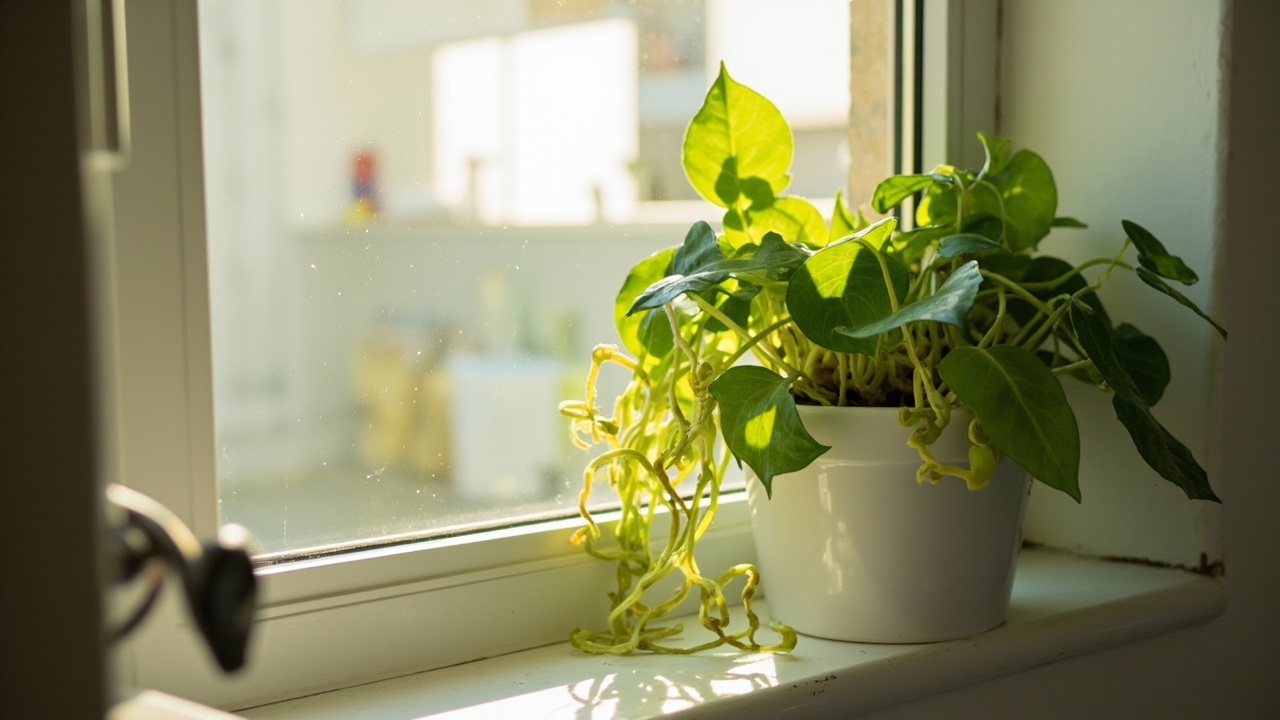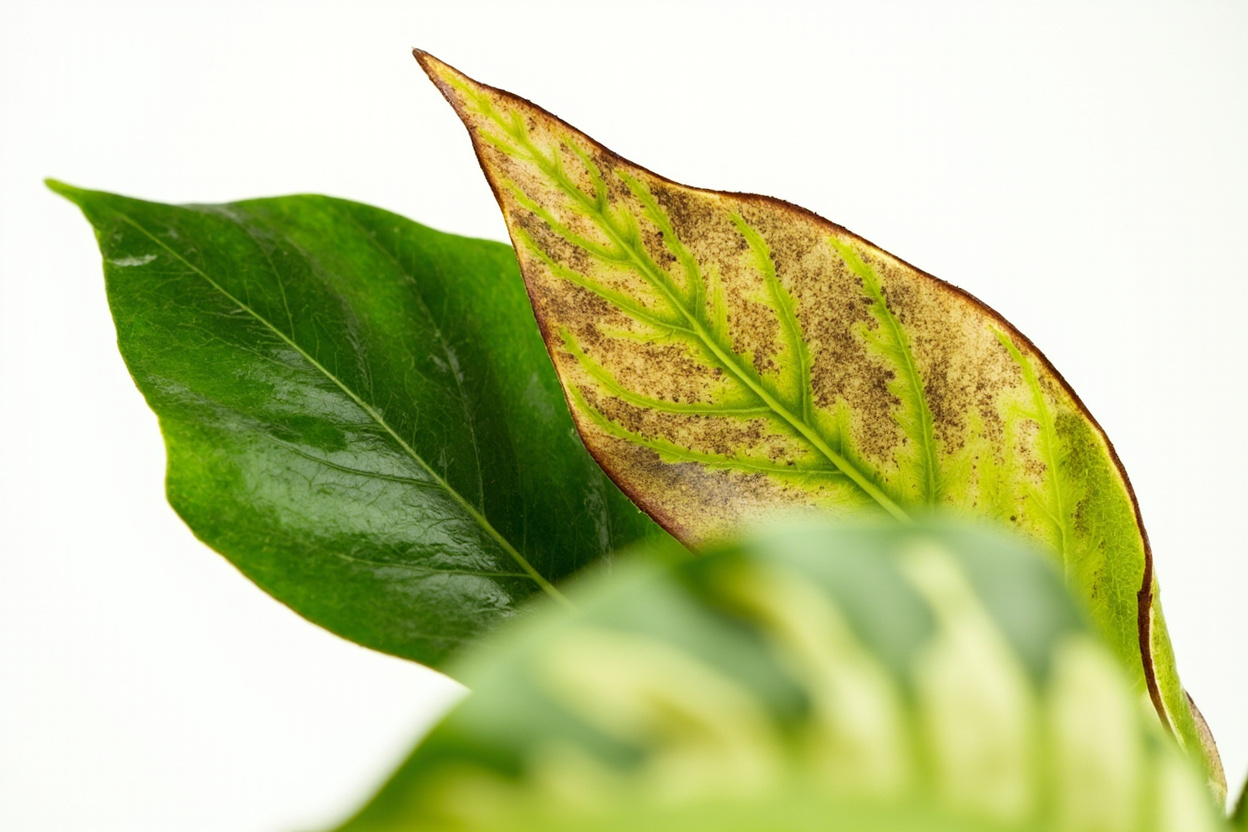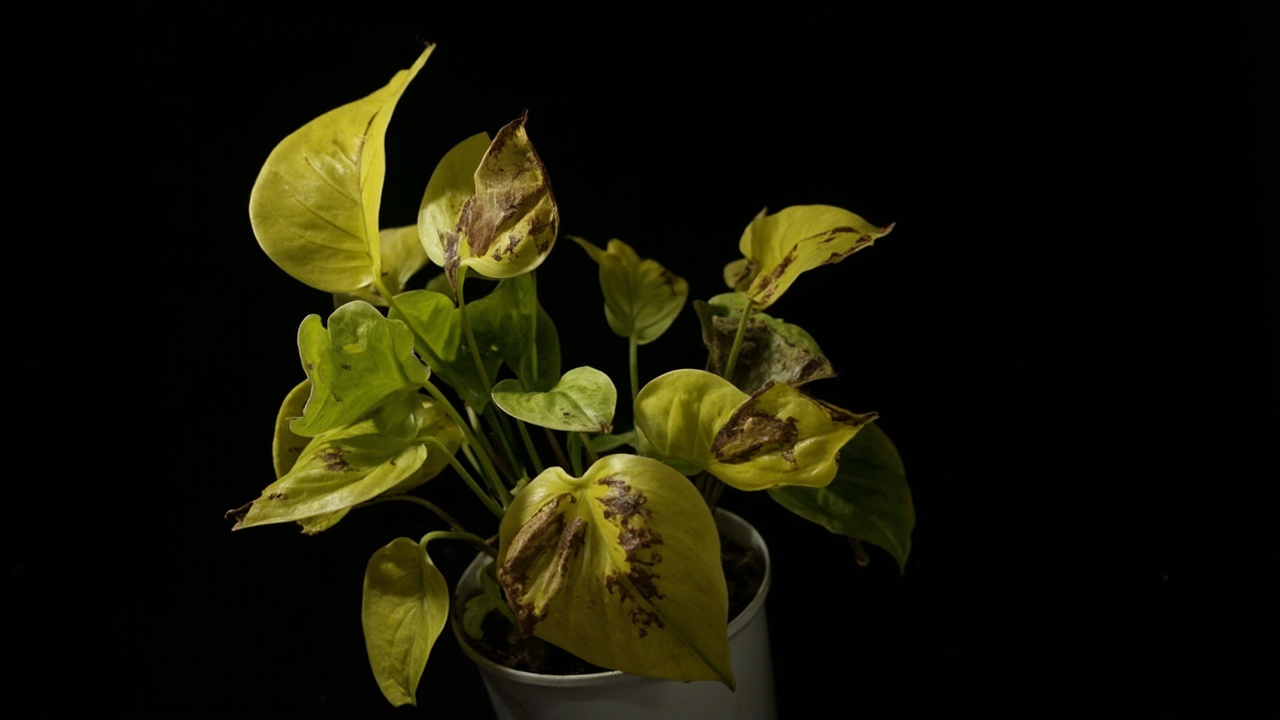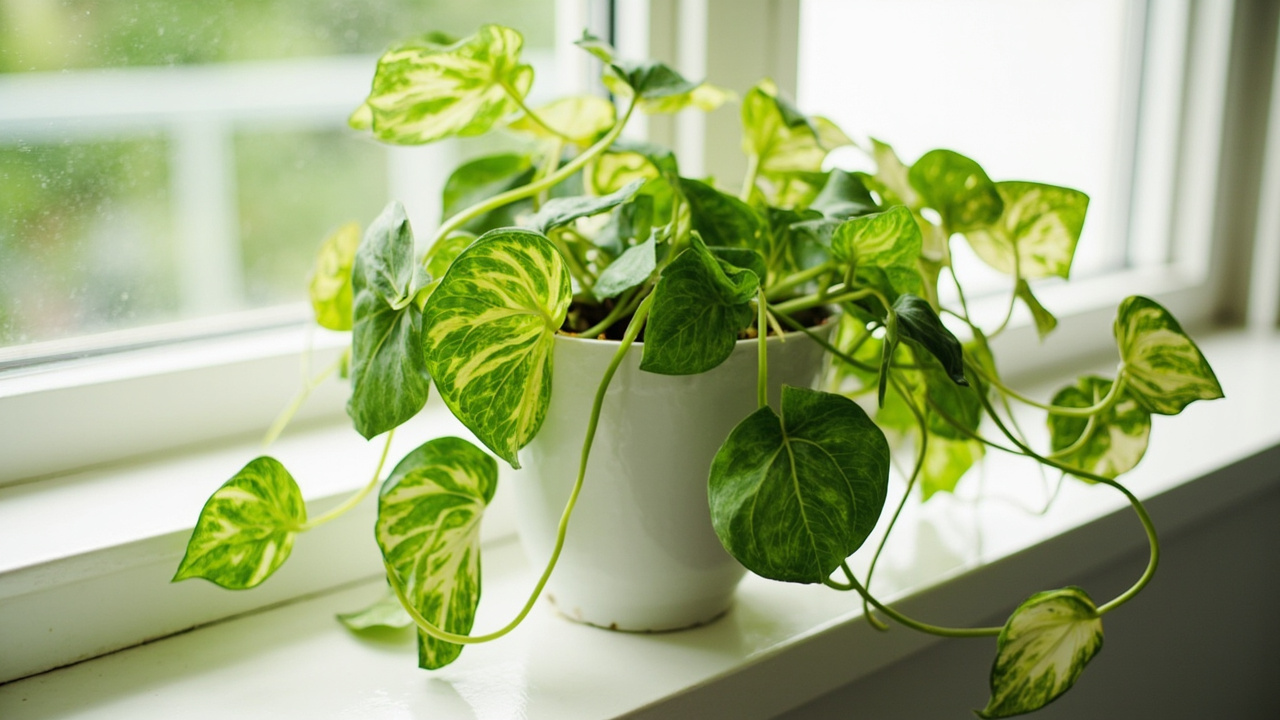

Money plants are everywhere — in offices, living rooms, bedrooms, hotel lobbies, and garden centres. They’re considered basic, even boring, in plant collector circles. But basic has a reason: money plants deliver more than most houseplants for less effort than almost any other green companion you could choose.
The propagation guide covers how a single plant compounds into many over time. The light guide has the full details on variegated varieties and their light needs.
The care guide covers the baseline maintenance that delivers these benefits consistently.
Air Quality
Money plants contribute to indoor air quality in ways that are real but often overstated in popular lists. NASA’s original 1989 Clean Air study identified Epipremnum aureum as effective at removing formaldehyde and benzene from sealed chamber air. Subsequent research has been more cautious about the scale of effect — the study was conducted in airtight chambers with controlled airflow, not typical homes.
What’s accurate: money plants do remove some volatile organic compounds from indoor air, and they do add humidity through transpiration. The effect is modest in a typical room but meaningful in spaces with poor ventilation or high chemical loads (new furniture, freshly painted rooms, offices with lots of synthetic materials).
The practical contribution: one money plant per 100 square feet of living space makes a measurable difference in a sealed room over 6-12 months. Multiple plants have a compounding effect. This isn’t dramatic air purification — it’s subtle, sustained improvement that works alongside proper ventilation rather than replacing it.
The Psychological Effect
Studies on biophilia — the human preference for connection to nature — consistently show that the presence of plants in indoor environments reduces stress hormones, improves mood, and increases perceived wellbeing. Money plants contribute to this effect as effectively as any more expensive or exotic houseplant. Having one on your desk versus not having one correlates with measurably lower cortisol levels during work tasks in controlled studies.
This isn’t unique to money plants, but it’s relevant: the plant you already have and keep alive delivers this benefit. You don’t need a rarecollector variety or an expensive install. A healthy money plant on your desk delivers the psychological effect just as well as a fiddle leaf fig costing ten times as much.
Low Maintenance, High Return
Money plants require less from their owner than almost any other popular houseplant. Watering every 7-14 days. No fertilising required in most conditions, though monthly feeding improves performance. No need for humidity control, mister, or pebble trays in most homes. No pruning required unless you want to manage the shape. No repotting required more than every 2-3 years.
This makes money plants the houseplant with the highest return on the care investment. The time and attention required to keep a money plant thriving is a fraction of what most other tropical houseplants demand. For people who travel frequently, work long hours, or are new to houseplants, this low-demand characteristic is the primary benefit.
The Forgiving Nature
Money plants recover from mistakes that kill other houseplants. Forgot to water for three weeks? The money plant is wilting but will recover within hours of watering. Moved it to a darker corner and it looks sparse? Move it back to brighter light and it recovers. The plant forgives the kind of inconsistent care that damages more sensitive species. This resilience is not an accident — it’s the result of the plant’s evolution in conditions where nature is inconsistent and survival depends on endurance rather than precision.
Aesthetic Benefits
Money plants are one of the most versatile design elements in interior plant styling. They trail gracefully from high shelves, fill corners with established fullness, climb moss poles into substantial specimens, and work in spaces where other plants look awkward or temporary. The trailing habit, in particular, is one that indoor designers rely on heavily because it creates visual flow — the vines lead the eye downward and soften the hard lines of shelves and furniture.
The colour palette works with most interior styles. The green-gold of golden pothos complements warm wood tones, white walls, and natural materials. The solid green of jade pothos works in minimalist or dark-contrast schemes. Neon pothos brings a brightness that lifts subdued rooms without clashing.
Propagation as Benefit
A single money plant, properly maintained for a year, produces enough material for 20-30 new plants through propagation. This isn’t a small thing — it means the initial investment in one healthy plant compounds over time into a collection or a supply of gifts. The propagation is also satisfying in a way that buying replacement plants isn’t: you’ve grown it, not purchased it.
The Confidence Builder
For people new to houseplants, money plants are the best first investment because they provide reliable feedback. When something is wrong, the plant shows it quickly. When something is right, the plant grows visibly within weeks. This fast feedback loop accelerates learning about plant care in a way that slower-growing plants don’t. A money plant teaches you what watering looks like, what good light looks like, what healthy growth looks like — and then rewards that knowledge with visible results.
The confidence developed with a money plant transfers to other plants. Someone who has kept a money plant alive for a year has learned the fundamentals of watering, light, and observation that apply to every other houseplant. The money plant is the training ground.
The Honest Limitation
Money plants are not special. They don’t have dramatic flowers, unusual textures, or the visual drama of a Monstera deliciosa or a fiddle leaf fig. In plant collector circles, they’re considered common. If you want a statement plant, a money plant isn’t the answer.
But if you want a plant that lives, grows, improves your space, and teaches you what you need to know about keeping plants — the money plant is the answer. And it costs less than a restaurant dinner.
Turn any PDF statement into a clean sheet
Skip the typos and the hours of copying. Our converter handles any bank statement format and outputs Excel, CSV, or QBO for QuickBooks. No file retention, free to try.
Convert your statement