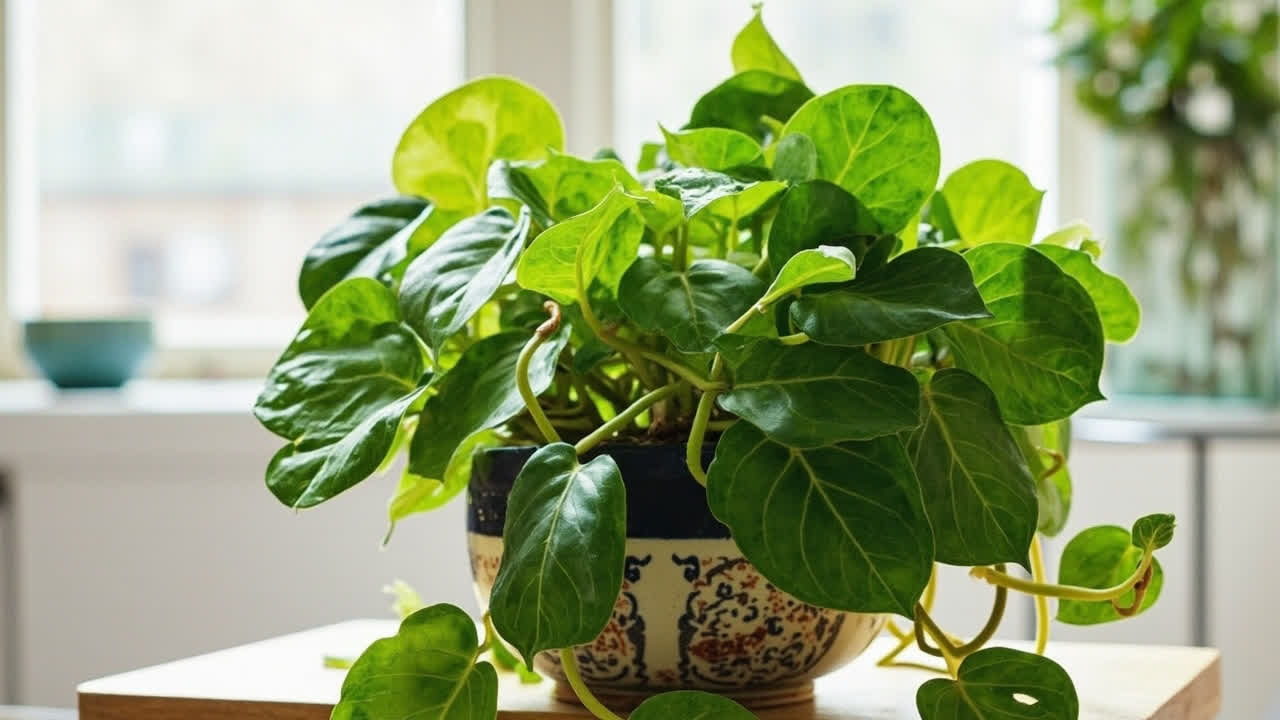

The money plant — also called pothos, devil’s ivy, or if you’re being botanical, Epipremnum aureum — is one of those rare houseplants that actually deserves its reputation. It tolerates low light, it tolerates irregular watering, it grows fast, and it looks good doing it. If you’ve managed to kill one, the problem is usually not the plant. It’s one of a few fixable things.
This guide covers everything that matters for keeping a money plant healthy in a home environment. No fluff, no filler — just the actual care logic that works.
What Is a Money Plant (and Why the Name?)
Epipremnum aureum is native to French Polynesia and Southeast Asia. It climbed its way into indoor plant collections worldwide because it’s genuinely hard to kill and adapts to conditions that would defeat most tropical houseplants. The “money plant” name is applied to several different species in different cultures — in China and India it’s associated with good fortune — but in Western houseplant circles, “money plant” almost always means pothos.
What makes pothos remarkable: it trails for metres when given the space, it climbs if you give it something to attach to, and it propagates from a single node cutting dropped in water. If you have one healthy money plant, you have an infinite supply of money plants. That’s not an exaggeration.
Money Plant vs. Pothos vs. Devil’s Ivy
These are the same plant. Epipremnum aureum has been called money plant in Asia, devil’s ivy in Europe (because it grows in dark conditions where other plants struggle), and pothos everywhere. The names are interchangeable in houseplant context. The care is identical regardless of what you call it.
Light: The Most Important Factor
Money plants handle low light better than almost any other houseplant. They survive in rooms with north-facing windows, offices with fluorescent lighting, and dim corners where nothing else thrives. But “survive” and “thrive” are different things — and the difference is visible in the leaves.
In low light, a money plant slows its growth noticeably. New leaves come in smaller, the trailing vines lengthen but don’t thicken, and the variegation — if your plant has it — fades. The plant is managing, not flourishing. If you want vigorous growth and large, deeply variegated leaves, give your money plant bright indirect light for 4-6 hours daily.
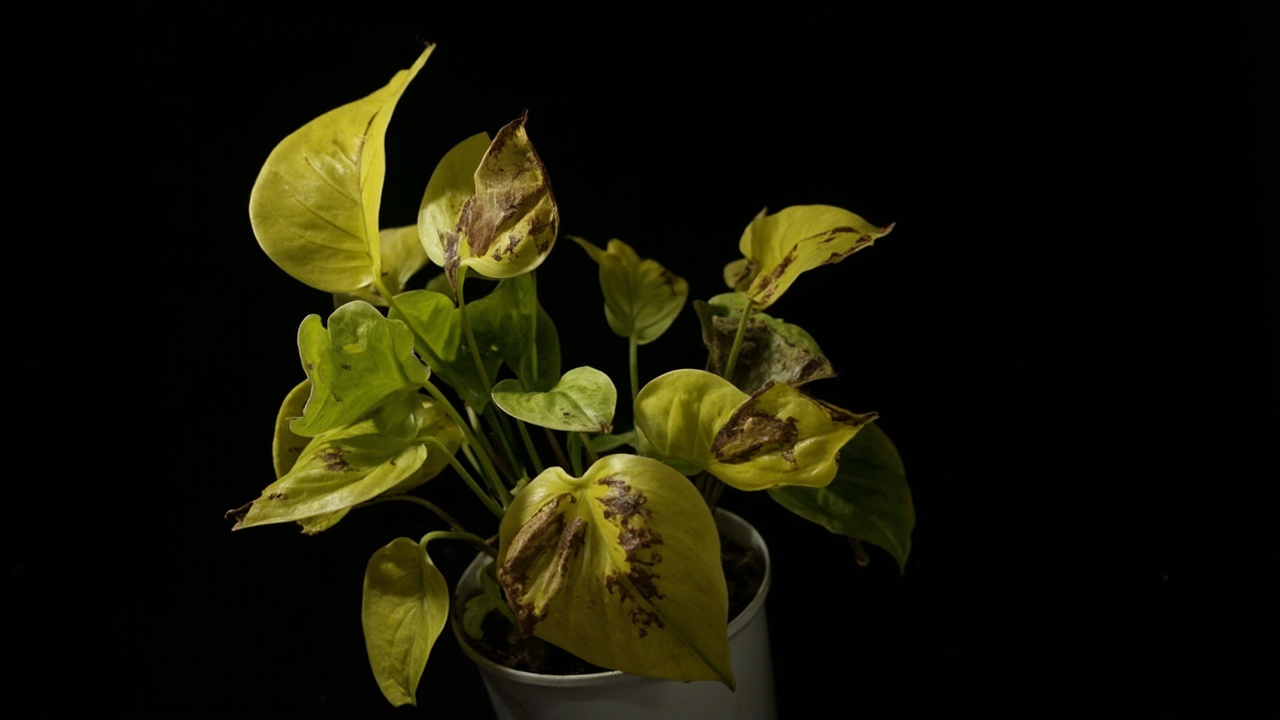
Direct sun is the one thing money plants genuinely dislike. The leaves scorch easily — they’ll develop brown, papery spots within hours in hot direct sun through glass.Filtered light or morning sun from an east-facing window is fine. Afternoon sun from the south or west is too intense.
The Variegation Question
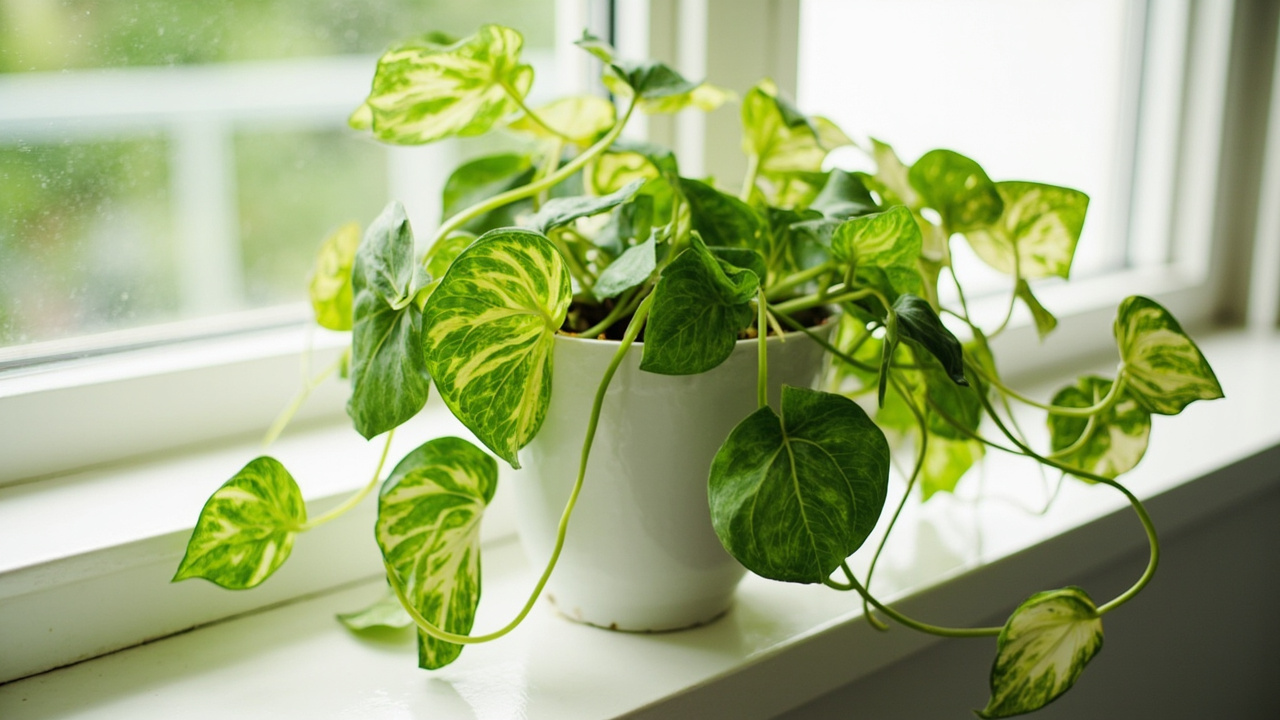
Variegated money plant varieties — golden pothos, marble queen, neon pothos — need more light than solid green varieties to maintain their variegation. In low light, the solid green sections expand and the variegated sections shrink. If you’ve noticed your marble queen becoming more green than white, the light is too low. Move it closer to a window and watch the new leaves express more variegation.
Watering: The Core Skill
Money plants store water in their leaves and stems, which means they tolerate drought better than most tropical houseplants. They can go 2-3 weeks without water in low-light conditions and recover quickly when watered. This makes them forgiving for people who travel frequently or tend to forget to water. Root rot from overwatering is the main risk — the root rot guide has the full treatment steps.
The watering rule for money plants is simple: water when the top inch of soil is dry. Not when the surface looks dry — when you push your finger in and the first inch is dry. The watering guide has the complete seasonal breakdown.
What happens if you water too frequently: the stems become soft and mushy, the leaves yellow, and root rot develops. What happens if you underwater severely and repeatedly: the leaves droop, then crisp at the edges, the vines shrivel slightly, and the plant looks generally sorry for itself. Both are recoverable. The underwatered plant recovers faster.
Water Quality
Money plants are relatively tolerant of most water types, but they can be sensitive to fluoride and chlorine in tap water, particularly in sensitive varieties like neon pothos. The tip burn — brown edges on otherwise healthy leaves — that appears on neon pothos is often a water chemistry issue rather than a watering frequency issue. If you have a sensitive variety and your tap water is heavily chlorinated, leaving a jug of water to sit uncovered overnight before using it reduces the chlorine concentration enough to help.
Soil and Drainage
Money plants aren’t fussy about soil, but they need drainage. A standard potting mix works fine. If you’re using a mix that feels dense or stays damp for more than a week after watering, add perlite — roughly 30% perlite to 70% potting mix. This is the single adjustment that prevents most money plant problems.
The pot matters as much as the soil. A pot without drainage holes will kill a money plant faster than almost any other mistake. The roots sit in water and rot. Always use a pot with drainage holes, and empty the saucer within 30 minutes of watering.
Temperature and Humidity
Money plants do well in the same temperature range as most homes: 60-75°F / 15-24°C. They slow their growth below roughly 55°F / 13°C and can sustain damage below 50°F / 10°C. They don’t need humidity adjustment — they handle average indoor humidity without issue.
If your money plant is near a cold window in winter, check the actual temperature at leaf level. Glass can be 10-15°F / 5-8°C colder than the ambient room temperature. A plant sitting against a cold window on a frosty night can experience temperatures that would cause damage even though the thermostat reads normal.
Feeding
Money plants are not heavy feeders, but they grow fast and deplete potting soil nutrients within a few months. During active growth (spring through fall), a monthly feed with a balanced liquid fertilizer diluted to half strength keeps them looking their best. Don’t fertilize in winter when growth slows — the nutrients build up as salt in the soil and damage roots.
Common Problems and What They Mean
Yellow leaves on a money plant usually mean overwatering. Start by checking the soil — if it’s damp below the surface, the roots are sitting in water. Second most common: underwatering combined with very low humidity. The third possibility: too much direct sun, which stresses the plant even if it hasn’t scorched the leaves.
Brown leaf tips on neon pothos are usually a water chemistry issue, not a watering issue. Fluoride and chlorine sensitivity shows up as tip burn on this variety before it appears on others.
Vines that are long and sparse with small leaves — this is the classic sign of insufficient light. The plant is etiolating, stretching toward whatever light it can find, and putting that energy into vine length rather than leaf size. Move it closer to a window.
Soft, mushy stems at the base — severe overwatering and likely root rot. Check the roots by gently tipping the plant out of its pot. If the roots are dark and mushy, treat for root rot. If only the lower stems are affected and the upper vines are still firm, you can propagate the healthy tips and start over.
The Money Plant Propagation Shortcut
One healthy money plant is all you need. Cut a vine with 3-4 nodes — a node is the small bump where a leaf meets the stem. Remove the lowest leaf, leaving 2-3 leaves at the top. Place the cutting in water with the nodes submerged. Roots appear within 1-2 weeks. Once roots are 2-3 inches long, plant in soil. This takes about a month and works reliably on every variety of pothos.
The propagating-in-water step is optional — you can plant cuttings directly into moist soil and they’ll root. The water method is more satisfying because you can watch the roots develop.
What Makes Money Plants Special
Most houseplants that tolerate low light look like they’re barely surviving in dim conditions. Money plants look like they’re doing fine. That distinction matters if you’re furnishing a low-light space. A ZZ plant in low light looks tired. A money plant in low light looks intentionally designed for that corner.
They’re also among the best plants for people who travel. Their water storage system means a week or two without watering in a dim room won’t kill them. Most other tropical houseplants would be in serious trouble by then.
If you’ve been treating yours as unkillable and it’s been slowly declining anyway, the most likely culprits are overwatering, insufficient light, or a pot without drainage. The money plant problems guide has the full diagnostic breakdown for these symptoms.
Turn That PDF Into a Spreadsheet in Minutes
You've seen how to do it manually — now let the tool handle the heavy lifting. Upload your bank statement and get Excel, CSV, or QBO in a few clicks.
Try It Free