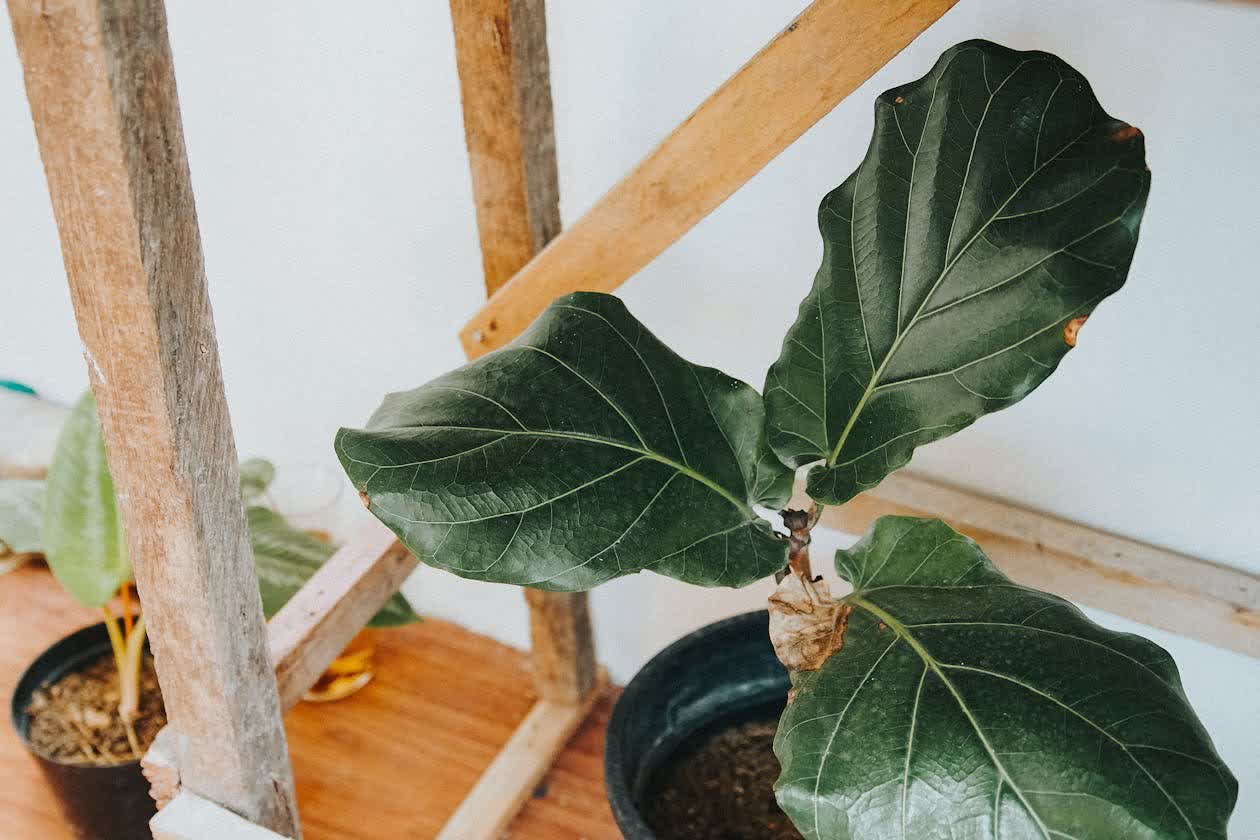

You haven’t changed anything about how you care for your fiddle leaf fig. Same spot by the window. Same watering schedule. But lately the leaves look duller than usual, a few are yellowing, and the newest leaf at the top came in smaller than the previous one. You’re not sure if you’re underwatering or if something worse is happening.
Root rot in fiddle leaf figs is one of the most misdiagnosed problems in indoor plant care — because the soil usually looks fine, the plant doesn’t collapse overnight, and the symptoms mimic underwatering closely enough that most people keep watering the plant into its grave.
What Root Rot Actually Is in Fiddle Leaf Figs
Root rot occurs when the soil stays saturated long enough that the roots — which need oxygen as much as they need water — begin to suffocate and decay. Fungal organisms that are always present in soil multiply rapidly in anaerobic conditions and invade the weakened root tissue. As the roots break down, they stop absorbing water and nutrients, and the decline moves upward through the plant.
The critical misunderstanding: overwatering doesn’t cause root rot by causing too much water. It causes root rot by excluding oxygen from the root zone. A fiddle leaf fig that dries out completely between waterings almost never develops root rot, regardless of how much water it gets in a single session. A fiddle leaf fig that stays damp for more than 10 days after watering almost certainly will, given enough time. The fiddle leaf fig watering guide has the full breakdown of correct watering frequency.
Why Fiddle Leaf Figs Are Particularly Vulnerable
Fiddle leaf figs have a specific vulnerability: they store very little water in their woody stems relative to their leaf surface area. Unlike succulents or ZZ plants, they can’t draw on internal reserves when their roots are damaged. A fiddle leaf fig with healthy roots recovers from drought quickly. A fiddle leaf fig with damaged roots has no backup system — the decline is rapid and visible.
The combination of large, thin leaves that transpire a lot of water, a shallow root system relative to top growth, and the indoor conditions of dry heated air in winter creates a plant that needs careful water management — and is deeply punished when it doesn’t get it. For the full care baseline that prevents this, the fiddle leaf fig care guide covers everything that matters.
How to Identify Root Rot in Fiddle Leaf Figs
The Soil Check : Your First and Most Important Diagnostic
Before looking at the leaves, look at the soil. Insert your finger 2-3 inches into the potting mix. If it feels damp at all — cool, dark, soil sticking to your finger — the plant is not ready to be watered. If the top inch is dry but the second inch is still damp, the plant is also not ready. The soil should be genuinely dry before you water a fiddle leaf fig in a well-draining pot.
If the soil stays damp for more than 10-14 days after watering in a pot with drainage, something is wrong with the soil mix, the pot, or the drainage situation.
Leaf Symptoms That Differentiate Root Rot From Underwatering
Both underwatering and root rot cause leaf dullness and some yellowing. The key differentiator is which leaves are affected and how quickly the decline progresses.
In underwatering, the plant draws water from its oldest leaves first — the large bottom leaves yellow and may drop. New growth at the top continues but is smaller. When you water, the plant recovers within days.
In root rot, the oldest leaves also yellow, but new growth at the top may also stall or die back entirely. The yellowing spreads to multiple leaves simultaneously rather than one at a time. The leaves may feel softer and more limp than firm. After watering, the plant does not recover — it continues declining because the roots cannot absorb the water you’re giving. For the full symptom range, fiddle leaf fig problems has the complete diagnosis guide.
The Smell Test
If you tip the plant out of its pot, healthy fiddle leaf fig roots smell like fresh garden soil — earthy and neutral. Rotting roots smell sour, musty, or like decay. The smell is distinct if you’ve ever encountered it. Any sour smell from the root ball means you have rot.
The Visual Root Inspection
The only definitive diagnosis is looking at the roots directly. This is what to do:
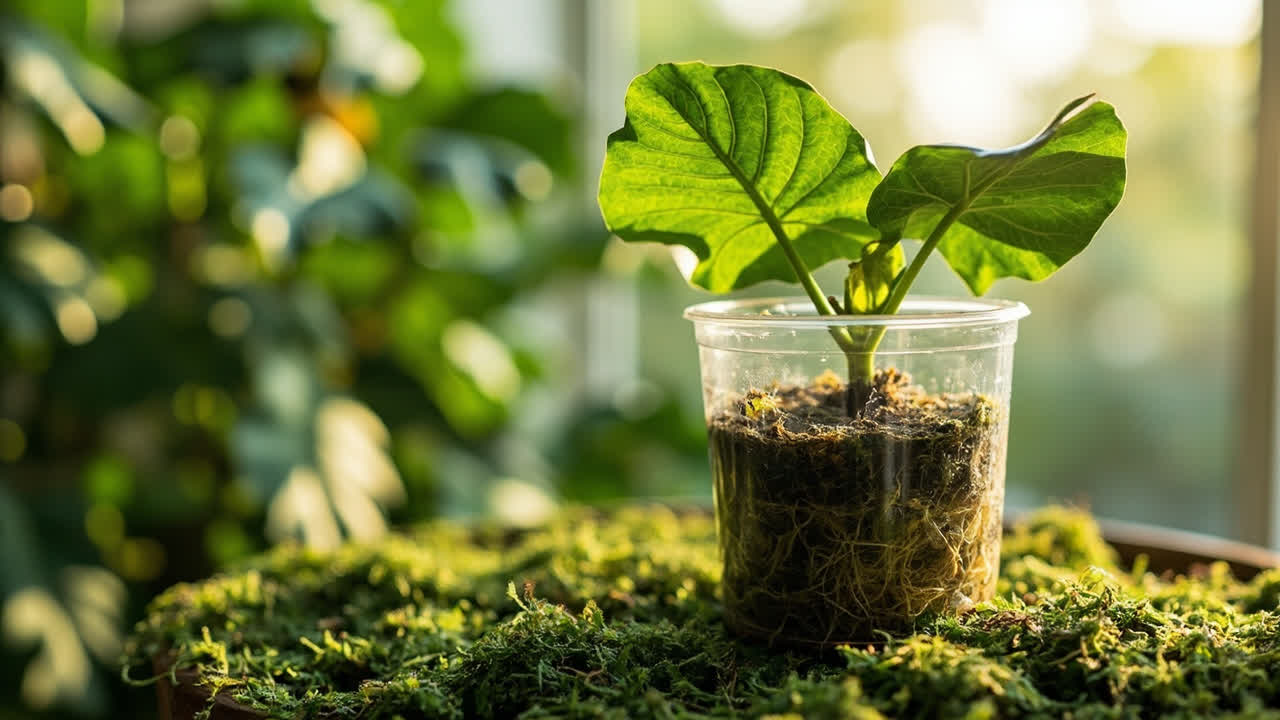
Remove the plant from its pot. Shake off as much soil as possible without damaging roots — this soil is saturated with the anaerobic bacteria that caused the problem. Healthy fiddle leaf fig roots are firm, white to tan, and relatively thick. They should look alive, not slimy.
Rotting roots are dark brown to black, mushy when touched, and collapse easily under light pressure. They may smell distinctly bad. If only the fine outer roots are affected — the small feeding roots — the plant can recover. If the main structural roots are soft and dark, the prognosis is much more guarded.
How to Treat Root Rot in a Fiddle Leaf Fig
Step 1: Remove All Affected Roots
With clean, sharp scissors or pruning shears, cut away every soft, dark, or mushy root. Work systematically: identify the firm, light-colored roots you want to keep, and remove everything else. Don’t be tentative with damaged tissue — leaving rotting roots in contact with healthy ones spreads the problem. Healthy roots should feel firm when you touch them and snap rather than bend.
Step 2: Rinse the Remaining Root System
Rinse the remaining roots with clean water to remove soil that harbors fungal spores. This also lets you see the root structure clearly so you don’t miss damaged sections hidden under soil clumps.
Step 3: Let the Roots Air Dry
Set the plant on a dry surface — cardboard, a shelf, anything absorbent. Let the roots air dry for 24-48 hours before replanting. This is essential — the cut root ends need to callous over, or they’ll be vulnerable to immediate reinfection in fresh soil.
Step 4: Repot in Fresh, Fast-Draining Soil
Use a completely fresh soil mix. Never reuse the old soil — it contains the fungal spores that started the problem. A suitable mix for fiddle leaf figs: roughly 60% potting soil, 30% perlite, and 10% coco coir or peat moss. The perlite ensures the mix stays fast-draining and doesn’t compact.
Use a clean pot — if using the same pot, scrub it with hot soapy water first. The pot should have large drainage holes. Place the plant so the root crown sits slightly above the soil line rather than buried deep — this helps excess moisture drain away from the crown.
Step 5: Post-Treatment Watering Protocol
Do not water for 7-10 days after repotting. The roots need time to re-establish before they can handle moisture. After the initial drying period, water lightly — just enough to dampen the soil evenly without creating a saturated situation. Resume normal watering only when the soil is dry 2 inches down.
Place the repotted plant in bright indirect light — not direct sun while it recovers. Reduce watering frequency even below your normal schedule for the first 4-6 weeks. The plant is using its stored energy to regrow roots, not to support large leaf production — this is normal.
Preventing Root Rot From Recurring
Root rot is almost always a soil moisture management problem. The fix is structural: adjust your soil mix, your pot, or your watering frequency so the soil dries to the touch between waterings every single time.
Use a moisture meter if you’re unsure — they’re inexpensive and eliminate the guesswork. Water only when the meter reads dry at root level, not just the surface.
The saucer under the pot is part of the problem. After watering, check the saucer within 30 minutes and empty it. A plant sitting in standing water is essentially planted in a saturated soil condition.
If you’ve had root rot once, the plant needs a lighter soil mix going forward. Add more perlite. Pot into a terra cotta pot rather than plastic — terra cotta wicks moisture from the soil surface and speeds drying.
Seasonal adjustments matter. In winter, fiddle leaf figs slow their growth and use less water. Reduce watering frequency by roughly 30-40% from November through February. The soil takes longer to dry in cold weather even in a heated room.
From Bank Statement to QuickBooks-Ready File
That manual cleanup you just read about? This tool skips it. Turn your PDF into QBO for QuickBooks without storing your data anywhere.
Start Converting