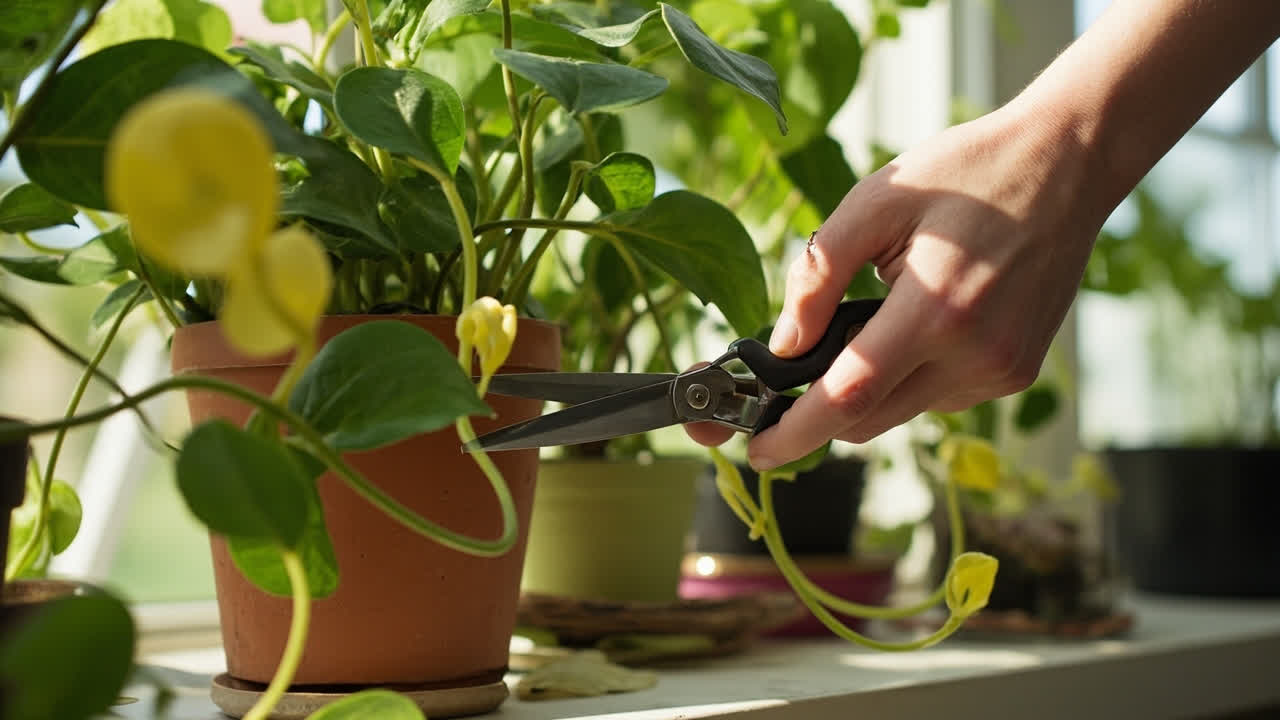
Pruning a Philodendron is not difficult, and it is one of the most rewarding things you can do for the plant. A long, leggy vine that has lost most of its leaves near the base can be brought back to a compact, full, and actively growing specimen with the right pruning approach. Here is how to think about it and how to do it.
Why Prune a Philodendron
Three good reasons to prune:
To make it fuller. The most common reason. Every node you cut triggers two new growing points below the cut. A vine that was growing as a single trailing strand branches into two, then four, then eight — making the plant denser and more attractive over time. Pruning is not removing growth; it is directing growth.
To manage leggy stems. Old Philodendron vines that have lost their lower leaves are leggy — bare stems with leaves only at the tips. Cutting those bare stems back to a node near the base forces fresh branching from the remaining nodes. The bare section does not recover, but the new growth from below does.
To propagate. Every cutting you take is a new plant. Philodendrons root easily, so pruning is always productive — you never lose what you cut.
When to Prune
Light pruning can be done any time. Major reshaping — removing more than a third of the plant’s total foliage — is best done in spring or early summer during active growth. The plant will recover and produce new growth faster in warm months.
What You Need
Clean, sharp scissors or secateurs. Wipe the blades with rubbing alcohol before you start to prevent transmitting any disease from one section of the plant to another. Clean tools make clean cuts, and clean cuts heal faster.
How to Prune
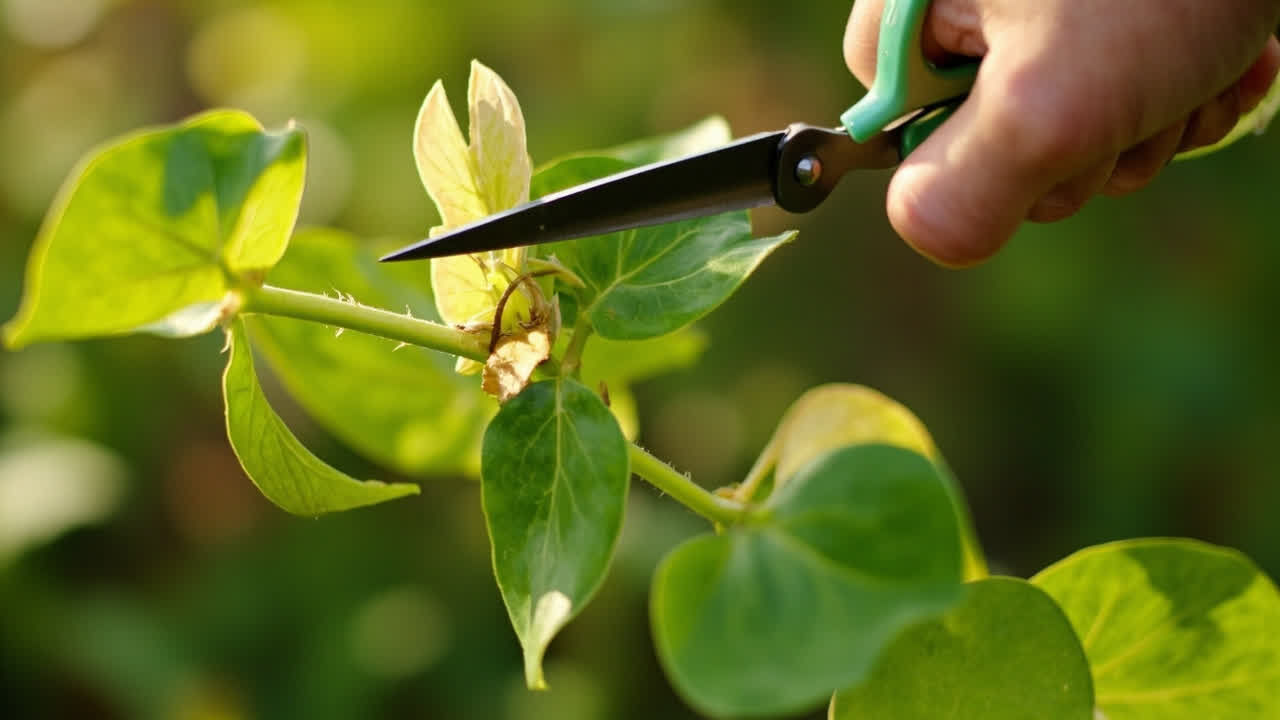
Step 1 — Identify the nodes. Nodes are the ridge or bump on the stem where a leaf petiole emerges. This is where new growth will come from after you cut. Everything below the node is part of the stem; the node itself is the growth centre.
Step 2 — Decide where to cut. Look at the vine from the tip backward. Find the section where the leaves have thinned out or disappeared. Cut 1 to 2 cm above a healthy, active node in that section — not at the very tip of the vine, but back from it, at a point where the stem is still firm and the leaves are healthy. The cut will look like you are cutting off the longest part of the vine — that is correct.
Step 3 — Make the cut. Cut at a 45-degree angle, not straight across. This reduces the exposed surface area and helps the cut heal cleanly. Cut in one clean motion — do not saw or crush the stem.
Step 4 — Decide what to do with the cutting. If you want to propagate, strip the lowest leaf from the cutting so you have a bare node at the base, and put it in water or moist soil. If you do not need more plants, the cutting can be composted — Philodendrons do root easily but they are not so valuable that every cutting must be kept.
Post-Pruning Care
After pruning, the plant concentrates its energy into the remaining nodes. Within one to two weeks, you will see new growth emerging from the cut points — typically two new growing tips instead of the single vine you cut. Feed lightly at the two-week mark if the plant is in active growth, to support the burst of new foliage.
The pruned sections will not regrow from the cut point — the bare stem below the cut is permanent. This is why it is important to cut at a node that is close to where the plant is still full, not at the end of a long, bare section. New growth comes from active nodes, not from bare stem.
What Not to Do
Do not remove more than 25 to 30 percent of the plant’s foliage at one time. Pruning more aggressively stresses the plant and can stall its growth for weeks. If you need to do major renovation, do it in stages — prune one section, wait a month, prune the next.
Do not prune a sick plant. If your Philodendron has root rot, severe pest damage, or is generally declining, fix the underlying problem first. Pruning a sick plant compounds the stress and can kill it.
For propagation of your pruned cuttings, see the Philodendron Propagation guide. For general care, see Philodendron Care guide.
Turn PDF Bank Statements Into Workable Spreadsheets
Your bank statement is a mess of numbers, but your books shouldn't be. Use our converter to get Excel, CSV, or QBO files — ready for QuickBooks.
Try It Free Now