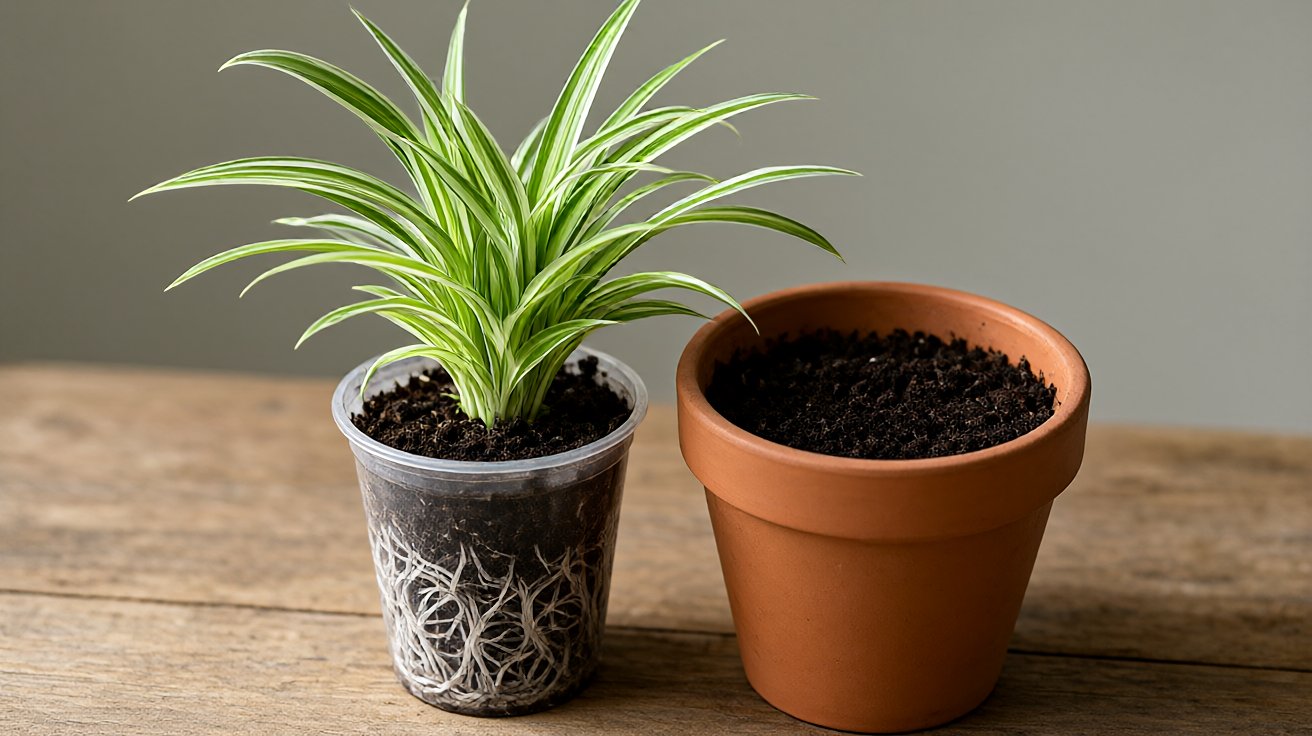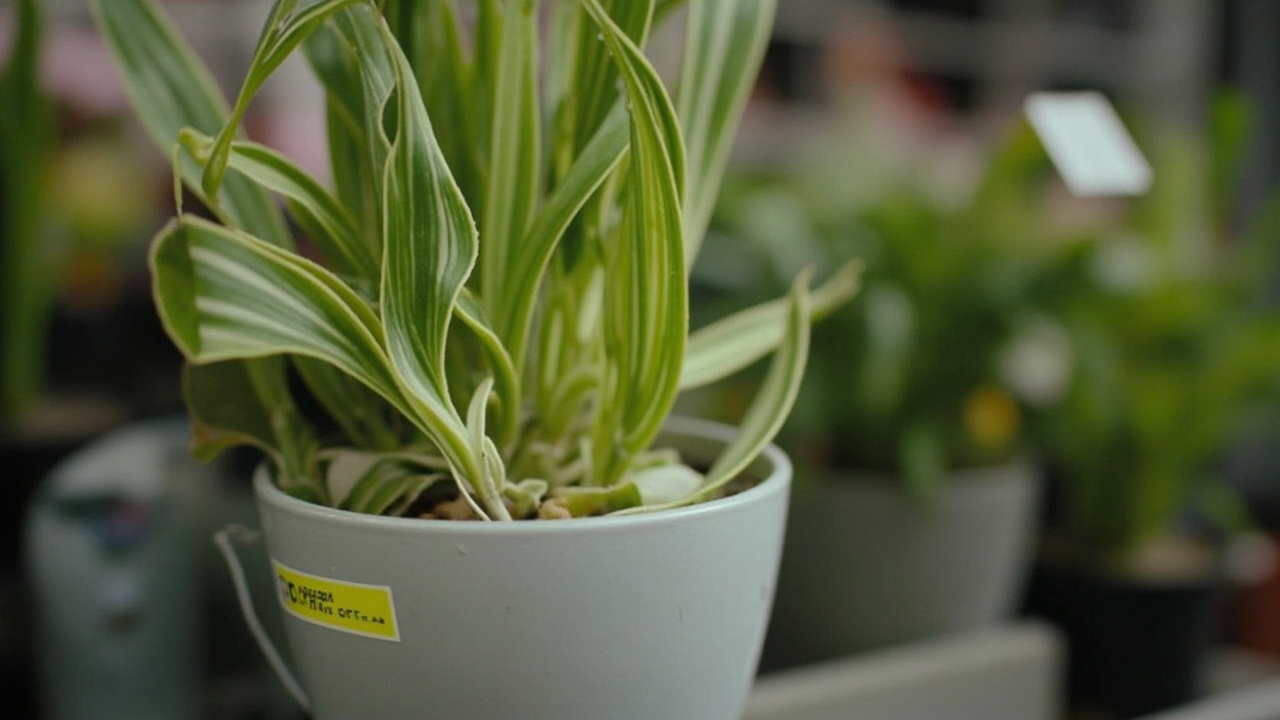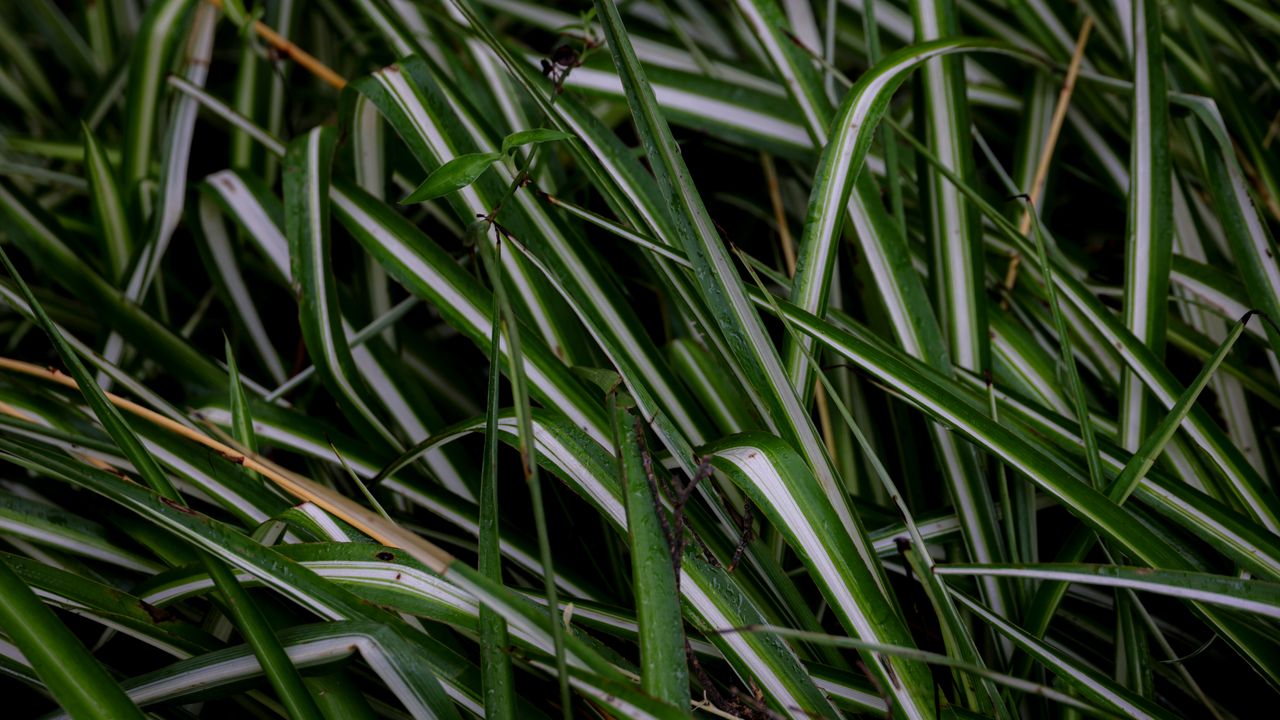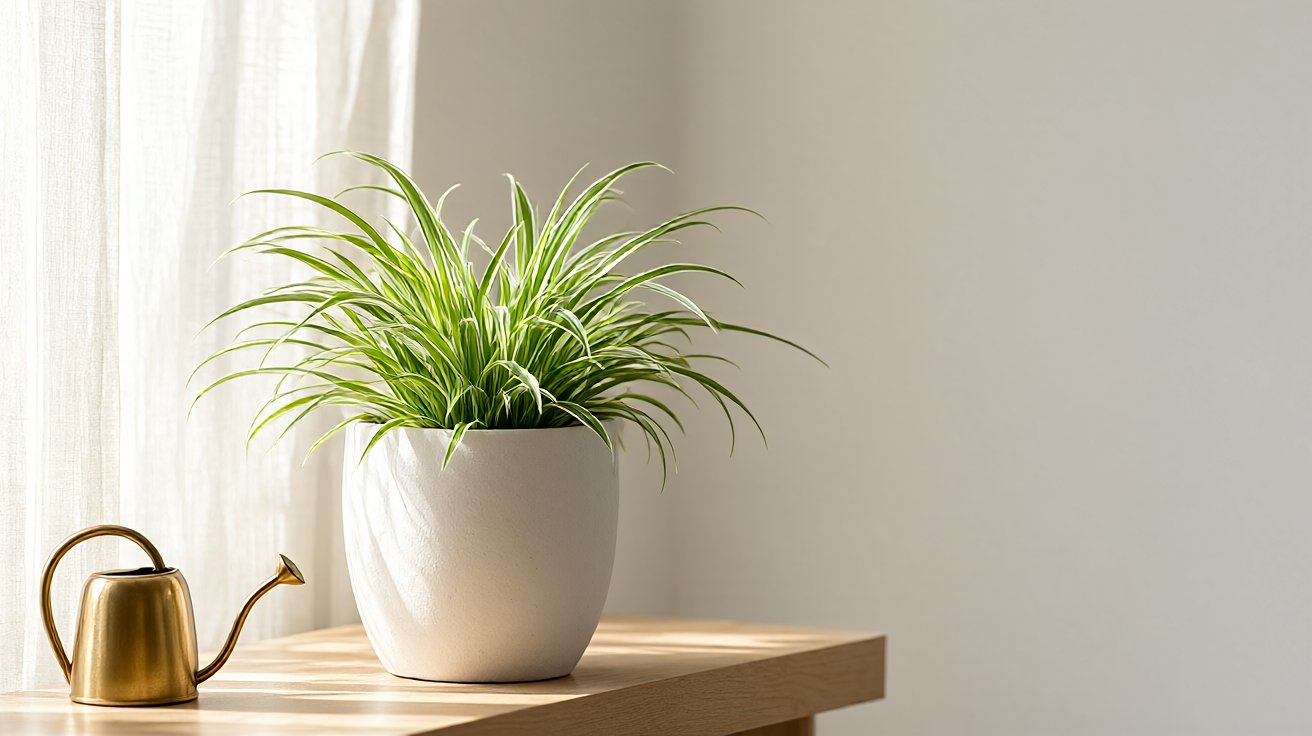

Summer is when a spider plant does its best growing, but it is also when two problems peak: sunburn from direct light and drought from faster drying soil. The care that worked in spring needs adjusting, not abandoning. This guide covers what changes in summer, what to increase, and what to watch for. It is written for Chlorophytum comosum grown indoors.
It is the seasonal counterpart to our spider plant care in winter guide.
What Changes in Summer
Light intensity and duration peak. A spot that was bright indirect light in winter may become direct sun in summer as the sun moves higher and days lengthen. The plant grows faster, which means it uses more water and more nutrients.
Soil dries faster because transpiration is higher. A pot that needed water every seven days in spring may need it every four in summer. Humidity often drops if air conditioning runs, which adds transpiration stress on top of faster drying.
What to Adjust
Watering
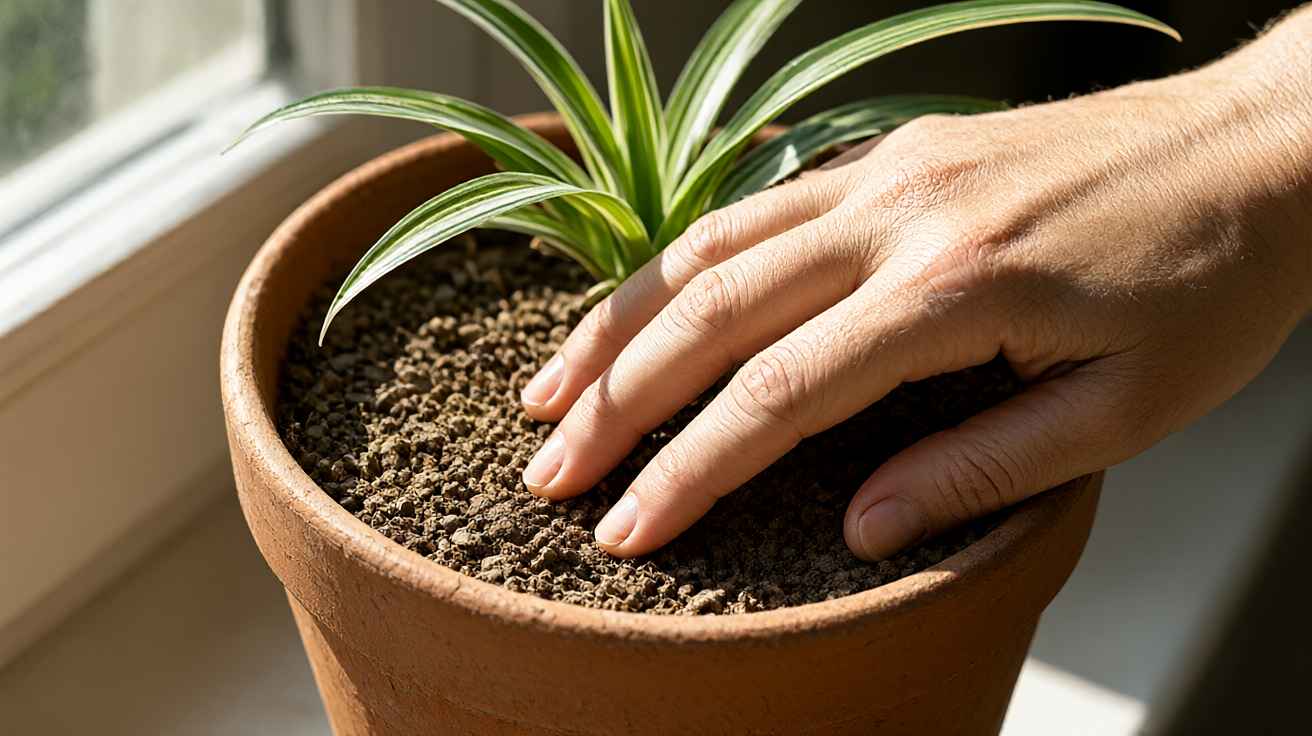
Check the soil more often. Water when the top two centimetres are dry, not on a fixed schedule. In a hot, bright room this can mean every three to four days. Empty the saucer after watering so roots do not sit in water.
Do not let the plant wilt repeatedly. Spider plants recover from one drought, but repeated wilting stresses roots and reduces spiderette production. Our how often to water a spider plant guide covers seasonal intervals.
Light
Move the plant back from windows that now receive direct afternoon sun. Spider plants scorch in direct midday light, which shows as bleached or brown patches on leaves. A sheer curtain or a metre of distance from the glass is usually enough.
Rotate the plant weekly so growth stays even. A plant that leans toward the window will become lopsided by autumn. Our spider plant light requirements guide covers intensity and placement.
Fertilizing
Summer is the main feeding season. Fertilize every four to six weeks at half strength during active growth. Stop if the plant is stressed or not growing. Our how to fertilize spider plants guide covers ratios.
Humidity
Air conditioning dries the air even in summer. If the plant shows brown tips or curling in an air-conditioned room, humidity is the suspect. Group plants, use a pebble tray, or run a humidifier. Our spider plant humidity requirements guide covers targets.
Signs of Summer Stress
Bleached or brown patches on leaves are sunburn from direct light. Move the plant back and trim damaged leaves; they will not recover.
Crispy brown tips in summer usually come from dry air combined with salts in tap water, because transpiration is higher and salts concentrate faster. Switch to low-mineral water and raise humidity. Our spider plant brown tips guide covers the differential.
Wilting in the afternoon that recovers by evening is heat stress, not drought. The plant is transpiring faster than roots can supply. Move it out of direct sun and away from heat sources.
Yellowing lower leaves in summer often mean overwatering in a pot that drains poorly, because watering frequency increased but drainage did not. Check the soil; if it stays wet, reduce watering and improve drainage. Our spider plant overwatering guide covers diagnosis.
Summer Propagation
Summer is the best season to propagate. Spiderettes root faster in warm, bright conditions, and the mother plant recovers quickly from division. Water and soil propagation both work well. Our spider plant propagation guide covers method selection, and spider plant propagation without cutting covers the lower-risk attached method.
What to Leave Alone
Do not repot during a heat wave. A plant stressed by high temperature recovers more slowly from repotting. Wait for a cooler week, or repot in spring or autumn.
Do not move the plant outdoors unless you can provide bright shade and consistent watering. Outdoor sun is stronger than indoor light, and wind increases transpiration. A plant moved outside needs daily attention.
Preparing for Autumn
As days shorten in late summer, reduce watering gradually and stop fertilizing by early autumn. The plant will slow growth on its own. Move it back to its winter position before the first cold nights, and inspect for pests that may have multiplied in summer warmth. Our spider plant pest identification guide covers common species.
For the full care baseline, see our spider plant care guide, and if summer stress is one of several problems, our spider plant problems index helps sort the picture.
Turn PDF Bank Statements Into Workable Spreadsheets
Your bank statement is a mess of numbers, but your books shouldn't be. Use our converter to get Excel, CSV, or QBO files — ready for QuickBooks.
Try It Free Now