
Humidity is the care variable most spider plant owners ignore, and it is the one that explains a surprising number of leaf problems. Brown tips, curling, pale foliage and slow growth can all trace back to air that is too dry, even when watering is correct. The spider plant evolved in the humid understorey of southern Africa, and most heated or air-conditioned homes run far below that.
This guide explains how humidity affects Chlorophytum comosum, how to measure it, what range to aim for, and how to raise it without creating new problems. It is written for indoor growing.
What Humidity Actually Does for a Spider Plant
Humidity is the amount of water vapour in the air. A plant loses water through transpiration: water moves from roots, up the stem, and out through leaf pores. The drier the air, the faster that water leaves. When transpiration outpaces root uptake, the plant experiences water stress even if the soil is moist.
Spider plants tolerate average household humidity, but they do not thrive in it. In dry air they slow growth, produce fewer spiderettes, and show stress at the leaf margins first. The damage is cumulative: a plant in 25 percent humidity for three months looks worse than a plant in 45 percent humidity for the same period, even if both are watered correctly.
The Target Range
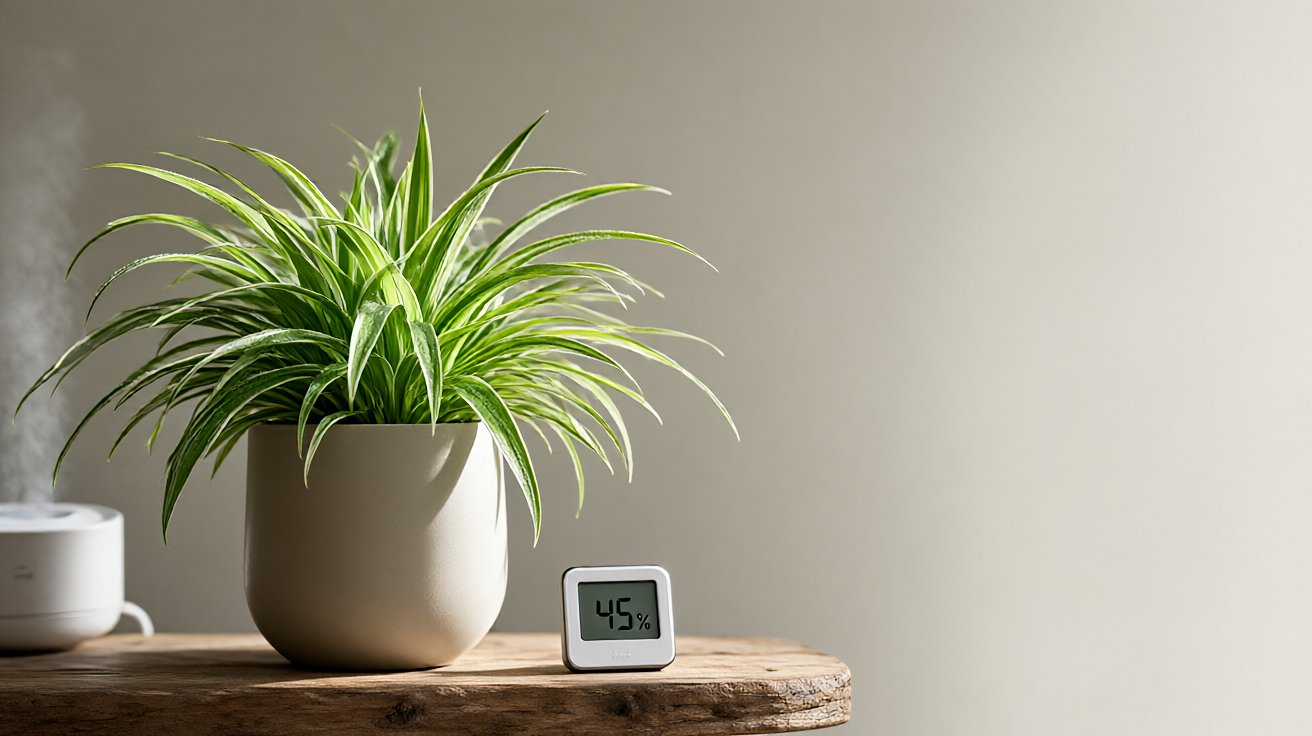
Aim for 40 to 50 percent relative humidity for healthy growth. Below 30 percent, stress symptoms become likely. Above 60 percent, the risk shifts to fungal problems and slow drying soil, which can lead to root rot. The target is a band, not a single number.
Relative humidity changes with temperature: warm air holds more moisture, so the same absolute moisture reads as lower relative humidity in a heated room. This is why winter is the hardest season for spider plants even when watering stays the same.
How to Measure Humidity
A digital hygrometer costs little and removes guesswork. Place it at plant level, not on a high shelf, because humidity stratifies: floors are more humid, ceilings less. Check it at different times of day and across seasons. A reading of 35 percent at 10 a.m. may drop to 25 percent by evening when heating peaks.
Do not rely on how the air feels. Human comfort and plant comfort overlap but are not identical. A room that feels fine to you can still be too dry for a spider plant.
Signs That Humidity Is Too Low
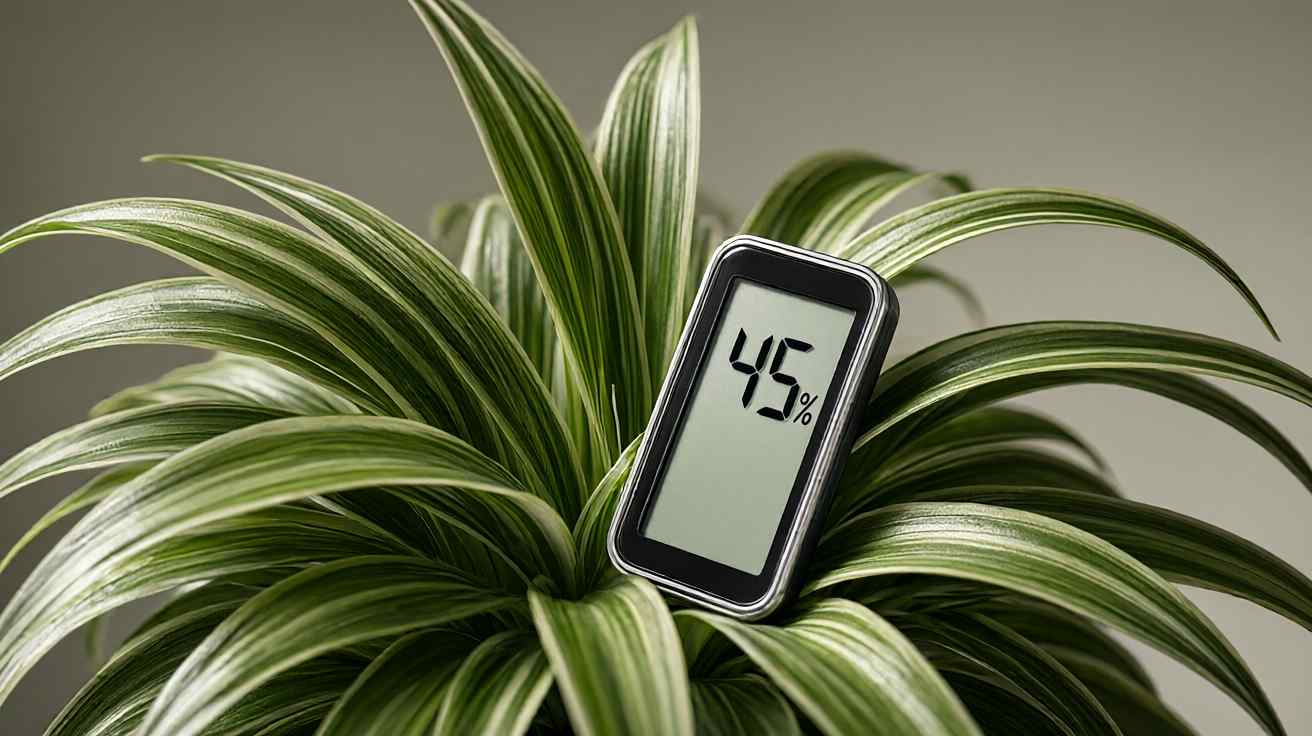
Low humidity announces itself at the leaf margins first, because that is where transpiration is highest and water delivery slowest.
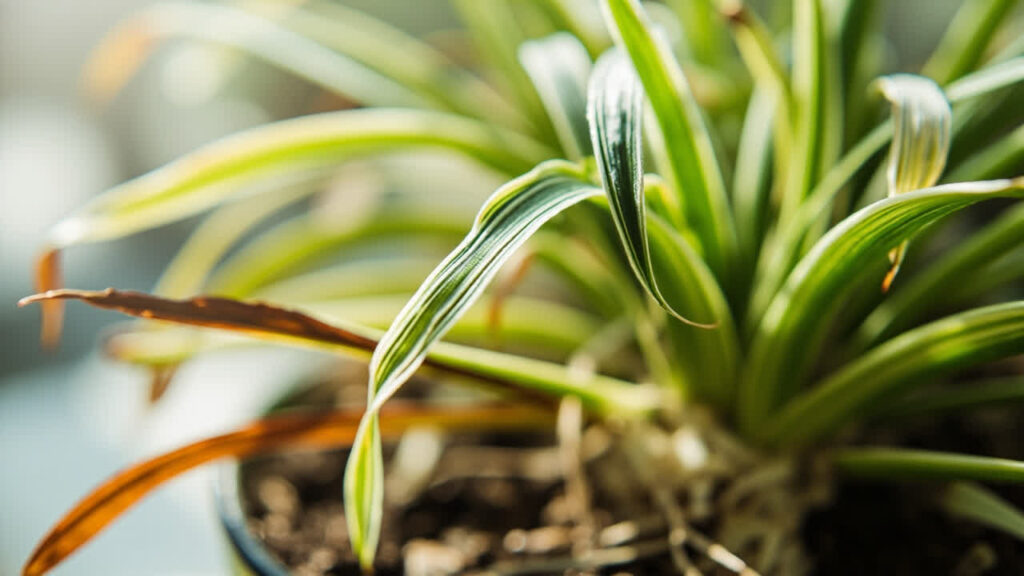
Brown tips are the most common sign. The tip dries out faster than the rest of the leaf, and once tissue dies it does not recover. If brown tips appear alongside otherwise healthy growth, and watering is correct, humidity is the leading suspect. Our guide on spider plant brown tips covers other causes.
Leaf curling follows. The leaf rolls inward to reduce exposed surface area, which is the plant’s attempt to limit water loss. If curling is uniform across the canopy and worse on outer leaves, dry air is likely. See spider plant leaves curling for the full diagnosis.
Pale or faded foliage and slower growth come next. The plant is conserving resources, and variegation may soften. Spiderette production drops, because reproduction is the first function a stressed plant sacrifices.
How to Raise Humidity
Grouping plants
Plants transpire, so a cluster of plants creates a small zone of higher humidity around itself. Grouping is the simplest, cheapest method and works well for a windowsill collection. Keep spacing tight enough to share moisture but loose enough for airflow.
Pebble trays
A tray of water with pebbles holding the pot above the water line adds evaporation without waterlogging roots. The effect is modest, a few percentage points, but it is steady and needs little maintenance. Refill when dry.
Humidifiers
A small room humidifier is the most effective method and the only one that can hold 45 percent in a heated room through winter. Run it near the plant, not across the room. Clean it regularly to avoid mineral dust and mould.
Room choice
Bathrooms and kitchens run more humid than living rooms and bedrooms. A spider plant in a bright bathroom often looks better than one in a dry living room, provided light is adequate. Light still governs placement; humidity is secondary.
What Not to Do
Misting is the most common advice and the least effective. It raises humidity for minutes, then evaporates. Repeated misting can spot variegated leaves and encourage fungal spots on foliage. It is not a substitute for a humidifier.
Do not enclose the plant in a terrarium or plastic bag long-term. Humidity spikes, but airflow collapses, and root rot follows. Short-term humidity tents can help a recovering plant, but they are not a permanent setup.
Do not overwater to compensate for dry air. Soil moisture and air humidity are separate variables. Adding water to dry soil in a dry room only risks root rot without fixing transpiration stress.
Seasonal Adjustment
In summer, open windows and natural humidity usually keep spider plants comfortable. In winter, heating strips moisture from the air, and this is when most humidity problems appear. Start the humidifier before symptoms show, not after. A plant that enters winter in good condition handles dry air better than one that is already stressed.
If you cannot raise humidity, compensate partially by reducing light intensity slightly and watering a little less, which lowers transpiration demand. This is a compromise, not a fix.
Humidity and Other Care Variables
Humidity interacts with everything else. In high humidity, soil dries more slowly, so watering intervals lengthen. In low humidity, soil dries faster, but adding water does not fix the air. Temperature and humidity move together: warm dry air is the worst combination.
For the full care baseline that keeps all variables in balance, see our spider plant care guide. If low humidity has already caused leaf damage, our spider plant problems index helps sort the symptoms.
From Bank Statement to QuickBooks-Ready File
That manual cleanup you just read about? This tool skips it. Turn your PDF into QBO for QuickBooks without storing your data anywhere.
Start Converting