
Most feeding mistakes in home gardens are not about how much fertilizer you apply. They are about how fast it becomes available. Two bags with the same NPK numbers can feed plants on completely different schedules. One dumps nutrients in a single rush. The other meters them out for weeks or months. Choosing between slow-release and quick-release fertilizer is the decision that sits behind most of the burned lawns, yellow leaves, and wasted money gardeners blame on the wrong product.
What “release rate” actually means
Release rate is the speed at which nutrients in a fertilizer move from a solid or liquid into a form roots can absorb. Plants do not eat fertilizer pellets. They absorb dissolved ions from the soil solution. Every fertilizer, whether synthetic or organic, has to dissolve or break down before it helps the plant.
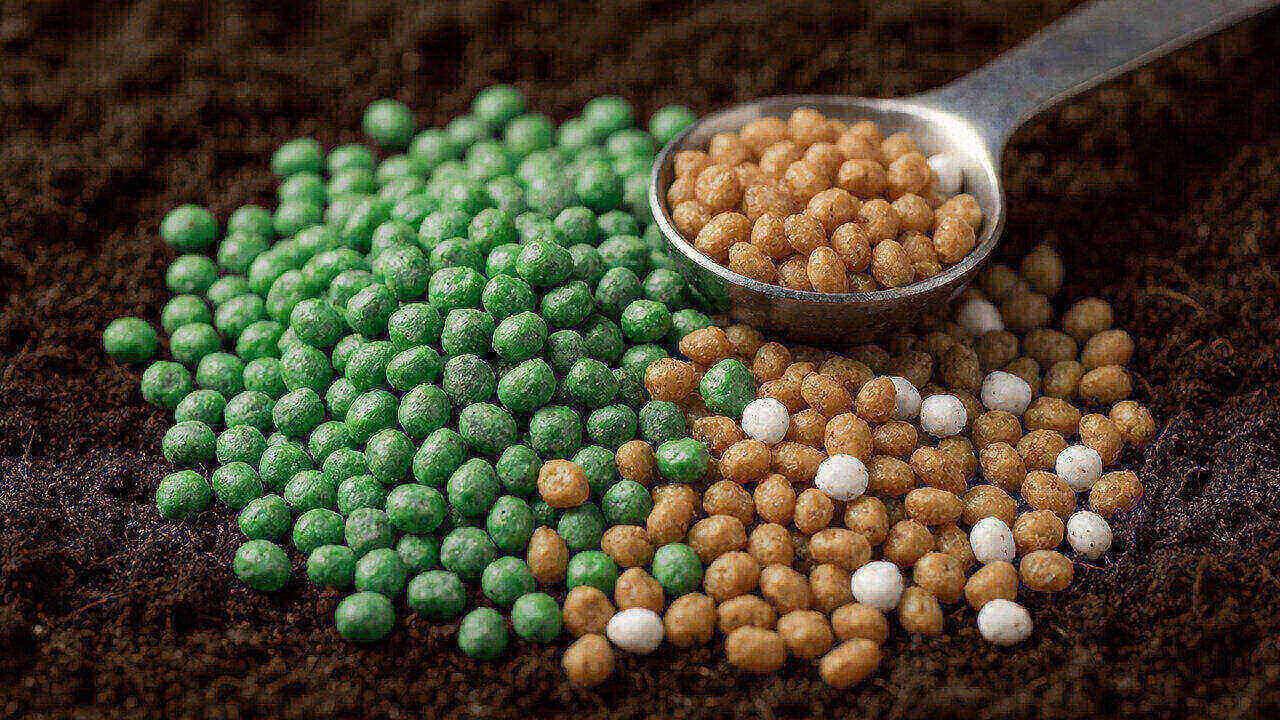
Quick-release products are already in a soluble form. Water dissolves them almost immediately, so nutrients reach the root zone within hours of application. Slow-release and controlled-release products hold nutrients back through a physical coating, a less soluble chemical form, or microbial breakdown, then release them gradually.
The NPK label does not tell you the release rate. A 10-10-10 quick-release and a 10-10-10 slow-release contain the same total nutrients. What differs is the calendar over which those nutrients arrive. That calendar is the real product difference, and it is why reading only the NPK numbers leads to poor decisions.
Think of fertilizer as a deposit into a soil bank account. Quick-release is a lump-sum deposit that sits in the account all at once, available for immediate withdrawal but also vulnerable to theft by leaching. Slow-release is an annuity that pays out in scheduled installments. Both put the same total money into the account. The schedule determines whether the plant, or the groundwater, collects it.
Quick-release fertilizer: fast, cheap, risky
Quick-release fertilizers are water-soluble salts, most commonly urea, ammonium nitrate, and potassium chloride. They dissolve on contact with water and move into the soil solution immediately. That speed is useful when plants need nutrients right now, but it is also the source of most fertilizer problems.
Benefits include low cost per pound of nutrient, immediate green-up visible within days, and precise timing for a single feeding event. Drawbacks include high burn risk if over-applied, short duration often two to four weeks, and high leaching and runoff potential because nutrients are mobile before roots can take them up.
Quick-release fits rescue feeding, establishing new lawns, container plants in active growth, and situations where soil tests show an immediate deficiency. It does not fit set-it-and-forget-it schedules or sandy soils where water moves fast and nutrients wash past the root zone.
The burn risk is not theoretical. Soluble salts raise the osmotic pressure around roots, pulling water out of plant tissue. A heavy application of quick-release nitrogen on a hot day can desiccate roots within hours, producing the brown, scorched leaf edges gardeners call fertilizer burn. The fix is not a different product but a lower rate split across multiple applications.
Slow-release and controlled-release: what the label words mean
These terms get used interchangeably, but they describe different mechanisms. Separating mechanism from source is the key insight most articles miss, and it is the difference between reading a label correctly and trusting marketing.
Slow-release is a broad category. It includes any product that releases nutrients gradually, whether through a coating, a less soluble chemical form, or organic matter that must be decomposed by microbes. Organic fertilizers like composted manure, bone meal, and blood meal are slow-release because microbes have to break them down first.
Controlled-release is a subset. These are synthetic products with a polymer or sulfur coating that releases nutrients at a rate governed by temperature and moisture. The manufacturer can state a release window, such as 8 to 12 weeks, because the coating is engineered. Coated urea is the classic example.
So “slow-release” describes speed. “Controlled-release” describes an engineered, predictable speed. “Organic” describes source. A product can be slow-release and synthetic, slow-release and organic, or quick-release and synthetic. The label words matter more than the marketing category, and a product marketed as natural can still behave like a quick-release salt.
Microbial slow-release depends on soil life. In cold, waterlogged, or heavily sterilized soils, organic fertilizers release little or nothing because the organisms that break them down are inactive. This is why an organic fertilizer applied in early spring may not green up a lawn until temperatures rise. Controlled-release coatings, by contrast, respond to temperature and moisture regardless of microbial activity.
How temperature and moisture change the schedule
Release rates are not fixed. Controlled-release coatings respond to soil temperature and moisture: warmer, wetter soil accelerates release, while cold or dry soil slows it. A product rated for 12 weeks may finish in 8 weeks during a hot summer or stretch to 16 weeks in a cool spring.
Organic slow-release depends on microbial activity, which also rises with temperature and falls with cold. In early spring, organic fertilizers can sit inert for weeks. In midsummer, they can release faster than expected. This variability is why experienced gardeners treat release windows as estimates, not guarantees.
The practical takeaway is to match the product to the season. Use quick-release or a high-WIN blend for early spring when soil is cold and plants need an immediate boost. Use controlled-release for summer maintenance when heat would accelerate a quick-release burn. Reassess midseason rather than assuming the label schedule holds.
Side-by-side comparison table
| Factor | Quick-release | Slow / controlled-release |
|---|---|---|
| Speed of availability | Hours | Days to weeks |
| Duration of feeding | 2 to 4 weeks | 6 to 16 weeks or more |
| Burn risk | High | Low |
| Leaching / runoff risk | High | Lower |
| Application frequency | Frequent | Infrequent |
| Cost per pound of nutrient | Lower | Higher |
| Predictability | Depends on weather | Engineered window (controlled) |
| Best for | Rescue, starter, active fruiting | Maintenance, containers, lawns |
The trade-off is speed versus safety and longevity. Quick-release wins on cost and immediacy. Slow-release wins on convenience, burn safety, and environmental footprint. Neither is universally better. The right choice depends on the plant, the soil, and the season.
When to use which (by situation)
New plantings and transplants benefit from a modest quick-release starter dose because roots need accessible nutrients immediately, followed by slow-release for sustained growth. Containers and hanging baskets lose nutrients to leaching with every watering, so a controlled-release product mixed into the potting mix at planting reduces the need for frequent liquid feeding.
Lawns generally do better with slow-release nitrogen, which feeds evenly and reduces surge growth and mowing frequency. Vegetables in active production often need a quick-release side-dress during fruiting because demand spikes. Houseplants in low light with slow growth usually need little fertilizer at all; if you feed, use a dilute quick-release or a small amount of slow-release.
Soil temperature matters. Controlled-release coatings work faster in warm soil and slower in cool soil. In early spring, a controlled-release product may underperform expectations. In midsummer heat, the same product may release faster than planned, compressing the feeding window.
Sandy soils favor slow-release because quick-release nutrients leach before roots absorb them. Clay soils hold nutrients longer, so quick-release can work if applied at modest rates. In containers, where drainage is rapid and root volume is small, controlled-release is usually the safer default.
Reading the label: WIN and coated nitrogen
The single most useful number on a fertilizer label is the water insoluble nitrogen percentage, often listed as WIN. WIN is the share of nitrogen that will not dissolve in water and therefore releases slowly. A higher WIN means a slower, longer feed.
Labels also state the nitrogen sources. Look for coated urea, sulfur-coated urea, or polymer-coated urea, which signal controlled release. If the nitrogen sources are all soluble salts like urea or ammonium nitrate with no coating mentioned, the product is quick-release regardless of marketing words like “long lasting” or “extended feed.”
A practical rule: if WIN is under 15 percent, treat the product as quick-release. If WIN is 30 percent or higher, treat it as slow-release. Many products fall in between and behave as a blend, which is often the best choice for mixed plantings.
Some labels list “slowly available nitrogen” or “water insoluble nitrogen” as separate lines. Add the slowly available figure to the WIN figure to get the total slow fraction. If the label does not break this out, assume the product is quick-release.
Can you mix them?
Yes, and many commercial products already do. A blend of quick-release and slow-release nitrogen gives an immediate green-up plus sustained feeding. The risk is double-counting: if you add a quick-release product on top of a slow-release product without checking the total nitrogen, you can exceed safe rates and burn plants or pollute runoff.
Do not mix two different controlled-release products with overlapping release windows expecting to extend feeding; the result is usually just a higher total dose concentrated in the same window. Do not combine quick-release with heavy watering on sandy soil, which accelerates leaching of the soluble fraction into groundwater.
If you want both speed and longevity, buy a single blended product with a stated WIN rather than layering two products. That keeps the total nitrogen on the label honest and the application math simple.
A common mistake is applying a slow-release product and then, seeing no immediate green-up, adding a quick-release dose on top. This stacks nitrogen and often causes the very burn the slow-release product was chosen to avoid. Patience is part of the slow-release bargain. If faster results are needed, choose a blend with a higher quick-release fraction instead of layering.
Environmental note: leaching and runoff
Nitrogen that is not taken up by plants does not disappear. It moves with water into groundwater and surface water, where it fuels algae blooms and contaminates drinking water. Quick-release nitrogen is the larger contributor because it is present in the soil solution all at once, often beyond what roots can absorb in the days after application.
Slow-release and controlled-release products reduce this loss by matching supply to demand over time. They are not zero-impact, especially if over-applied, but their lower peak concentrations in soil water reduce the amount that escapes. Choosing slow-release is one of the simplest ways a home gardener can cut nutrient runoff without giving up plant performance.
Timing and rate still matter more than product choice. Even a slow-release product applied at twice the needed rate will leach. The best environmental outcome combines the right release rate with the right rate, applied when plants are actively growing and roots are absorbing.
Last updated: October 28, 2026.
Sources
- UF/IFAS Extension HS1255, “Fertilizer Types and Their Use.”
- UF/IFAS Gardening Solutions, “Slow-Release Fertilizers.”
- University of Maryland Extension, “Fertilizers.”
- Michigan State University Extension, “Understanding Fertilizer Labels.”
- Iowa State University Extension, “Fertilizer Types.”
- North Carolina State Extension, “Fertilizers for Gardens.”
The actual number is the decision.
From PDF to Excel in one click
Forget retyping line by line. Upload any bank statement, get a spreadsheet you can actually use. Your files are never stored, and you can test the converter with 3 free conversions.
Try it free