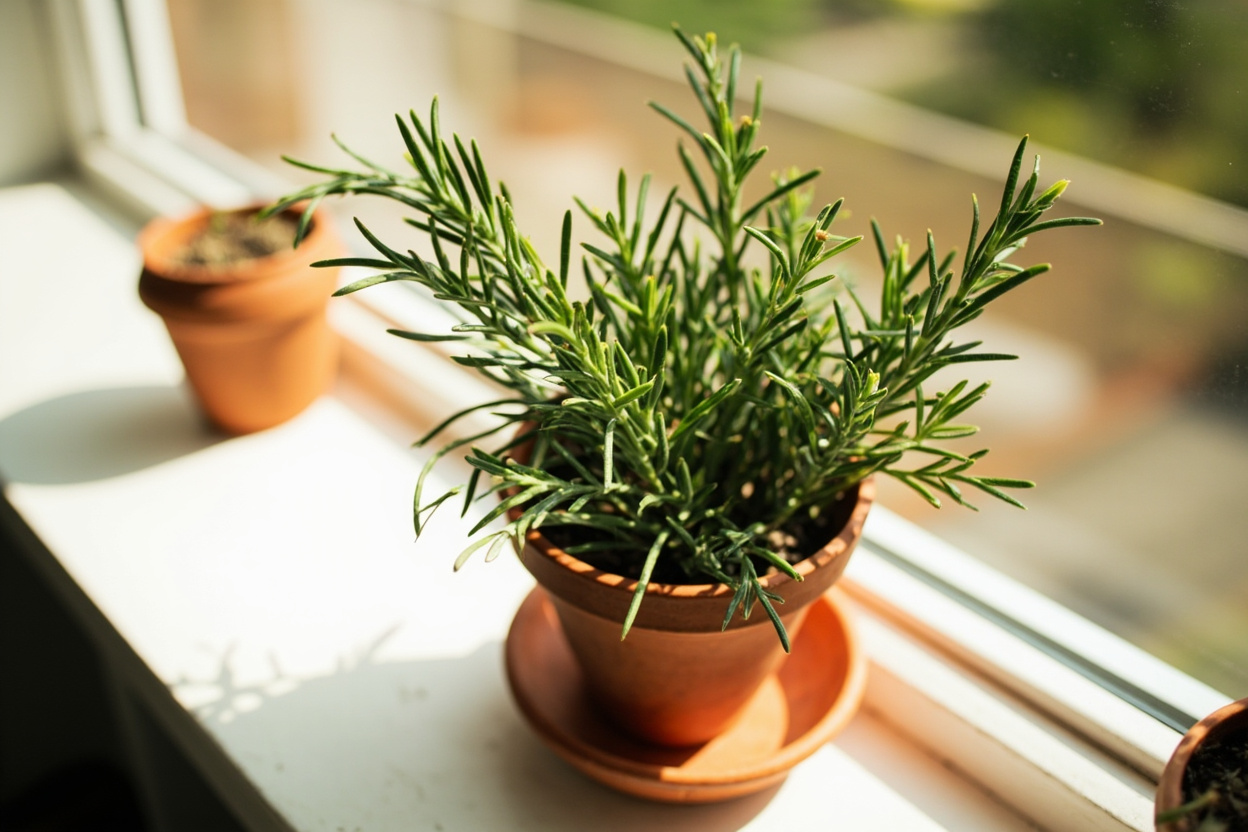
Propagating rosemary from cuttings works when you take the right stem at the right time and keep the conditions steady for a few weeks. A semi-hardwood cutting from a healthy, non-flowering stem, stripped of its lower leaves and placed in a moist but airy rooting medium, will push out white rootlets in roughly 3 to 6 weeks. The mistake most people make is treating rosemary like a tropical houseplant cutting — too wet, no airflow, and a stem that was already too old or too soft to root.
Rosemary (Salvia rosmarinus) is a Mediterranean woody perennial, and its cuttings behave more like lavender or sage than like basil or mint. The stems are slow to root because they are designed to survive drought, not to absorb water on demand. Once you match the cutting to that biology, success rates of 70 to 90 percent are realistic for a home gardener working at the kitchen counter.
This guide covers the two methods that actually work — water propagation and soil propagation — and the small but important details that separate a rooted cutting you can plant in the garden from a stem that browns and dies in two weeks.
When to Take Rosemary Cuttings
The window matters more than most guides admit. Rosemary roots best from semi-hardwood cuttings — stems from the current season’s growth that have started to firm up at the base but are still flexible at the tip. In most climates that means late spring through early summer, with a second smaller window in early autumn when growth has hardened but is not yet winter-dormant.
Take cuttings in the morning when the plant is fully hydrated. Avoid stems that are flowering or about to flower — the plant is putting energy into reproduction, not root production. Also skip the very oldest, woodiest stems at the base of the plant; they are technically capable of rooting, but only with bottom heat and a long wait.
Plan on taking more cuttings than you need. A success rate of 60 to 80 percent is typical even when you do everything right, so six cuttings usually give you three to four solid new plants.
How to Take the Cutting
Use clean, sharp pruners or a knife. Wipe the blade with rubbing alcohol first — rosemary’s woody stems carry surface fungi that take advantage of ragged cuts.
Cut a stem 4 to 6 inches (10 to 15 cm) long, just below a node (the point where leaves meet the stem). The node is where the root initials are concentrated, and a cut made just below it gives the cutting the highest rooting chance. Strip the leaves from the bottom 2 inches (5 cm) of the stem, leaving at least four sets of leaves at the top to fuel growth.
If you cannot plant the cutting immediately, wrap it in a damp paper towel and keep it in a sealed bag in the refrigerator for up to 24 hours. Beyond that, the stem starts to dry out and rooting success drops sharply.
Choosing Your Rooting Method: Water vs. Soil
Both water and soil propagation work for rosemary, but they have different tradeoffs. Water propagation lets you watch the roots form, which is reassuring for beginners, but the roots it produces are water roots — thin, fragile, and not always well-suited to life in soil. Soil propagation produces sturdier roots that are ready to keep growing once potted up, but it requires more discipline around moisture and airflow.
Water Propagation Step-by-Step
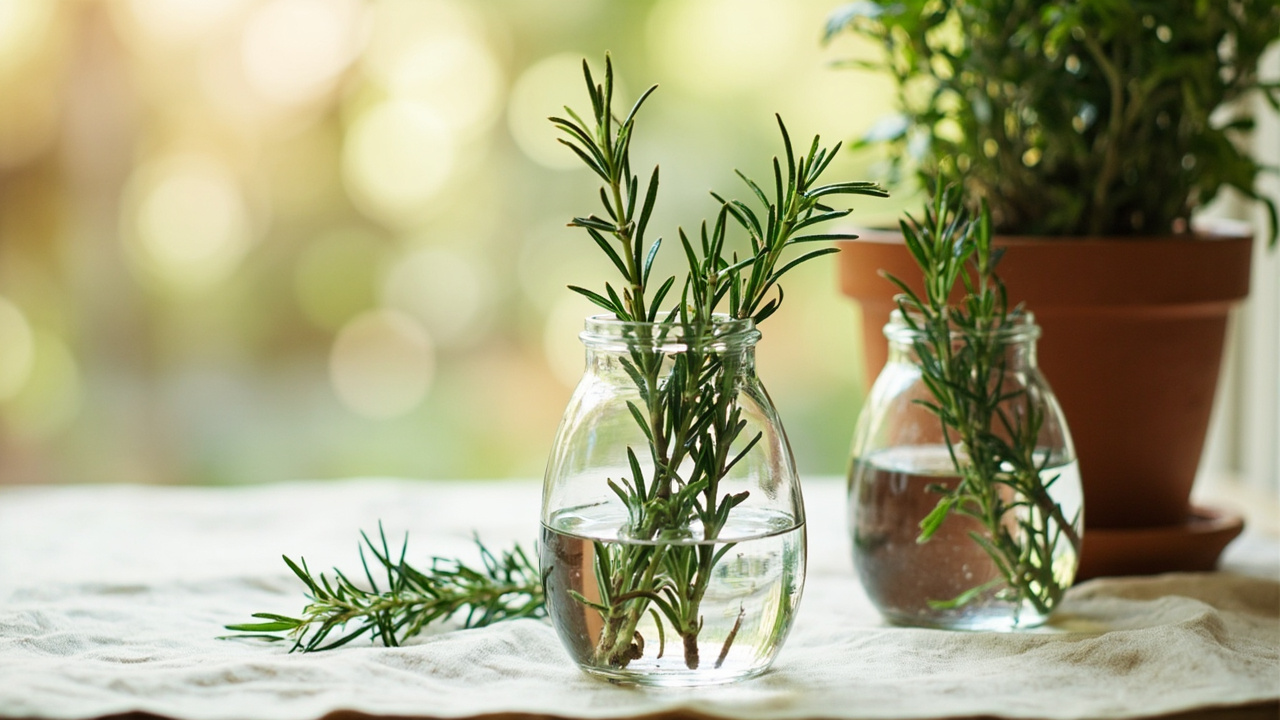
Fill a clear glass jar with room-temperature, non-chlorinated water. Tap water that has sat out overnight works fine. Place 3 to 5 cuttings in the jar, making sure the stripped leaf nodes are submerged but no leaves are touching the water — submerged leaves rot fast and turn the jar into a bacterial soup.
Set the jar in a warm spot with bright, indirect light. Direct sun heats the water and cooks the developing roots. Change the water every 2 to 3 days, gently rinsing the stems to remove any slimy film.
Roots usually appear in 2 to 4 weeks. Wait until the roots are at least 1 inch (2.5 cm) long, ideally with several branches, before transplanting to soil. Move them gradually — start with a week in a high-humidity setup (a clear plastic bag loosely tented over the pot) so the water roots can adapt to soil moisture without collapsing.
Soil Propagation Step-by-Step
Fill a small pot (3 to 4 inches / 7.5 to 10 cm) with a free-draining mix. Equal parts perlite and peat-free potting mix, or coarse sand blended with compost, both work well. Rosemary’s roots need air as much as they need moisture, and a dense, water-retentive mix is the most common reason cuttings fail in soil.
Dip the cut end of each stem in rooting hormone powder or gel. Rosemary does not require rooting hormone, but it shortens rooting time and improves the odds, especially for older or woodier cuttings. Tap off any excess.
Insert the cutting into the moistened mix so the stripped nodes are buried, firm the mix around the stem, and place the pot in a warm spot (65 to 75°F / 18 to 24°C is ideal) with bright, indirect light. Cover the pot with a clear plastic bag or dome to keep humidity high, but prop it open slightly so air can move — stagnant air invites botrytis and damping-off fungi.
Check moisture every few days. The mix should stay lightly damp, never soggy. Tug the cutting gently after 3 weeks; resistance means roots have formed. Most cuttings are ready to pot up individually in 6 to 8 weeks.
Common Cutting Failures and How to Spot Them
The most common failure is the cutting that looks fine for two weeks, then turns brown and soft at the base. That is almost always stem rot from either contaminated water, a mix that stayed too wet, or a jar that was sealed with no airflow. A healthy cutting stays firm and green; any blackening at the base or a sour smell means the cutting is gone and should be removed before it spreads to its neighbors.
The second most common failure is the cutting that roots in water but collapses the moment it hits soil. Water roots are not built to absorb nutrients or handle the moisture swings of a pot, and the transplant shock is real. If you see this happening — wilting, browning leaf tips, a stem that goes limp within days — the new plant may be salvageable with humidity, but it usually does not recover. The full set of recovery steps for a rosemary plant in this kind of decline is covered in the revive guide for dying rosemary plants, and the same humidity and watering logic applies to a freshly transplanted cutting that is struggling. If you have a history of failed transplants, start the next batch directly in soil to skip the vulnerable intermediate stage.
Wilting leaves on a freshly cut stem are not always a sign of failure. The cutting has no roots yet, so it cannot pull water up, but the leaves will often perk back up once you increase humidity with a plastic dome. Persistent wilting past week two, paired with a blackened stem, is the actual warning sign. The stress pattern is similar to what you see in a dried-out rosemary plant — both cases show the plant’s leaves pulling moisture from a root system that cannot keep up, so the early visual cues are worth knowing in either situation.
Caring for a Newly Rooted Rosemary Cutting
Once the cutting has a healthy root system — at least 2 inches (5 cm) of root, ideally branching — pot it up into a 4 to 6 inch (10 to 15 cm) container with a gritty, well-draining potting mix. Standard indoor potting soil is too moisture-retentive on its own; blend in about one-third perlite or coarse sand to mimic rosemary’s native Mediterranean soils.
Place the new plant in a sunny window (6+ hours of direct light) or under a grow light. Water deeply, then let the top inch (2.5 cm) of soil dry out before watering again. Rosemary tolerates drought far better than it tolerates wet feet, and overwatering is the fastest way to undo the success you just achieved.
Do not fertilize for the first month. The young roots are sensitive, and fresh potting mix already has enough nutrients to support early growth. After a month, a diluted balanced fertilizer once a month during the growing season is plenty.
Harden the plant off before moving it outdoors permanently — a week of progressively longer outdoor exposure, starting in a sheltered spot. Once established in the garden, rosemary is a tough, drought-tolerant shrub that rewards you for years. Ongoing care — light, watering rhythm, feeding, and pruning — is covered in detail in the complete rosemary care guide, which picks up where propagation leaves off.
Turn any PDF statement into a clean sheet
Skip the typos and the hours of copying. Our converter handles any bank statement format and outputs Excel, CSV, or QBO for QuickBooks. No file retention, free to try.
Convert your statement