Growing rosemary outdoors is the closest thing to set-it-and-forget-it herb gardening. Once established, an outdoor rosemary bush survives on sunlight and occasional rain, produces fragrant foliage all year in warm climates, and rewards you with harvests that dwarf what any indoor pot can yield. But only if you match the plant to your climate and give it the right soil from the start.
Indoor rosemary is a exercise in compensation. You fight low light, dry heat, and the temptation to water on a schedule. Outdoor rosemary asks the opposite discipline: give it full sun, lean soil, and then mostly leave it alone. The same plant that struggles on a kitchen windowsill often thrives for years as a perennial herb in a garden bed with almost no attention.
The question is not whether rosemary can grow outside. It is whether your climate, your soil, and your chosen planting method align with what Salvia rosmarinus actually needs. This guide walks through that decision in order: climate fit, soil prep, planting choice, ongoing care, and what to do when winter arrives in a zone that is too cold.
Why Growing Rosemary Outdoors Is Different From Keeping It Inside
Outdoor rosemary benefits from a combination of environmental inputs that are nearly impossible to replicate indoors. Direct sunlight is the biggest factor. A south-facing window in winter delivers a fraction of the photon density that a garden bed receives in summer. The difference is not subtle. Rosemary grown in full outdoor sun builds thicker leaves, denser essential oil production, and stronger woody stems than the same plant grown under a grow light.
Wind exposure outdoors also strengthens the plant. Gentle air movement trains the stem to develop thicker vascular tissue and a more compact growth habit. Indoors, still air produces softer, leggier growth that is more vulnerable to pests and disease. A outdoor rosemary bush that gets natural breeze through the growing season is naturally more disease-resistant than one that sits in stagnant indoor air.
The soil environment is another major differentiator. Garden soil, even when amended, provides a larger root volume than any container. A deeper root zone means better access to moisture during dry spells, better nutrient uptake over time, and more stable temperature regulation around the roots. Container rosemary dries out faster and cools faster in winter, which is why potted plants need more attentive watering and winter protection than their in-ground counterparts.
If you already have indoor rosemary care knowledge from our complete rosemary care guide, the outdoor version is largely a simplification of that routine. Less frequent watering. Less concern about humidity. Fewer interventions overall, once the plant is established in the right conditions.
Understanding Your Zone: Where Outdoor Rosemary Actually Survives Year-Round
Hardiness zone is the single most important factor in deciding whether outdoor rosemary is a permanent garden fixture or a seasonal experiment. The USDA hardiness zone map divides North America into 13 zones based on average annual minimum winter temperature. Rosemary species and cultivars differ in cold tolerance, but the general rule is straightforward: zones 8 through 10 allow most rosemary varieties to survive outdoors year-round with minimal intervention.
In zones 8 and warmer, outdoor rosemary behaves as a true Mediterranean perennial. It enters a shallow winter dormancy when temperatures drop below 50°F (10°C), slows its growth cycle dramatically, and resumes active growth when spring warmth returns. A well-established shrub in zone 8 can routinely survive short dips to 20°F (-7°C), especially when planted against a south-facing wall that radiates stored heat.
Zones 6 and 7 are where outdoor rosemary becomes conditional. The plant can survive these zones, but only with specific site selection, mulch protection, and in many cases, a microclimate advantage. A south-facing slope, a location shielded from prevailing winds, or proximity to a heat-absorbing structure like a stone wall all improve the odds significantly. Without those advantages, a zone 6 or 7 grower should treat outdoor rosemary as a tender perennial that needs winter intervention.
Zones 5 and colder make permanent outdoor rosemary impractical without greenhouse protection. In these zones, the plant can still be grown outdoors during the frost-free season as an annual, then moved indoors before the first hard frost. Some growers successfully overwinter rosemary in unheated but frost-free structures like cold frames or garage spaces that stay above 20°F (-7°C). But treating it as a true outdoor perennial in zone 5 is fighting the climate, not working with it.
The honest limit is that outdoor rosemary cannot survive sustained frost below 5°F (-15°C) without active protection. If your area regularly hits those temperatures, the container-overwintering strategy described later in this guide is your most realistic path to outdoor rosemary growing.
Preparing the Right Soil: Sandy Loam, Drainage, and pH
Rosemary evolved on the rocky, well-drained slopes of the Mediterranean region. Its roots are adapted to lean, fast-draining soil where water moves through quickly and never sits around the root zone. Replicating those conditions in your garden is the foundation of successful outdoor rosemary growing. Heavy clay soil or moisture-retentive loam will kill rosemary faster than any pest or disease.
The ideal soil for outdoor rosemary is sandy loam: a loose, crumbly texture that drains freely while still holding enough moisture and nutrients to support steady growth. If your native soil is clay-heavy, you must amend it before planting. The standard approach is to dig a planting hole twice as wide and equally as deep as the root ball, then mix in coarse sand, fine grit, or perlite at a ratio of one part amendment to two parts native soil.
pH matters less than drainage for rosemary, but the plant does prefer slightly alkaline to neutral conditions, in the range of 6.0 to 7.5. If your soil tests acidic, adding a small amount of garden lime at planting time can bring the pH into range. Most rosemary varieties tolerate a fairly broad pH band, so this is a refinement rather than a strict requirement.
Drainage is non-negotiable. Before planting, do a simple percolation test: dig a 12-inch hole, fill it with water, and time how long it takes to drain. If the water is still standing after two hours, your soil drains too slowly for rosemary. In that case, build a raised bed or modify the planting site with additional grit and sand until drainage improves. A raised bed filled with a gritty, sandy loam mix is often the cleanest solution for heavy-clay gardens.
If you already understand soil basics from the rosemary care guide, the outdoor soil strategy is an extension of the same principle: lean, gritty, fast-draining. The only addition is the scale. Outdoors, you are amending a larger volume of soil, but the target is identical.
Planting Methods: In-Ground vs. Container in the Garden
Choosing between in-ground planting and container growing outdoors is a decision that depends on your climate, your garden layout, and how much control you want over the plant’s environment. Each method has distinct advantages and trade-offs that become clear once you understand what the plant needs at each stage.
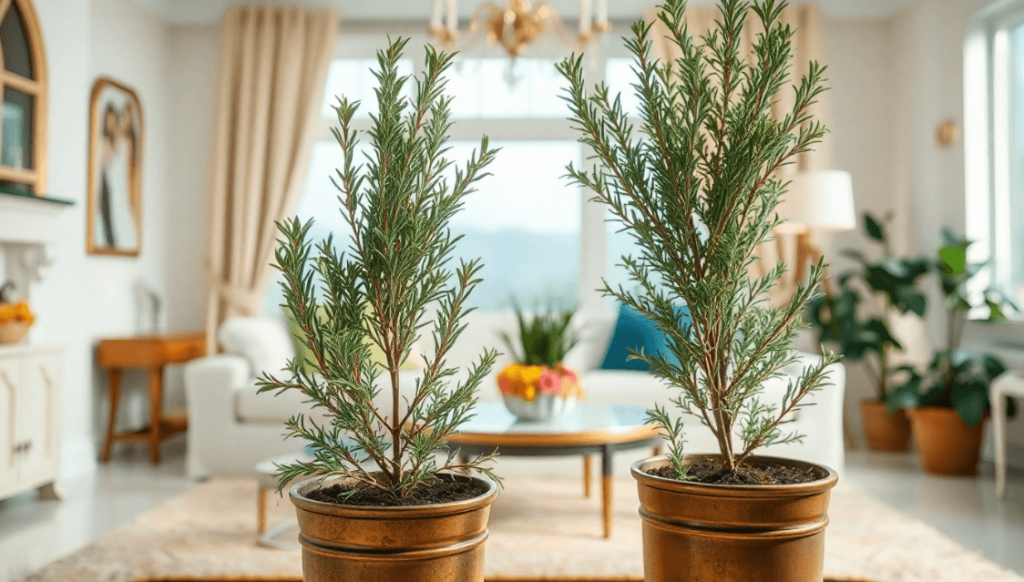
In-ground planting is the lowest-maintenance option for suitable climates. Once the hole is prepared and the plant is set, an in-ground rosemary bush relies on rainfall for water, draws nutrients from the surrounding soil, and develops a deep, expansive root system that supports a large woody stem structure. A healthy in-ground rosemary in zone 8 or warmer can reach 3 to 4 feet tall and spread 4 to 6 feet wide over several years, forming a substantial evergreen shrub.
The spacing requirement for in-ground rosemary is generous. Allow 3 to 4 feet between plants to ensure adequate air circulation, which reduces fungal disease pressure and supports the dense, compact growth habit that characterizes healthy outdoor rosemary. Crowded plants compete for light and air, producing weak, leggy stems that are more vulnerable to damage.
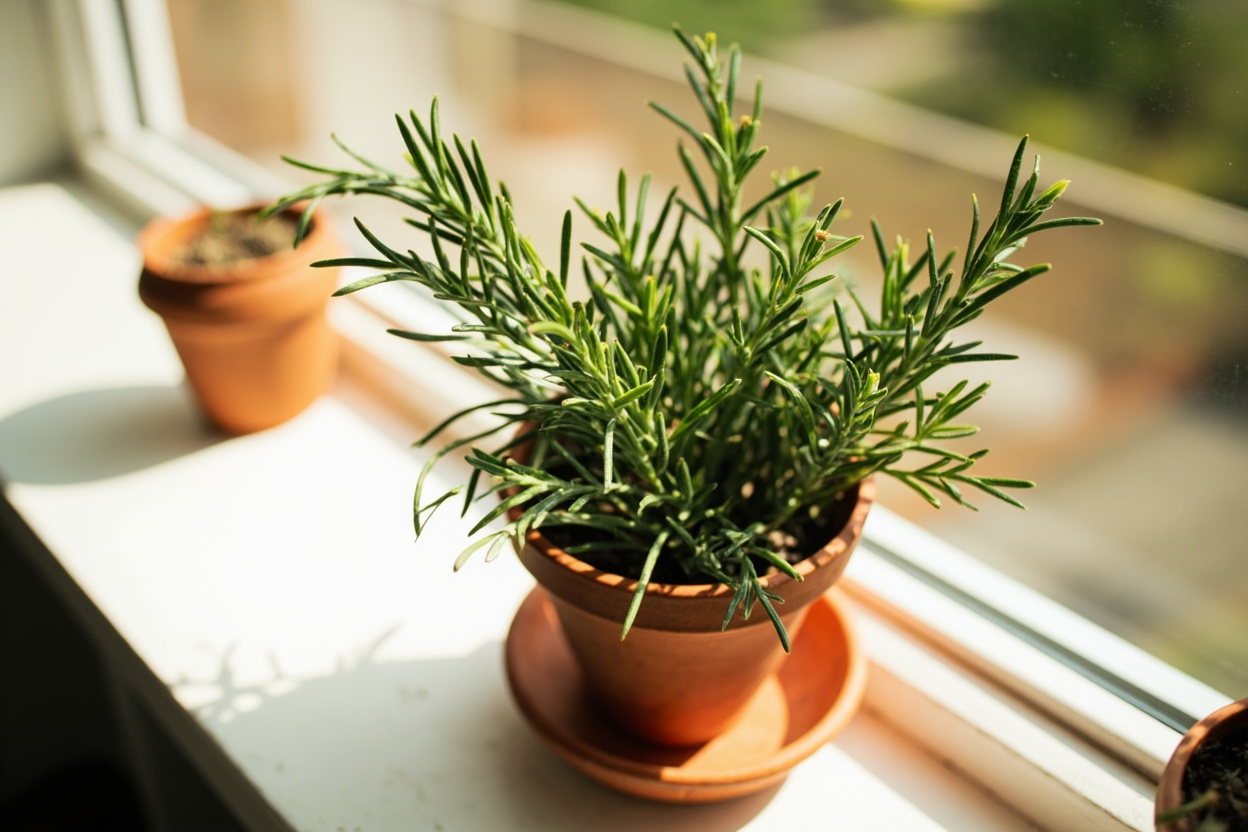
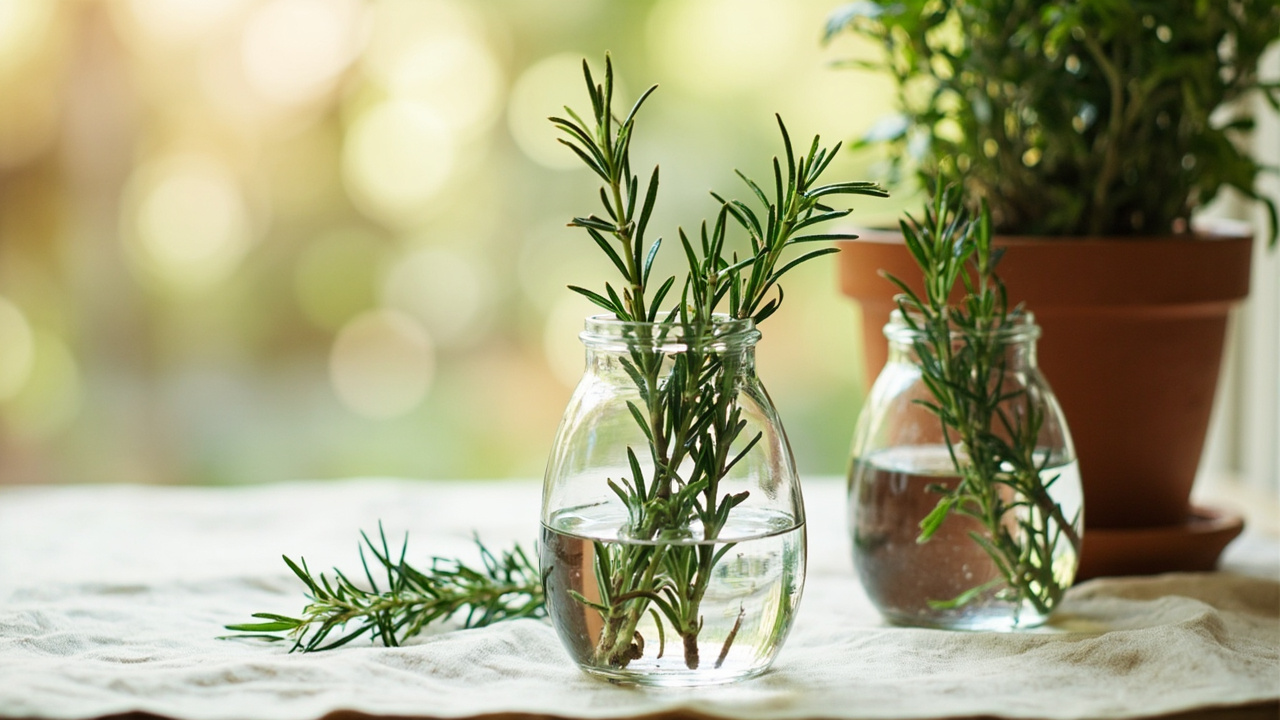
Container growing outdoors offers flexibility that in-ground planting cannot match. A rosemary in a 12 to 14-inch pot can be moved to adjust light exposure, brought closer to a house wall for winter warmth, or relocated entirely indoors before hard frost. Container-grown rosemary also lets you control the soil mix completely, and makes propagation from stem cutting much easier since rooted cuttings can be potted immediately, which is valuable if your garden soil is poor or poorly draining.
The trade-off is that containers dry out faster and require more frequent watering, especially in hot weather. A terracotta pot in full sun can go from moist to bone-dry in a single hot day. During the growing season, container rosemary may need watering every 2 to 3 days in summer heat, compared to weekly or biweekly watering for in-ground plants. The rosemary watering guide covers the dry-down principle that applies to both methods.
If you are in a marginal zone (6 or 7), container growing is often the smarter choice because it gives you the option to move the plant to protected conditions during severe cold events. A rosemary in a pot can be relocated to a garage, porch, or cold frame in a way that an in-ground plant simply cannot.
Care After Establishment: Watering, Feeding, and Harvesting
Established outdoor rosemary is one of the most drought-tolerant culinary herbs you can grow. Once the root system has filled the planting area (typically 6 to 8 weeks after planting), the plant can sustain itself on rainfall alone in most climates. Overwatering is far more dangerous to an outdoor rosemary than underwatering, and both can lead to root rot if the soil stays saturated long enough, and the two problems look deceptively similar: both can cause needle yellowing and drop.
The difference is in the stem and root condition. Overwatered rosemary shows soft, dark stems at the base and roots that smell sour when you inspect them. Underwatered rosemary shows dry, brittle stems and roots that are firm but desiccated. The recovery paths are different: overwatering needs immediate drainage improvement and reduced watering; underwatering needs a thorough soak and mulch retention.
Fertilizer is rarely needed for outdoor rosemary. The plant evolved in nutrient-poor Mediterranean soil and does not benefit from rich feeding. A single light application of balanced slow-release fertilizer in early spring is sufficient for most outdoor rosemary bushes. Over-fertilizing produces soft, rapid growth that is diluted in flavor and more vulnerable to cold damage. If your rosemary is in a container, a half-strength liquid feed once a month during active growth is acceptable, but treat it as optional rather than essential.
Harvesting outdoor rosemary follows a simple principle: take what you need, when you need it, without stripping more than a third of the current season’s growth at any one time. The best time to harvest is just before the plant flowers, when essential oil concentration peaks and the flavor is strongest. Every culinary rosemary harvest is best taken from fresh, healthy stems rather than from dried or damaged material. Cut stems from the current year’s growth, preferably in the morning after the dew has dried. The browning diagnostic guide covers what to watch for if harvested stems show unexpected decline.
Pruning is both a harvest tool and a shape-maintenance practice. Outdoor rosemary benefits from a light trim after flowering to remove any leggy or damaged growth and encourage bushy, compact renewal. A hard prune into old woody stem is risky because rosemary does not always regenerate from bare wood. Cut back to areas with active green growth, and the plant will respond with fresh branching.
Overwintering in Marginal Zones: When Containers Save the Plant
Winter dormancy is a natural and healthy phase for outdoor rosemary. In zones 8 and warmer, dormancy is shallow: the plant slows growth but may continue producing small amounts of new foliage throughout mild winters. In zones 6 and 7, dormancy is deeper. The plant may appear to die back partially, with needle browning on exposed tips, while the main woody structure remains alive beneath the surface.
The key indicator of winter survival is stem flexibility. Scratch a small section of stem with your fingernail. Green tissue underneath means the stem is alive. Brown or dry tissue means that section has died back, but the plant may still recover from lower buds if the main crown is intact. If the entire stem is brown and brittle, the portion above that point is lost, and you will need to prune back to living wood in spring.
For container-grown rosemary in zones 7 and colder, winter intervention is essential. The plant cannot survive a hard freeze in a pot the way it would in the ground. Soil in a container freezes through completely, exposing the root ball to lethal temperatures. The protection strategy is to move the container to an unheated but frost-free space: a garage, shed, or covered porch that stays above 20°F (-7°C). Water the plant lightly once a month during dormancy to prevent the root ball from desiccating completely.
If you grow rosemary in the ground in a marginal zone, apply a thick mulch layer (3 to 4 inches of straw, leaves, or bark) around the base of the plant after the first hard frost. The mulch insulates the root zone and reduces temperature fluctuation. Avoid piling mulch against the main stem, which can trap moisture and encourage crown rot during wet winter periods.
The most common winter killing factor for outdoor rosemary is not cold itself but wet cold. A plant that stays dry and dormant through freezing temperatures often survives better than one that cycles through freeze-thaw events with moist soil. Good drainage in winter is as important as good drainage in summer, because waterlogged frozen soil is almost uniformly fatal to rosemary roots.
If you lose an outdoor rosemary plant to winter damage, the recovery options are covered in our save-dying-rosemary-plant guide. In many cases, a plant that looks dead in late winter is still alive at the crown and can be revived with proper pruning and repotting once spring warmth returns.
Turn That PDF Into a Spreadsheet in Minutes
You've seen how to do it manually — now let the tool handle the heavy lifting. Upload your bank statement and get Excel, CSV, or QBO in a few clicks.
Try It Free