Orchid watering is not a fixed weekly chore. A moth orchid should be watered when the roots and bark are approaching dryness, then drained well so air returns to the pot. The plant needs moisture, but the roots need oxygen just as much.
This is why orchid watering feels different from watering a normal houseplant in potting soil. A Phalaenopsis orchid usually grows in chunky bark, and many of its roots are exposed or visible through a clear pot. Those roots give you better clues than the calendar.
The goal is to read the plant, water thoroughly, keep the crown dry, and stop before wet bark becomes stagnant bark. Once you learn the root color and pot-weight signals, watering becomes much less mysterious.
The Right Watering Signal: Roots Plus Bark
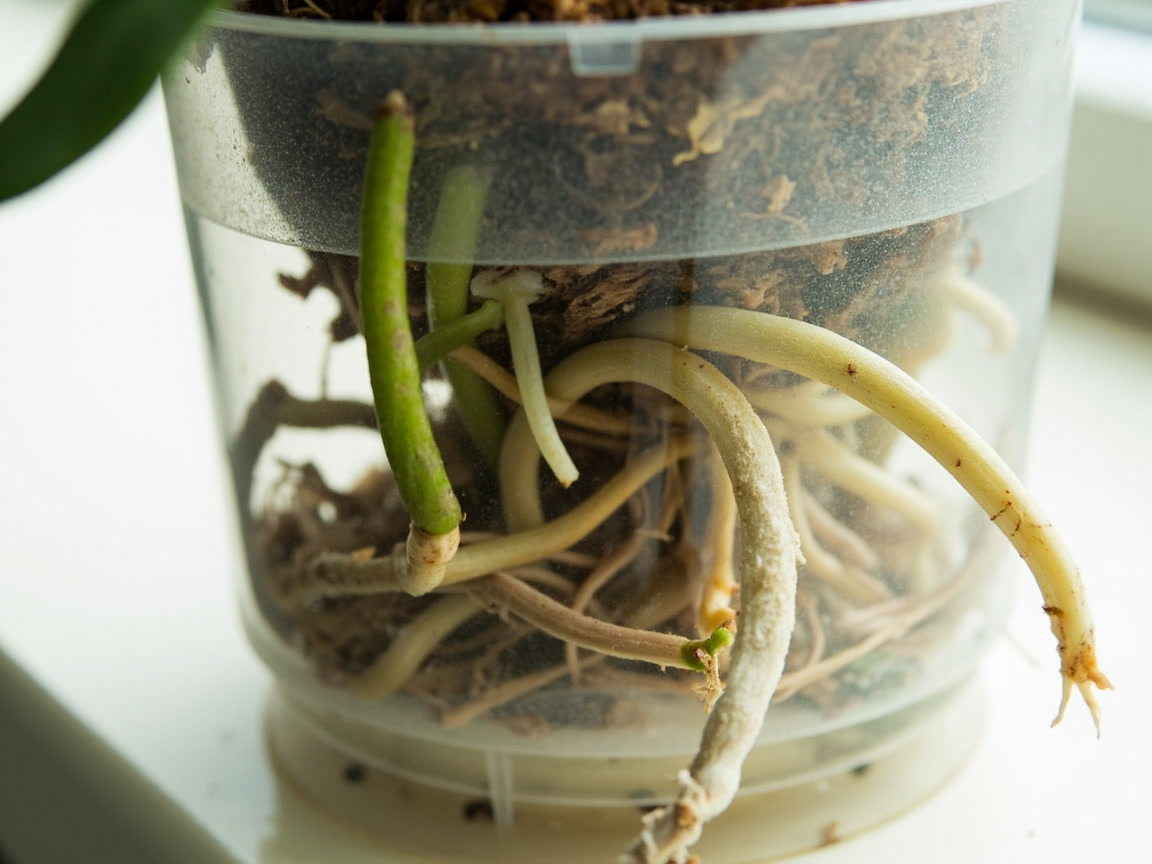
The easiest signal is root color. Hydrated Phalaenopsis roots often look green. Drier roots often look silvery, pale gray, or white. That shift is useful because the outer root layer absorbs water quickly and changes color as it hydrates.
Root color is not enough by itself. A few aerial roots may look silver while the bark inside the pot is still damp, especially in a deep pot or a cool room. Check the bark too. If the bark feels damp below the surface and the pot still feels heavy, wait. If the bark is nearly dry, the pot feels lighter, and most visible roots are silver, it is time to water.
This root-first approach sits inside the broader orchid care system. Light, temperature, pot size, and bark age all change how fast the same plant dries.
How To Water A Moth Orchid Safely
Use a soak-and-drain method rather than tiny sips. The point is to hydrate the bark and roots evenly, then remove excess water.
- Take the inner nursery pot out of any decorative cachepot.
- Run room-temperature water through the bark for 20 to 30 seconds, or soak the inner pot for about 10 minutes if the bark is very dry.
- Let the pot drain fully until water no longer runs from the bottom.
- Check the crown, where the leaves meet. If water is sitting there, blot it with a paper towel.
- Return the drained inner pot to the cachepot only after the bottom is no longer dripping.
Do not leave the inner pot sitting in water. A short soak can rehydrate dry bark, but standing water after that turns the bottom of the pot into a low-oxygen zone.
Why Overwatering Usually Means No Air
Overwatering an orchid usually does not mean one generous watering. It means the bark never gets enough dry-down for air to return around the roots. Orchid roots are adapted to cling to airy surfaces, not sit in dense wet media. When bark stays saturated, oxygen drops and root tissue begins to fail.
Crown wetness is a separate risk. Water sitting in the center of the leaves can rot the crown even when the roots are fine. That is why overhead watering is not automatically wrong, but leaving water pooled in the crown is risky. The safe habit is to water the bark and roots, then make sure the crown is dry.
The same oxygen principle drives broader root rot prevention. Orchids simply make the problem more visible because the roots are thick, exposed, and quick to show rot when the bark stays wet.
Watering Pattern Table
Use several signals together. One clue can mislead you, but the pattern is usually clear.
| Roots | Bark and pot | What it means | Action |
|---|---|---|---|
| Mostly green | Bark damp, pot heavy | Recently watered | Wait |
| Mixed green and silver | Bark slightly damp inside | Drying but not ready | Check again in a day or two |
| Mostly silver | Bark nearly dry, pot light | Ready for water | Water and drain fully |
| Brown, black, hollow, or mushy | Bark wet or sour | Root failure likely | Stop routine watering and diagnose |
The most reliable beginner habit is to lift the pot after every watering. Once you know what a wet pot feels like, the lighter dry-down weight becomes easy to recognize.
Seasonal And Room Conditions That Change Timing
A bright warm room dries bark faster than a cool dim room. Fresh chunky bark dries faster than old broken-down bark. A small clear pot dries faster than a large decorative container. That is why one orchid may need water in five days while another waits two weeks.
In winter or very dim rooms, align watering with the slower rhythm in your house plant care calendar. The plant uses less water when light is lower and growth is slower. If you keep the same summer watering rhythm through winter, the bark may stay wet too long.
When Watering Is No Longer The Main Problem
If the roots are black, hollow, or the leaves stay limp after watering, use the dying orchid recovery path. A watering routine only works when the plant still has functioning roots.
The useful test is response. A thirsty orchid with viable roots firms up after a proper soak and drain. An orchid with failed roots stays limp because the roots can no longer move water into the leaves.
From Bank Statement to QuickBooks-Ready File
That manual cleanup you just read about? This tool skips it. Turn your PDF into QBO for QuickBooks without storing your data anywhere.
Start Converting