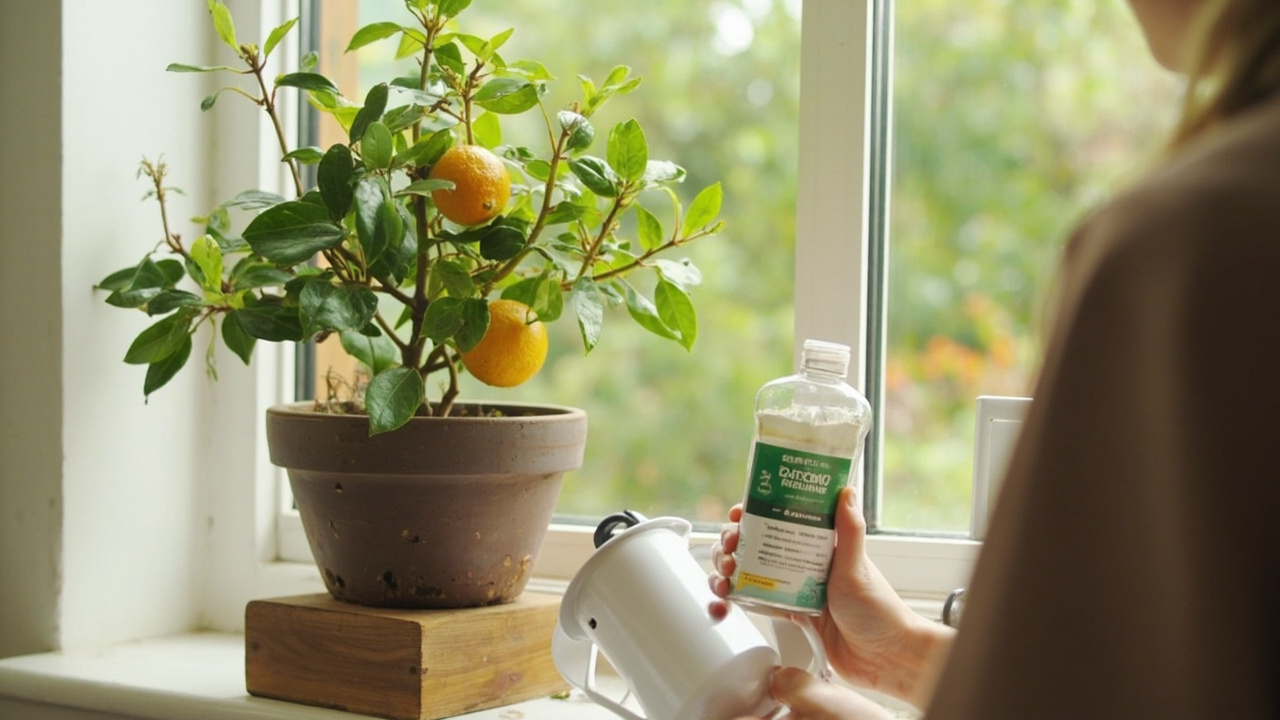
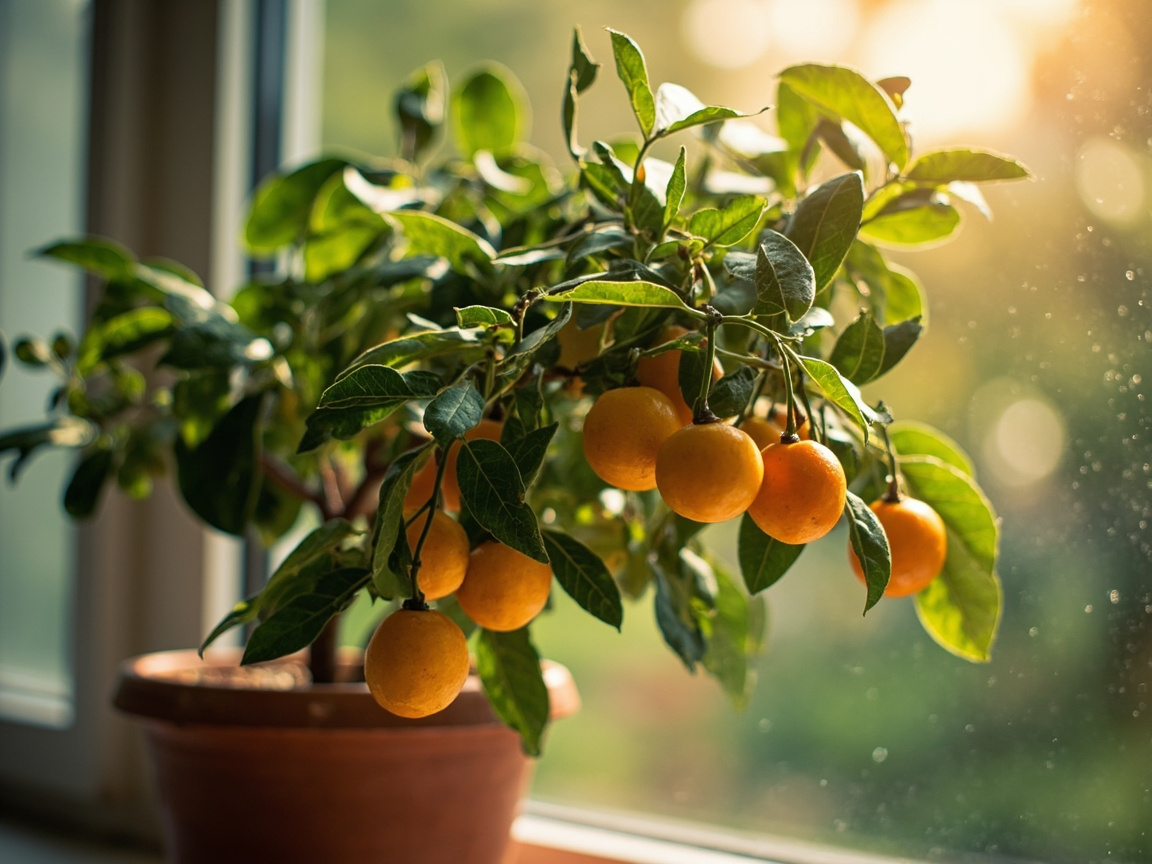
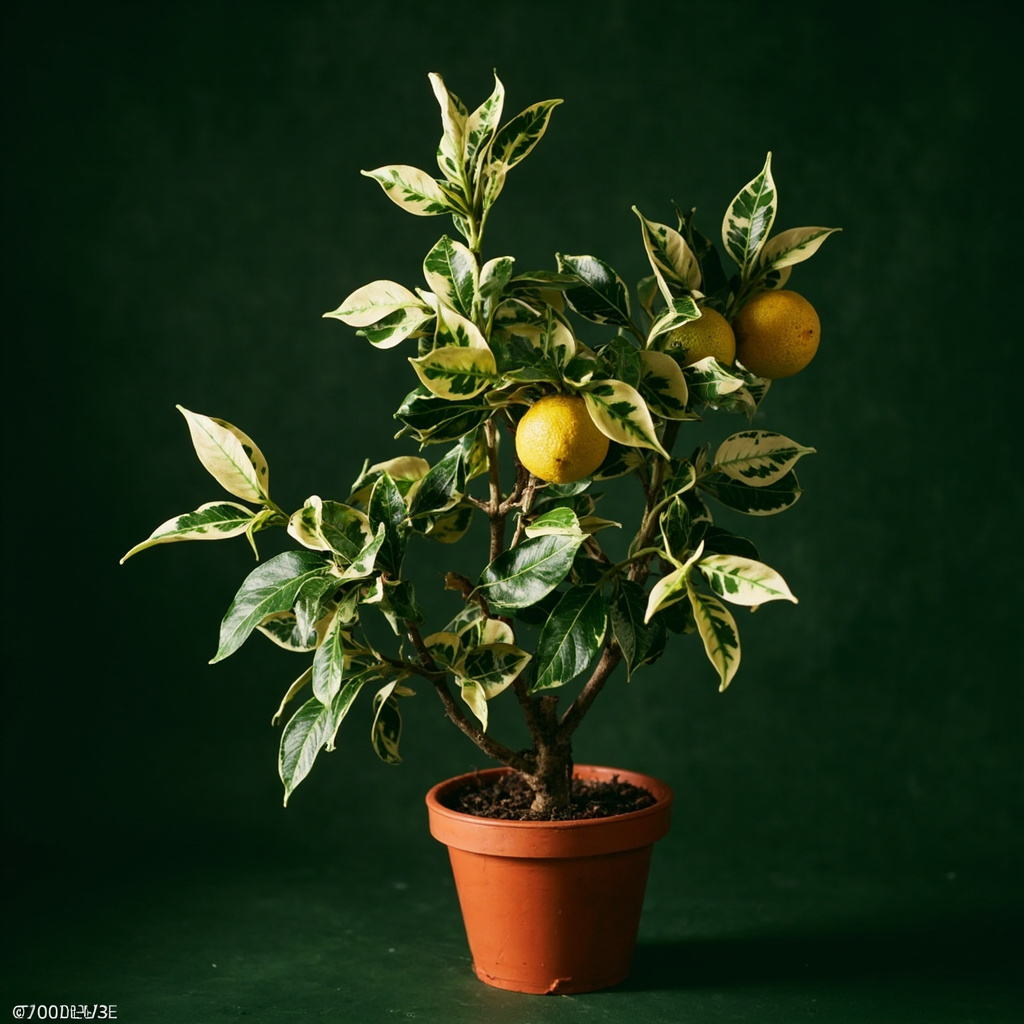
Indoor citrus can fruit for years without a single cut — but most container trees eventually outgrow their windowsill, lose their shape, or trap light in a dense canopy. Pruning fixes all three without killing the tree. The catch is timing: prune at the wrong moment and you remove flower buds already set, and there is no fruit the following season. Get it right, and the tree reshapes itself in weeks.
This guide covers the three most common indoor citrus — Meyer lemon, calamondin, and kumquat — and explains when to make each cut, how much you can safely remove, what to do when a tree has already grown too large, and how to read the tree’s response so you know whether you pruned too early, too late, or too hard.
What Aqualogi recommends: prune in late winter or early spring, before the spring growth flush. Use bypass secateur for anything under 1.5 cm and loppers for thicker wood. Never remove more than 25% of the living canopy in a single year. Open the centre first — light reaching interior branches is what drives fruit, not exterior leaf count.
When to prune indoor citrus : and the timing that costs you fruit
The right pruning window for indoor citrus opens in late winter, roughly 4–6 weeks before the first new growth appears, and closes as soon as green tips begin to show on the branches. For most indoor growers in temperate climates, this means February to early March, depending on the tree’s light exposure and indoor temperature. Pruning inside this window lets the tree recover and direct energy into the coming bloom — so flower buds that open in spring were set the previous summer and autumn.
Why fall and summer pruning backfires
Pruning in fall or early winter cuts away the flower buds already formed along the current season’s wood. Indoor citrus sets buds in late summer for the following spring, so a fall pruning removes next season’s Meyer lemon or kumquat bloom before it opens. Pruning in mid-summer has the same problem — it strips newly set buds and forces the tree into a late flush that hardens off poorly before winter dormancy. Both mistakes buy you a leafy green tree with zero fruit that year. The recovery is not the end of the world — the tree re-buds the following spring — but the lost season is gone.
Regional note: bring indoors, wait, then prune
If you summer your Meyer lemon or calamondin on a balcony and bring it indoors before the first frost, wait 3–4 weeks before pruning. The tree needs time to adjust to lower indoor light and recover from the transplant. Pruning too soon after the indoor move compounds stress and often triggers a leaf drop that takes months to reverse.
Tools and hygiene for clean citrus cuts
Clean, sharp tools are not optional for citrus pruning. A torn wound invites fungal infection at the collar; a crushed wound fails to callus over and dies back past the cut. Two tools cover every cut on a dwarf indoor citrus.
Bypass secateur (up to 1.5 cm)
Use bypass secateur with a hardened steel blade for everything pencil-thin to pencil-plus — which is most fresh growth on a Meyer lemon or calamondin. Test sharpness across a sheet of paper: a clean slice without snagging means the blade is citrus-ready. If the paper tears, sharpen or replace before touching the tree.
Bypass lopper (1.5–4 cm)
Older structural wood on a mature Meyer or kumquat can reach 3–4 cm thick. Use a bypass lopper with a compound-action handle, not anvil pruners — anvil blades crush citrus bark and crack the branch behind the cut. For anything over 4 cm, the tree is probably calling for staged size reduction rather than a single cut (see H2 #5).
Sterilisation between trees
Sterilise blades between trees — not just between cuts on the same tree — with methylated spirits or a 10% bleach dip. Indoor citrus shares space, and fungal spores on a blade move from one container to the next faster than most growers realise. Let the blade air-dry before the next cut; a wet bleach solution rusts the edge.
The three essential cuts : removing dead, crossing, and inward-growing wood
Every citrus pruning session starts with the same three cuts, regardless of your shape goal. Removing dead wood, crossing branches, and inward-growing twigs opens the canopy without reducing overall size, and it is the foundation that makes later shaping cuts meaningful.
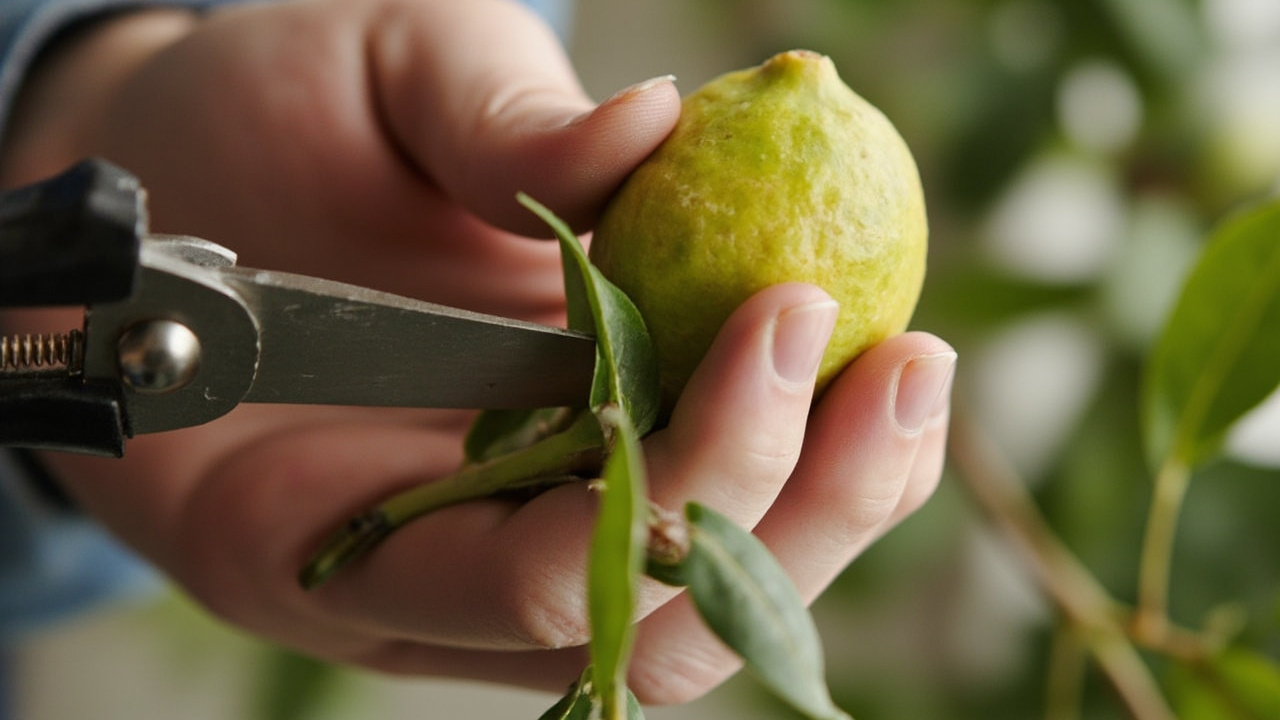
Dead or diseased wood: remove completely
Dead wood on a Meyer lemon or kumquat shows grey-brown bark, no green layer under the scratch test, and brittle twigs that snap cleanly. Cut back to the nearest live collar — the swollen ring where the branch meets the parent stem. Leave the collar intact; it is the tree’s own wound-sealing tool. Diseased wood (cankers, gummosis, blackened twigs) goes the same way, at least 2 cm past the visible damage.
Crossing branches: remove the weaker
When two branches rub, the movement opens bark during every breeze and invites fungal entry inside 6–8 weeks. On an indoor citrus in a still room, the rubbing threshold is lower — abrasion from a single hard adjustment is enough to wound. Remove the one with the worse angle against the trunk, or the one shading the other. If the crossing pair are both structurally sound and interior light is otherwise adequate, keep the one with outward-facing buds and cut the other.
Inward-growing twigs: redirect outward
Indoor citrus twigs that grow toward the centre of the canopy spend their life in self-shade. They never fruit, never thicken into useful wood, and trap humidity that encourages powdery mildew — particularly on a dense calamondin orange. Trace each inward-growing twig to the node where it started redirecting, and cut just above the previous outward-facing bud. A redirect at the right node sends the next sprout in a better direction for the following 2–3 years.
Opening the centre : why interior light drives fruit production
On a container citrus, fruit production is driven by light at the interior buds, not by the outer shell of leaves. A Meyer lemon with a dense canopy photosynthesises all day on the outside and still fruits lightly because no light reaches the interior branches where flowers actually set. Opening the centre fixes that imbalance, often doubling fruit set within one season.
Drop-crotching: redirect a tall stem outward
Drop-crotching is the single most useful shaping cut on a Meyer lemon that has gone vertical. Pick the tallest upright stem, follow it back to a lower side branch heading outward at a 45-degree angle, and cut just above that side branch. The side branch becomes the new terminal leader, and the redirected energy lowers the canopy by 20–40 cm in one cut. On a 40-inch Meyer that’s hit the ceiling, this is the step that brings it back to windowsill height.
Cut above an outward-facing bud, not inward
Every pruning cut just above a bud sends the next sprout in that bud’s direction. Cut above an outward-facing bud and the new growth moves away from the centre, opening the canopy one branch at a time. Cut above an inward-facing bud and you have just created the next year’s problem. The rule sounds simple; under pressure in a thick canopy, it becomes the detail most growers skip.
How much centre removal is safe
15–20% of the total canopy is as much as you should open the centre in a single session. More than that exposes bark that has grown used to shade and scorches in direct light within 7–10 days. A scorched branch does not fruit for two years while it recovers. If the canopy needs more drastic thinning, stage it: remove 15% in year one, another 15% the following spring.
Size management : cutting a tree that has already outgrown the windowsill
The “my tree is too tall” problem is the single most common reason growers eventually cut an indoor citrus hard. A Meyer lemon that has not been pruned in 3–4 years can reach 6–8 feet, exhausting the window height and setting fruit only at the top where it catches the most light. The fix is a staged height reduction, not a single hard chop.
Top reduction: one cut, multi-year recovery
Reduce height by cutting the tallest stem to a lateral branch at least one-third the diameter of the cut stem. A lateral branch under 4 mm on a 30 mm stem will die back instead of taking over as the new leader. The reduced canopy then re-balances over 12–24 months, filling in from below while the new leader thickens.
The 25% annual rule
Never remove more than 25% of the living canopy in any single year. A hard renovation cut that strips 40% or more triggers a stress response: the tree drops yellow leaves within 2–3 weeks, halts root growth, and sends up a flush of vigorous water sprouts at the cut sites. Water sprouts fruit poorly and multiply the pruning problem for the following year.
When to call it: stage removals over 2–3 years
If the tree needs more than one-third of its canopy removed to fit the space, spread the cuts over 2–3 pruning seasons. Year one: remove the tallest stems and dead wood. Year two: thin the centre and correct the shape. Year three: fine-tune the silhouette. A 6-foot Meyer lemon brought down to 3.5 feet over three years fruits every season through the process — a tree cut from 6 feet to 3.5 feet in one session often misses fruit the following year entirely.
Post-pruning care : water, feeding, and reading the tree’s response
Pruning a container citrus exposes more leaf surface to light and air, which changes the tree’s water use. A freshly pruned Meyer lemon or kumquat may need water 2–3 days sooner than before the cuts, but the same stress applies if the root zone is saturated.
Watering after pruning
Resume watering on your normal dry-before-soaked cycle, but check the pot weight more frequently for the first three weeks. A common mistake is over-watering a pruned citrus because the grower assumes stress equals thirst. The tree is not thirsty — it is recovery mode, and saturated soil on a pruned root system triggers root rot within 10–14 days.
Feeding: resume or wait
If you pruned in late winter as growth is resuming, resume the normal feeding schedule immediately — every 2 weeks for a Meyer lemon on a citrus-specific 2-1-1. If you pruned in dormancy (true winter), wait until you see active green tips before resuming. Feeding a dormant tree on a 2-1-1 blend salts the soil and burns the fine roots that have not yet reactivated.
Reading the response: new shoots, leaf drop, or yellow leaves
New shoots appearing 15–30 days after pruning — the tree has re-budded cleanly and the canopy is rebuilding. This is the signal to resume regular care.
Leaf drop within 2 weeks of pruning — the tree has shed more canopy than it can sustain. Hold water, increase ambient humidity to 50–60%, and wait. Most pruned citrus recover from a shock drop within 4–6 weeks.
Yellowing leaves concentrated at the interior — the tree is mobilising nitrogen from older leaves to fuel new growth. This is normal yellowing and resolves once the new flush expands. If yellow spreads to the outer canopy, check drainage before responding.
Cultivar-specific pruning notes : Meyer lemon, calamondin, and kumquat
The three main indoor citrus respond differently to the same cut. Understanding these differences saves you from over-pruning the forgiving cultivar and under-pruning the dense one.
Meyer lemon: open the canopy, cut after fruit harvest
Meyer lemon grows with a naturally open framework — long internodes, well-spaced branches, and a tendency to leggy growth in winter light. Centred canopy opening and post-fruit pruning keep Meyer trees producing full canopies of fruit. The cultivar tolerates aggressive pruning (up to 25% removal) and responds reliably with 4–6 new shoots per cut if light levels are strong enough.
Calamondin: thin the dense interior first
Calamondin grows densely — short internodes, heavy twig production, and a habit of shading out its own interior. Before any shaping cuts, thin the interior twigs back to the first outward-opening bud. A calamondin that has not been thinned in 2 years often loses 30% of its productive inner wood to self-shade. Post-pruning recovery is slower than Meyer — expect 3–4 weeks for new shoots — but the tree responds well if you do not rush the thinning.
Kumquat: prune for shape, not necessity
Kumquat stays naturally compact at 3–5 feet indoors and needs little structural pruning beyond removing dead wood and crossing branches. The kumquat tree fruits on old wood and at the tips of previous-season growth, so heavy tip-pruning reduces the following winter’s harvest. Shape a kumquat by removing 10–12% of the canopy every 2 years rather than the full 15–20% you might apply to a Meyer or calamondin.
Turn That PDF Into a Spreadsheet in Minutes
You've seen how to do it manually — now let the tool handle the heavy lifting. Upload your bank statement and get Excel, CSV, or QBO in a few clicks.
Try It Free