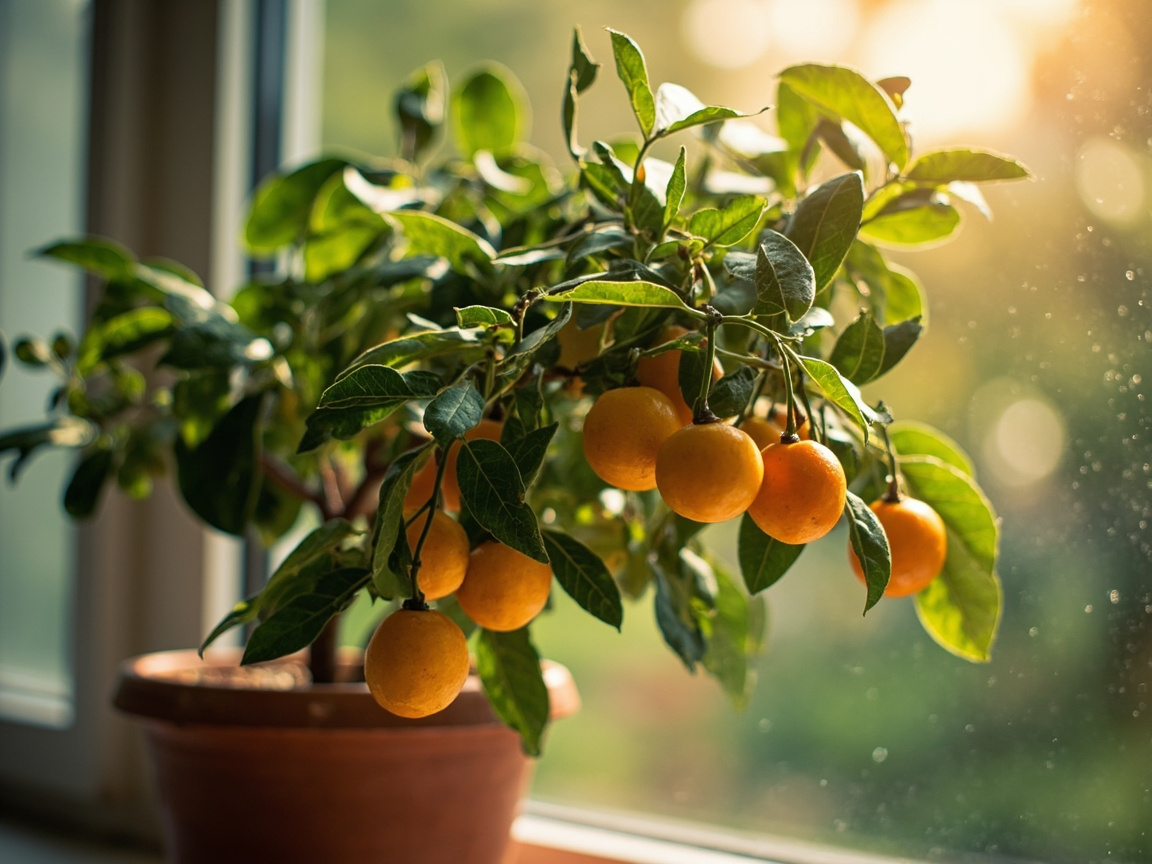
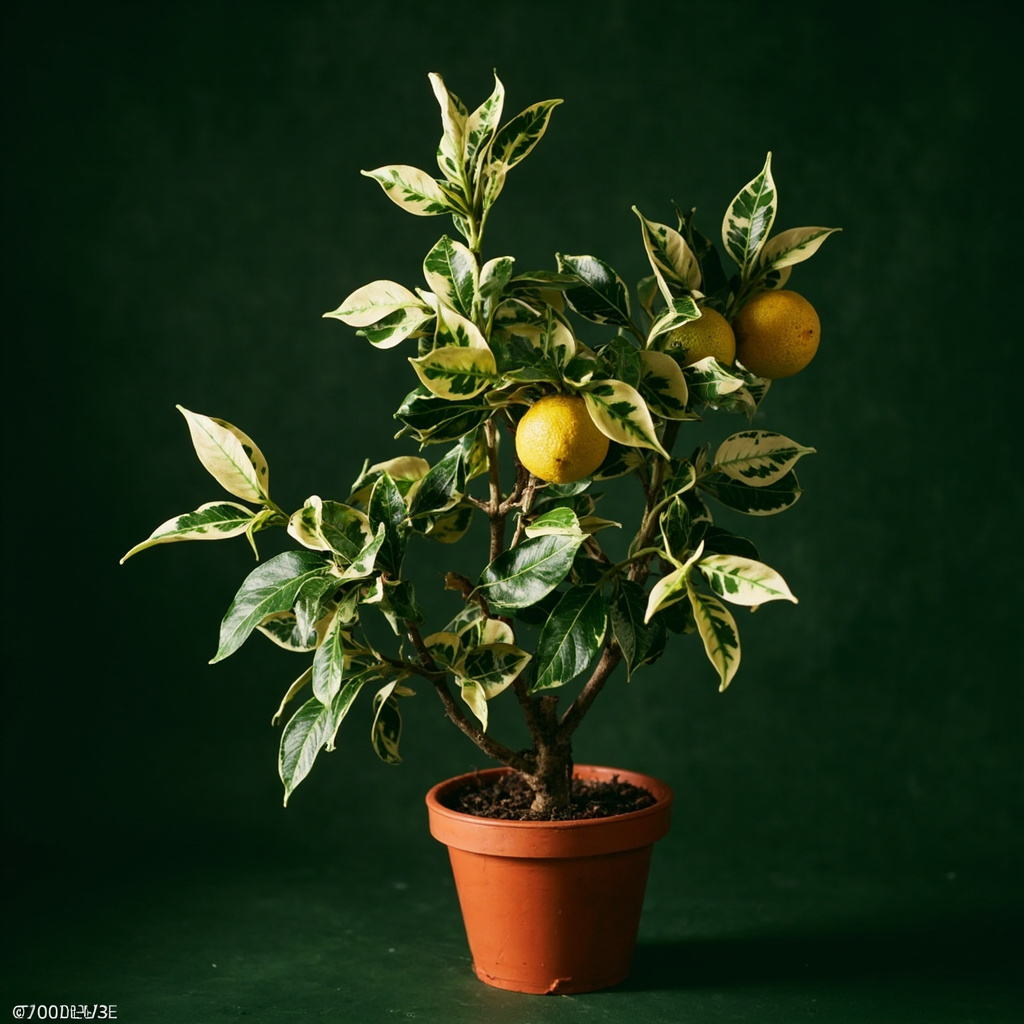
What Makes Meyer Lemon Different. Meyer lemon trees (Citrus × meyeri) are a cross between a true lemon and a mandarin orange — that parentage is what makes them the most forgiving citrus tree for indoor growing. The fruit is rounder, sweeter, and thinner-skinned than a Eureka or Lisbon, and the tree itself tolerates lower light levels and lower humidity than actual lemons demand. If you have tried growing a standard lemon indoors and watched it drop leaves within weeks, the Meyer is the variety that fixes most of those failures.
Dwarf cultivars dominate the indoor market. Improved Meyer (the one most nurseries sell today) reaches about 4–6 feet in a container and fruits reliably within 18 months. Ponderosa — technically a separate citrus species grouped under the Meyer umbrella for most home gardeners — produces larger fruit and more thorns but shares the same indoor care profile. Both self-pollinate, which is the single biggest advantage over a Meyerlime or Calamondin in an apartment without bees.
Light : The Number One Reason Indoor Citrus Fails
Most windows provide 200–400 μmol of photosynthetically active light during a winter day. Meyer lemon trees drop leaves below 500–600 μmol consistently. The gap between what a bright living room actually delivers and what a citrus tree requires is the reason most indoor Meyer trees decline — not watering, not fertilizer, not pests, but plain light insufficiency. The leaves yellow at the margins, then drop from the bottom up, while the tree still looks superficially green on top. This is the same pattern you see in low-light leggy growth in indoor herbs, just slower because citrus stores energy in woody tissue while herbs spend it immediately on soft shoots.
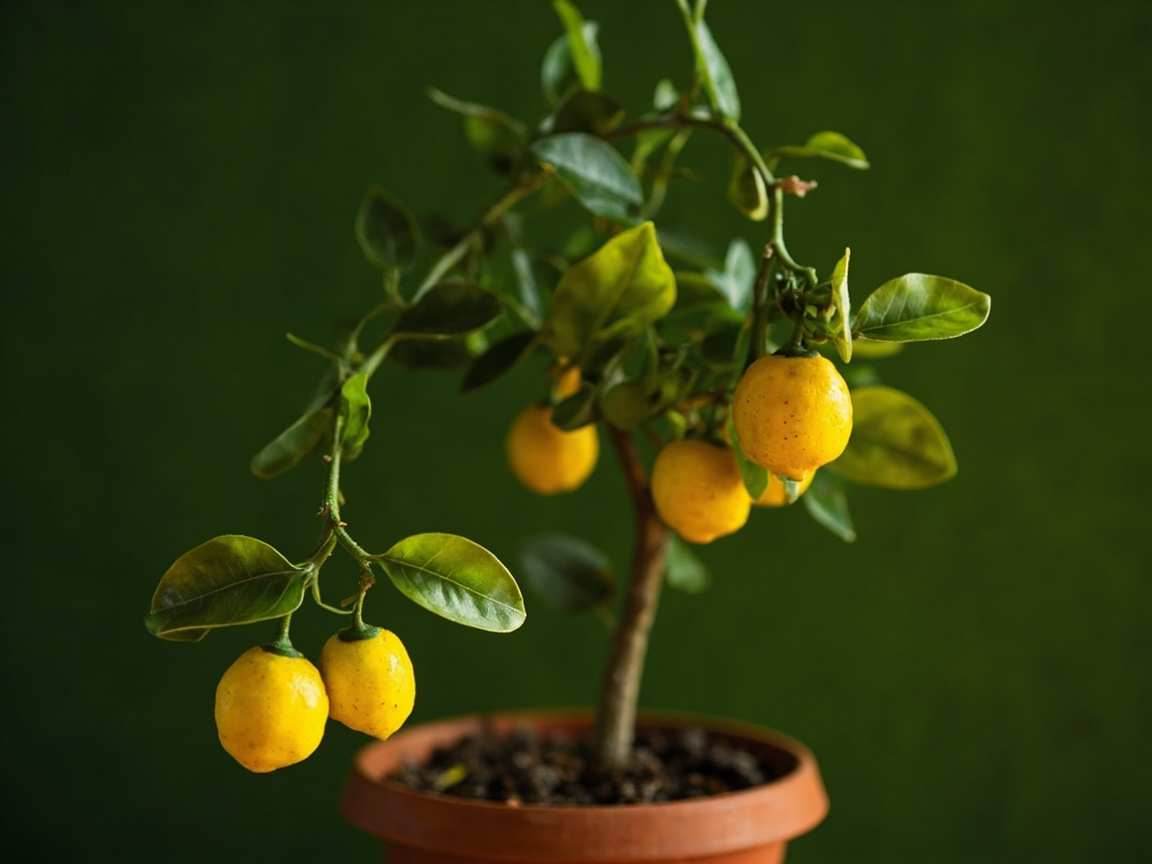
To keep a Meyer indoors without leaf drop in winter, give it 8+ hours of direct sunlight against a south-facing unobstructed window. A southeast or west-facing window works if you supplement with a full-spectrum grow light for the remaining 4 hours. Hang the light 12 inches (30 cm) above the canopy for 600–800 μmol at the leaf surface. Without a grow light, expect the tree to go semi-dormant in December and January — fewer leaves, no new growth, no fruit set. That is normal. Resume active feeding once day length climbs above 11 hours in March.
If you cannot provide 6+ hours of direct light at the leaf level, Meyer lemons will survive indoors but they will not fruit reliably. The threshold for flowering indoors is roughly the same as for keeping an indoor calamondin healthy and fruiting — 600 μmol for 8 hours, every day.
Watering and Soil : Getting the Root Zone Right
Water a Meyer when the top 2 inches (5 cm) of potting mix feel dry to the touch. Push a finger in past the top crusted layer — if it feels damp at the second knuckle, do not water yet. In a 10-inch (25 cm) unglazed terracotta pot under 8 hours of south-facing light, this typically means watering every 5–7 days in summer and every 10–14 days in winter. In a glazed ceramic pot the intervals stretch longer because the clay does not wick moisture away from the root zone. The risk is almost always overwatering, not underwatering.
The soil needs to drain freely and still hold enough moisture to keep roots from desiccating between waterings. A 50:50 mix of high-quality container potting mix and perlite works for most indoor conditions. For a better result, use one part potting mix, one part perlite, and one part fine orchid bark. The bark keeps the mix open for gas exchange at the root zone, which is what prevents the anaerobic root rot that kills container citrus. Meyer prefers a soil pH between 5.5 and 6.5. If you chlorinate your tap water, let it sit in an open container for 24 hours before watering off chlorine (not fluoride — it will not gas off). This is the same principle as watering indoor plants using diluted nutrient tea rather than straight-strength feed.
Flush the soil thoroughly every 2 months. Run water through the root zone until it flows clear for 30 seconds — this prevents soluble salts from fertilizer and hard water from accumulating in the mix. Salt burn shows up as crispy leaf margins and premature leaf drop that looks like underwatering but is actually the opposite.
Fertilizing : Why Citrus Feed Is Different
Meyer lemon trees grow actively from March through October indoors. During that window, feed every 2 weeks with a balanced NPK fertilizer at half strength. A 15-15-15 or 20-10-10 formulation works — the higher nitrogen fuels vegetative growth, while the matching phosphorus and potassium support root integrity and flower initiation. Dilute to half the label rate for container citrus; a full dose will burn the feeder roots within 7–10 days in a 10-inch pot. For the complete seasonal feeding schedule, deficiency diagnosis, and micronutrient management, see the indoor citrus fertilizer guide.
What balanced fertilizers miss is the micronutrient gap. Citrus needs iron, zinc, manganese, and magnesium in small but reliable quantities. A yellowing pattern between the green veins of older leaves (interveiling chlorosis) signals iron or magnesium deficiency in soil above pH 6.0. The fix is a chelated citrus micronutrient spray, applied as a foliar drench twice in March and once in June. Without those added micronutrients, Meyer trees grow pale and flower poorly even when the NPK numbers look correct on paper.
Reduce feeding to once monthly from November through February. The tree is semi-dormant and cannot metabolize the nitrogen you give it; the salts accumulate in the root zone and degrade the soil structure over time. This is the same principle underlying hand-pollination indoors — you work with the tree’s natural rhythm, not against it.
How to Prune, Flower, and Fruit Indoors
Prune a container Meyer for shape and size once a year, ideally in late February before the spring flush. Remove any branch that grows vertically past 18–20 inches (45–50 cm) or any branch that crosses another in the center of the canopy. Thin the interior to let light reach the inner fruiting wood — Meyer lemons set fruit on the interior branches under full light, not the outer flush. Make cuts just above an outward-facing bud node. The tree will respond with 3–5 new shoots in the following 6 weeks.
Flowering indoors is gated by light intensity, not season. A Meyer grown under 600+ μmol of full-spectrum light for 8+ hours will flower almost continuously with a natural peak in February–March. Each flower is self-fertile but needs physical transfer of pollen between its own anthers and stigma. Indoors without wind or bees, you are the pollinator. Use a soft artist’s brush to swirl inside each open flower every morning for 3 consecutive days. Pollinated flowers hold their petals for 4–6 days, then the petal drops and a tiny green fruitlet appears at the base. Unpollinated flowers drop within 48 hours.
From successful pollination to ripe yellow fruit on a Meyer is 6–9 months. The tree will naturally abort about 60–70% of set fruit within the first 3 weeks if it cannot support the full crop. That is normal physiology, not failure. Thin remaining fruitlets to 1 fruit per 6 inches (15 cm) of branch if you want full-sized fruit instead of a heavy crop of small, seedy lemons. Pick fruit when the rind turns fully golden-yellow and the fruit feels slightly soft at the base — not hard, not mushy.
Common Problems : Yellow Leaves and Leaf Drop
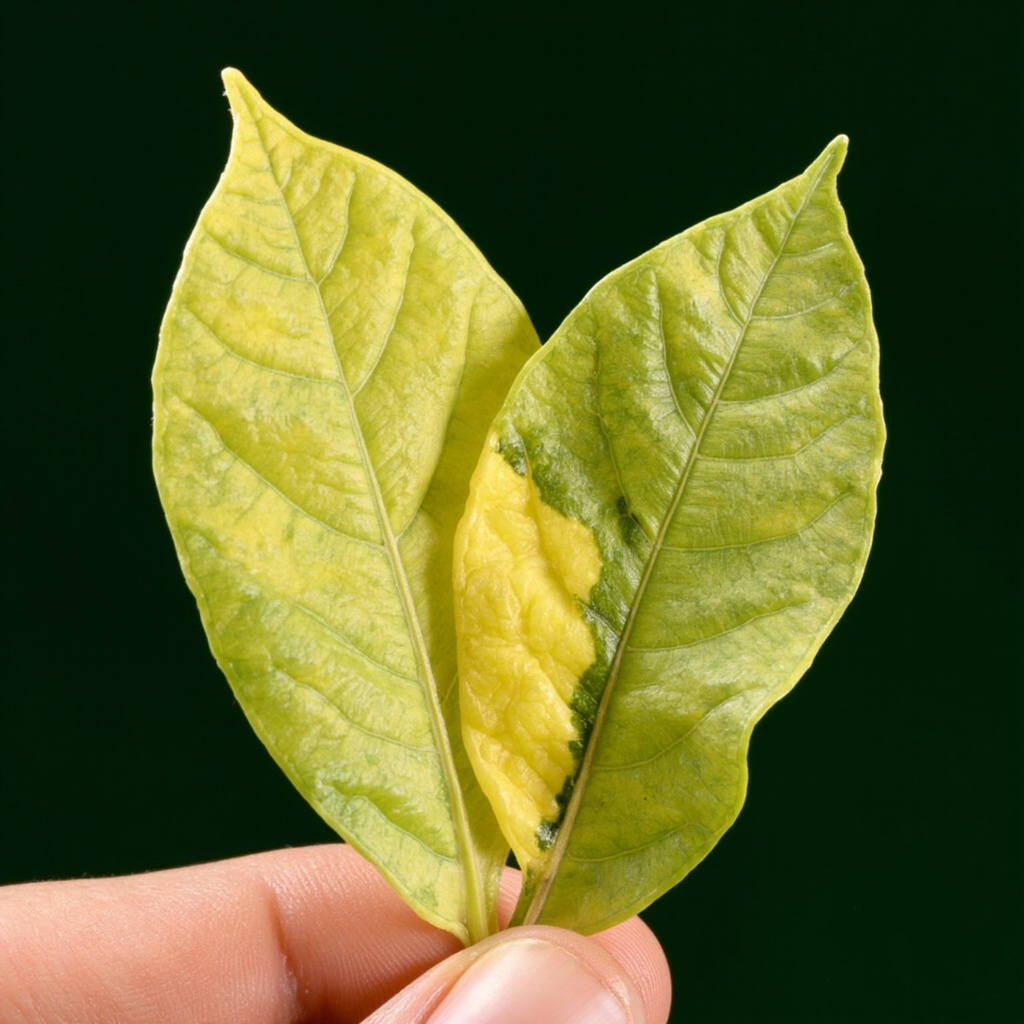
Two common problems trip up indoor Meyer growers. The first is the yellow leaves — margins staying green but the blade turning uniform yellow or showing interveiling chlorosis. The second is the sudden leaf drop that happens after moving the tree indoors from a summer patio or after a cold snap under 45°F (7°C). Both are stress responses, not disease.
Yellow leaves on a Meyer indoors usually trace to three causes in order of frequency: light insufficiency (low μmol, the lower leaves fade evenly), overwatering (lower leaves yellow first, soft brown roots on inspection), or nitrogen deficiency (uniform yellowing that responds to a single 15-15-15 feeding). Diagnose by checking your light meter first — a step-by-step diagnostic walkthrough covers the soil-pinch test and root inspection technique that separates these three causes without guesswork.
Sudden leaf drop tells a different story. If more than 30% of the canopy drops within a week, the tree experienced a temperature shock or humidity crash that happened 2–4 weeks ago. The internal abscission layer had already formed; today’s drop was set in motion by a heating-vent blast event or a draft from a door you sealed. The recovery protocol is to stabilize temperature above 50°F (10°C), provide 600+ μmol for 8 hours daily, and do not fertilize for 4 weeks. New growth emerges in 6–8 weeks if the root system is healthy. If the root system rotted, the branch tips fail to push new growth by week 10 and the tree enters terminal decline.
Turn any PDF statement into a clean sheet
Skip the typos and the hours of copying. Our converter handles any bank statement format and outputs Excel, CSV, or QBO for QuickBooks. No file retention, free to try.
Convert your statement