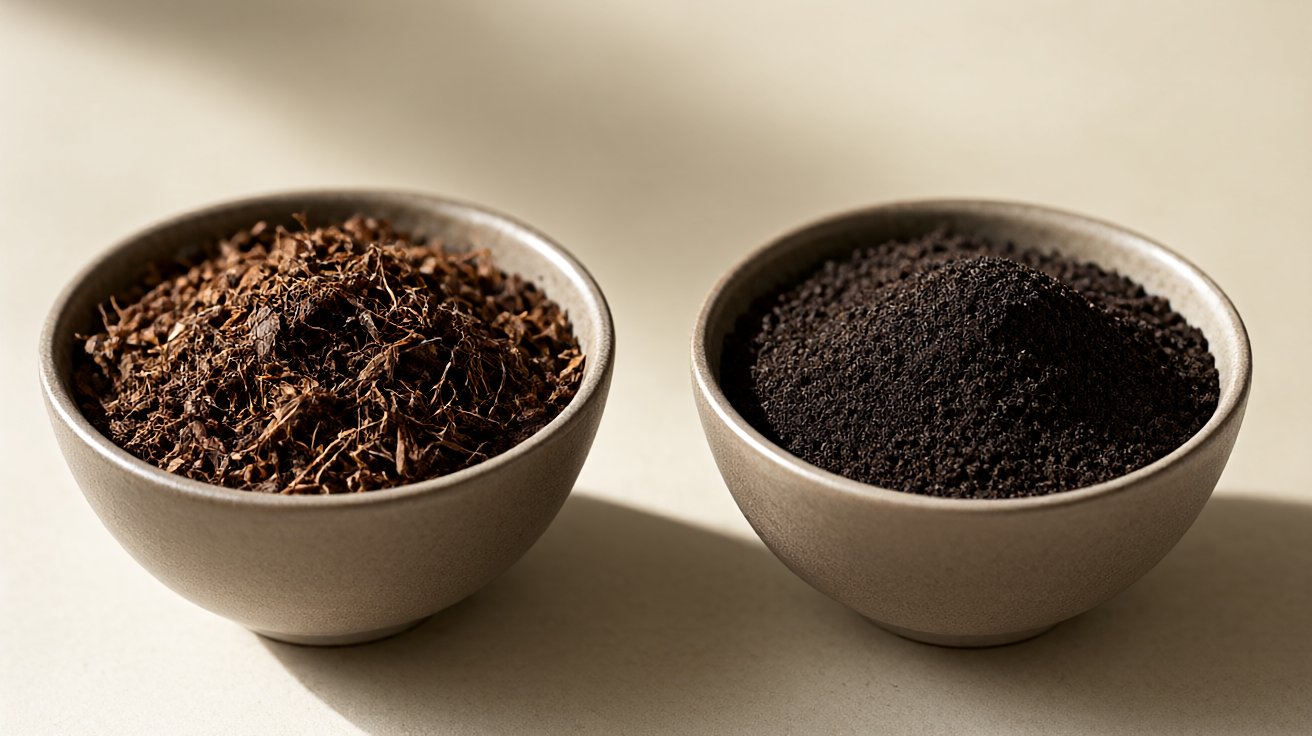

Coco coir is a blended growing medium made from coconut fiber and pith, giving it strong drainage, good aeration, and reliable structure for hydroponic roots. Coco peat is the finer, more powdery pith fraction on its own, with higher water retention and lower aeration. For most hydroponic growers, coco coir is the better choice; coco peat alone tends to stay too wet and starve roots of oxygen unless it is blended with fiber or perlite.
This guide breaks down what each material actually is, how fiber, pith, and chips change water retention, drainage, CEC, pH, and salt content, and when each one earns its place in a hydroponic system. It is written for growers choosing between bags labeled “coco coir” and “coco peat,” and it addresses the mislabeling that makes that choice harder than it should be.
What Coco Coir and Coco Peat Actually Are
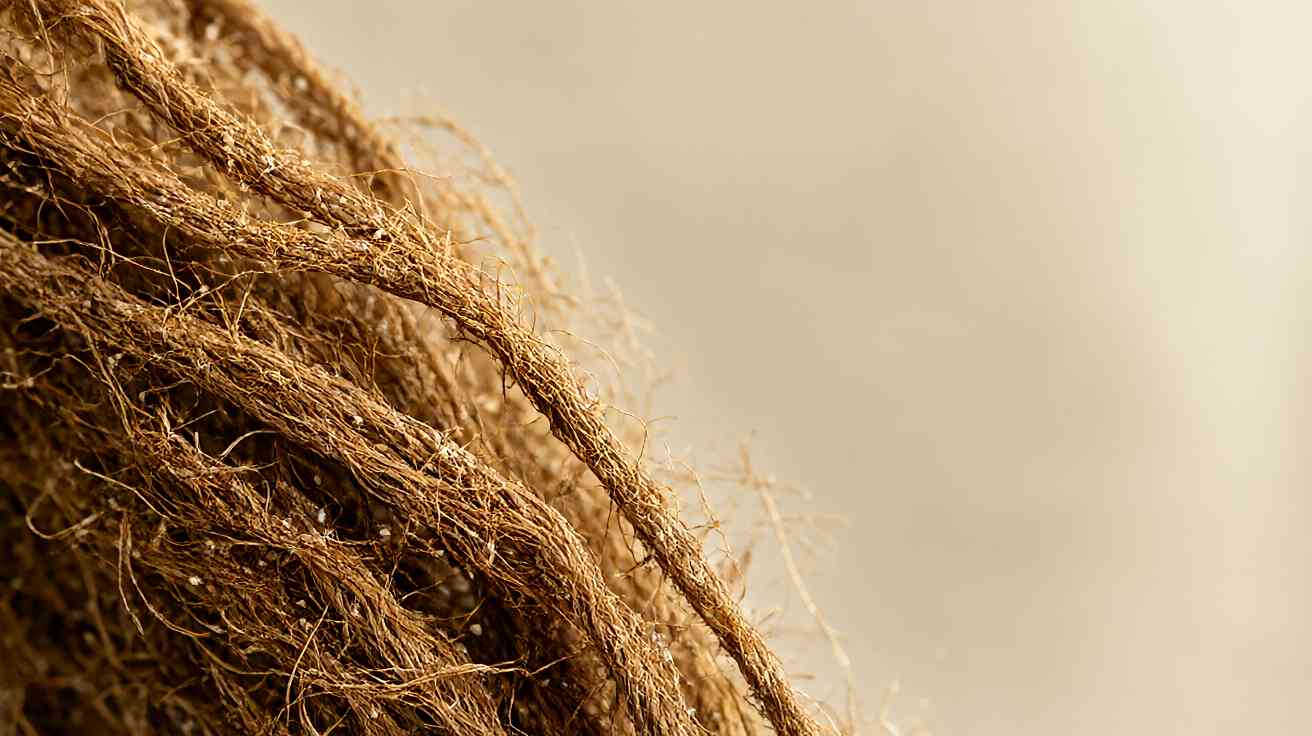
Both materials come from the same source: the fibrous husk of mature coconuts. After the coir is extracted from the husk, it is separated into fractions. The long, stringy material is coir fiber. The fine, dust-like material is coir pith, which is often sold as coco peat. A blend of fiber and pith, sometimes with coir chips, is what most suppliers call coco coir.
Coco coir as a product is therefore a composite medium. It balances the water-holding capacity of pith with the structural strength and aeration of fiber. Coco peat, by contrast, is essentially the pith fraction alone. That single difference drives almost every performance gap between the two in hydroponic use.
Because the same husk produces both, the terms are often used loosely in marketing. A bag labeled “coco peat” may contain mostly pith, while a bag labeled “coco coir” may be a pith-heavy blend with little fiber. Understanding the fractions matters more than trusting the front of the bag.
Processing also matters. Raw husk material must be retted, washed, dried, and sometimes buffered before it becomes a usable medium. The degree of processing affects salt content, pH stability, and how consistently the material performs across batches. Two bags with the same label can behave differently if their processing histories differ.
The Real Difference: Fiber, Pith, and Chips
Three fractions determine how a coconut medium behaves. Coir pith is the sponge: it holds water and nutrients but compacts easily and drains poorly on its own. Coir fiber is the scaffold: it creates air pockets, improves drainage, and keeps the medium from collapsing. Coir chips are small chunks of husk that act like a coarse amendment, boosting aeration and drainage further.
Coco coir contains fiber plus pith, and often chips. That mix gives it porosity and structure. Coco peat is pith alone, so it behaves like a fine, absorbent sponge with little internal airflow. The fiber content is the single most important variable to check when comparing two products.
Growers who want to compare hydroponic growing media should look past brand names and read the fiber-to-pith ratio on the spec sheet. A high-fiber blend drains faster and re-oxygenates better; a pith-heavy blend holds more water and needs more careful irrigation.
Fiber length also influences structure. Longer fibers create more stable air channels that resist compaction over multiple growing cycles. Short or degraded fibers break down faster, reducing aeration as the medium ages. Chips add the most durable structure but can be too coarse for small containers or seedling trays.
Water Retention and Drainage Compared
Peat’s Water Holding
Coco peat holds more water per volume than coco coir because pith has a high surface area and many micropores. That makes it attractive for water-hungry crops or for growers who irrigate infrequently. The downside is that saturated pith leaves little room for air, which can suffocate roots in hydroponic containers.
Coco peat’s finer particles (mostly <0.5mm) create more micropores, which hold water so tightly that roots cannot extract it; coir's longer fibers (1-10mm) create macropores that drain freely and hold air.
Coir’s Drainage Profile
Coco coir drains faster and re-aerates quickly after watering. Its fiber content creates macropores that let excess water escape and fresh air enter. For hydroponics, where roots sit in a constantly moist but never waterlogged environment, that balance is usually preferable.
The key metric is air-filled porosity after drainage. Coco coir typically retains enough water for steady nutrient delivery while keeping enough air space for root respiration. Coco peat, unless amended, can drop below the air-filled porosity that roots need, especially in dense containers or with frequent feeding.
Irrigation frequency interacts with this. In drip or recirculating systems, coco coir handles frequent small pulses well because excess drains and air returns quickly. Coco peat can remain saturated under the same schedule, increasing the risk of anaerobic conditions and root disease. Adjusting pulse volume and frequency can help, but it does not fully fix the low aeration of pure pith.
CEC, pH, and Salt Content
CEC Difference
CEC, or cation exchange capacity, measures how well a medium holds positively charged nutrients like calcium, magnesium, and potassium. Coconut-based media generally have a moderate CEC compared with peat moss, which means they can buffer nutrients but do not lock them up excessively. Both coco coir and coco peat share this trait because both are coconut-derived.
Because coco peat has higher CEC than coir, it holds more nutrients but also more residual salts from processing , which is why peat requires more thorough rinsing and buffering.
pH Range
pH in coconut media usually sits between 5.5 and 6.5, a range suitable for most hydroponic crops. Coco peat can run slightly more acidic depending on processing, but the difference is small. The more important variable is salt content, which varies widely by source and processing rather than by fraction.
Salt Content
Salt content in coconut media comes from sodium and potassium residues left from the husk. High salt levels can compete with calcium and magnesium uptake, causing deficiencies even when those nutrients are present in the solution. Quality products are washed and sometimes buffered; cheap products may arrive salty and require extensive rinsing before use.
Understanding growing medium properties such as CEC, pH, and salt content helps you interpret a product label and decide whether rinsing or buffering is needed before planting.
Buffering is especially relevant for coco coir. Because of its CEC, unbuffered coir can adsorb calcium and magnesium from your nutrient solution until its exchange sites are saturated. Pre-buffering with a calcium-magnesium solution stabilizes the medium so it does not strip nutrients from early feeds. Coco peat benefits from the same treatment, but the need is most commonly discussed with coir because coir is the standard hydroponic substrate.
Which One for Hydroponics
For hydroponics, coco coir is the standard choice. Its blend of water retention and aeration matches the needs of recirculating and drain-to-waste systems, where roots must stay moist but never suffocate. It also holds structure over multiple cycles, making it reusable after flushing and re-buffering.
Coco peat alone is rarely ideal for hydroponics. Its high water retention and low aeration push systems toward over-saturation, which increases the risk of root rot and nutrient lockout. It can work in small, frequently flushed setups or when blended with a coarse amendment, but it is not the default.
If you are deciding between the two for a hydroponic grow, choose coco coir unless you have a specific reason to want maximum water holding and are prepared to amend for aeration. Most growers who try coco peat alone end up blending it with fiber or perlite to get back to coir-like performance.
System type matters too. In deep water culture or nutrient film technique, the medium is secondary, but in drip, ebb-and-flow, and container systems, the medium’s air-water balance dominates outcomes. Coco coir’s predictable drainage makes it easier to tune these systems, while coco peat demands more precise irrigation control.
When Coco Peat Makes Sense
Coco peat earns its place in situations where water retention is the priority. Seed starting and propagation often benefit from the fine, moisture-holding texture, which keeps delicate roots from drying out. It also works as an amendment to lighten heavy mixes or to increase water holding in arid climates.
Gardeners growing in containers with infrequent watering may prefer coco peat blends because they reduce irrigation frequency. In those cases, the lower aeration is offset by the slower drying rate, and roots have time to adapt.
Even then, pure coco peat is best used as a component rather than the whole medium. Blending it with fiber, chips, or perlite restores the aeration that pure pith lacks, giving you control over the final balance.
Soil-based gardeners sometimes use coco peat as a peat moss substitute in potting mixes. In that context, its fine texture and water holding are assets, and the lower aeration is less of a problem because soil structure and organic matter provide additional porosity. The hydroponic context is where the difference bites hardest.
Mixing Ratios and Combinations
Growers often create custom blends to tune water retention and aeration. A common starting point is a 70/30 mix of coco coir to perlite, which boosts drainage while keeping moisture. For a more water-retentive mix, increase the pith fraction; for more aeration, increase fiber or chips.
If you start with coco peat, blend it with coir fiber or chips at roughly 50/50 to approximate standard coco coir performance. Adding perlite at 20 to 30 percent further improves drainage and prevents compaction over time.
Whatever the ratio, consistency matters. Mix thoroughly before filling containers so that water and nutrients distribute evenly. Uneven blends create wet and dry pockets that stress roots and complicate irrigation scheduling.
When experimenting, change one variable at a time and track results. Adjusting fiber content, chip size, or perlite percentage in isolation makes it easier to identify what your specific crop and system prefer. Many growers keep a standard base blend and tweak only the aeration component.
Common Confusions and Mislabeling
The biggest source of confusion is terminology. “Coco coir,” “coco peat,” and “coir pith” are used interchangeably by suppliers, even though they describe different fractions. A product labeled coir may be mostly pith, and a product labeled peat may contain fiber.
Another confusion is assuming that all coconut media are low in salt. Salt content depends on washing and buffering, not on whether the product is called coir or peat. Always check whether the product is washed and whether it requires buffering before use.
To avoid surprises, inspect the texture and read the specs. Fibrous, chunky material indicates coir; fine, dusty material indicates peat or pith. When in doubt, ask the supplier for the fiber-to-pith ratio and the electrical conductivity of the finished product.
If you are unsure how to prepare your medium, follow a proven how to buffer coco coir process before planting. Buffering replaces excess sodium and potassium with calcium and magnesium, stabilizing the medium for hydroponic nutrition.
Mislabeling also extends to chip content. Some products advertise “coco coir with chips” but contain only a token amount, which does little for aeration. Checking the physical texture and asking for a breakdown by fraction is the only reliable way to know what you are buying.
Review date: November 2026. Sources: industry coconut coir processing references, hydroponic growing medium specifications, and standard horticultural practice for coco-based substrates.
Last reviewed on 3 November 2026. Updated as new evidence and extension guidance are checked.
Sources and further reading
The claims in this guide come from extension services, plant science references, and horticultural practice.
The Coco Depot , Coco coir tutorials.
CocoX , Coco coir buffering.
Oklahoma State University Extension , Soilless growing media.
Turn That PDF Into a Spreadsheet in Minutes
You've seen how to do it manually — now let the tool handle the heavy lifting. Upload your bank statement and get Excel, CSV, or QBO in a few clicks.
Try It Free