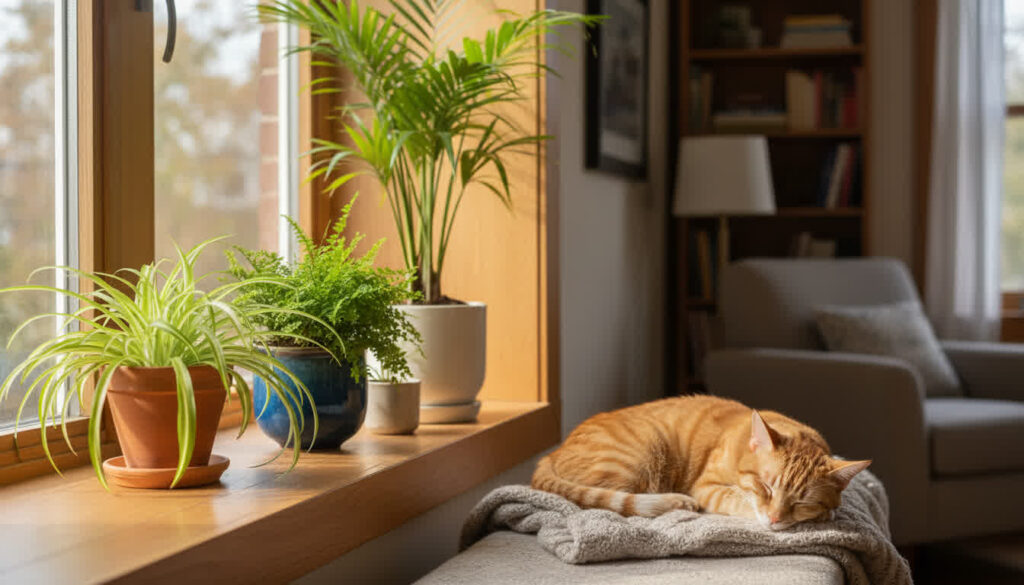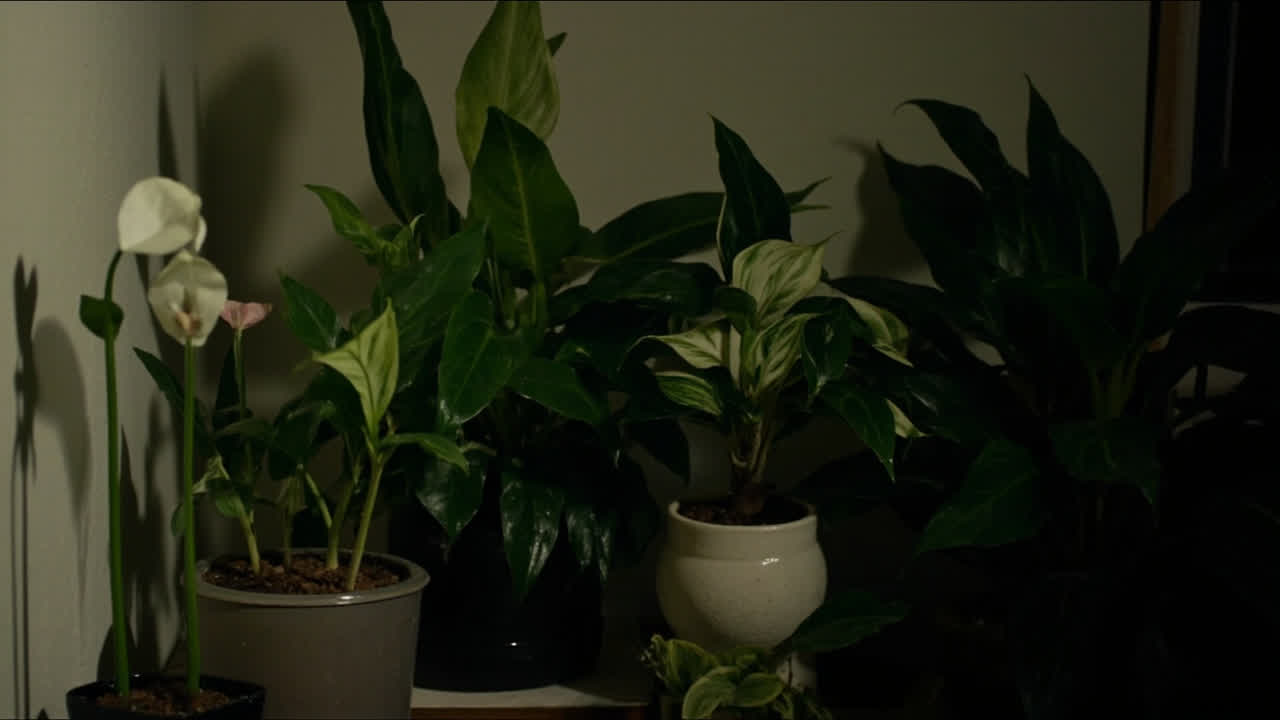

Most indoor plants sold as “low light” are marketed into a room that doesn’t actually exist. The label means the plant can survive roughly 50 to 250 foot-candles (540 to 2,700 lux) at the leaf for 8 to 12 hours a day. The room most owners put it in — a corner eight feet from a north window — measures closer to 20 foot-candles, sometimes under 10. Below 25 fc, even a Zamioculcas zamiifolia declines inside a year. The plant isn’t dying from neglect; the photons aren’t there.
The fix isn’t to give up on dim rooms. It’s to measure what you actually have, then pick a species whose minimum quantum requirement sits below that number. Six species reliably do that. They don’t grow fast. They don’t flower on demand. They sit there, green and steady, for the six months out of the year when the window across the room is the brightest thing in the apartment.
What “Low Light” Actually Means
Horticulturists at the University of Missouri Extension define low light as 50 to 250 foot-candles (about 540 to 2,700 lux) at leaf level for 8 to 12 hours daily. Mississippi State Extension sets the survival floor at roughly 50 foot-candles: below that, even the most shade-adapted species begin to decline after three to six months. The single number that matters is photosynthetic photon flux density (PPFD), measured in micromoles per square meter per second (µmol/m²/s). For white light, the practical conversion is roughly PPFD ≈ 0.2 × foot-candles.
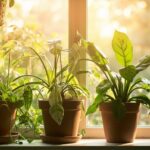
What those numbers mean in real rooms: a north-facing window on a clear winter day delivers around 200 foot-candles at the glass and falls off sharply with distance. A spot 2 meters (6 feet) back from that same window sees about 40 fc. A hallway with no windows measures under 10 fc even at noon. The drop happens because light spreads out following the inverse square law: every time you double the distance from a source, you get a quarter of the light. That math is why “I have a window in the room” doesn’t equal “the plant has enough light” — the plant is rarely sitting on the windowsill.
If you want a real number for your space, a phone-based lux meter (Photone, Lux Light Meter Pro) is accurate to within 15 percent for white light and costs nothing. Measure at the leaf, not at the window. If the reading is under 50 fc at noon, you are below the survival floor for any plant on this list and need a grow light to do better than one growing season.
Why the Overwatering Curve Is Actually a Light Problem
Below roughly 75 µmol/m²/s, most tropical foliage plants shift into survival physiology: stomata close, transpiration drops, and the grow mix stays wet for weeks. The wet mix isn’t a watering problem; it’s a light problem. Wet mix is the direct cause of root rot, fungus gnat infestations, and the overwatering spiral that kills more indoor plants than any other single factor. The cure is more photons, not less water. If you find yourself reaching for the watering can every three weeks instead of every week, the plant is telling you the light is fine, not that the soil is dry.
Three visible cues signal carbon deficit before the plant actually dies: new leaves come in smaller and paler than the older ones, variegation fades to plain green, and internodes stretch so the plant gets leggy. None of these are reversible. The old growth stays stretched even if you move the plant to better light. Recovery starts from the growing tip forward.
The Six Species That Actually Perform
Each species below is ranked by its documented minimum sustainable foot-candles per the University of Georgia, Cornell Cooperative Extension, and the Royal Horticultural Society low-light trials from 2021 to 2023. Pet safety is from the ASPCA database. All six are widely available and tolerate a normal indoor humidity range of 40 to 60 percent.
Zamioculcas zamiifolia (ZZ Plant)
Minimum light: 25 to 35 foot-candles. Growth at 75 fc: 1 to 2 new leaves per year. The ZZ plant is the lowest-light houseplant that reliably survives a year. It stores energy in potato-like rhizomes under the soil, which is why it can sit in a windowless conference room for a month and look the same. The cost of that survival strategy is speed. A ZZ in low light produces almost no visible new growth; it is metabolically running a deficit and slowly spending down its reserves. Move it closer to the window for one month per quarter if you want steady new stems.
Watering: every 8 to 12 weeks in low light. The rhizome holds water. Pet safety: non-toxic. Air-purifying: limited (the original NASA clean-air study claims are overstated; in a real room, the air-exchange rate overwhelms any plant’s VOC contribution).
Aspidistra elatior (Cast Iron Plant)
Minimum light: 20 to 40 foot-candles. Growth: negligible, often holds the same leaves for three or more years. The cast iron plant earned its name honestly. It tolerates dust, dry indoor air, erratic watering, and dim corners better than any other commonly sold houseplant. The visual trade is that it never looks lush; it just looks alive. Variegated cultivars need more light to keep their striping, so choose the plain green form for the darkest spots.
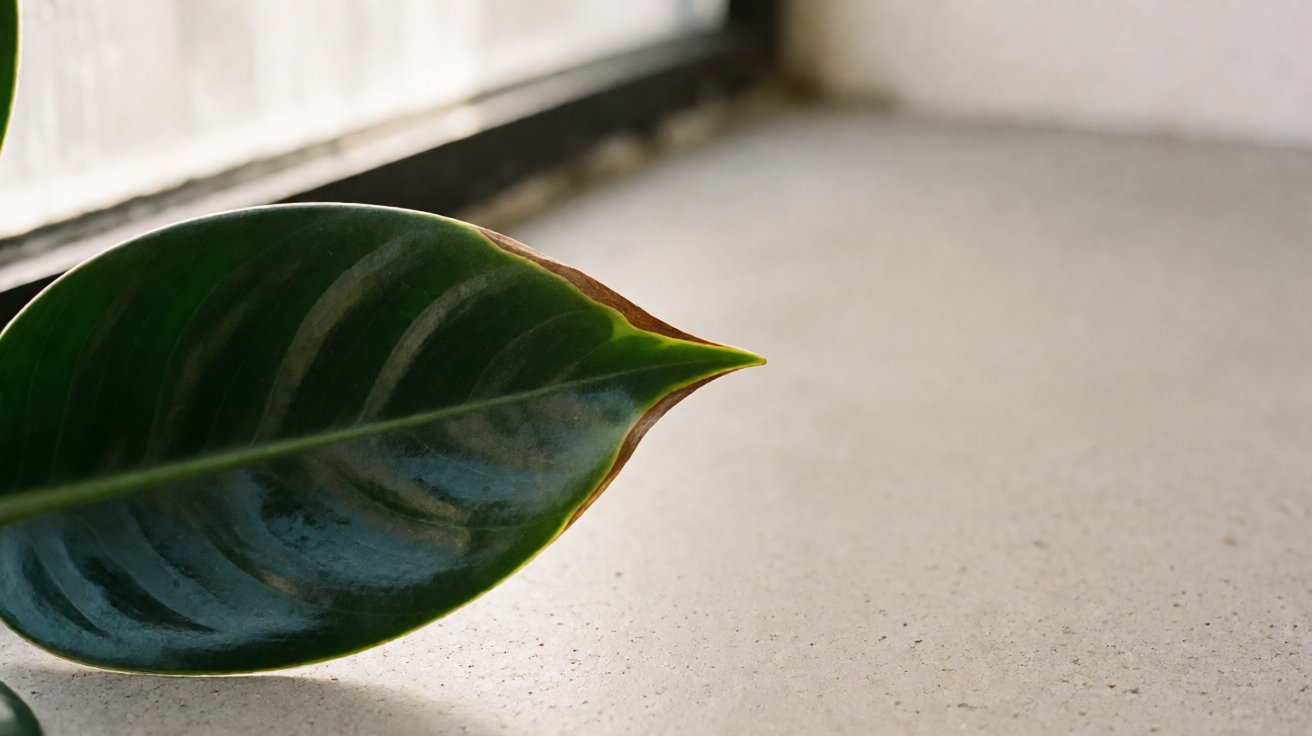
Watering: every 3 to 4 weeks in low light. Pet safety: non-toxic. Common failure mode: leaf-tip browning in dry winter air; raise humidity with a pebble tray or grouping.
Dracaena trifasciata (Snake Plant, formerly Sansevieria trifasciata)
Minimum light: 40 to 60 foot-candles. Growth at 75 fc: minimal above ground, robust root and rhizome maintenance. Snake plant uses CAM photosynthesis, opening its stomata at night to absorb CO₂ and closing them during the day. That adaptation lets it survive dim conditions and a 3-week light drought with no visible damage. The leaves can develop water-soaked spots if watered too frequently in low light, which is the most common failure mode. When in doubt, don’t water.
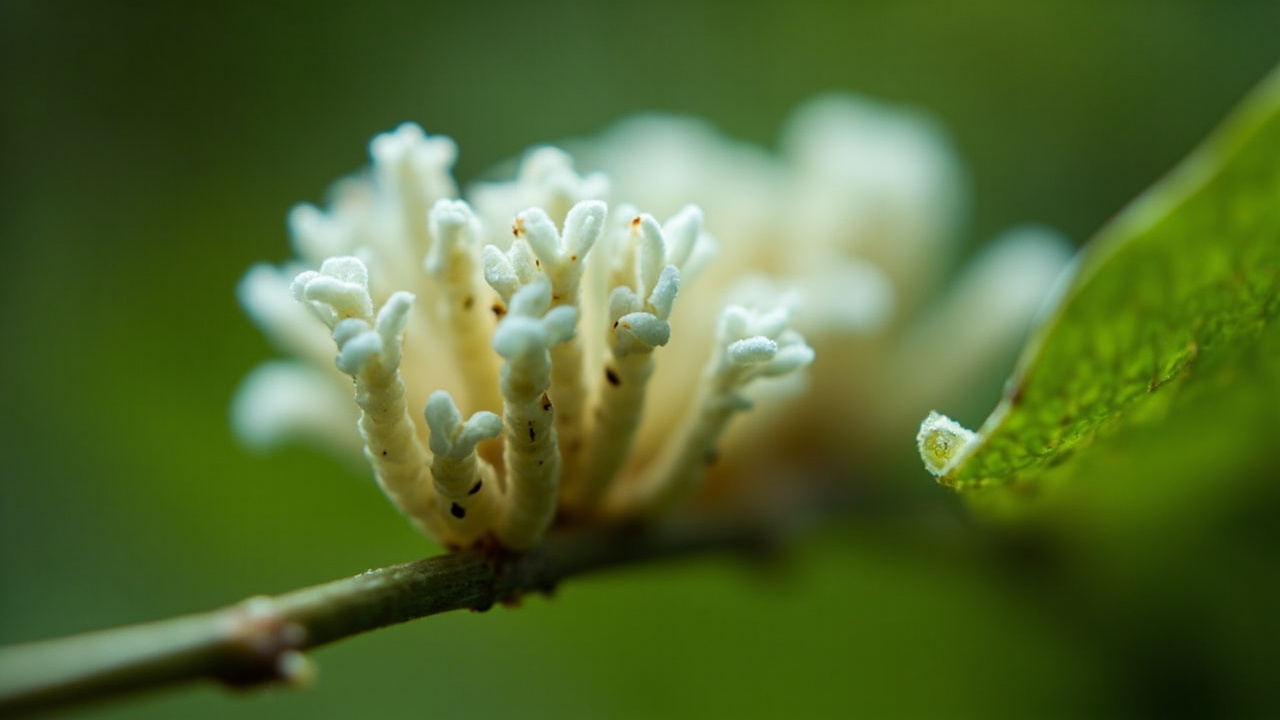
Watering: every 4 to 6 weeks in low light. Pet safety: mildly toxic (causes vomiting if chewed; not life-threatening to cats or dogs). One of the few flowering plants in the low-light group — mature plants occasionally send up a slender, fragrant white spike when root-bound.
Aglaonema spp. (Chinese Evergreen)
Minimum light: 35 to 50 foot-candles. Growth: 1 to 3 new leaves per season, faster in higher humidity. Chinese evergreen is the most decorative option for true low light. Pink and red cultivars (Aglaonema ‘Red Anjamani’, ‘Siam Aurora’) lose their color saturation in dim conditions and revert toward green, which is the visible signal that the plant is carbon-limited. The plain green cultivars (Aglaonema modestum, ‘Silver Bay’) keep their pattern and grow steadily even at 50 fc.
Watering: every 2 to 3 weeks in low light. Pet safety: mildly toxic. Thrives in humid bathrooms if the window is frosted (around 35 fc) — the humidity compensates for the lower light.
Spathiphyllum spp. (Peace Lily)
Minimum light: 50 to 100 foot-candles. Growth: steady, with flowering possible above 100 fc. Peace lily is the only plant in this group that will flower in a dim room, but only if it sits at 100 fc or above for several months. Below 50 fc, the plant stays alive but never blooms and the leaves gradually thin. The drooping that owners blame on underwatering is often the opposite: the grow mix has stayed wet for too long because the plant is barely transpiring. Lift the pot. If it feels heavy, do not water.
Watering: every 2 to 4 weeks. Pet safety: mildly toxic (calcium oxalate crystals). The “I water it when it droops” advice is wrong; that droop is light-driven, and watering a chronically dim peace lily accelerates root rot.
Epipremnum aureum (Pothos, Devil’s Ivy)
Minimum light: 75 to 100 foot-candles. Growth: leggy and slow below 100 fc, vigorous above 150 fc. Pothos is the most forgiving vine in cultivation, but it is not actually a low-light plant in the strict sense. In dim conditions it stretches badly and loses variegation on cultivars like ‘Marble Queen’ and ‘Njoy’. It survives, but it doesn’t thrive. If you want pothos to look the way it does in the nursery, give it 200 fc or more — a spot about 1 meter (3 feet) from a bright east or west window.
Watering: every 2 to 3 weeks in low light. Pet safety: mildly toxic. The plant signals low light with progressively smaller leaves and longer gaps between them — easy to read once you know what to look for.
The Quick Light Test
If you don’t have a meter, do the shadow test at noon on a clear day. Hold your hand one foot above a sheet of white paper where the plant would sit. A sharp, dark shadow means 1,000+ foot-candles (bright indirect). A soft gray shadow means 250 to 1,000 fc (medium). No visible shadow means under 250 fc, which is the band where the six species above are relevant. The test is not perfect — it conflates shadow sharpness with direction, not total photons — but it correctly sorts rooms into the broad zones most plant-care decisions depend on.
For more precision, the Photone app on a modern smartphone, calibrated against a known light source, is accurate to within 15 percent for white light. The free version is enough to make plant decisions.
For a deeper look at how light, water, humidity, and soil interact in a dim apartment, see our complete guide to indoor plant care.
When Low Light Isn’t Enough
If your measured space is below 50 foot-candles, no plant on this list will do well for more than a year. The honest answer is to add light. A full-spectrum LED panel rated 25 to 60 µmol/m²/s at 12 inches (about 100 to 250 fc) is the right intensity for the species above. Run it on a timer for 10 to 12 hours per day. Color temperature 3500K to 4500K (warm white to neutral) mimics dawn and dusk; the blue-heavy “blurple” grow lights designed for tomatoes will overwhelm shade-adapted leaves. The Royal Horticultural Society’s 2023 grow-light trials identified Soltech Solutions GrowClip and the Philips GrowWatt Slim as suitable fixtures for foliage plants at this intensity.
The inverse square law is your friend here. Going from 12 inches to 6 inches from a window roughly doubles the PPFD. Going from 6 feet to 3 feet quadruples it. A plant that won’t grow in a dark corner will grow in the same corner if you move it one foot closer to the window. This is the cheapest intervention and the most often skipped.
Common Mistakes That Kill “Low-Light” Plants
Watering on a schedule. The same plant in 40 fc and in 200 fc uses water at very different rates. Stick a finger in the mix. If the top 2 inches are dry, water thoroughly. If not, wait. The most common overwatering death in low light happens because the owner follows the nursery’s “water weekly” tag.
Trusting the “low light” label on a plant you bought for a closet. A closet is 0 to 10 fc. No plant in this article survives that. Move the plant to a room with a window, or accept that the plant is on a months-long timer.
Replacing soil with “better” mix without addressing the light. The number-one cause of failure in dim rooms isn’t the soil. The number-one cause is the light. Switching from a peat-based mix to a gritty cactus mix won’t save a plant that is sitting below its minimum quantum requirement.
Fertilizing in low light. A plant that is barely photosynthesizing doesn’t need nitrogen. Fertilizer in dim conditions burns roots and accelerates the decline. Skip fertilizer entirely unless you can confirm the plant is actively pushing new growth, which is a leading indicator that the light is adequate.
Your First Month With a Low-Light Plant
Measure the spot with a phone lux meter at noon. Compare the reading to the species minimums above. If you are within range, water once when the top 2 inches of mix dry out, and then leave the plant alone. Do not fertilize. Do not rotate it. Do not repot it. The plant is running a small energy surplus; disturbing it costs energy it doesn’t have.
After 30 days, check for new growth. A new leaf that is the same size as the older ones is a sign the light is at or above the species minimum. Smaller new leaves mean the plant is borrowing from its reserves and you should either move it closer to the window or add a small grow light for 6 to 8 hours per day.
The plant isn’t dying. It is telling you, in leaf size and internode length, exactly how many photons it is getting. Now you know how to read the signal.
Related reading: low light houseplants that bloom grades bud-set foot-candles for every flowering species, from Spathiphyllum to Phalaenopsis.
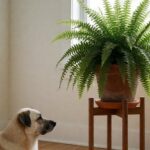
If you also have a dog, see the non-toxic chemistry list for species that survive low light without sending your pet to the emergency vet.
Turn any PDF statement into a clean sheet
Skip the typos and the hours of copying. Our converter handles any bank statement format and outputs Excel, CSV, or QBO for QuickBooks. No file retention, free to try.
Convert your statement