Picking the right blueberry variety starts with your climate, not the catalog. The four blueberry types — northern highbush, southern highbush, rabbiteye, and lowbush — each evolved in different regions, and that origin story determines how they perform in your garden today.
Plant a northern highbush in Zone 9 with no winter chill and it will flower, then drop fruit before berries size up. Plant a low-chill rabbiteye in Zone 4 and it may not survive its second winter.
The variety choice has to come first — before planting depth, soil pH, or pruning — because no amount of after-care rescues a mismatched variety. The Royal Horticultural Society publishes an updated cultivar list each year, but the same chill-hour logic applies whether you live in Maine, Texas, or the Pacific Northwest.
How Blueberry Types Differ: Beyond the Label
Before comparing specific varieties, it helps to understand the fundamental dividing lines. Blueberries are not a one-size-fits-all crop.
For comparison with other berry variety selection, see our guides to strawberry varieties and raspberry growing — both cane and runner berries with different climate constraints than blueberry.
The type you choose determines your harvest window, how much winter cold you can expect the plant to need, and how large the bush will grow in your garden. The four categories worth knowing are northern highbush, southern highbush, rabbiteye, and lowbush.
Each serves a different climate and purpose. Crossing them gets you the hybrid varieties you see in most nursery listings.
The single most practical difference between types is chill hour requirement: the number of hours a plant needs between 0°C (32°F) and 7°C (45°F) during dormancy to set fruit properly. Get this wrong, and no amount of watering or fertilizing saves the season.
Northern Highbush: The Standard Bearer
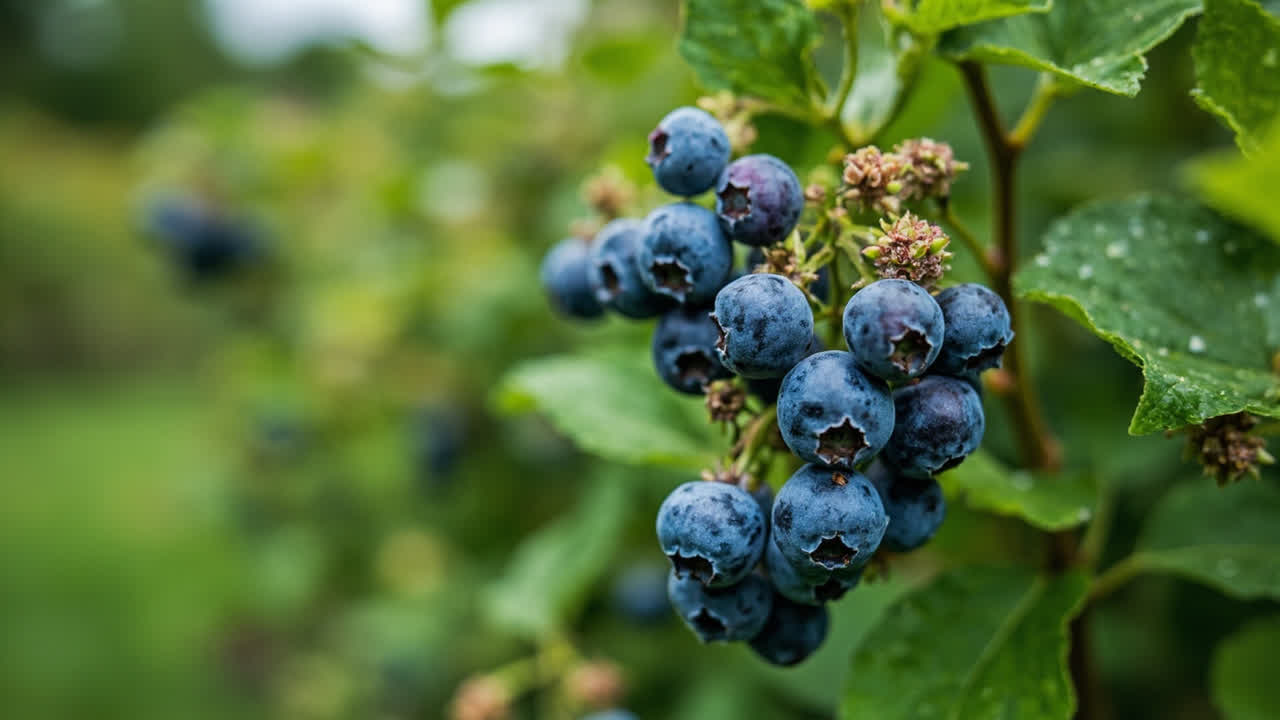
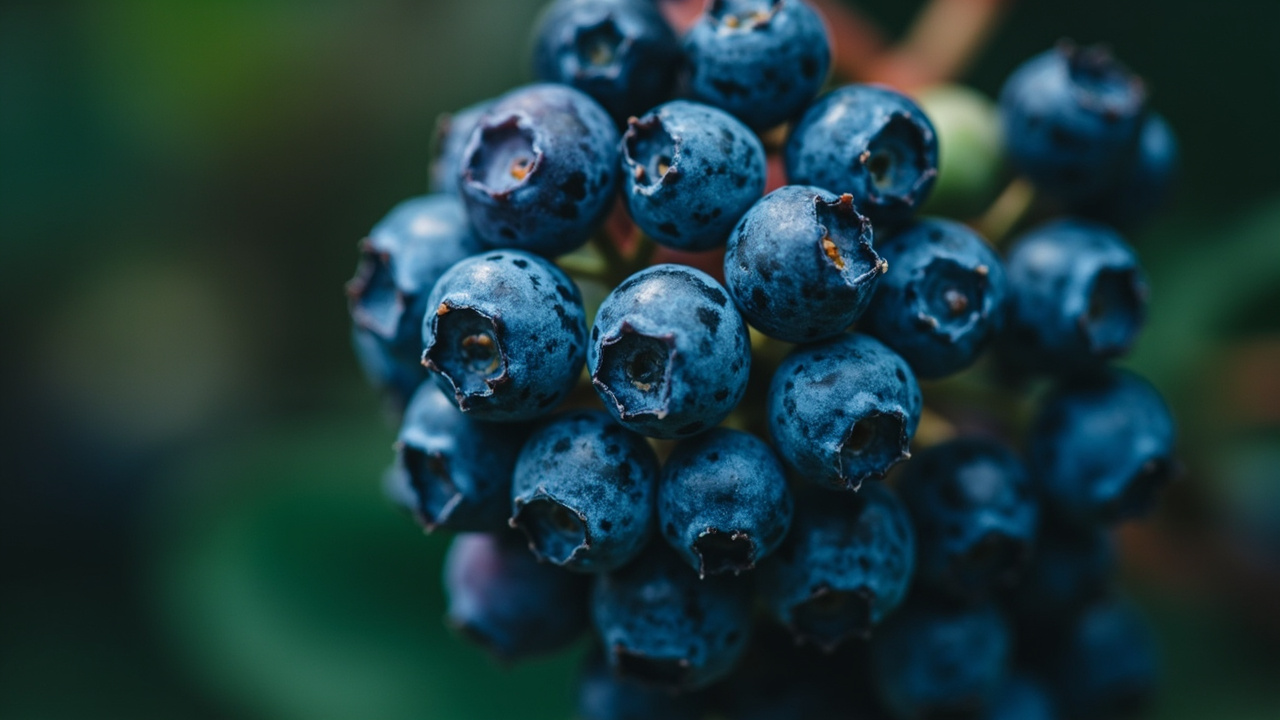
Northern highbush blueberries ( Vaccinium corymbosum ) are the commercial standard: upright, 5 to 8 feet tall, with classic grey-blue fruit and tart-sweet flavor. They produce large, firm berries in quantity and stay productive for 20 years or more in good conditions.
The tradeoff is climate. Northern highbush varieties need real winters.
Most require 600 to 1,000+ chill hours depending on the variety. They grow best in Zones 4 through 7. If you are gardening somewhere with mild winters (Zone 8 or above), these varieties push growth but do not set reliable fruit.
Key varieties:
- Duke — One of the most widely planted early-season varieties. Chill requirement around 800 hours. Grows 4 to 6 feet tall. Harvests about 8 to 10 pounds of large, firm berries per mature plant, typically in early July. The fruit holds its firmness well. Flavor is bright and tangy when fully ripe.
- Bluecrop — The benchmark mid-season variety and the one most commercial growers default to. Chill requirement approximately 800 hours. Grows 5 to 7 feet tall. Produces 9 to 12 pounds per plant over a harvest window of about 3 weeks in mid-July through early August. The berries are medium-sized, resist cracking, and have that classic blueberry flavor. Extremely reliable and widely available.
- Patriot — A mid-season option that deserves more attention. Chill requirement around 800 to 1,000 hours. Grows 4 to 6 feet tall with a more compact, vase-shaped habit than Duke. Berries are large with rich, full blueberry flavor. Performs well in heavier soils that would challenge other varieties.
Southern Highbush: The Warm-Climate Workaround
Southern highbush blueberries were developed specifically for areas where traditional northern highbush varieties fail. These are Zones 7 through 9, and parts of Zone 8 where winters are too short and mild.
The breeding program crossed northern highbush with southern-adapted species to produce plants that need far fewer chill hours. The catch is that southern highbush varieties tend to be more variable. Some are excellent; others were bred more for the commercial fresh market than for home garden performance.
Yields are generally lower than northern highbush, and the plants are often smaller-statured. This is convenient for small spaces, but worth factoring into your harvest calculations.
Key varieties:
- Sunshine Blue — A compact southern highbush, growing only 3 to 4 feet tall, making it a natural fit for container growing. Chill requirement is remarkably low at 200 to 300 hours, one of the lowest of any highbush type. Produces medium-sized, intensely flavored berries over a long mid-season harvest window. The plant itself is attractive enough to use as a landscape specimen, with showy pink flowers in spring.
- Star — A mid-season southern highbush requiring approximately 400 to 500 chill hours. Grows 4 to 6 feet tall. Berries are large with good flavor, and the plant bears consistently in warm climates where northern types fail. The harvest window runs about 2 to 3 weeks.
- Pink Lemonade — This one is more curiosity than workhorse, but it earns its place in a home garden for sheer novelty value. The berries ripen to a distinctive pink color and have a mild, less acidic flavor than most blueberries. Chill requirement around 300 to 400 hours. Grows 4 to 5 feet tall.
Rabbiteye: The Southern Workhorse
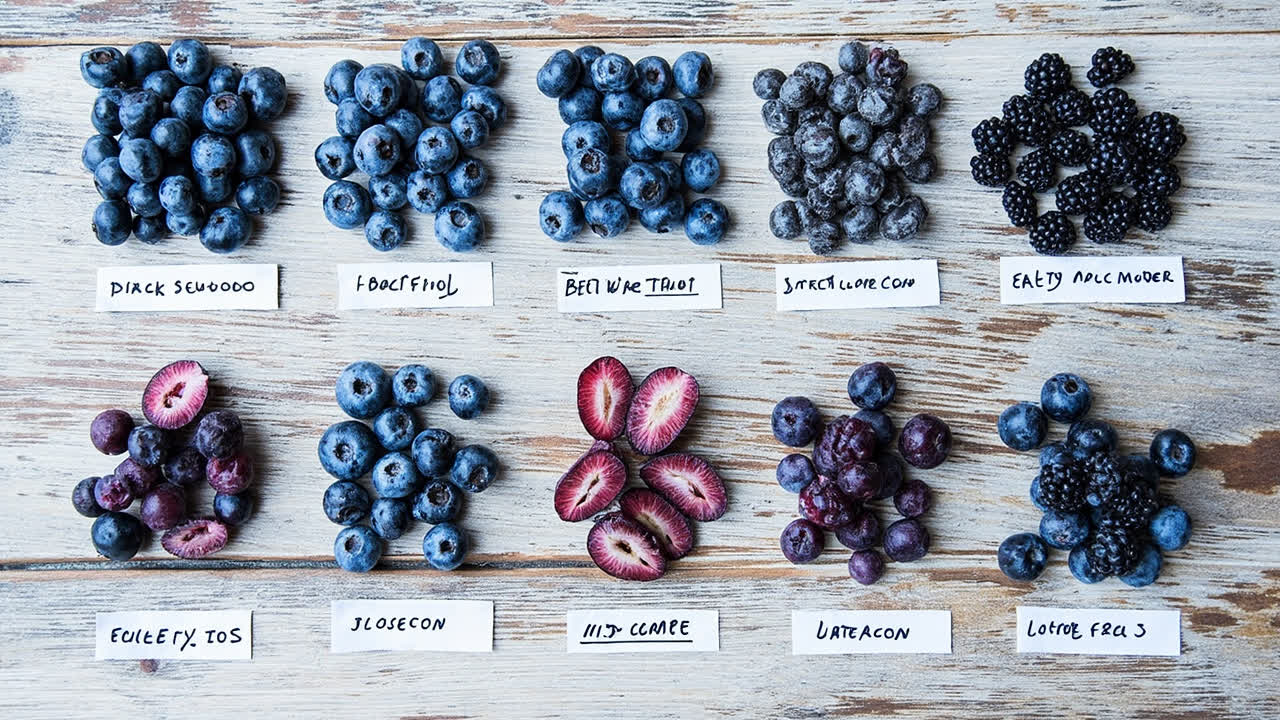
Rabbiteye blueberries (Vaccinium virgatum) are native to the southeastern United States and remain the dominant commercial blueberry type throughout the Gulf Coast and lower South.
They handle heat and humidity that would devastate northern highbush varieties. Their chill requirement of 300 to 600 hours makes them suitable for Zones 7 through 9.
Rabbiteye bushes are larger than highbush types, often reaching 10 to 15 feet at maturity if left unpruned. The fruit is generally smaller and more variable in quality, ranging from excellent to seedy depending on variety and growing conditions.
Rabbiteye varieties also have a longer establishment period — typically 2 to 3 years after planting before meaningful harvests, compared to 1 to 2 years for highbush types. One critical requirement: rabbiteye blueberries are partially self-unfruitful.
You need at least two different rabbiteye varieties planted within reasonably close range (within 50 to 100 feet) for solid fruit set. This is not optional. A solo rabbiteye bush will flower but drop most of its fruit before it develops.
Key varieties:
- Tifblue — The benchmark rabbiteye variety and still one of the most widely planted. Chill requirement around 400 to 500 hours. Grows 10 to 15 feet tall without pruning, though you can keep it more manageable at 6 to 8 feet with regular pruning. Berries are small to medium, firm, and have excellent flavor when fully ripe. Harvest window is up to 6 weeks in late July through September. Tifblue is an excellent pollinator for other rabbiteye varieties.
- Premier — An early-season rabbiteye bred specifically for home garden use. Chill requirement approximately 350 hours. Grows 8 to 12 feet tall. Berries are large for a rabbiteye type, with good flavor and firm texture. Harvest begins in mid- to late July, about 1 to 2 weeks before Tifblue.
- Onslow — A mid-season rabbiteye with a chill requirement around 400 to 500 hours. Grows 8 to 12 feet tall. Produces large, sweet berries with notably good flavor. Harvest window is about 3 to 4 weeks in late July through August.
Lowbush: Ground-Level Production
Lowbush blueberries (Vaccinium angustifolium) are the wild blueberries of Maine and Atlantic Canada, low-growing, spreading shrubs that typically reach 6 to 18 inches tall. They spread by underground runners and form dense mats, making them better suited to large-scale ground planting or meadow-style gardens than typical backyard beds.
The fruit is small — roughly half the size of highbush berries — but lowbush blueberries are intensely flavored. The drawback for most home gardeners is scale: you need a substantial planted area to get meaningful harvests, and the plants are slower to establish than highbush types.
Lowbush varieties are cold-hardy to Zone 2 or 3, making them the choice for gardeners in genuinely cold climates where even northern highbush varieties struggle. They also require relatively few chill hours around 1,000 to 1,200 hours, offset by their extreme cold hardiness. The practical constraint is space and management.
Key varieties:
- Blues (sometimes listed as “Blues” lowbush) — A hybrid lowbush variety selected for heavier yields and larger fruit than wild lowbush strains. Grows 8 to 15 inches tall. Berries are still smaller than highbush, but significantly more productive per square foot than unimproved wild strains. Best suited for ground planting in larger gardens or naturalized areas.
- Fundy — A lowbush variety with good flavor and moderate yield. Grows 6 to 12 inches tall and spreads steadily. Berries are small but intensely sweet. One of the more cold-hardy lowbush options, reliable down to Zone 2.
Container gardeners in warm zones are effectively limited to southern highbush varieties with low chill requirements (Sunshine Blue and Star are the most reliable starting points). If you are growing in the ground and dealing with real winter cold, northern highbush offers the most straightforward path to serious yields.
Variety Variables: What Changes the Recommendation
Six variables shift the recommendation from one variety to another. Catalog descriptions break down the variables, but most home gardeners underestimate how much each one swings the final choice.
Chill hours. The number of hours below 7°C (45°F) your site reliably delivers between November and February. The USDA Plant Hardiness Zone Map and most state university extension services publish county-level chill hour estimates.
A site that averages 600 chill hours cannot run a 1,000-hour northern highbush reliably. The plant will leaf out, flower weakly, and drop its crop before it sizes up.
Climate zone and humidity. Northern highbush and rabbiteye grow in fundamentally different humidity ranges. Rabbiteye tolerates Gulf Coast summers that would scorch a northern highbush.
Northern highbush tolerates long sub-freezing winters that would set rabbiteye back hard. The USDA Plant Hardiness Zone Map is a starting point, not the answer. Summer humidity and minimum winter temperature both matter.
Ripening window. Early-season Duke ripens in late June in Zone 6. Late-season Elliott ripens in late August in the same garden. Picking two or three cultivars with staggered windows stretches the harvest from three weeks to seven or eight.
Plant size at maturity. Northern highbush runs 5 to 8 feet tall. Rabbiteye runs 10 to 15 feet unpruned. Container-friendly Sunshine Blue stays at 3 to 4 feet.
Choosing a 15-foot rabbiteye for a 6-foot suburban side yard is the most common variety mismatch in home blueberry plantings.
Berry size and use. Large, firm berries travel well and freeze cleanly. Smaller, softer berries taste better fresh but collapse in the freezer.
Pick for what you will do with the harvest, not for what looks impressive on the tag.
Self-fertile vs cross-pollinating. Most northern and southern highbush varieties set fruit on their own, though yields improve with a second variety nearby. Rabbiteye is partially self-unfruitful.
A solo rabbiteye will flower but drop most of its fruit before it develops.
Making Your Decision: A Practical Framework
The variety that looks best in a catalogue is not always the one that performs best in your garden. Use this five-step framework to narrow your choices before you buy.
Step 1: Match to your climate zone
This is non-negotiable. If you are in Zone 6 or colder, northern highbush is your primary option. Zone 7 to 8 opens southern highbush and rabbiteye.
Zone 9 and above means southern highbush or low-chill rabbiteye. Check your USDA zone, then filter your variety list accordingly. A variety bred for the Southeast will not fruit reliably in a northern winter garden.
Step 2: Count your chill hours
Your zone tells you roughly what climate you live in, but your actual site chill hours are more precise. The USDA Plant Hardiness Zone Map and university extension services in most states publish county-level chill hour averages that let you check site-specific values.
Use those numbers rather than your zone label alone. If your area averages 500 chill hours, a variety requiring 1,000 will not perform well regardless of how good it looks in the catalogue.
Step 3: Size the plant to your space
Northern highbush varieties reach 5 to 8 feet. Rabbiteye varieties can push 10 to 15 feet if you don’t prune them. If you are working with a small urban garden or container, that size difference matters.
Sunshine Blue at 3 to 4 feet and other compact southern highbush varieties are built for tight spaces. Growing blueberries in containers changes your variety options significantly.
Step 4: Decide how you want to harvest
One big harvest or a long season? Duke and Bluecrop concentrate their production into 3-week windows. Tifblue will give you berries for 6 weeks straight.
If you want to eat fresh blueberries straight from the plant for as long as possible, build your variety selection around harvest window length rather than peak yield.
Step 5: Plan for pollination if you choose rabbiteye
Rabbiteye varieties need a second variety for cross-pollination. Don’t treat this as optional. If you only have room for one bush in your garden, choose a self-fertile highbush variety rather than a rabbiteye that will let you down in year two.
Three home garden case studies
The same variety performs differently in different gardens. Pick the case study closest to your site.
Setup 1 — Cold-climate northern home (Zones 3 to 5). An 8 by 12 foot bed in Zone 4 Maine with 1,200 chill hours and a 110-day frost-free season.
The recommendation here is two northern highbush varieties with staggered harvest — Duke for early July, Bluecrop for mid-July through early August — planted 4 feet apart in acidic soil (pH 4.5 to 5.5).
What fails in this setup: Sunshine Blue (only delivers 200 to 300 chill hours of winter but this site delivers 1,200; the variety underperforms here), and rabbiteye (most varieties are cold-hardy only to Zone 7, so the canes die back most winters).
Setup 2 — Mild-winter southern home (Zones 8 to 9). A coastal North Carolina yard in Zone 8b with only 450 chill hours and hot, humid summers.
Rabbiteye is the default here, but it needs two varieties for cross-pollination. Tifblue paired with Premier delivers a steady mid-July to mid-September harvest.
What fails: northern highbush despite being widely sold in this region. Duke, Bluecrop, and Patriot all need 800 to 1,000+ chill hours, and this site only delivers 450.
Setup 3 — Container patio gardener. A balcony in Zone 7 with 14-inch terracotta pots, movable into an unheated garage for January and February.
Sunshine Blue at 3 to 4 feet is the right pick here — self-fertile, low chill, compact. Pink Lemonade works if you want novelty, but be ready for a softer berry.
What fails: standard northern highbush in containers. Duke and Bluecrop want 5 to 7 feet of root run and full ground planting.
When the Variety Recommendation Breaks Down
Five common cases push the variety catalog off course. These are the limitations every blueberry buying guide has to disclose honestly.
Trade-off 1 — Store-bought potted plants vs mail-order bare-root. Garden center blueberries ship in 2-gallon pots with full foliage, so they look ready to fruit the first year.
The drawback of potted stock is root-bound circling — the plant has been in its container long enough that the roots wrap. Pease et al., in a 2017 peer-reviewed study from North Carolina State University, found that root-bound blueberry plants underperformed field-grown stock by 20 to 30 percent in the first three seasons.
Trade-off 2 — Rootstock incompatibility in grafted plants. Most home-garden blueberries are own-root, but commercial growers sometimes graft highbush varieties onto rootstocks for soil-disease resistance.
The downside is suckering — the rootstock sends up its own shoots that out-compete the grafted variety within a few years. A peer-reviewed study in HortScience documented that unaddressed rootstock suckers reduce grafted highbush yields by 40 percent or more within five years.
Trade-off 3 — Yield expectations vs reality. Tag claims of 9 to 12 pounds per plant assume full sun, perfect acidic soil (pH 4.5 to 5.5), consistent moisture, and mature plants in year 4 or later.
First-year plants typically produce nothing. Second-year plants produce a small handful. Year three is the first real harvest.
However, most home garden blueberries underperform by year five because soil pH has drifted upward. Test your soil pH every 18 months and amend with sulfur to keep it below 5.5.
Trade-off 4 — Cross-pollination limits in rabbiteye. We covered this above, but the failure mode is specific enough to repeat. A single rabbiteye bush will flower on schedule, hold its blossoms for two to three weeks, then drop 80 percent of them before the fruit sets.
The plant is healthy. The variety is wrong for the planting. If you want one bush, buy a self-fertile highbush.
Trade-off 5 — Variety recommendation breaks for local microclimates. A Zone 7 yard in Oregon with marine influence and cool summers is not the same as a Zone 7 yard in Georgia with continental heat. The variety catalog treats the zones as interchangeable; they are not.
The Royal Horticultural Society and University of Florida IFAS Extension both publish variety trial data by microclimate. Check your local extension service before you commit to a variety based on a national catalog recommendation.
The Verdict
If you are starting from scratch and want the most reliable path to a productive blueberry patch in a temperate climate garden, Bluecrop is the honest answer for most home gardeners in Zones 4 to 7.
It is not the most glamorous variety. It does not have the novelty appeal of Pink Lemonade or the compact size of Sunshine Blue.
But it delivers 9 to 12 pounds of large, firm, well-flavored berries per plant with a manageable 5-to-7-foot stature, and it has the broadest track record of any home-garden blueberry variety in temperate regions.
Plant two or three different northern highbush varieties with staggered harvest windows — Duke for early season, Bluecrop for mid-season, Patriot for a slightly later crop — and you can stretch your fresh blueberry season from early July through late August with minimal headaches.
If you are in a warm climate (Zones 8 to 9), Sunshine Blue is the variety that actually performs where most others fail. Its low chill requirement, compact size, and self-fertility make it the single most practical blueberry for warm-zone gardens.
Pair it with Star if you want a slightly larger harvest and more variety in your harvest window. If you are growing rabbiteye in the South, Tifblue remains the standard.
It is widely available, adaptable, and an excellent pollinator for other rabbiteye varieties. Just make sure you plant at least one other rabbiteye variety nearby.
Lowbush blueberries are worth considering only if you have enough space to plant them at scale. For most home gardens, the type and variety that fits your climate and space is the right one — not the variety with the most impressive catalogue photograph.
Before committing, review our complete growing guide to match variety to climate and soil.
From Bank Statement to QuickBooks-Ready File
That manual cleanup you just read about? This tool skips it. Turn your PDF into QBO for QuickBooks without storing your data anywhere.
Start Converting