
You have read the product pages. You have read the Reddit threads. You have watched the YouTube take-downs where a hydroponic grower and an aquaponic grower each explain why the other system is a mistake. Everyone has an opinion. Almost nobody offers data.
The framing problem is that “aquaponics vs hydroponics” treats each as a single system. In reality, aquaponics is a family of systems — media bed, raft, NFT-aquaponic hybrid — and hydroponics is a family of systems — DWC, NFT, Kratky, aeroponic. The question “which is better” has a different answer for every pairing. A 20-gallon media-bed aquaponics system on a balcony competes with a 20-gallon DWC hydroponic system on the same balcony. It does not compete with a commercial NFT gutter system in a climate-controlled greenhouse.
The honest thesis: aquaponics wins on ongoing-cost and multi-output appeal. Hydroponics wins on startup speed and biological simplicity. Neither wins on both. The right answer for you depends on which constraint bites your situation hardest — and this page gives you five axes of comparison with real numbers so you can decide, rather than inherit someone else’s ideology.
The False Binary: Why “Aquaponics vs Hydroponics” Is the Wrong Question
A media-bed aquaponic system and a raft aquaponic system share the same nitrogen cycle but diverge on almost every practical axis: weight, pump dependency, fish stocking density, and harvest method. Likewise, a DWC hydroponic system and an NFT hydroponic system share the same nutrient principle but diverge on power dependency, root-zone oxygen, and maintenance rhythm. Comparing “aquaponics” to “hydroponics” without specifying the shape is like comparing “a vehicle” to “a bicycle” and expecting a useful answer.
This page compares system shapes across five axes: startup cost, ongoing cost, yield, time-to-first-harvest, and maintenance complexity. For the aquaponics fundamentals — the nitrogen cycle, the fish-plant-bacteria loop — see the cluster aquaponics fundamentals page. This page assumes you understand the mechanism and are now making a choice between matched system shapes.
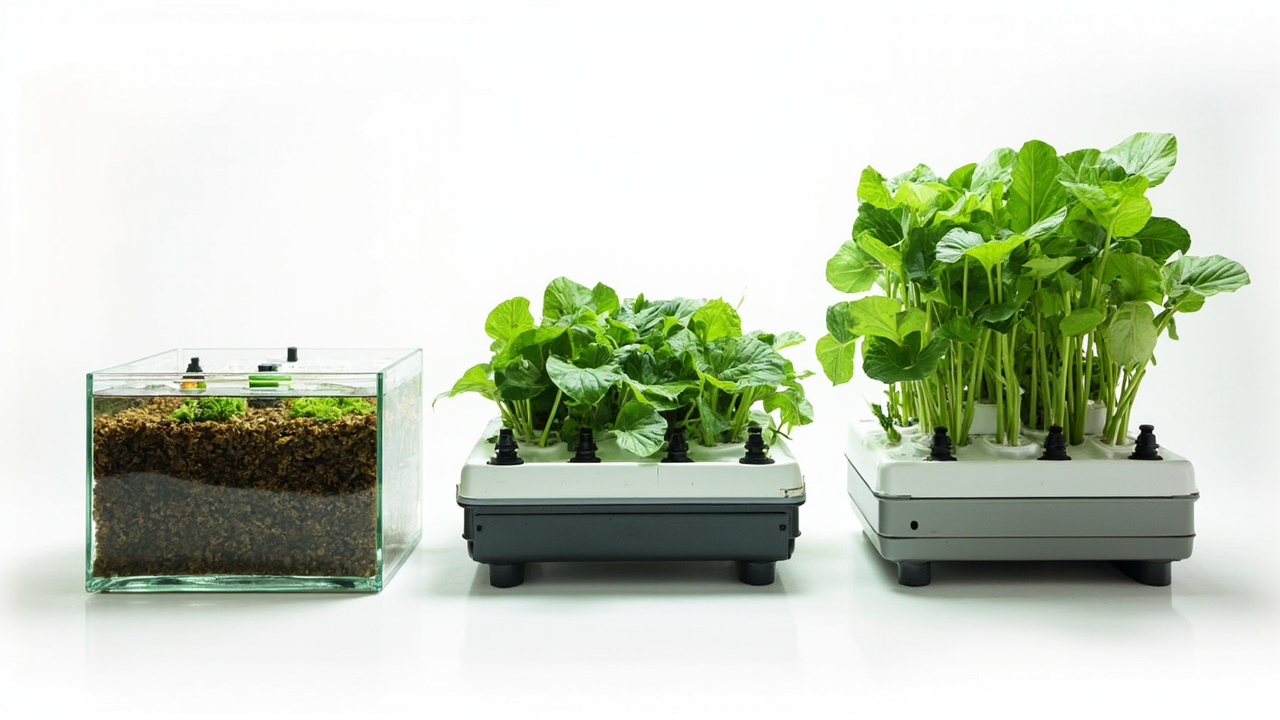
The valid comparisons for apartment and home growers are four: media-bed aquaponics vs DWC hydroponics (both “pour and drain” style, home-scale), raft aquaponics vs NFT hydroponics (both channel/raft-based, modular), Kratky hydroponics (zero-power, zero-fish winner for the extremely space-constrained), and aeroponic hydroponics (high-performance, high-maintenance outlier). Each pair trades differently.
The Real Cost Difference: Ongoing, Startup, and Hidden
Startup cost comparison
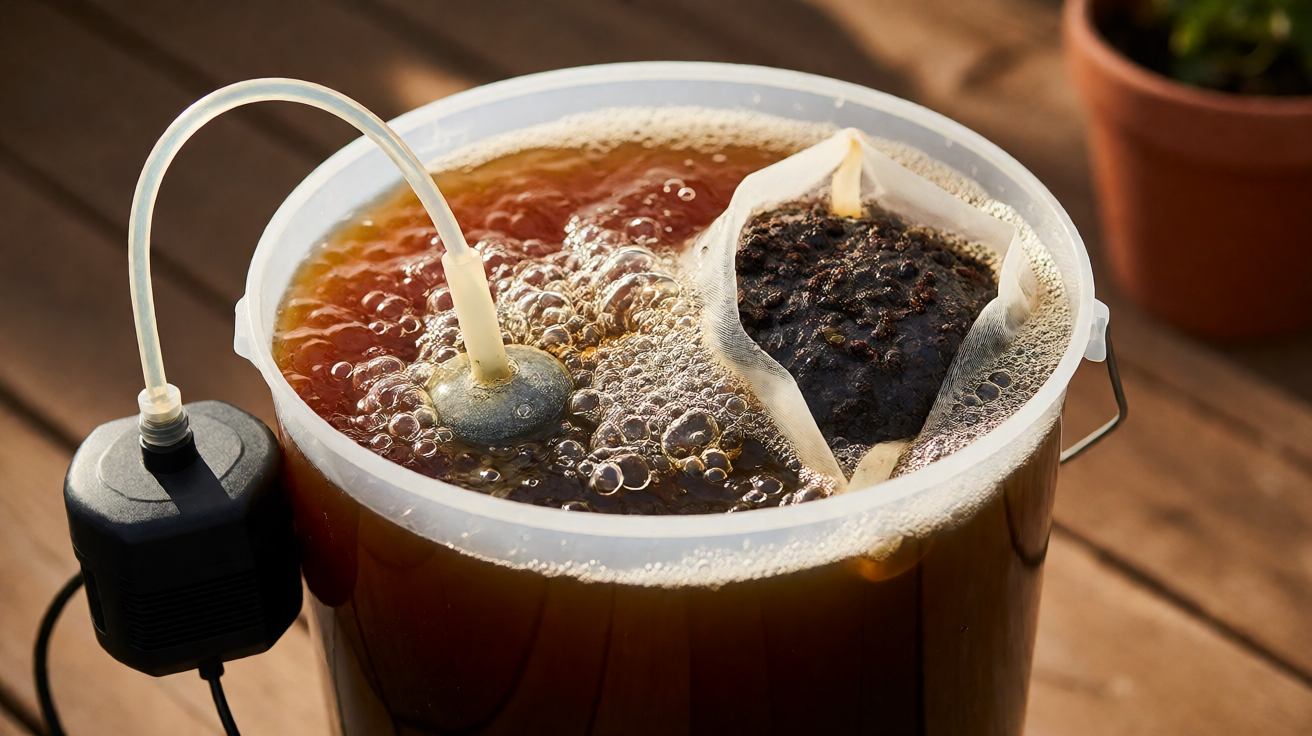
A starter media-bed aquaponic system for home use — 20–30 gallon tank, media bed, pump, basic test kit, and 6–8 small fish — runs $400–$700 USD when new or $250–$400 USD when the tank is secondhand. A starter DWC hydroponic system of equivalent grow area — communal reservoir, air pump, net pots, nutrients, and seedlings — runs $300–$600 USD new. NFT hydroponics of the same scale runs $350–$650 USD. Kratky hydroponics runs $50–$150 USD, because the system is a container, growing medium, and nutrient solution with no pump. The startup gap narrows at home scale. It widens at commercial scale, where aquaponics requires fish hatchery infrastructure, feed storage, and biosecurity that hydroponics simply does not.
Ohio State Extension documented a small-scale aquaponic build cost at approximately $4,800 USD in 2022. That number tracked a larger-than-kitchen-scale system with structural support, water heating, and a bell siphon build. Most apartment growers launching a media-bed or raft system spend $250–$600 USD at launch if they source the fish tank used and the grow bed from standard containers.
Ongoing cost comparison
Here is where the system families diverge. Hydroponic nutrients — a calibrated NPK + micronutrient concentrate sold in 1–5 kg containers — run $20–$50 USD per year for a home system growing leafy greens. Aquaponic fish feed — a high-protein pellet for tilapia or goldfish — runs $30–$60 USD per year at modest bioload. On this line-item, aquaponics wins narrowly. But aquaponics has two recurring costs hydroponics does not: electricity for a circulating pump (25–70 W, $3–$8/month in the US) and periodic Amma-Lock or equivalent chloramine-neutralizer for top-off water (~$10–$20/year). Net ongoing annual gap: aquaponics is roughly $15–$40 USD cheaper per year than hydroponics at home scale.
The ResearchGate productive-economic comparison (2026) concluded that hydroponics produces higher plant yield per square foot, but aquaponics is more profitable when fish protein revenue is included. At home scale, those fish rarely become revenue. The “aquaponics is cheaper because fish feed the plants” framing is marketing horticulture. Fish feed the plants if and only if the biofilter is mature, the fish are healthy, and the stocking density matches the grow-bed area. During the 4–8 week cycling period before the biofilter matures, the aquaponic grower is feeding fish and adding partial hydroponic nutrients anyway to keep plants alive.
Hidden cost (time + learning curve)
The least-accounted cost is the learning curve. Killing fish in the first month of aquaponics is a rite of passage that costs $3–$10 per fish and weeks of emotional investment. Hydroponic killing is quieter: a $2 seedling etioliates and is composted without ceremony. The aquaponic learning curve involves understanding ammonia, nitrite, nitrate, pH, alkalinity, and the interaction between fish feed rate and plant nutrient uptake. The hydroponic learning curve involves understanding pH, EC, and nutrient concentration. Both are learnable. The aquaponic curve is measurably longer — most beginners report 2–3 months before they trust their aquaponic system; hydroponic beginners report 2–4 weeks before they trust theirs.
Yield, Growth Speed, and Output Quality: What the Numbers Actually Say
Leafy green yield is the most-cited comparison axis, and the data consistently favors hydroponics. Lettuce, basil, and leafy greens in DWC hydroponics reach harvest size in 28–35 days from seed at 75–85 °F (24–29 °C). The same varieties in media-bed aquaponics reach harvest in 35–45 days — roughly 20–30% slower. The mechanism is nutrient availability: hydroponic nutrients are immediately ionic and optimized for vegetative growth; aquaponic nutrients depend on the rate at which nitrifying bacteria convert fish-waste ammonia, and that rate has a ceiling set by biofilter surface area and dissolved oxygen. In a mature, well-stocked aquaponic system, nitrate production can match DWC nutrient delivery. But well-stocked means 0.5–1 lb of fish per 5 gallons of biofilter media — a bioload most apartment systems cannot sustain.
For fruiting plants, the gap widens. Tomatoes, peppers, and cucumbers grown in hydroponics reach first fruit in 60–80 days from transplant under good light. In aquaponics, the same plants need a mature biofilter (8+ weeks) plus a high bioload to generate the potassium and phosphorus levels that fruiting demands. Many aquaponic growers supplement with chelated iron and potassium sulfate after cycling, which blurs the “aquaponics is pure fish-fertilizer” claim.
The honest limitation: most of the high-quality yield-comparison data comes from greenhouse or commercial systems with 1,000+ sq ft of grow area. At apartment scale (5–50 sq ft), environmental variables — light, ambient temperature, operator skill — overwhelm the system-shape effect. Two identical 20-gallon systems in two different apartments will produce different harvests because the light falling through the window is the dominant variable, not the nutrient source. Use yield numbers as directional, not deterministic.
Startup Complexity and Daily Maintenance: Where Each System Actually Spends Your Time
Startup complexity differs more by shape than by family. A media-bed aquaponic system requires: setting up the tank, installing the pump, sizing the media bed, adding the bell siphon or timer-based flood-and-drain, and then cycling — adding pure ammonia or hardy fish and waiting 4–8 weeks for nitrifying bacteria to colonize. The first fish cannot be added until ammonia and nitrite both read below 0.5 ppm. The first plants can be added after week 3–4, but they will not thrive until the biofilter is mature. Time to a producing aquaponic system: 8–14 weeks, assuming no parameter crashes.
A DWC hydroponic system requires: mixing the nutrient solution, planting the seedlings, and adjusting pH to 5.5–6.5. The first harvest is possible in 3–5 weeks for leafy greens. A Kratky hydroponic system skips even the air pump — fill, plant, and walk away for 2–3 weeks. NFT hydroponics requires channel assembly, pump timing, and flow-rate adjustment, typically functional in 2–5 days. The shape-for-shape startup gap: aquaponics requires 4–16× more time before first harvest than a matched hydroponic shape.
Ongoing maintenance daily: aquaponics requires 5–10 minutes per day at minimum — fish feeding, visual health scan, and a twice-weekly dipstick check of pH and ammonia during the first 12 weeks. After cycling, maintenance drops to 5 minutes/day plus 30 minutes/week for parameter testing and water top-off. Hydroponics-DWC requires 2–5 minutes/day visual check and 30 minutes/week for nutrient top-off/pH adjustment. Kratky requires 5 minutes/week. If your life includes more than 2 consecutive days without access (travel, long shifts), aquaponics requires an automatic fish-feeder or a friend with a key. Hydroponics does not require feeding anything alive.
Spatial Fit: Which System Shapes Work Where
On a countertop (≤2 sq ft of usable space with no structural reinforcement), only Kratky hydroponics or an AeroGarden-type unit works. Countertop aquaponics below 20 gallons fails too often to recommend. If your balcony has no electrical outlet below a GFCI, you cannot run an aquaponic pump and the circulating flow stops.
On a balcony (5–20 sq ft, rated for at least 40 kg/m² live load, with one GFCI-protected outlet), media-bed aquaponics at 20–50 gallons and DWC hydroponics at 20–50 gallons are both viable. The aquaponic option is heavier by 50–100 lb (22–45 kg) per gallon of fish-tank water and louder by 5–10 dB. The hydroponic option is lighter, faster to harvest, and biologically simpler. The trade-off favors hydroponics for the space-constrained and aquaponics for the grower who wants fish as an output and a pet, not only a nutrient source.
In a spare room or basement (20–100 sq ft, floor-drain access, 15 A circuit), all four shapes are viable, and the comparison shifts to skill development and output goals. This is where the aquaponics learning curve pays off as an ongoing capability rather than a one-time cost. Expand from a single media-bed system into a multi-raft aquaponics build and the system maintains its ratio efficiency at 2–3× the scale more smoothly than hydroponics does, because the biofilter scales with the grow area rather than requiring new chemical mixing infrastructure. For small-space aquaponics constraints specific to apartments and balconies, see the cluster small-space aquaponics constraints page.
The Verdict by Reader Situation
There is no universal recommendation. If your priority is fastest time to first harvest, choose hydroponics-DWC or Kratky. If your priority is lowest ongoing cost per year and you want fish as pets as well as fertilizer sources, choose aquaponics — but budget 12–16 weeks before the system produces at capacity. If your space has no electrical outlet, choose wicking-based container gardening or passive hydroponics, not aquaponics. If you travel more than 5 days per month, choose hydroponics and automate the pump with a $15 timer rather than managing a live bioload remotely.
If your priority is system simplicity and biological predictability, choose hydroponics-DWC. Add KoolBloom or equivalent supplement after week 4 of fruiting and the system performs predictably. If your priority is system resilience, ecosystem interest, or you want to teach a child a nitrogen-cycle lesson, choose aquaponics — but be present for cycling. Check ammonia and nitrite every 48 hours from day 4 until the biofilter matures. A missed parameter spike at week 3 costs 6–10 weeks of restart time.
Turn PDF Bank Statements Into Workable Spreadsheets
Your bank statement is a mess of numbers, but your books shouldn't be. Use our converter to get Excel, CSV, or QBO files — ready for QuickBooks.
Try It Free Now