Thyme that has gone leggy — thin stems, bare centers, leaves clustered only at the tips — is one of the most common failures indoor herb growers face, and it is almost always a light problem disguised as a watering or nutrient issue. The good news is that leggy thyme can usually be corrected with a combination of harder pruning, better exposure, and patience. The honest caveat is that pruning cannot shorten internodes that have already elongated; it can only stimulate new compact growth below the cut.
This guide walks you through what leggy growth actually means at the stem level, the five most common causes ranked by likelihood, a concrete recovery protocol you can start today, and how to decide when a plant is too far gone to save and should be propagated from cuttings instead.
What “leggy” actually means for thyme: internodes, light hunger, and bare centers
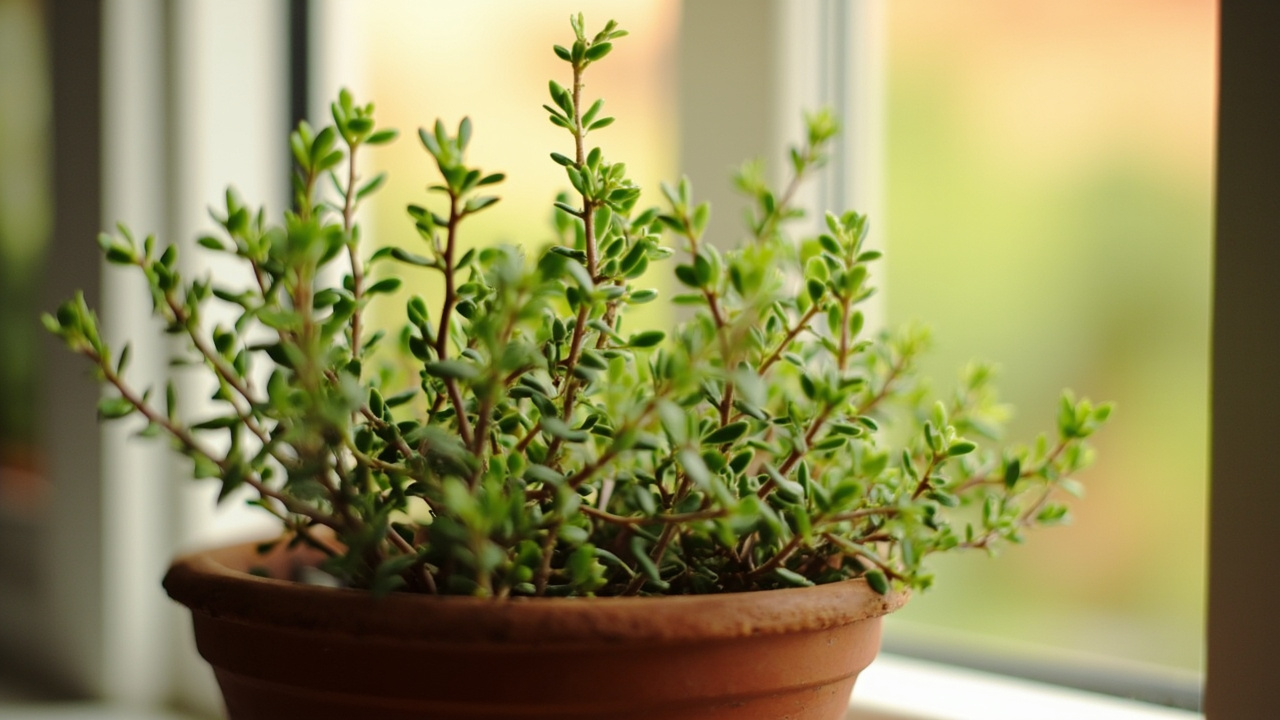
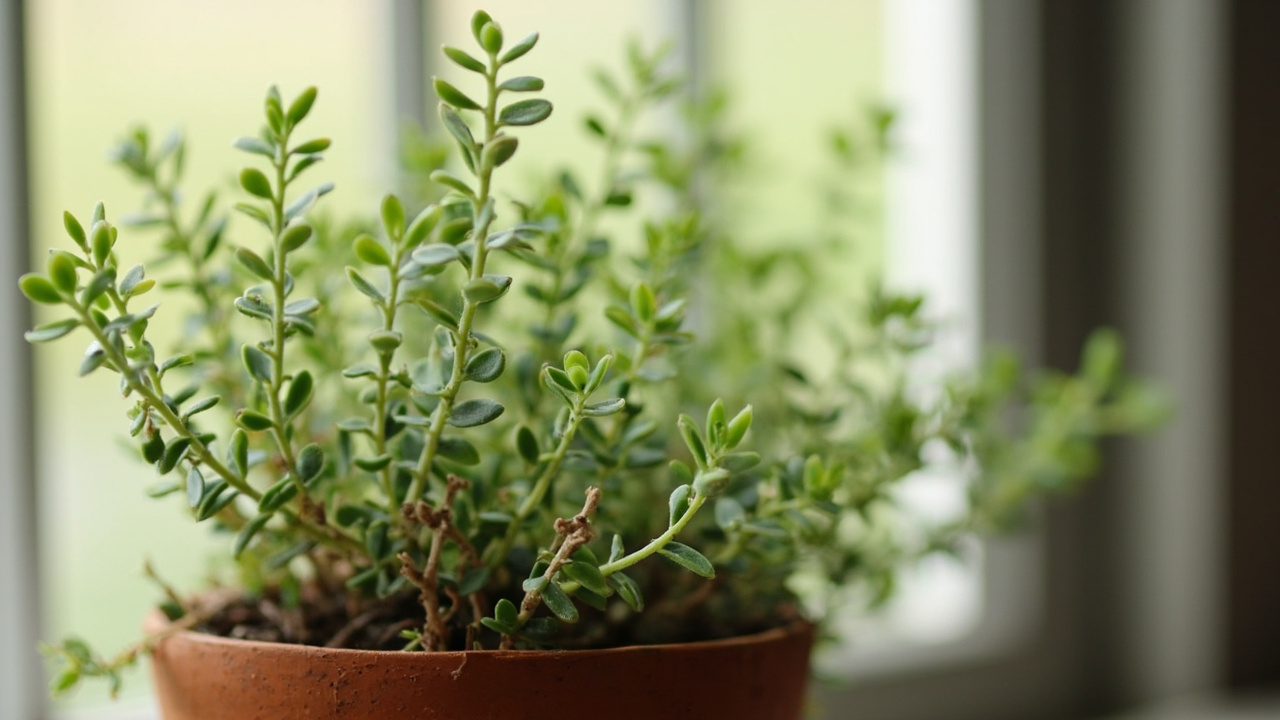
When your thyme stretches into thin, bare stems with leaves only at the tips, the plant is telling you it cannot get enough light to sustain compact growth — and no amount of water or fertilizer will reverse the problem until you fix exposure first. Leggy thyme is not a disease. It is a structural confession: the stem is elongating its internodes, pushing foliage toward whatever light source exists, and abandoning leaves along the lower stem because those shaded cells cost more energy than they return.
Healthy thyme grown in full sun produces internodes of 5 to 10 millimetres. Stretched indoor thyme routinely reaches 25 to 40 millimetres between nodes, and the stem turns from supple green to thin and wiry. Missouri Botanical Garden notes that Mediterranean herbs like thyme are among the fastest to etiolate indoors because their photosynthetic machinery is calibrated for open-sky irradiance. Both English thyme and lemon thyme show the same response, though upright cultivars stretch faster than creeping or ground cover forms.
The bare-center pattern tells you how long the problem has been building. If only the lowest third is bare, the plant has been light-starved for two to four weeks. If the bare zone runs halfway up, you are looking at a month or more of insufficient exposure, and recovery takes longer because the plant has already cannibalized its lower leaf buds.
This mechanism explains why the most common fixes — watering less, adding fertilizer — do nothing. Thyme stretches because every cell in the stem is trying to close the gap to adequate light. The concentration of thymol and carvacrol — the volatile compounds behind thyme’s essential oil — declines in leggy stems because the plant spends its metabolic budget on elongation rather than secondary metabolite production.
The five causes of leggy, sparse, or stalled thyme — ranked by likelihood
1. Insufficient light — the dominant cause, responsible for roughly 80 percent of leggy thyme cases. Thyme needs a minimum of six hours of direct sun daily; eight to ten is better. A south-facing window delivers 1,000 to 2,500 foot-candles in direct sun — adequate in summer but marginal in winter. East- and west-facing windows rarely exceed four hours of direct exposure, and north-facing windows provide almost none. If your thyme sits more than 30 centimetres back from the glass, you have halved the light it receives.
2. Over-fertilization, especially with high-nitrogen feeds. Thyme evolved in lean Mediterranean soils and needs almost no supplemental fertilizer. Feeding it produces soft, sappy growth that stretches faster than light alone would cause. University of Minnesota Extension warns that over-fertilized herbs sacrifice essential oil concentration for rapid cell expansion — you get a bigger plant that tastes weaker and collapses under its own weight.
3. Overwatering combined with poor drainage. This cause masquerades as leggy growth because chronically wet roots produce a plant that looks sparse and weak-stemmed. But the real damage is below the soil line: root rot reduces the root system’s ability to take up water and nutrients, so the above-ground growth slows while the few remaining stems stretch unevenly. If your thyme’s stems feel soft rather than wiry, and the soil stays damp for more than three days after watering, overwatering — not light — may be your primary problem. Compare with our thyme turning brown and dying guide for the full root-rot diagnostic.
4. Rootbound container conditions. Once roots circle the pot densely and push through the drainage holes, the plant can no longer support vigorous top growth. The result is a plant that looks stalled — producing very few new stems and thinning from the center outward. If your thyme has lived in the same pot for two or more seasons, lift the root ball and check.
5. Winter dormancy mistaken for decline. English thyme goes semi-dormant below 7 °C — growth slows to near-zero, older leaves bronze at the edges, and the plant looks sparse. This is normal. Unlike fruit trees that require chill hours to set buds, thyme simply pauses, but forcing growth with fertilizer or water during dormancy weakens the root system and produces genuinely leggy growth when the plant breaks dormancy in spring.
How to fix leggy thyme: pruning, light correction, and root work
Start with pruning. Using clean, sharp secateurs, cut each leggy stem back by one-third to one-half, making your cut just above a visible leaf node — the small bump where a pair of leaves emerges from the stem. Thyme sprouts reliably from green wood and from partially woody stems as long as you do not cut into fully brown, brittle sections. The RHS recommends pruning in early spring or just after the summer flush of growth, but leggy indoor thyme can be cut back whenever you notice the stretching. Remove all bare woody sections that have no green foliage within 5 centimetres of the cut point.
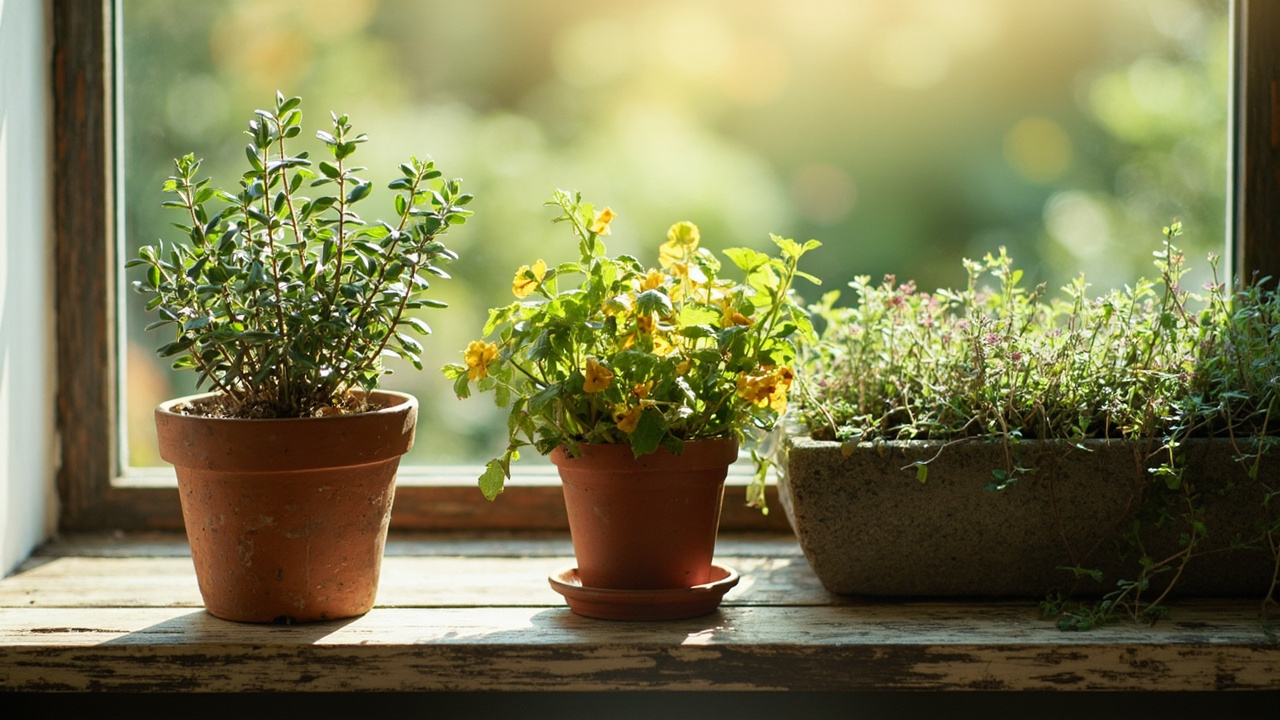
After pruning, move the plant to the brightest available position immediately. Outdoors, that means unobstructed southern exposure with at least eight hours of direct sun. Indoors, place the thyme on a south-facing windowsill within 15 centimetres of the glass. If natural light is insufficient from October through March, add a full-spectrum LED grow light 20 to 30 centimetres above the plant for 14 to 16 hours daily. This single change produces more compact growth than pruning alone.
Check the root zone next. Slide the root ball out and examine the roots. If you see dark, mushy, or foul-smelling roots, trim back to healthy tissue, repot into fresh sandy-loam mix, and withhold water for five days. If roots are tightly circling but healthy, move up one pot size and tease the outer roots loose before repotting. Our thyme pruning and harvesting guide covers the recovery timeline in detail.
Withhold fertilizer for the first six weeks after corrective pruning. Water only when the top 3 centimetres of soil feel dry — typically every five to seven days in summer and every ten to fourteen days in winter. The goal is well-drained conditions that mimic the drought-tolerant regime of thyme’s native Mediterranean hillsides.
Expect visible new growth within two to three weeks. New shoots emerge from nodes below your cut points and from the crown at soil level, with shorter internodes and denser foliage if the light correction is adequate. If growth still stretches after three weeks, move the grow light closer or extend the photoperiod by two hours.
When to propagate instead of revive: reading the woody-stem signals
Some leggy thyme cannot be pruned back to health. Scratch the surface of each stem with your thumbnail: green tissue underneath means alive and capable of resprouting; brown, dry tissue all the way through means dead. If more than two-thirds of the stem tests brown, pruning to viable green wood would leave a stump — and thyme does not resprout reliably from old, fully woody stems bare for more than one growing season.
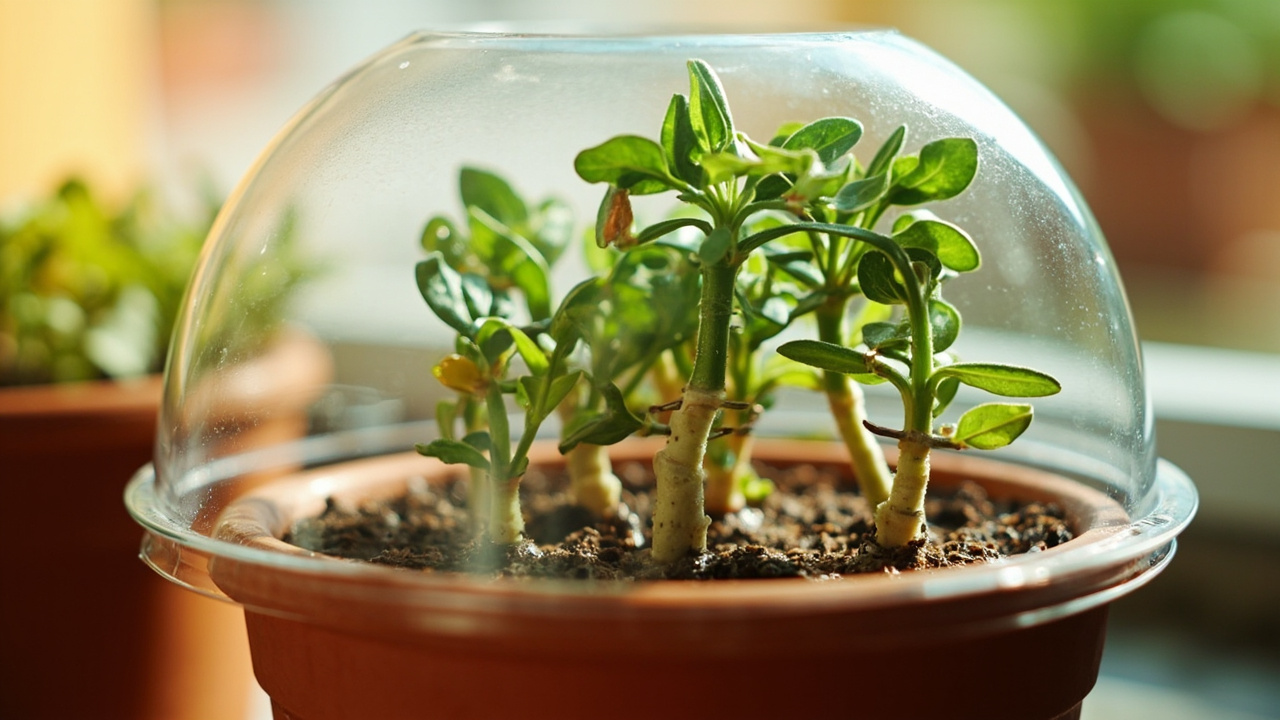
When the scratch test fails across most of the plant, propagation from stem cuttings is the realistic path. Select three to five healthy green shoot tips 8 to 10 centimetres long and strip the lower leaves to expose at least two nodal zones. Place in equal parts perlite and coir, keep under bright indirect light, and maintain consistent moisture without waterlogging. Rooting occurs within three to four weeks. Our thyme propagation guide covers the full cutting-to-pot timeline including division for older clumps.
Propagation resets the clock. A four-year-old thyme plant leggy for two seasons is past its productive prime. Mediterranean perennial herbs naturally decline after three to four years as the woody base expands and the center opens up. Taking cuttings from the best remaining green growth gives you genetically identical plants that produce compact, vigorous growth for another full cycle.
The honest limit: pruning stimulates new growth from existing buds but cannot shorten internodes that have already elongated. The leggy section stays leggy forever. If the overall shape is too sparse or too tall after a hard prune, propagate fresh plants and compost the old one.
Preventing leggy thyme: the light-and-pruning routine that keeps bushes compact
Prevention starts with accepting that thyme’s light requirement is non-negotiable. Outdoors, plant thyme in the sunniest bed you have — six hours of direct sun is the floor, eight to ten is the target. Even partial shade from a neighbouring rosemary or tomato plant can tip thyme into etiolation over a single cloudy month.
Indoor thyme requires a seasonal strategy. From April through September, a south-facing windowsill may provide enough direct sun. From October through March, supplement with a grow light for 14 to 16 hours daily. Rotate the pot a quarter turn every three to four days to prevent the lopsided lean that precedes full etiolation.
Prune thyme twice per year regardless of how it looks. The first cut in early spring removes one-third of the previous season’s growth to keep the plant bushy and delay woody buildup. The second cut in midsummer trims spent flower stems and any branches stretching toward shade. Harvesting regularly for culinary use — drying the cuttings for winter — doubles as structural pruning because it removes apical dominance and forces lateral branching. The optimal harvest window is just before flowering, when essential oil concentration peaks. For the full seasonal pruning calendar and overwintering strategy, see our thyme light and watering guide.
Keep the root zone lean with sharply drained sandy loam — roughly 40 percent coarse sand, 30 percent compost, 30 percent perlite. In containers, use unglazed terracotta rather than plastic. A thin layer of gravel mulch reduces humidity around lower stems and improves air circulation. Repot every two to three years because compacted soil retains too much water and suffocates the root system.
Indoor thyme and grow lights: making the windowsill work
If you grow thyme indoors year-round, accept that natural window light alone is almost never enough to keep the plant compact through winter. A south-facing window delivers roughly one-quarter to one-third of outdoor summer irradiance from November through February, and no repositioning within the room will close the gap.
The minimum effective setup is a full-spectrum LED panel rated at 30 to 50 watts, positioned 20 to 30 centimetres above the canopy. Look for 5000 to 6500 Kelvin colour temperature and at least 200 µmol/m²/s PPFD at the leaf surface. Run it for 14 hours in summer and 16 in winter. Compact fluorescent fixtures deliver roughly 40 percent less usable PAR per watt and must sit within 15 centimetres of the foliage to achieve the same effect.
Monitor weekly. Compact new growth with internodes under 10 millimetres means the light is adequate. Stems still stretching after two weeks need closer positioning or a higher-output fixture. Yellowing lower leaves under a grow light usually mean the photoperiod is too long — thyme needs at least eight hours of darkness for respiration.
Indoor thyme demands more light attention than almost any other culinary herb you are likely to grow. Basil, mint, and cilantro tolerate lower light; thyme does not. Give it abundant light and it rewards you with dense, aromatic growth that attracts pollinators and bee-friendly insects when placed near an open window, making it as ornamental as it is useful. If you cannot provide a grow light for the dark months, treat indoor thyme as seasonal — grow it outdoors from spring through autumn, harvest heavily during the peak window just before flowering, dry the cuttings, and propagate fresh perennial plants the following spring.
From PDF to Excel in one click
Forget retyping line by line. Upload any bank statement, get a spreadsheet you can actually use. Your files are never stored, and you can test the converter with 3 free conversions.