Growing raspberries at home rewards you with fruit that supermarket berries cannot match — but only if you understand the two-year cane cycle that separates a thriving patch from dead wood. This guide covers the full lifecycle: choosing varieties, preparing acidic soil, planting bare-root canes, pruning primocanes and floricanes, harvesting drupelets, and overwintering for next year’s crop. If you are new to raspberries, start with the cane cycle section — every other decision flows from that mental model.
How Raspberry Plants Grow: The Primocane and Floricane Cycle
Rubus idaeus lives on a two-year cane cycle that most guides skip. Each spring, new green shoots called primocanes emerge from the crown and from root suckers. These first-year canes grow vigorously but produce no flowers. In their second year they become floricanes: they push out flower clusters, set fruit, then die. Your patch always contains both at once — primocanes for next year, floricanes for this year.
Without removing spent floricanes after harvest, the patch becomes overcrowded and prone to spur blight and cane blight. Unpruned raspberry patches decline in yield by 30-50% within three seasons. Variety choice determines which pruning schedule applies.
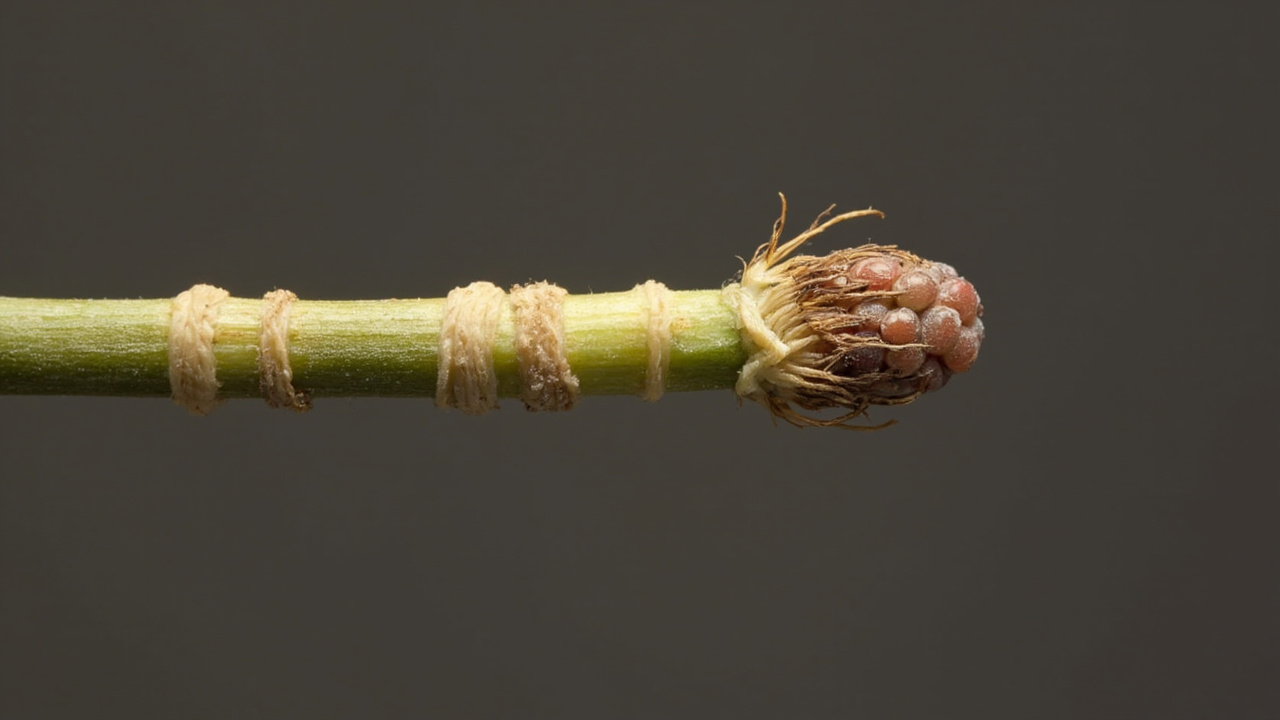
Raspberries are self fertile — each flower contains both male and female parts — but they still need bees and other pollinators to move pollen between drupelets. Poor pollination produces crumbly, undersized berries even on healthy canes. If your canes flower but the fruit stays small and uneven, inadequate pollination is the likely cause, not a nutrient deficiency.
Choosing Raspberry Varieties: Summer-Bearing vs Everbearing
Summer-bearing varieties produce one heavy crop on second-year floricanes in early to midsummer. Everbearing varieties produce a fall crop on first-year primocanes and, if left, a second smaller crop the following summer. Summer-bearing suits gardeners who want a concentrated harvest; everbearing trades peak volume for a longer window and simpler winter care.
Heritage and Tulameen dominate in temperate climates, needing 400-800 chill hours below 7°C (45°F) during dormancy. In warm-winter regions with fewer than 200 chill hours, choose low-chill varieties. Joan J (thornless) and Caroline are popular everbearing choices — mow all canes to the ground each winter and still get a fall crop.
For a full comparison of recommended varieties — including flavor profiles, cane height, thorniness, and regional suitability — see our raspberry varieties guide. Compact varieties like Raspberry Shortcake (a true dwarf, thornless type bred for containers) deserve special attention if you are growing in pots. Floricane-fruiting varieties need a sturdy trellis to support heavy fruiting laterals.
Bird netting is essential — birds strip a ripening patch faster than you can harvest. Sunscald (white or bleached drupelets from intense afternoon sun) can be prevented with 30% shade cloth or a site with morning sun and afternoon shade.
Light and Soil Requirements for Productive Raspberry Plants
Raspberries need 8 hours of direct sun for reliable fruiting — six hours is the survival threshold. Morning sun is more valuable than afternoon because it dries dew from leaves quickly, reducing fungal disease pressure. In hot climates, afternoon shade prevents sunscald on exposed berries. If your garden has limited sun, prioritize the sunniest spot even if the soil needs more work — soil can be amended; sunlight cannot.
Soil pH is the most overlooked factor in raspberry success. The target is 5.5 to 6.5 — moderately acidic. Above 7.0, raspberries develop iron chlorosis: yellow leaves with green veins, stunted canes, and progressive decline. Cornell Cooperative Extension recommends testing pH before planting and amending with elemental sulfur to lower it. Well drained soil is equally critical: raspberries will not tolerate waterlogged roots, and root rot from poor drainage is the single most common cause of plant failure.
If your garden has heavy clay, build raised beds at least 8-12 inches high or grow in containers with drainage holes. A 50:50 mix of garden loam and coarse compost works for in-ground planting; for containers, use potting soil, perlite, and aged pine bark. Before planting, work 2-3 inches of compost into the top 6 inches of soil. For the full soil preparation guide, see our raspberry light and soil requirements article.
Container raspberries need pots at least 14 inches in diameter — 10-gallon containers produce more fruit because root volume limits cane count. Elevate pots on pot feet for drainage. Aphid colonies and spider mite stippling are more common in containers due to root zone stress — inspect weekly.
Planting Raspberry Canes: Bare Root vs Container-Grown
Bare-root canes are dormant, sold without soil, and shipped in late winter to early spring. Plant them as soon as the ground is workable — ideally when soil temperatures reach 10°C (50°F). Soak roots in water for 1-2 hours before planting. Container-grown plants offer a wider planting window but establish more slowly. The crown — where roots meet stems — should sit 1-2 inches below the soil surface. Too deep buries primocanes; too shallow exposes roots to drying. For step-by-step planting instructions including trellis setup, see our raspberry planting guide.
Space plants 18-24 inches apart in rows 6-8 feet apart. Install a two-wire trellis at planting time — one wire at 3 feet, one at 5 feet. The trellis keeps canes upright, improves air circulation around the crown, and reduces fungal disease. Oregon State University Extension research shows trellised rows produce 20-40% more fruit than untrellised ones. For smaller gardens, a single post per plant with cross-arms works well.
After planting, mulch with 3-4 inches of straw, shredded leaves, or wood chips, keeping mulch a few inches from the crown. Aged compost under the mulch adds slow-release nutrients. Water deeply once or twice per week during the first season, providing 1-1.5 inches total per week. For a step-by-step walkthrough including container preparation, see our raspberry planting guide.
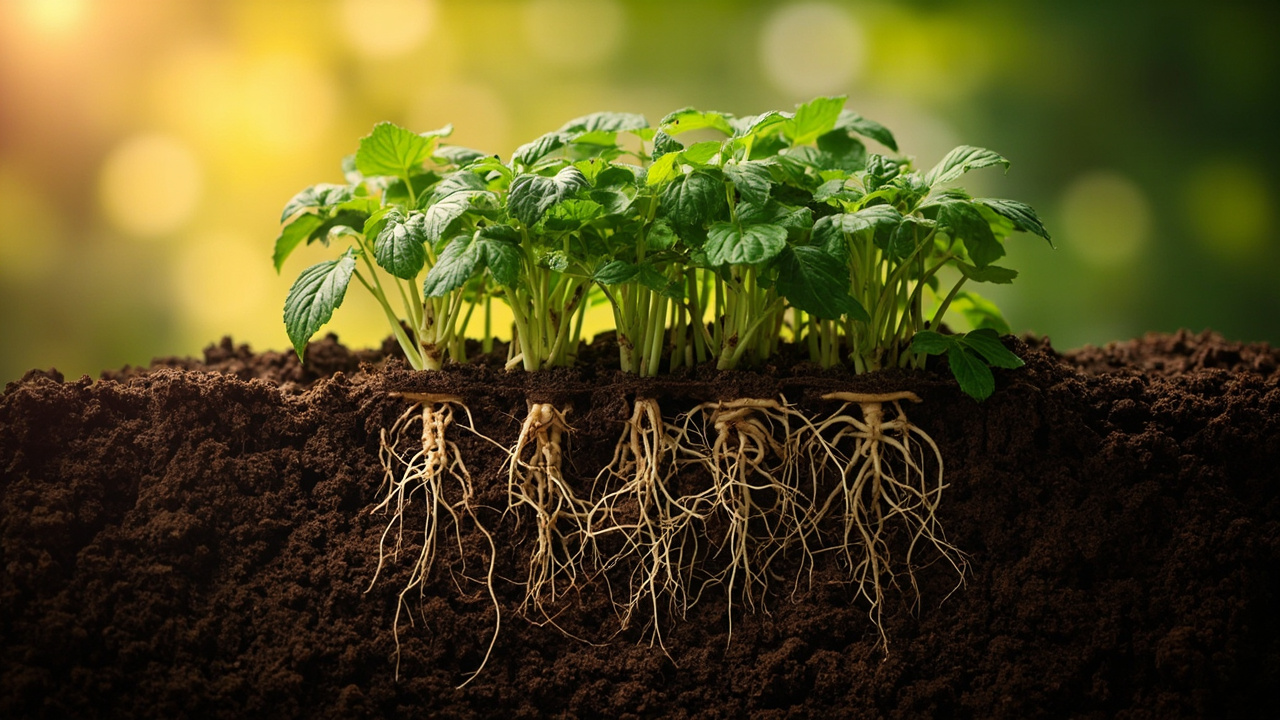
Raspberries spread through root suckers — left unchecked, a single plant colonizes a 3-foot-wide area within two seasons. Control spread by sinking edging 12 inches deep or growing in a raised bed with solid sides.
Pruning Raspberry Plants: The Task That Confuses Everyone
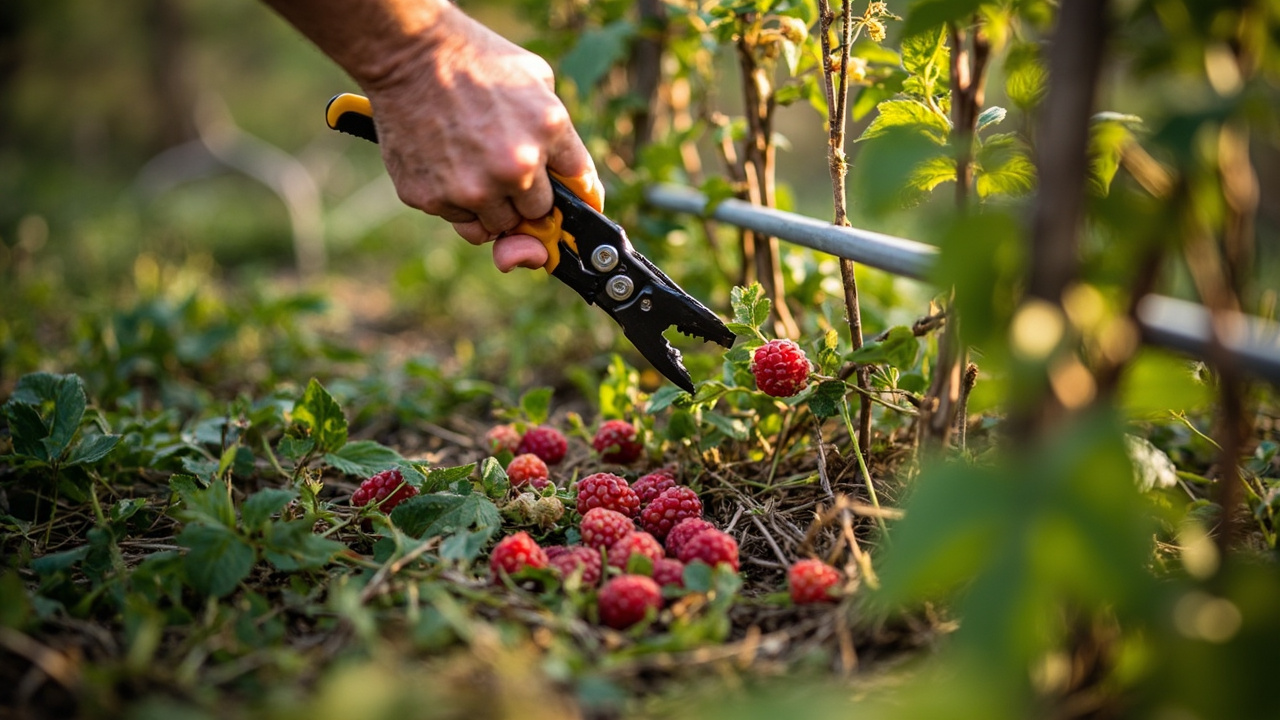
Pruning raspberries is straightforward once you can identify primocanes (first-year, green, no fruit) from floricanes (second-year, brown bark, flowered and fruited). Floricanes die after fruiting and must be removed. Primocanes become next year’s floricanes and must be kept. For summer-bearing varieties, cut all spent floricanes to ground level after harvest, then thin primocanes to the 4-6 strongest per plant. Tip-prune the remaining canes by removing the top 3-4 inches in late winter to encourage lateral branching. For the complete technique including everbearing varieties and tool sanitation, see our raspberry pruning guide.
For everbearing varieties, the simple approach is to mow all canes to the ground in late winter — the plant produces a fall crop on new primocanes. The two-crop approach leaves the lower portion of this year’s primocanes after fall harvest for a summer crop next year, while new primocanes produce the fall crop. The two-crop approach yields more total fruit but requires more careful cane management.
Use sharp bypass pruners and disinfect blades between plants with a 10% bleach solution, especially if you suspect cane blight or spur blight. Remove all pruned canes from the garden — floricanes can harbor cane borer larvae and fungal spores. For detailed diagrams and timing charts, see our raspberry pruning guide.
The most common pruning mistake is cutting too early in fall — everbearing primocanes are still moving nutrients back into the root system. Wait until the plant is fully dormant in late winter before cutting.
Harvesting, Overwintering, and Common Problems
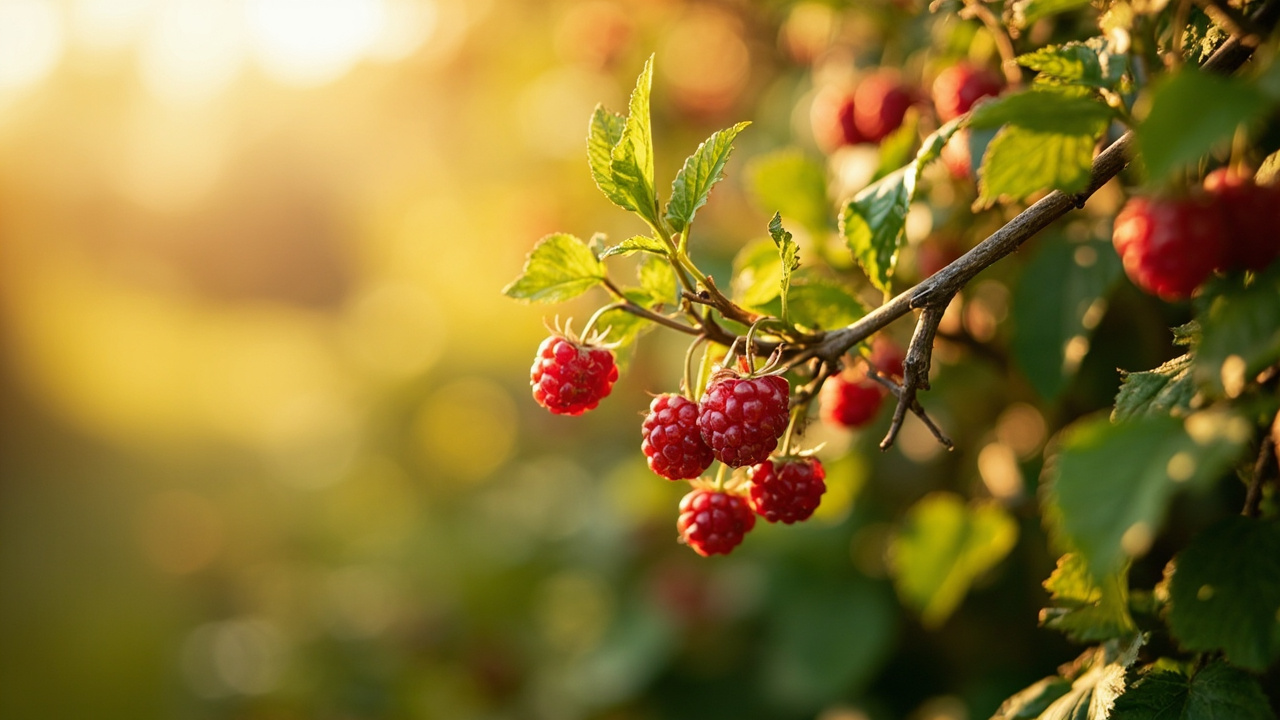
Raspberries are ripe when the drupelets are fully colored and the berry separates from the plant with a gentle tug. Check daily during peak harvest — berries ripen fast and overripe fruit attracts wasps. Pick into shallow containers (no more than 3-4 berries deep) and refrigerate immediately. Fresh berries last 2-3 days; freeze unwashed on a parchment-lined tray for 6-8 months of storage. A healthy plant produces 1-2 quarts of berries per cane per season.
For overwintering, raspberry canes are cold-hardy to approximately -20°C (-4°F) once fully dormant, but the crown and shallow roots are vulnerable to freeze-thaw cycles. In regions below -10°C (14°F), bend canes toward the ground and cover with 4-6 inches of straw mulch. In milder climates, a 3-inch mulch layer over the root zone is sufficient. Container-grown raspberries need extra protection: move pots against a south-facing wall and wrap in burlap. Reduce watering in fall as primocanes harden off — soggy soil around the crown freezes harder than dry soil.
In spring, remove mulch gradually over 7-10 days as temperatures stabilize above 5°C (40°F). Inspect canes for winter damage — healthy canes show green tissue when scratched. Watch for cane borers (dark puncture rings near the tip), aphid colonies on new growth, and spider mite stippling on older leaves.
Yellow leaves most often signal iron chlorosis from soil pH above 6.5 — foliar iron sprays provide a temporary fix, but lowering pH with elemental sulfur is the lasting solution. For the full diagnostic, see our raspberry leaves turning yellow guide. For a complete rescue protocol when a plant is collapsing cane by cane, see our save dying raspberry plant guide covering root rot surgery and rejuvenation pruning. If you are deciding between raspberry and blackberry for your space, our raspberry vs blackberry comparison walks through the structural differences in growth habit, thorniness, pruning, and winter hardiness.
Turn any PDF statement into a clean sheet
Skip the typos and the hours of copying. Our converter handles any bank statement format and outputs Excel, CSV, or QBO for QuickBooks. No file retention, free to try.
Convert your statement