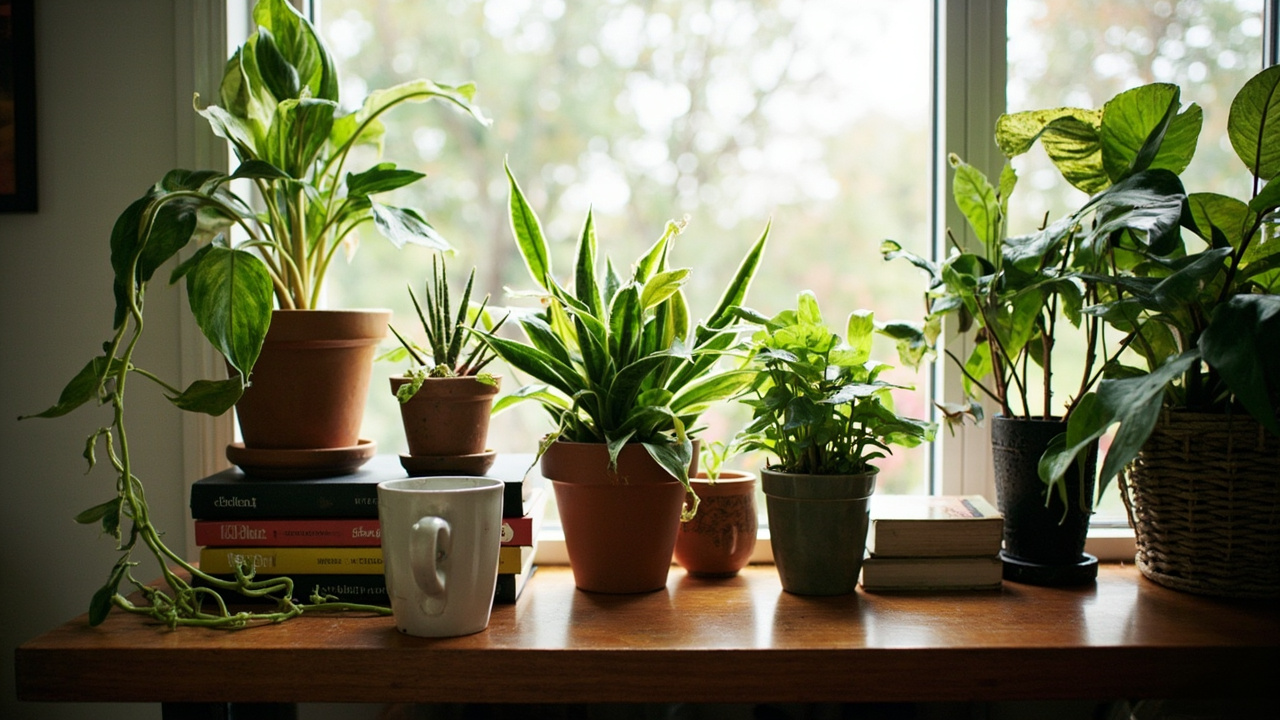
Pick the right plant for the spot, not the plant you saw on Instagram. A Hoya and a philodendron both trail from a shelf, both come from tropical understories, and both tolerate benign neglect. That is where the similarity ends.
The 60-second rule of thumb is light and patience. If the spot is bright, choose the Hoya; if the spot is dim, choose the philodendron. If the spot gets bright indirect light and you can wait 2-3 years for the first bloom flush, the Hoya wins. If the spot is a north-facing room or a shelf six feet from a window, the philodendron wins – because no Hoya blooms reliably below 200 foot-candles, and a philodendron will quietly trail 6 feet in conditions a Hoya would refuse to grow in.
This comparison breaks down three real differences: light demand, watering rhythm, and what each plant gives back. For the full walkthrough on either plant, see our hoya plant care guide or the dedicated philodendron care guide.
The 60-Second Decision Rule: Light and Patience
Two factors pick the plant for you before any other consideration: how much usable light the spot gets, and how much of a timeline you accept before the plant does something visible. If both answers push the same direction, the choice is made.
For the full year-round light rule, see our hoya light.
Measure light the cheap way before you buy anything. At noon on a clear day, hold your hand one foot above the spot where the plant will sit.
If the shadow on the wall behind has sharp, defined edges, the spot is in bright indirect light and a Hoya will grow there. If the shadow is soft and barely there, the spot is low light and a philodendron will tolerate it; a Hoya will sit for two years and then drop a leaf. The Royal Horticultural Society’s Hoya cultivation sheet puts the floor at 200 foot-candles for sustained growth and bloom; philodendrons tolerate 50-75 foot-candles without complaint, which is a four-fold lower threshold.
The patience factor matters because the visible payoff differs by years. A new philodendron heart-leaf cutting unfurls a new leaf every 3-7 days during the growing season; you see the vine extend within a month.
A new Hoya pushes out one vine per node and may not produce its first peduncle – the small spur that carries the flower cluster – for 2-3 years, even under ideal light. The hoya light requirements walk through how to maintain that floor year-round without a grow light.
Light: Why the Hoya Demands 200+ Foot-Candles and the Philodendron Doesn’t
Hoyas and philodendrons fall into two distinct sub-categories by leaf thickness: Hoyas are semi-succulent, philodendrons are thin-leaved. Both plants evolved in tropical understories, but they evolved into different niches. Hoyas climbed into the canopy, gripping bark with epiphytic roots that draw moisture from humid air. To bloom they need the sun flecks that reach the upper third of a rainforest – which in a home translates to direct morning sun for 2 hours or bright indirect light all day. The leaves are semi-succulent: thick, waxy, and built to store water during dry spells.
Philodendrons stayed on the forest floor. The heart-leaf philodendron (Philodendron hederaceum) trails along the ground in dense shade, putting out a new leaf every week during the growing season.
The leaves are thin and matte, built to capture diffuse light at low intensity. University of Florida IFAS extension notes on epiphytic and terrestrial aroids put the philodendron’s net photosynthesis curve at roughly one-third the light saturation point of a Hoya – meaning a philodendron hits its growth ceiling well below the level a Hoya needs to even start blooming.
The practical version: if the spot is bright enough to read a book at noon without a lamp, the philodendron will be happy and the Hoya will at least survive. If the spot is bright enough to cast a defined shadow, the Hoya has a real chance to flower and the philodendron will thrive to the point of needing monthly trimming. The philodendron light requirements go deeper into the lower-light end of that range.
Water and Root System: Tight Pot vs Forgiving Aroid
When to water depends on the root architecture, which dictates the watering rhythm, and the roots are fundamentally different. The parameters that drive the rhythm: substrate type, pot size, light intensity, and humidity. A Hoya’s root system is wiry, sparse, and adapted to dry out fast between rain events; a philodendron’s root system is fibrous and dense, designed to capture consistent moisture in the top inch of forest-floor litter. That difference is why the same watering routine will over-water one and under-water the other.
The full watering rhythm lives in our hoya watering.
Unlike philodendrons, however, Hoyas prefer the top 1-2 inches of mix to dry out completely between waterings and then soak through. In a 6-inch pot in bright light, that means watering every 7-10 days in summer and every 14-18 days in winter.
In a bark-based mix that drains in 5 seconds, the rhizosphere dries predictably. Overpotting – moving to a pot more than one size up – causes the lower root zone to stay wet, which causes root rot within 4-6 weeks. The full rhythm lives in the hoya watering guide, but the short version is tight pot, infrequent soak, fast-draining mix.
For philodendrons, the rule is the opposite: keep the top inch of mix lightly moist at all times during the growing season and let it dry only to the point of feeling like a wrung-out sponge. In a 6-inch pot in medium light, that means watering every 5-7 days in summer and every 10-14 days in winter.
A standard peat-based houseplant mix holds moisture well enough for this rhythm; a bark-based mix would dry too fast and the philodendron would yellow. The root mass is forgiving – it tolerates a missed watering or two – and recovers from drought stress by dropping one older leaf and resuming growth within 2-3 weeks.
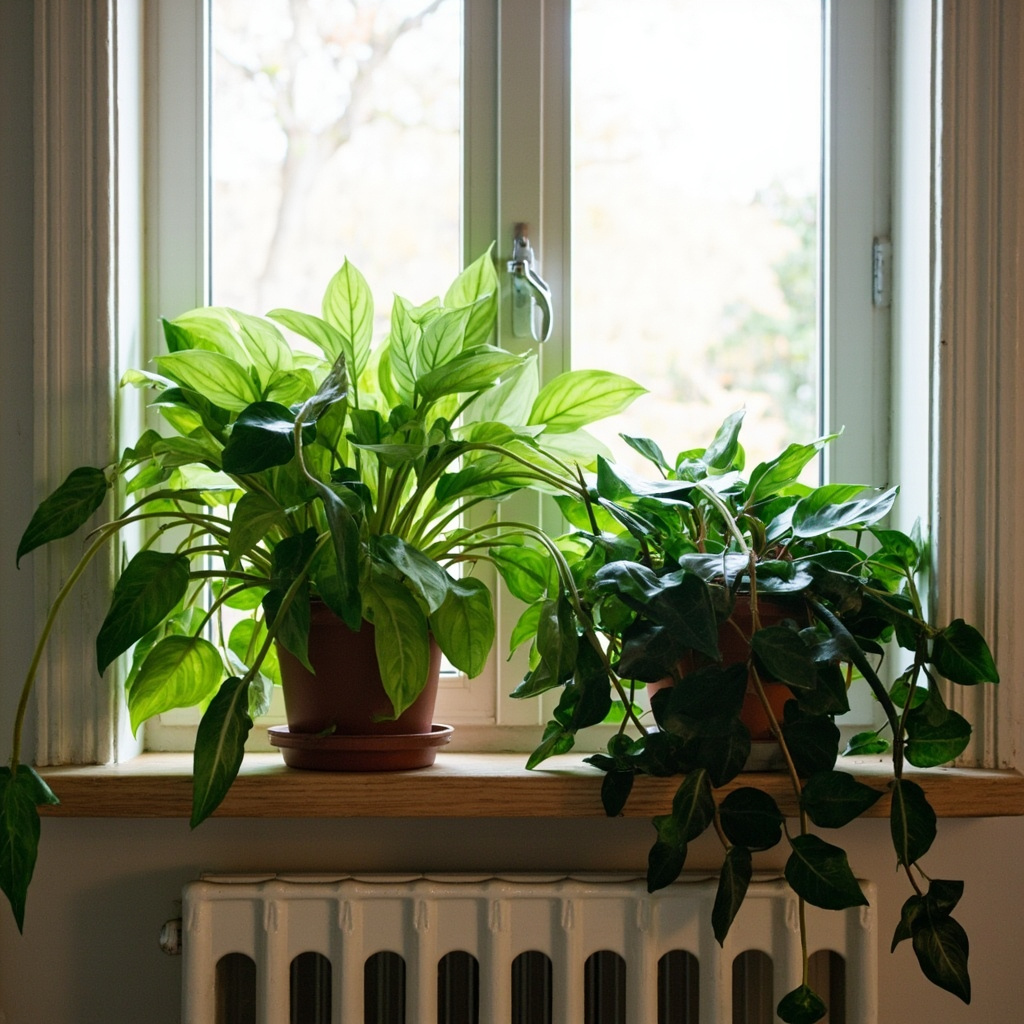
Foliage and Form: Waxy Oval vs Heart-Shaped Vine
The visual difference is the reason most people confuse them in the first place. A Hoya carnosa has thick, oval, waxy leaves with a slight cup; mature leaves feel almost plastic to the touch and reflect light from a single bright spot on each leaf surface. A Philodendron hederaceum has thin, heart-shaped leaves with a matte finish; new leaves emerge in a pale bronze color and darken to green over 5-7 days as they harden off.
Variety-level variation is covered in our hoya varieties.
In a hanging basket, both plants trail. For example, in one case study a Hoya carnosa took 14 months to fill a 6-inch basket while a Philodendron hederaceum filled the same basket in 4 months. The trade-off: density vs speed of fill.
The Hoya vine is denser and slower; one vine per node, leaves clustered in pairs, length extension of 6-12 inches per year in mature plants. The philodendron vine is faster and more sparse; new leaves emerge every 3-7 days during the growing season, and a single vine can extend 6 feet in a year.
Apply this rule: match the philodendron to spots where quick fill matters. If you want a plant that looks the same in five years as it does today – a slow, deliberate architectural piece – the Hoya wins. Variety-level variation is covered in the hoya varieties and philodendron varieties guides.
Bloom and Fragrance: The Hoya’s Peduncle vs the Philodendron’s Spathe
The honest limit worth stating up front: no philodendron produces the waxy flower clusters that make Hoyas worth the wait. A philodendron flower is a spathe-and-spadix structure – a modified leaf wrapped around a small spike – that is functional for the plant but rarely showy indoors. Most houseplant philodendrons never flower at all in cultivation. If a flower is what you want, the Hoya is the only choice between the two.
For variety-level selection, see our philodendron varieties.
Hoya blooms are something else. Each cluster (an umbel) sits on a spur called a peduncle, and each umbel carries 10-30 small star-shaped flowers with a thick, waxy texture and a sweet fragrance that peaks in the early evening.
Hoya carnosa in particular releases a scent that reads as chocolate or vanilla depending on the cultivar. The first bloom typically arrives 2-3 years after the plant is established in a tight pot under bright light, and once a peduncle forms, it will re-bloom from the same spur year after year. Cut the spur after flowering and you wait another 2-3 years for the next one – which is why the pruning rule for Hoyas is “never on a peduncle.”
The bloom window itself is 6-10 weeks from peduncle emergence to flower opening, with each umbel lasting 7-14 days. The plant will often push multiple umbels in sequence across a single growing season once it is mature. For philodendrons, the comparable metric is leaf production rather than flowers: a happy philodendron produces 30-50 new leaves per year once established, which is its version of visible reward.
Which One Should You Buy This Week?
The side-by-side decision aid, condensed:
Use when buying: a Hoya if the spot gets direct morning sun or bright indirect light all day, you are willing to wait 2-3 years for the first bloom, and you want a plant that takes up less visual space but rewards patience with flowers. Expect to spend $20-40 on a 4-inch starter; expect to spend $50-80 on a 6-inch plant with mature foliage. Suitable species for first-time owners: Hoya carnosa, Hoya kerrii, Hoya pubicalyx.
Buy a philodendron if the spot is medium to low light, you want visible growth within a month, and you prefer a forgiving plant that tolerates missed waterings. Expect to spend $10-25 on a 4-inch starter; the price reflects how fast they propagate and how quickly the market is supplied. Suitable species for first-time owners: Philodendron hederaceum (heart-leaf), PhilodendronBrasil (variegated), Philodendron micans (velvet leaf).
Buy both if you have two different spots. A north-facing bookshelf gets a philodendron; an east-facing windowsill gets a Hoya.
The two plants coexist in a home without competing for the same light, and the watering rhythms are different enough that you will not confuse them. The full care walkthroughs are in our hoya plant care and philodendron care guides.
From PDF to Excel in one click
Forget retyping line by line. Upload any bank statement, get a spreadsheet you can actually use. Your files are never stored, and you can test the converter with 3 free conversions.
Try it free