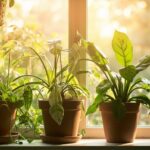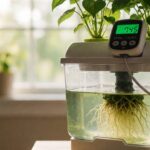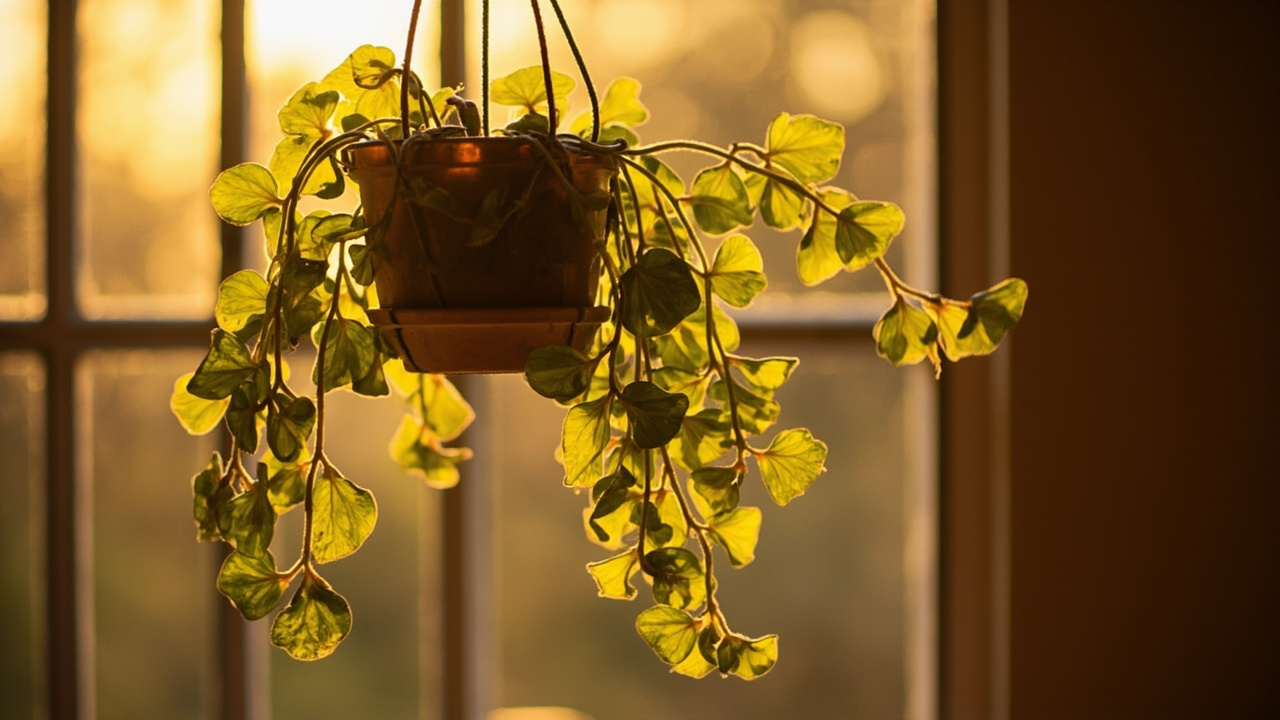

You bought a Hoya because the waxy leaves and trailing vines looked indestructible. Then a stem turned yellow. A leaf dropped. You watered more, thinking the Hoya was thirsty. The next leaf fell faster.
The paradox of Hoya care is that most wax plants die from overwatering, not neglect. The reason sits underground: Hoya roots are epiphytic aerial roots evolved to cling to tropical tree bark, not to sit in damp soil. Treat them like regular houseplant roots and the Hoya rots within weeks. Understand how they breathe and the same Hoya thrives for decades, sending out spadix umbels year after year.
This guide walks through the five care dimensions that make the difference: light position, watering rhythm, soil structure, humidity range, and the root-bound flowering trigger that sounds wrong until you see it work.
What Makes a Hoya an Epiphyte: Why Soil Rules Don’t Apply
A Hoya in the wild never touches forest floor soil. It anchors itself to tree bark using aerial roots that absorb moisture from humid air, not from the ground. The term epiphyte means a plant that grows on another organism for physical support without drawing nutrients from it.
The roots wrap around branches and wait for rain to wash over them, then dry within hours as the canopy breeze returns.
This is why a Hoya in dense potting mix suffocates: the roots stay wet longer than their tissue can tolerate, and the first cell collapse begins within 48 hours. The Hoya’s semi-succulent leaves store water precisely because its root system evolved for quick hydration followed by rapid drying.
The practical shift is immediate. A Hoya does not want to be evenly moist. It wants a wet-dry cycle that mimics a tropical downpour followed by wind.
When the Hoya’s pot feels light and the top inch of mix crumbles at a touch, that is the window. Until then, the roots are still breathing through residual moisture.
The University of Florida IFAS Extension notes that epiphytic plants in consistently moist media show root cortex breakdown within 10 days because the cells literally drown from oxygen deprivation. Once you see the Hoya as a tree-dweller with aerial roots stuck temporarily in a pot, every care decision falls into place.
The Right Light for Hoya: How Bright Indirect Light Drives Flowering
The Hoya paradox extends to light. Direct afternoon sun scorches the waxy Hoya cuticle in under an hour, leaving bronze patches that never fade. But a dark corner starves the Hoya of the energy it needs to push out peduncles.
An east-facing windowsill delivers roughly 2-4 hours of gentle direct morning sun in the 800-2000 lux range, which Hoya foliage metabolizes without damage.
The trade-off: while south windows deliver twice the raw intensity, the heat buildup through glass shortens Hoya leaf lifespan by roughly a third over a full growing season because the waxy coating cracks under sustained hot exposure. The Royal Horticultural Society’s growing guides confirm that mature Hoya specimens produce peduncles more reliably under moderate, steady light than under the fluctuating intensity of direct southern sun.
Hoya plants evolved under canopy cover in Southeast Asian forests, and the genetic programming reflects that: the photosynthetic apparatus saturates and reverses into photoinhibition when glass magnifies noon sun beyond safe thresholds. The safest indoor position is therefore an east window with sheer curtain diffusion or a south window pulled back well away from the glass.
As fall daylight drops, natural light alone often falls short of the threshold that triggers peduncle formation in Hoya varieties. Growers who supplement with a best grow lights indoor plants fixture can maintain the photosynthetic rate into winter, though the Hoya still benefits from a cooler rest period below 70°F (21°C) to set buds.
Watch for the first peduncle nubs at leaf nodes; once they appear, keep the light position steady because Hoya plants abort developing blooms when the light source shifts during bud initiation.
Watering Hoya: The Dry-Between Rule That Prevents Root Rot
The pot-lift method removes all guesswork from Hoya watering. Lift the Hoya pot right after a thorough watering and feel the weight. Lift again 5-7 days later. When the pot feels roughly half as heavy as the post-watering baseline, the Hoya root zone has reached the moisture level where aerial roots function without suffocation. In a 6-inch plastic pot with a chunky mix, this typically takes 7-10 days in spring and summer, expanding to 14-21 days in winter when evaporation slows and the Hoya stalls.
expanding to 14-21 days in winter when evaporation slows and the Hoya stalls\.
Below 60°F (15°C), Hoya metabolism slows to near-dormancy and water sits in the mix far longer. In that range, stretch the dry interval to 3-4 weeks rather than relying on the calendar. If you see a Hoya leaf wrinkle or a stem lose turgor, that is a late-stage thirst signal; a healthy Hoya rarely shows visible wilting because its semi-succulent tissue buffers water loss.
Cornell Cooperative Extension’s houseplant watering research shows that the majority of indoor epiphyte failures trace to calendar-based watering rather than moisture-check-based decisions. The takeaway for Hoya care is to check the pot, not the date.
The commonest mistake is watering every Saturday out of habit. Instead, check the Hoya pot weight every 3 days and water only when the pot drops to its post-drying baseline. To calibrate timing across seasons, an indoor plant watering schedule tailored to your indoor climate gives a baseline rhythm, but the Hoya’s pot weight remains the final decision trigger.
Chunky Soil Mix: Building a Fast-Draining Medium for Hoya Roots
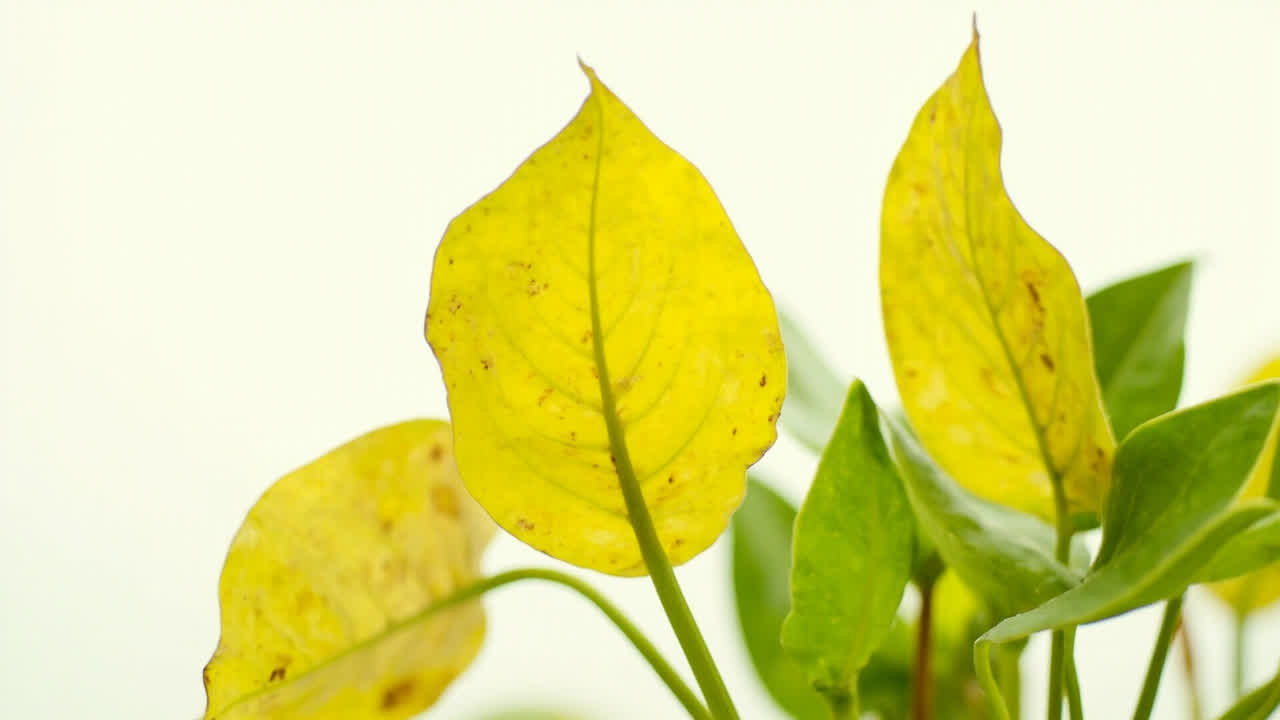
The right Hoya mix drains in under 30 seconds and stays airy even when fully saturated. The components break down into three structural variables: chunky orchid bark for moisture retention without compaction, perlite for aeration pockets, and coconut coir for gentle water holding between drinks. Standard potting mix holds too much water because the fine particles block the air pockets Hoya roots need to breathe; within 3 months the roots in a dense mix show brown sloughing and the lower Hoya leaves yellow from root stress. For step-by-step recipes and compaction timelines, see Hoya soil mix guide.
The formula that works is one part orchid bark chips, one part perlite, one part coconut coir, plus a handful of horticultural charcoal to absorb fungal byproducts. The bark-perlite-coir ratio recreates the chunky, well-drained surface of a tropical tree crotch where the Hoya’s aerial roots anchor in nature.
Water should run freely from the drainage holes within a single pour, and the Hoya surface should feel dry to the touch within 48 hours on a 70°F (21°C) day. If moisture lingers on day 3, increase the perlite ratio. If the Hoya pot dries within 24 hours and shows no weight retention, increase the coir.
The goal is a cycle where the Hoya roots experience moisture for roughly 3-4 days, then air for the remainder of the interval. That wet-dry swing keeps epiphytic aerial roots functional indoors because it mirrors the Hoya’s natural pattern of drench-and-dry on exposed bark. The limitation of bark-heavy mixes is that they break down after 2-3 years and hold more water, so annual inspection of the root zone catches degrading media before it suffocates the Hoya roots.
Humidity and Temperature: The Indoor Range That Keeps Hoya Leaves Waxed
Hoya foliage looks its best between 65-85°F (18-29°C) with 50-70% relative humidity. Below 55°F (13°C), Hoya leaf unfurling slows and the peduncle nodes may abort their buds because cold-stiffened cell walls cannot complete expansion. Above 90°F (32°C) with low humidity, the Hoya leaf margins desiccate because transpiration outpaces root water uptake in warm air.
The RHS Ornamentals growing committee notes that tropical epiphytes in sustained dry heat undergo stomatal closure that persists for 48 hours after humidity returns, which means a single hot afternoon can stall Hoya growth for nearly a week. In our experience with indoor Hoya collections, the winter heating season causes more stress than summer heat because the dry cold near windows creates a double bind.
A pebble tray or a small humidifier restores the Hoya range where the plant’s stomata function without closing. The ASPCA lists Hoya as non-toxic to cats and dogs, but the Hoya humidity range matters more for the plant than for pet safety. If you want to see the full impact of band-specific humidity care on tropical foliage, the indoor plant humidity guide maps symptom ranges to the same Hoya thresholds.
Expect new growth within 2-4 weeks once the Hoya sits in the right band; if nothing appears by week 6, the plant is likely signaling a root-temperature mismatch rather than a humidity problem.
For the full humidity and temperature thresholds, including cold-damage stages and four ways to raise indoor humidity, see the hoya humidity and temperature guide.
Keeping Hoya Root-Bound: The Counterintuitive Flowering Trigger
A Hoya ignores a spacious pot. Given room to roam, the Hoya roots grow vegetatively and the plant pours energy into vine elongation at the expense of blooms.
The Hoya flowering trigger is root restriction: when roots hit the pot wall and begin circling, the hormonal shift redirects energy to reproduction, and Hoya peduncle nubs appear at the nodes within 2-3 months. Most Hoya varieties will not send out spadix umbels until the root mass fills roughly 80% of the container volume.
The trade-off is real. A root-bound Hoya flowers prolifically but depletes the nutrients in its small soil volume faster, requiring diluted liquid feed every 2-3 weeks during active growth (March through September). Repot the Hoya only when the roots circle the bottom twice and the pot distorts under root pressure; for a mature Hoya, that might mean 3-4 years in the same container.
Peer-reviewed epiphyte physiology research confirms that the hormonal shift is triggered by mechanical stress on root cap cells, not by nutrient deprivation. In other words, the cramped Hoya flowers because the roots feel squeezed, not because they are starving. This is why repotting into a larger container reliably delays flowering by a full growing season. Other trailing epiphytes like those covered in the pothos care guide follow a similar logic but tolerate more root space before flowering stalls.
Winter Care: The Dormant Slowdown Most Owners Miss
From November through February in the Northern Hemisphere, the Hoya enters a semi-dormant phase. Hoya growth slows to near-zero because light drops below the photosynthetic compensation point for extended periods. During this window, Hoya watering should drop to once every 3-4 weeks regardless of pot weight, because the Hoya takes up so little that the mix stays wet well past the safe threshold for aerial roots.
Feeding should stop entirely; the Hoya roots cannot process concentrated nutrients at low metabolic rates, and fertilizer salts accumulate near the Hoya root crown until they reach levels that scorch emerging root tips in spring. A house plant care calendar laid out by month shows how the same Hoya schedule shifts between summer growth and winter rest.
Resist pruning during Hoya dormancy; the Hoya will not redirect energy to new growth until day length climbs past 10 hours. If the room drops below 55°F (13°C) at night, a thermostat set to maintain 60-65°F (15-18°C) prevents the cold-triggered Hoya leaf drop that occurs when warm-cold swings exceed 15°F (8°C) in a single evening. The most common winter mistake is keeping the Hoya near a radiator, where warm dry air pulls moisture from the leaves faster than dormant roots can replace it.
The Honest Limits: What Hoya Cannot Do on Demand
No amount of Hoya care guarantees a wax plant bloom before its third year. The Hoya biological clock demands 2-3 growing seasons of root restriction before the hormonal threshold for flowering kicks in, and a juvenile Hoya will spend those years building vines and leaf mass regardless of light or feed quality. Equally, no Hoya recovers cleanly from 5 days of fully saturated roots; the Hoya root cortex cells collapse and the remaining healthy roots must rebuild the uptake network over 4-8 weeks.
Prevention is the only reliable Hoya strategy because the species lacks the adventitious root regeneration that allows terrestrial houseplants like pothos to bounce back from rot. Cold tolerance stops at 50°F (10°C). Below that, Hoya cell membranes stiffen and Hoya leaves drop within 48 hours.
If you want a plant with similar epiphytic roots and more cold flexibility, the orchid care for beginners guide covers Phalaenopsis care in a wider cold-damage forgiveness range. For the Hoya owner, the takeaway is simple: bright indirect light, the pot-lift test, a chunky bark-heavy mix, moderate humidity, and a small pot. Master those five and the Hoya sends out umbels on its own timeline.
For specific problems, Aqualogi publishes dedicated troubleshooting guides: the Hoya not flowering page maps the seven most common reasons a mature Hoya refuses to bloom; the Hoya leaves turning yellow page walks through the four-cause diagnosis from overwatering to root rot; the Hoya leaves curling and wilting page covers the four curl patterns and the matching root-zone cause; and the Hoya pest identification page identifies mealybugs, scale, and spider mites with the specific treatment protocol for each.
For a step-by-step guide to choosing the right pot size, mix ratios, and the four-week recovery window, see our Hoya potting guide.
Turn PDF Bank Statements Into Workable Spreadsheets
Your bank statement is a mess of numbers, but your books shouldn't be. Use our converter to get Excel, CSV, or QBO files — ready for QuickBooks.
Try It Free Now