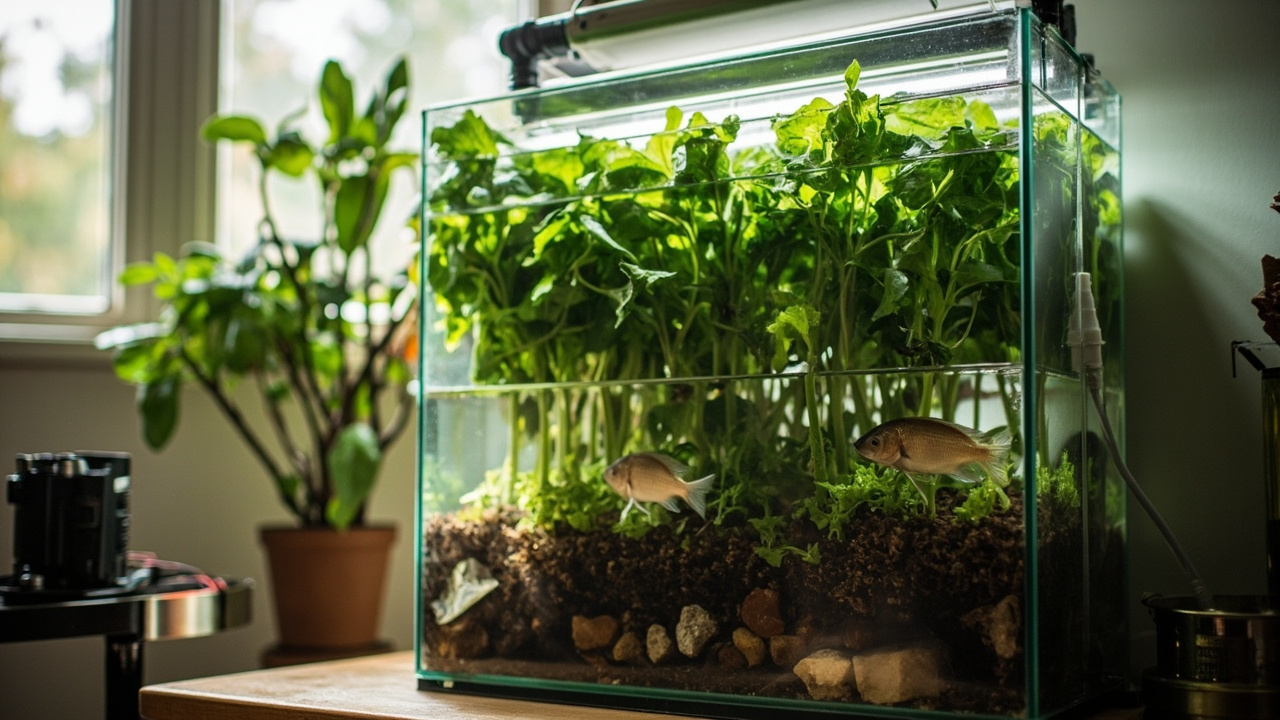

Setting up a small aquaponic system at home is one of the most rewarding projects a gardener can take on. You grow leafy greens and herbs using nutrient-rich water from a fish tank, the fish fertilize the plants, and the plants clean the water. The system keeps itself running with minimal intervention once it is established.
Most first systems fail for one of three predictable reasons: people skip the bacterial cycling phase, they oversize or undersize the components, or they choose the wrong fish for their climate. This guide walks through every decision in order — tank sizing, pump selection, media bed design, fish choice, plant selection, the full 4-to-8-week cycling process, and the maintenance routine for the first six months — so your system reaches a stable balance instead of collapsing into a stinky, algae-filled mess.
Expect to spend 6 to 10 hours building the system over a weekend, then 15 to 30 minutes per week on routine checks. The system needs no daily feeding if you choose hardy fish, and once cycled, you can expect your first harvest of leafy greens in 30 to 60 days and a steady yield of herbs and lettuce for years.

What Aquaponics Actually Is (and Is Not)
Aquaponics is a closed-loop system where fish and plants share the same water. Fish produce ammonia-rich waste; bacteria colonize the grow bed and convert that ammonia first into nitrites, then into nitrates; plants absorb the nitrates as fertilizer and return clean water to the fish. The system mimics a natural pond ecosystem but concentrates the biology into a small footprint that produces both protein (fish) and produce (vegetables, herbs).
What aquaponics is not: it is not hydroponics with fish added as decoration. The fish are the engine. Without enough fish, the plants starve; without enough plants, the fish die from their own waste. The art of aquaponics is balancing the three populations — fish, bacteria, and plants — so each supports the others.
It is also not a faster way to grow vegetables than soil gardening. Most aquaponic vegetables grow at roughly the same rate as soil-grown equivalents. The advantages are water savings (90 percent less water than soil gardening), no weeding, no soil-borne pests, and year-round growing indoors. The disadvantages are up-front cost (300 to 800 dollars for a beginner system), electrical dependency (pump failure kills fish within hours), and the 4-to-8-week startup period before you can add fish.
Sizing the System: Tank, Pump, and Media Bed
The fundamental rule of aquaponics is that the fish tank, grow bed, and pump capacity must be matched. Mismatched components cause the most common beginner failures: ammonia spikes (too many fish for the bacteria), root rot (waterlogged media from poor drainage), or fish suffocation (insufficient oxygen from undersized pumps).
Tank Size for a Home System
A 50-gallon (190-liter) fish tank is the practical minimum for a beginner system. Smaller tanks have less water volume, which means ammonia concentrations spike faster and fish suffocate more easily when something goes wrong. A 100-gallon tank is more forgiving but requires more floor space and weight support (a 100-gallon tank weighs 800 pounds when full).
For most home setups, a 50-to-75-gallon tank paired with a 12-to-18-square-foot grow bed produces enough vegetables for one or two people and is forgiving enough that a missed feeding or two will not collapse the system.
Grow Bed Sizing
The grow bed should hold roughly the same volume of media as the fish tank holds water — a 50-gallon tank pairs with a 50-gallon media bed, a 75-gallon tank with a 75-gallon bed. This ratio gives bacteria enough surface area to colonize (the media is where the bacteria live) and gives plants enough root volume to access the nutrients.
Media bed depth should be 12 inches (30 cm) for fruiting plants like tomatoes and peppers, or 8 to 10 inches (20 to 25 cm) for leafy greens and herbs. The extra depth for fruiting plants prevents root-bound conditions during the 4-to-6-month fruiting cycle.
Pump and Flow Rate
The pump should turn over the entire fish tank volume once per hour. A 50-gallon tank needs a pump rated at 50 gallons per hour (GPH); a 75-gallon tank needs 75 GPH. Undersized pumps cause low oxygen and dead zones in the grow bed. Oversized pumps waste electricity and stress fish with too much current.
Choose a pump rated for 24/7 continuous duty; cheap aquarium pumps are designed for intermittent use and burn out within months. Expect to spend 30 to 60 dollars on a pump that will last 3 to 5 years versus 15 dollars on a pump that fails in 6 months.
Media Selection
Expanded clay pebbles (hydroton or leca) are the standard media for aquaponic grow beds. They are pH-neutral, lightweight, provide excellent surface area for bacteria, drain well, and never decompose. Use 3-to-8-mm pellets; smaller pellets compact and suffocate roots, larger pellets let media fall through the bed floor.
River rock and lava rock are cheaper alternatives but heavier and may affect pH. Perlite is too light and floats; vermiculite holds too much water and suffocates roots. Do not use regular garden soil; it compacts, smothers roots, and introduces pests and diseases.
Fishless Cycling: The 4-to-8-Week Phase Most Beginners Skip
Fishless cycling is the single most important step in setting up an aquaponic system. During cycling, you grow the nitrifying bacteria colony (Nitrosomonas and Nitrobacter species) that convert fish waste into plant food before any fish are added. Skipping this phase means adding fish to a tank full of toxic ammonia — within days the fish show signs of stress (gasping at the surface, red gills, lethargy), and within a week most or all are dead.
The cycling process takes 4 to 8 weeks depending on water temperature. Bacteria grow faster in warm water (75 to 85°F) and slower in cold water (below 65°F). Plan your system setup to start cycling when water is reliably warm, or use a tank heater to maintain 75 to 80°F.
The Cycling Procedure
To cycle without fish, you need to add ammonia to the system to feed the bacteria. The traditional approach uses pure liquid ammonia (no surfactants, no fragrances, no additives) at a rate of 5 mL per 100 gallons of tank water to reach a target ammonia concentration of 2 to 4 ppm. Pure ammonia is sold as a cleaning product; check the label carefully — many household ammonias contain surfactants that kill the bacteria you are trying to grow.
Test the water every 2 to 3 days with a freshwater aquarium test kit that measures ammonia, nitrites, and nitrates. The cycling progression follows a predictable pattern:
- Days 1 to 7: Ammonia rises to 2 to 4 ppm, nitrites remain at 0, nitrates remain at 0. No bacteria colony yet.
- Days 7 to 21: Ammonia starts dropping as Nitrosomonas bacteria colonize; nitrites rise as ammonia converts; nitrates remain at 0.
- Days 21 to 35: Nitrites peak and then drop as Nitrobacter colonize; nitrates rise as nitrites convert.
- Days 35 to 56: Ammonia and nitrites drop to 0 within 24 hours of dosing; nitrates rise steadily. The system is cycled and ready for fish.
The system is fully cycled when you can add ammonia to 2 ppm and both ammonia and nitrites drop to 0 within 24 hours, with nitrates climbing to 20 to 40 ppm. This indicates a robust bacteria colony that will handle fish waste from day one.
Choosing Fish for Your Climate and Goals
The best fish for a home aquaponic system depend on your goals, climate, and local regulations. Some species are easy to keep but grow slowly; others grow fast but require warmer water and stricter feeding.
Best Choices for Beginners
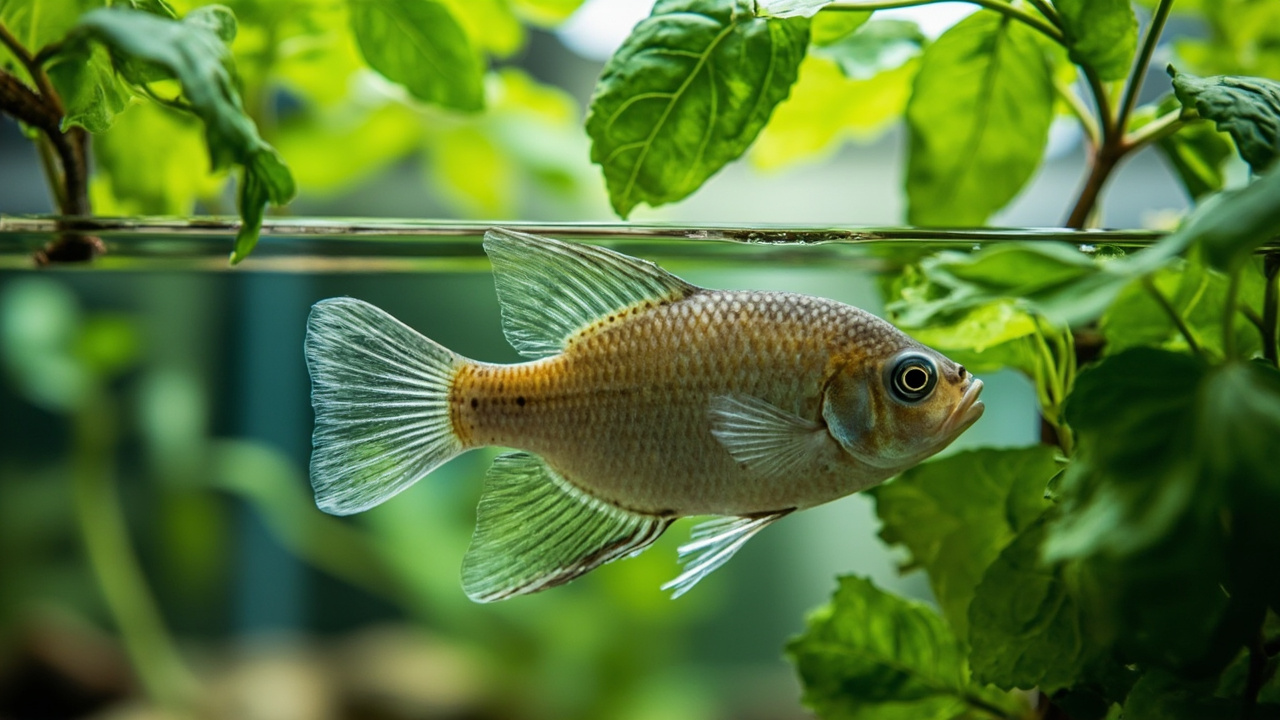
Goldfish are the most forgiving beginner fish. They tolerate temperature swings from 50 to 80°F, eat almost any commercial fish food, survive inconsistent feeding, and produce enough waste to feed a small system. The trade-off is slow growth (they reach harvest size in 12 to 18 months versus 6 to 9 months for edible species) and the aesthetic question of whether you want to raise goldfish for vegetables or for themselves.
Tilapia are the standard edible aquaponic fish. They grow fast (6 to 9 months to plate size), tolerate crowding, eat plant-based feed, and survive water quality fluctuations better than trout or perch. Tilapia require warm water (70 to 85°F) and are illegal to keep in some US states and Australian states because they are an invasive species — check your local regulations before purchasing.
Catfish are a good alternative to tilapia in climates where tilapia are restricted. Channel catfish tolerate 60 to 85°F, grow to plate size in 8 to 12 months, and eat a varied diet. They are bottom feeders, which means they clean up fallen plant debris from the tank floor.
Fish to Avoid
Trout require cold water (50 to 65°F) and pristine water quality — they are excellent for outdoor systems in cool climates but unforgiving for beginners. Koi are beautiful and produce abundant waste, but they grow huge (24 to 36 inches) and live 30+ years, which is a long commitment for a backyard system. Pacu and other large species outgrow home tanks within 2 to 3 years. For a deeper dive on matching fish to climate and goals, see our best fish for aquaponics comparison.
How Many Fish to Stock
Stock at a rate of 1 inch of fish per gallon of tank water as a starting point. A 50-gallon tank starts with five 10-inch fish or ten 5-inch fish. This density is conservative; once the system is mature (3 to 6 months in), you can increase density to 2 inches per gallon if water quality remains stable.
Add fish gradually over 2 to 4 weeks, not all at once. Adding 50 percent of the eventual population in week 1, then 25 percent in week 2, then 25 percent in week 3, gives the bacteria colony time to adjust to the increased ammonia load.
Plants That Thrive in Aquaponic Systems
Leafy greens and herbs are the easiest and most productive plants for beginner systems. They have low nutrient requirements, grow fast (30 to 60 days from transplant to harvest), and tolerate the slightly variable nutrient levels of a fish-driven system.
Best Plants for Beginners
Lettuce (romaine, butterhead, leaf varieties) is the easiest aquaponic crop. It germinates in 5 to 7 days, transplants at 2 to 3 weeks, and reaches harvest in 30 to 45 days. It grows well in the 50 to 70°F temperature range that suits most home setups.
Basil grows vigorously in aquaponic systems and produces continuous harvests when you pinch the growing tips. It prefers 65 to 80°F and benefits from the slightly higher nutrient concentration in a cycled system.
Mint, parsley, chives, and cilantro all perform well in aquaponic beds and are forgiving of the minor pH swings that occur in a beginner system.
Plants to Avoid Early
Tomatoes, peppers, cucumbers, and other fruiting plants need much higher nutrient concentrations than leafy greens and are sensitive to pH swings. They are also heavier feeders that strain a young bacteria colony. Wait 6 to 12 months until your system is mature before adding fruiting crops, or grow them in a separate container with supplemental nutrients.
Root vegetables (carrots, beets, radishes) need a deeper media bed than most home setups provide and are challenging to harvest without disturbing the bed.
Daily, Weekly, and Monthly Maintenance
An established aquaponic system needs 15 to 30 minutes of attention per week. Daily tasks are minimal; weekly checks are essential; monthly inspections prevent small problems from becoming catastrophic.
Daily Tasks (2 to 3 minutes)
- Feed the fish once or twice a day, only as much as they eat within 2 to 3 minutes
- Visual check that water is flowing from the tank to the grow bed and back
- Glance at the plants for wilting, yellowing, or pest damage
Weekly Tasks (15 to 20 minutes)
- Test water pH (target 6.8 to 7.2) and adjust if needed with pH up or pH down solutions
- Test ammonia and nitrite (both should be 0); nitrate should be 20 to 80 ppm
- Inspect the pump for clogs or unusual noise
- Check the grow bed for any areas where media has settled or compacted
- Harvest mature leaves and herbs
Monthly Tasks (30 to 45 minutes)
- Clean the pump intake screen
- Test water hardness and alkalinity; add crushed coral or calcium carbonate if alkalinity drops below 50 ppm
- Prune plant roots if they are clogging the standpipe
- Inspect the fish for signs of disease (lethargy, fin damage, abnormal swimming)
- Wipe down the tank exterior and remove any algae growth on the glass
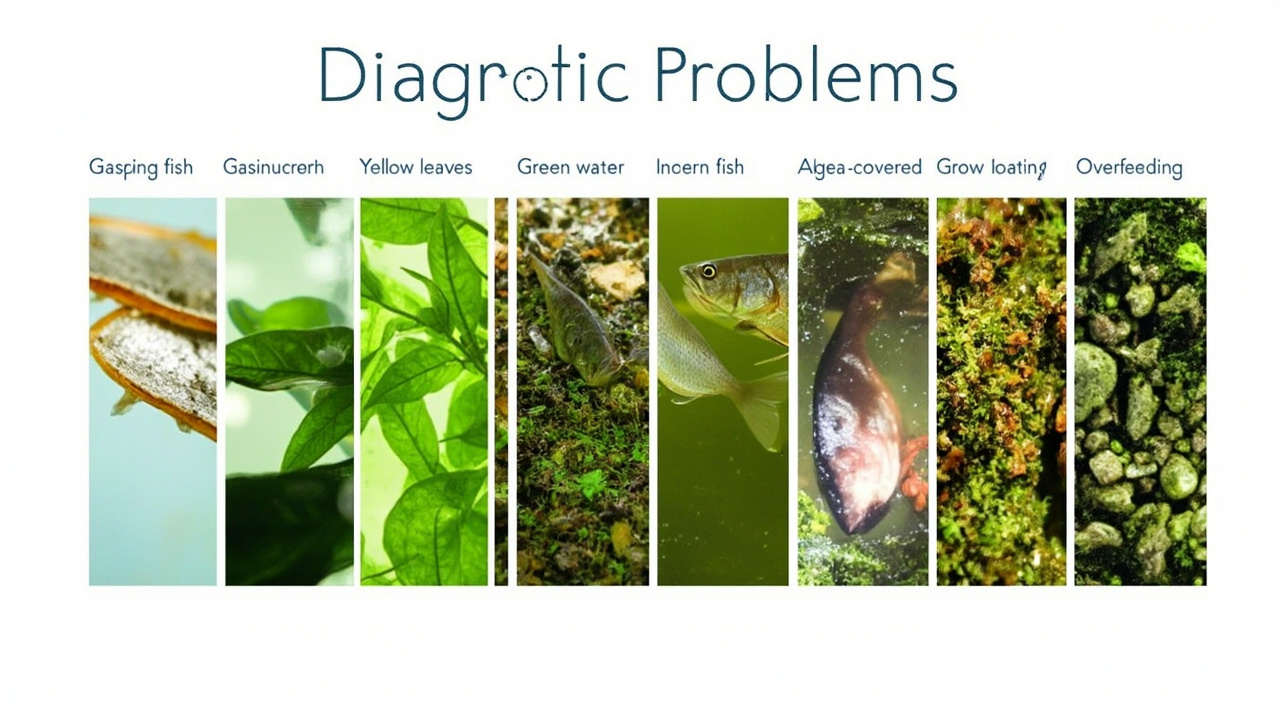
Common Beginner Problems and How to Fix Them
Even well-built systems encounter occasional issues. Recognizing problems early and responding correctly keeps small issues from becoming system failures.
Fish Gasping at the Surface
Fish congregating at the water surface and gasping means low dissolved oxygen. The most common cause is pump failure or reduced flow — check that the pump is running at full capacity and that the outlet is not blocked. Secondary causes are high water temperature (warm water holds less oxygen) and overstocking (too many fish producing too much CO2). For detailed diagnosis, see our common aquaponics problems troubleshooting guide.
Plant Leaves Yellowing
Yellowing leaves in aquaponic plants usually indicate iron deficiency (interveinal chlorosis with green veins) or nitrogen deficiency (uniform yellowing starting with older leaves). Iron deficiency is the most common in established systems because fish waste provides plenty of nitrogen but little iron. Treat by adding chelated iron to the tank at the rate specified on the product label, or foliar-spray with a dilute iron solution.
Algae Bloom in the Tank
Green water in the fish tank is an algae bloom, caused by excess light and excess nutrients. It does not directly harm fish but reduces dissolved oxygen at night when algae respire. Reduce light exposure to the tank (cover with a dark cloth or move to a shaded area), add a small UV sterilizer to the pump output, or introduce algae-eating species like certain snails or tilapia fingerlings.
Root Rot in the Grow Bed
Plants wilting despite wet media usually means the roots are rotting from poor drainage or insufficient oxygen. Check that the standpipe is not clogged and that water is draining freely from the bed. If drainage is adequate, add air stones to the grow bed to increase oxygen around the roots.
What to Expect: A Realistic First-Year Timeline
Month 1: Build the system, begin fishless cycling. No fish, no plants yet — just bacteria growing.
Months 2 to 3: Add fish and plants. Expect minor issues: occasional pH swings, slow plant growth, fish that hide for the first week. By the end of month 3, the system should be stable with consistent readings.
Months 4 to 6: First major harvests of leafy greens and herbs. Fish should be growing noticeably. You may need to add supplemental iron if plants show yellowing.
Months 6 to 12: System is mature. Consider adding fruiting plants if nutrient levels support them. Harvest fish when they reach plate size (if growing edible species).
Year 2 and beyond: Routine maintenance only. The system sustains itself with weekly checks and monthly deep cleans. Replace pump every 3 to 5 years, replace grow media every 5 to 7 years.
What to Do Now
If you are ready to start, the first decision is location. Choose a spot with stable temperature (60 to 80°F year-round), access to a power outlet, and enough floor space for your tank plus grow bed plus working access around them. A basement, garage, or covered patio all work. Avoid direct sunlight on the fish tank (it causes algae blooms) and avoid freezing temperatures (they kill the bacteria colony).
Once your location is chosen, order your tank, pump, grow bed, and media. Set everything up, fill the tank with dechlorinated water, and start the fishless cycling phase. In 4 to 8 weeks you will have a balanced ecosystem ready for fish and plants.
For a deeper look at the broader hydroponics-versus-aquaponics decision and how to choose between the two, see our aquaponics vs hydroponics comparison. For the broader context of building a complete home food-growing system, our complete aquaponics guide covers larger-scale designs.
Turn That PDF Into a Spreadsheet in Minutes
You've seen how to do it manually — now let the tool handle the heavy lifting. Upload your bank statement and get Excel, CSV, or QBO in a few clicks.
Try It Free