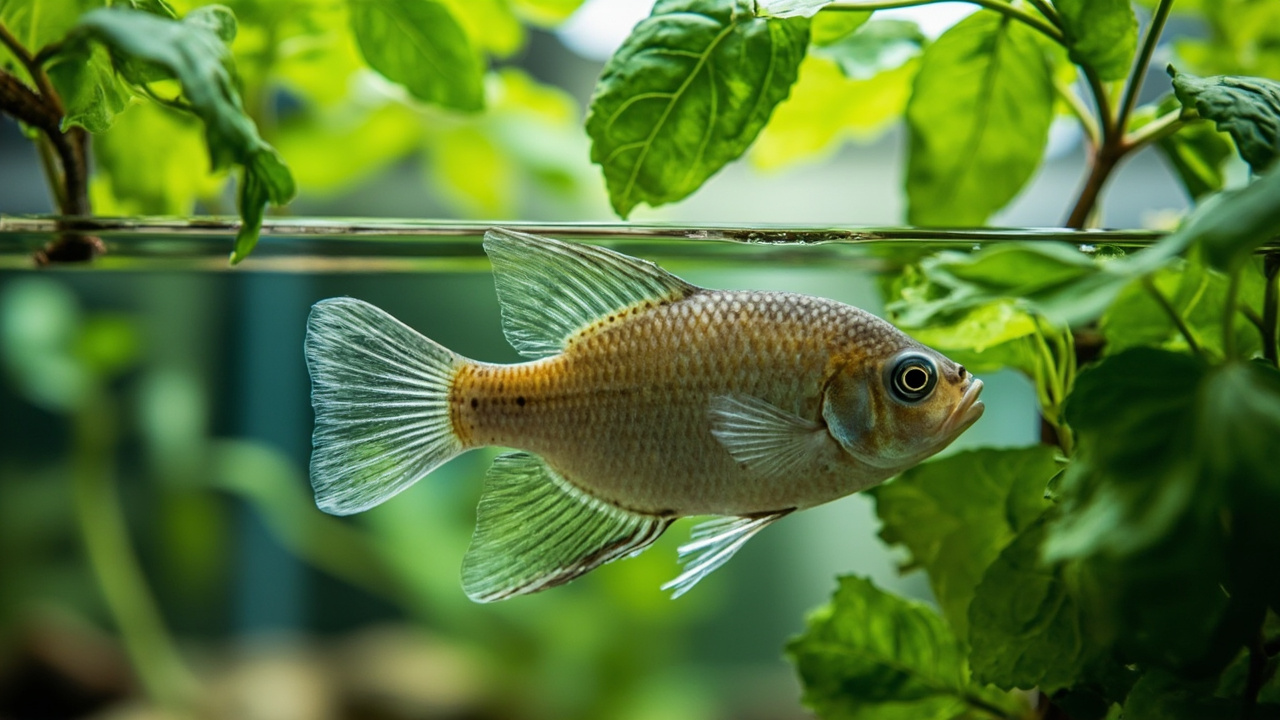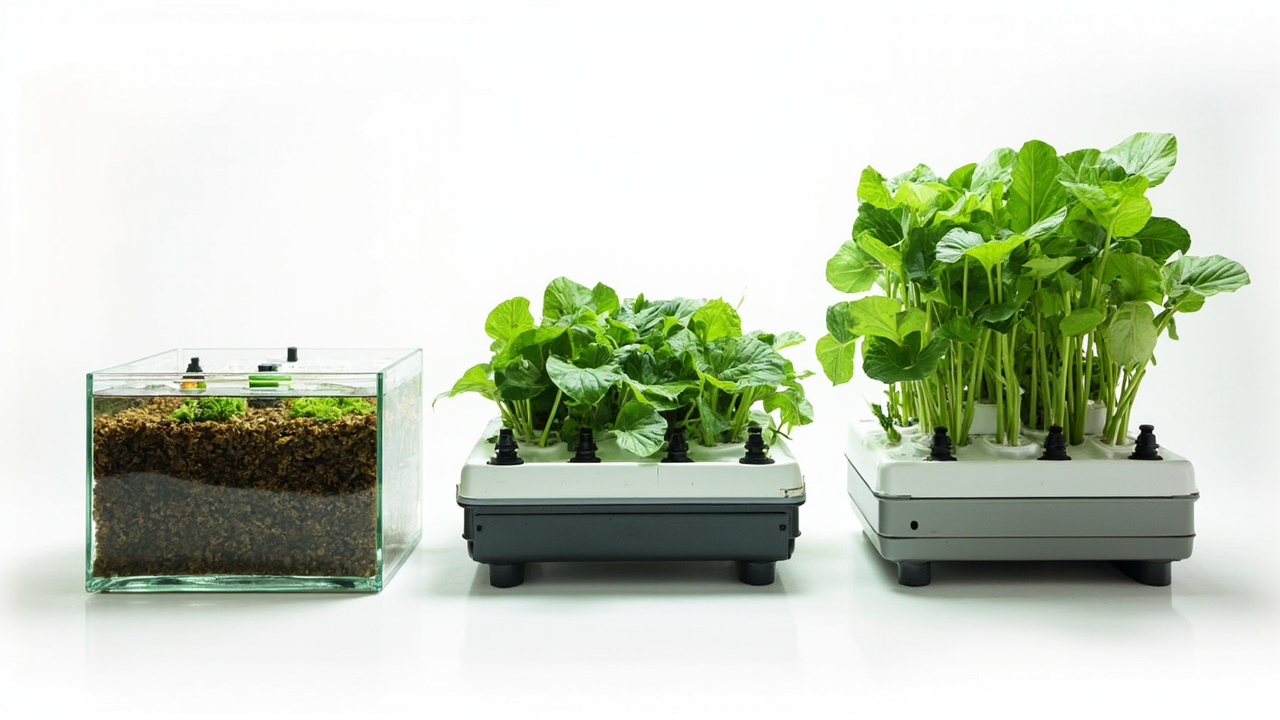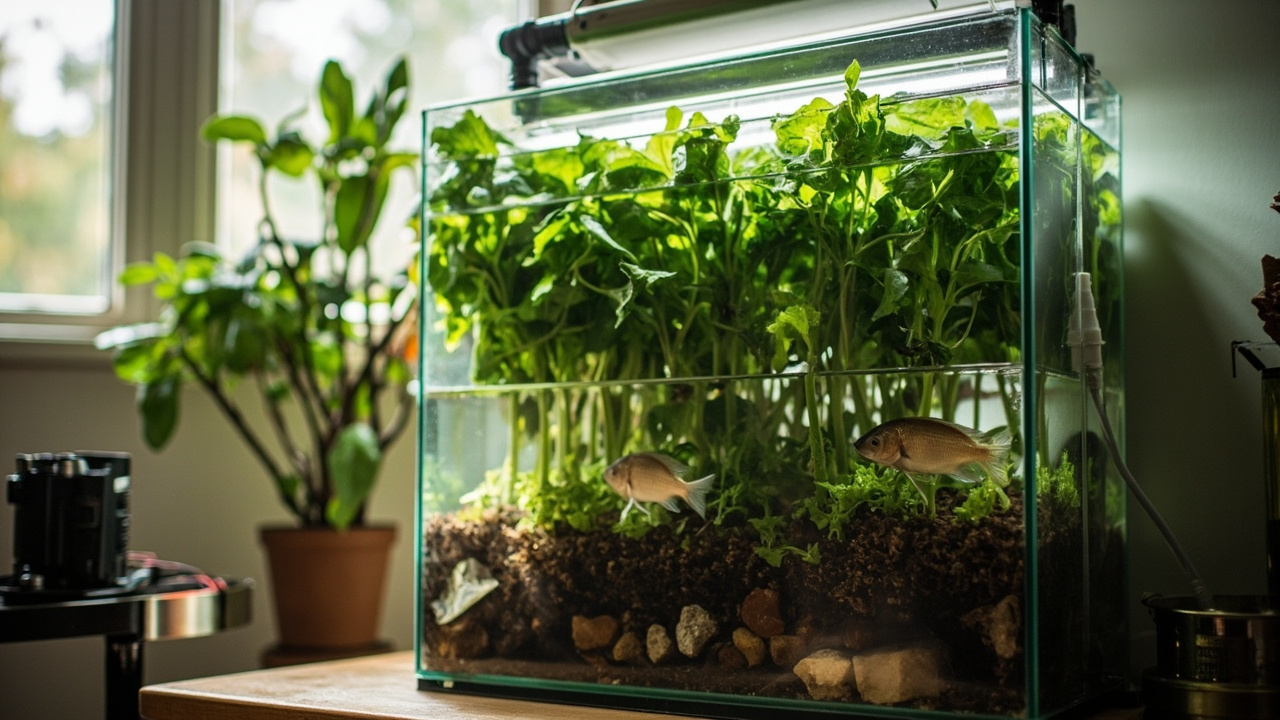

Aquaponics is a food-growing system where fish and plants support each other through a shared water cycle. Fish produce waste, beneficial bacteria convert that waste into plant-available nutrients, and the plants help clean the water before it returns to the fish tank.
It can be an elegant way to grow herbs, leafy greens, and some fruiting crops in a small garden, greenhouse, patio, or indoor growing area. But it is not a “set it and forget it” version of gardening. Healthy aquaponics depends on a living biological process. The fish, bacteria, water, oxygen, temperature, and plants all need to stay in balance.
This guide explains how aquaponics works, what a beginner system needs, how to start it safely, what to grow, and how to avoid the failures that frustrate new growers.
What Is Aquaponics?
Aquaponics combines three connected systems:
- Aquaculture — keeping fish or other aquatic animals.
- Nitrification — beneficial bacteria converting toxic fish waste into forms plants can use.
- Hydroponics — growing plants without soil, with roots receiving nutrients from water.
The central loop is simple:
- Fish eat feed and release waste.
- Waste produces ammonia in the water.
- Nitrifying bacteria convert ammonia into nitrite, then nitrate.
- Plants absorb nitrate and other nutrients through their roots.
- Filtered water circulates back to the fish tank.
In a well-run system, water is continuously recirculated rather than discarded after each use. You still need to replace water lost through evaporation, splashing, plant uptake, or maintenance, but water use can be much lower than in conventional soil gardening.
The recirculating-water half of the loop is closer to a closed hydroponics system than to a typical garden bed.
Aquaponics is an Ecosystem, Not Just Equipment
A pump, tank, and grow bed do not automatically make an aquaponics system. The biological filter is just as important as the plumbing.
The most important residents are often invisible: nitrifying bacteria. Without an established bacterial colony, ammonia can build up quickly and harm or kill fish. That is why cycling the system before fully stocking it is essential.
How the Aquaponics Nitrogen Cycle Works
Understanding the nitrogen cycle makes aquaponics much easier to manage.
1. Fish waste creates ammonia
Fish excrete ammonia through their gills and waste. Uneaten food and decomposing organic matter also add ammonia.
Even at low levels, ammonia can be dangerous to fish. Its toxicity rises as water temperature and pH rise.
On the plant side, the optimum hydroponic water temperature by crop varies more than most beginners expect, and that range rarely lines up with the fish’s preferred temperature.
2. Bacteria convert ammonia to nitrite
Bacteria commonly associated with the genus Nitrosomonas convert ammonia into nitrite.
Nitrite is also toxic to fish, so this is only the first stage.
3. Bacteria convert nitrite to nitrate
Other nitrifying bacteria, commonly associated with Nitrospira, convert nitrite into nitrate.
Nitrate is much less harmful to fish at normal aquaponics concentrations and is the main nitrogen source used by plants.
4. Plants take up nutrients
Plant roots absorb nitrate along with potassium, calcium, iron, magnesium, phosphorus, and trace elements. The cleaner water then returns to the fish tank.
This process is continuous, but it is never perfectly fixed. Fish grow, plants mature, temperatures shift, feed changes, and water chemistry moves. Good aquaponics management means watching those changes early rather than reacting after a crash.
The Parts of a Beginner Aquaponics System
A small system can be simple, but every component has a job.
| Component | What it does | Beginner notes |
|---|---|---|
| Fish tank | Holds fish and system water | Use food-safe, opaque materials to reduce algae |
| Grow bed or plant channel | Supports plants and root growth | Media beds are usually the most forgiving for beginners |
| Water pump | Moves water through the system | Choose a reliable pump rated for the required lift height |
| Plumbing | Carries water between components | Use safe materials such as PVC intended for potable water where possible |
| Aeration pump and air stone | Adds dissolved oxygen | Essential for fish health and beneficial bacteria |
| Mechanical filtration | Captures solid waste | Especially important in raft and NFT systems |
| Biofilter | Provides surface area for nitrifying bacteria | A media bed can serve this role in a small system |
| Grow lights, if indoors | Provide usable plant light | Use a timer and select fixtures suited to food crops |
| Water test kit | Measures system chemistry | A liquid freshwater aquarium kit is more useful than test strips |
The minimum equipment worth buying
For a first system, avoid overcomplicating the design. A practical starter setup usually includes:
- A fish tank
- A media-filled grow bed
- A submersible water pump
- An air pump and air stone
- Tubing and fittings
- Expanded clay pebbles or another inert growing medium
- A thermometer
- A liquid test kit for ammonia, nitrite, nitrate, and pH
- A dechlorinator if your tap water contains chlorine or chloramine
- Fish feed suited to the species you keep
A power outage plan is also important. In warm weather, fish can run short of oxygen surprisingly fast when aeration stops. For any system with meaningful fish stock, consider a battery backup air pump or an alternative power source.
The Best Aquaponics System for Beginners
There are several common aquaponics designs. The right choice depends on your space, budget, crop goals, and willingness to maintain filters and plumbing.
If your growing area is a balcony, patio, or apartment corner, our guide to aquaponics for small spaces covers the layouts that actually work at home.
Media bed aquaponics: the best first system for most gardeners
A media bed is a watertight bed filled with an inert medium such as expanded clay pebbles. Water from the fish tank enters the bed, flows around plant roots, and drains back.
Media beds are popular with beginners because the medium can perform several jobs:
- Supports plants
- Traps some solids
- Provides surface area for beneficial bacteria
- Oxygenates roots during flood-and-drain cycles
- Works with leafy greens, herbs, and many larger plants
A common design uses a bell siphon, which automatically fills and drains the bed. Bell siphons can work well, but they need careful tuning. A timer-based flood-and-drain system or a simple constant-flow design may be easier for a first build.
Best for: mixed home gardens, herbs, greens, compact fruiting crops, and gardeners who want a forgiving system.
Deep water culture (DWC) or raft aquaponics
In a deep water culture system, plants sit in net pots placed in floating rafts. Their roots hang directly in oxygenated nutrient water.
This style is efficient for lettuce, basil, bok choy, kale, and other leafy crops. However, it usually needs separate filtration before water reaches the plant raft. Solids can coat roots, reduce oxygen, and create disease problems.
Best for: high-volume leafy greens, especially in larger greenhouse systems.
Nutrient film technique (NFT) aquaponics
In NFT, a thin stream of water flows through narrow channels, bathing plant roots.
NFT is compact and productive for small leafy plants, but fish waste can clog channels and pumps. It needs good filtration, consistent flow, and careful maintenance.
Best for: experienced growers producing herbs and small greens.
Wicking beds and hybrid systems
Some gardeners connect fish water to soil-based wicking beds or use aquaponics water as an input for separate growing areas. These can be useful garden systems, but they are not the same closed-loop aquaponics model. If water is routinely discarded into soil beds, the nutrient and water balance changes.
For a first true aquaponics build, a media bed system remains the clearest place to learn the fundamentals.
Gardeners interested in air-rooted growing can read about aeroponics as a soilless cousin to aquaponics.
Choosing a Fish Tank and Grow Bed Size
Small systems are appealing, but very small water volumes are less stable. Water temperature and water chemistry can change quickly in a tiny tank.
For a home learning system, a fish tank in the range of 150 to 300 liters is often easier to stabilize than a desktop setup. It is still compact enough for a patio or greenhouse, but gives you more room for error.
A useful sizing principle
Rather than trying to maximize fish numbers, start with modest stocking and enough plant-growing area.
For media beds, many builders begin with approximately:
- One grow bed volume for each fish tank volume, or
- Up to two grow bed volumes per fish tank volume when the system is well designed.
These are design starting points, not guarantees. The actual safe capacity depends on:
- Fish species and adult size
- Water temperature
- Feeding rate
- Aeration
- Filter capacity
- Plant growth
- How often solids are removed
- Your ability to test and respond to water conditions
The most reliable approach is to begin understocked, establish the nitrogen cycle, and increase feed and fish load gradually.
Which Fish Are Best for Aquaponics?
Choose fish based on your local climate, legal requirements, available water temperature, and whether you plan to eat them.
Tilapia
Tilapia are widely used because they grow quickly, tolerate crowding better than some species, and accept a range of feeds. But they need warm water, generally around 22–30°C (72–86°F) for good performance. They may be restricted or illegal in some regions because they can become invasive.
For a deeper ranking by hardiness, climate fit, and intended use, see our guide to the best fish for aquaponics.
Best for: warm climates or heated systems where keeping food fish is legal.
Goldfish
Goldfish are hardy, widely available, and suitable for ornamental home systems. They are not usually raised as food, but they are a sensible choice if your main goal is learning to grow vegetables.
Best for: beginner ornamental systems and cool-to-moderate conditions.
Koi
Koi are durable and attractive, but they can grow large, live for decades, and become expensive. They are a long-term commitment rather than a disposable system component.
Best for: larger ornamental systems with permanent fish-keeping plans.
Trout
Trout prefer cold, clean, oxygen-rich water. They can be productive food fish in the right climate, but they are not a forgiving beginner species. Warm water and low oxygen can become fatal quickly.
Best for: cool climates and experienced growers with excellent aeration and temperature control.
Catfish and carp
Depending on local regulations and climate, catfish or carp may work well. Their suitability varies by species, temperature, and local availability.
Check local rules first
Before buying fish, check local wildlife, fisheries, and animal-health regulations. Some species require permits, are prohibited, or cannot be transported across regional boundaries. Never release aquaponics fish into natural waterways.
What Can You Grow in Aquaponics?
Aquaponics is especially effective for fast-growing plants with modest nutrient demands.
The easiest crops
Start with leafy greens and herbs:
- Lettuce
- Basil
- Bok choy
- Pak choi
- Watercress
- Arugula
- Kale
- Swiss chard
- Mint
- Parsley
- Cilantro
- Chives
- Asian greens
These crops grow quickly, tolerate consistently moist roots, and generally perform well with the nutrient level produced by a lightly stocked home system.
Fruiting crops: possible, but more demanding
Tomatoes, peppers, cucumbers, eggplants, beans, and strawberries can grow in aquaponics, particularly in media beds. However, they need more light and often more potassium, calcium, iron, and overall nutrition than a new system naturally supplies.
They also become physically large and can shade smaller plants.
If you want to grow fruiting crops, wait until the system is stable. Add them gradually, provide strong light, and be prepared to correct nutrient deficiencies with aquaponics-safe supplements.
Plants that are usually a poor fit
Avoid crops that need dry soil, long root crops, or large underground harvests:
- Potatoes
- Carrots
- Onions grown for bulbs
- Garlic
- Most large root vegetables
They are not impossible in every design, but they are inefficient and awkward in typical aquaponics beds.
How to Set Up an Aquaponics System Step by Step
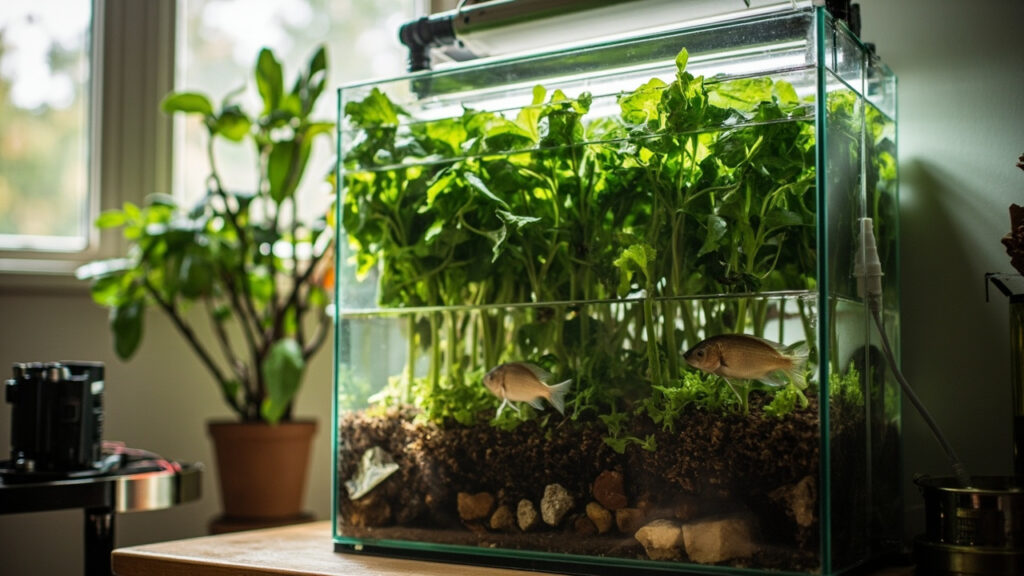
A step-by-step aquaponic system for beginners build is covered in our dedicated setup guide.
1. Choose a stable location
Place the system where you can easily inspect it every day. A neglected system can fail faster than a soil bed.
Look for:
- A level, strong surface
- Access to water and electricity
- Protection from extreme heat, freezing temperatures, and heavy rain
- Enough sunlight for plants, or space for grow lights
- A location where leaks will not damage your home
Remember that water is heavy: 1 liter weighs about 1 kilogram. A 250-liter tank weighs at least 250 kilograms before adding the tank, grow media, equipment, and structure.
2. Use safe containers and materials
Use food-safe tanks, beds, pipes, and sealants where possible. Avoid containers that previously held unknown chemicals, pesticides, solvents, or industrial products.
Opaque tanks are better than clear ones because light encourages algae growth. Cover exposed water surfaces where practical, while still allowing gas exchange and access for feeding and maintenance.
3. Install the water circulation and aeration
Set up the pump to move water from the fish tank to the grow bed, then allow gravity to return it to the tank.
Test the system with plain water before adding fish or plants. Check for:
- Leaks
- Overflow risks
- Drainage speed
- Pump noise
- Dead zones with little circulation
- Secure electrical connections
- Adequate aeration
Keep a safe water level in the fish tank even when the grow bed is filling. This is particularly important with flood-and-drain beds.
4. Dechlorinate the water
Municipal water often contains chlorine or chloramine. Both can harm fish and beneficial bacteria.
Use a water conditioner that neutralizes the disinfectant used by your water supply. Do not assume that leaving water out overnight will remove chloramine; it often will not.
If you use rainwater, test its pH and consider contaminants from roofing materials, gutters, and storage tanks.
5. Cycle the system before adding a full fish load
Cycling establishes nitrifying bacteria before fish waste reaches dangerous levels.
There are two main approaches:
Fishless cycling
You add an ammonia source without fish, then test the water while bacteria become established. This is generally the safer and more humane approach because no fish are exposed to ammonia or nitrite spikes.
Use only a known, suitable ammonia source. Avoid scented, colored, or surfactant-containing household products.
Fish-in cycling
You begin with a very small number of hardy fish and feed lightly while bacteria establish. This requires frequent water testing and may require partial water changes to protect the fish.
For most beginners, fishless cycling is the better choice.
6. Track the cycle with a test kit
During cycling, test for:
- Ammonia
- Nitrite
- Nitrate
- pH
- Water temperature
The usual pattern is:
- Ammonia rises.
- Nitrite appears and rises.
- Nitrate appears.
- Ammonia and nitrite return close to zero as bacteria process them.
A cycled system should consistently process the ammonia produced by its normal feeding level without measurable ammonia or nitrite accumulation.
Cycling may take several weeks. Temperature, pH, dissolved oxygen, and bacterial inoculation affect the timeline. Do not rush this stage.
7. Add fish gradually
Once the system is cycled, add fish slowly rather than filling the tank at once. Feed lightly for the first days and continue testing daily.
A sudden jump in fish biomass or feeding creates more ammonia than the biofilter can process.
8. Add seedlings, not large plants
Use young seedlings with clean roots. Gently remove soil before placing them into the media or net pot. Avoid washing soil directly into the system because it adds fine particles and may introduce pests or contaminants.
Start with fast-growing greens. Their growth gives you a useful signal: healthy, steady new leaves usually mean the system is moving in the right direction.
Water Quality Targets for Home Aquaponics
Exact targets vary with fish species and crop choice, but these ranges offer a practical starting point for many warm-water home systems.
| Parameter | Practical target | Why it matters |
|---|---|---|
| Ammonia | 0 ppm | Toxic to fish, especially at higher pH and temperature |
| Nitrite | 0 ppm | Toxic to fish; indicates incomplete nitrification |
| Nitrate | Low to moderate, often 5–150 ppm | Plant nutrient; rising levels can mean too few plants or excess feeding |
| pH | About 6.5–7.0 | A compromise range for fish, plants, and nitrifying bacteria |
| Water temperature | Depends on fish species | Affects fish metabolism, oxygen, bacteria, and plant growth |
| Dissolved oxygen | Keep high; aim for strong aeration | Essential for fish, roots, and nitrifying bacteria |
Why pH is a balancing act
Plants generally prefer slightly acidic conditions. Nitrifying bacteria tend to work efficiently near neutral pH. Fish species have their own tolerance ranges.
A pH around 6.5 to 7.0 is often used as a practical compromise. Avoid sudden pH changes. Small adjustments over several days are safer than trying to “fix” pH in one dose.
The hidden issue: alkalinity
As nitrification occurs, it consumes alkalinity and tends to lower pH over time. If your water has little buffering capacity, pH can fall quickly.
Test alkalinity or carbonate hardness if pH becomes unstable. Calcium carbonate and potassium bicarbonate are commonly used buffering materials, but use them carefully and in measured amounts. They also contribute calcium or potassium, which plants need.
Feeding Fish Without Overloading the System
Fish food is the main nutrient input to an aquaponics system. More feed means more potential plant nutrition—but also more ammonia, solids, and oxygen demand.
Feed only what fish will consume within a few minutes. Remove uneaten feed promptly.
Overfeeding is one of the most common beginner mistakes because the symptoms are delayed:
When those delayed symptoms turn into crashes, our common aquaponics problems guide walks through diagnosing and fixing them.
- Excess food decomposes.
- Ammonia rises.
- Water becomes cloudy or foul-smelling.
- Oxygen drops.
- Fish become stressed.
- Roots and filters collect sludge.
If water quality worsens, reduce feeding first. Do not assume plants alone can solve an overloaded system.
Use a complete feed appropriate for your fish species. Fish cannot thrive on vegetable scraps, bread, or kitchen leftovers.
Essential Aquaponics Maintenance
A good system does not need constant tinkering, but it does need routine observation.
Daily
- Feed fish conservatively.
- Watch fish behavior before feeding.
- Confirm that water is circulating.
- Check that air stones are bubbling.
- Look for leaks, blocked drains, or pump problems.
- Remove dead leaves and fallen plant matter.
Healthy fish are generally alert, swimming normally, and interested in food. Gasping at the surface, clamped fins, loss of appetite, erratic swimming, or isolating from the group can signal an oxygen, temperature, or water-quality problem.
Weekly
- Test ammonia, nitrite, nitrate, and pH.
- Check water temperature.
- Inspect roots for browning, slime, or rot.
- Clean pump intakes and remove accumulated solids.
- Check plumbing connections and water level.
- Prune plants to improve airflow and light.
Monthly or as needed
- Inspect and clean filters.
- Check the air pump, tubing, and stones.
- Thin fish stock only if the tank is approaching its safe capacity.
- Assess whether plant growth matches the amount of feed entering the system.
- Top up water after dechlorinating it and matching temperature as closely as practical.
Do not sterilize the grow bed, biofilter, or all system surfaces. Those surfaces hold the bacteria your system depends on.
Common Aquaponics Problems and What They Mean
Ammonia or nitrite is above zero
Likely causes:
- System is not fully cycled
- Too many fish were added too quickly
- Overfeeding
- Pump or aeration failure
- Biofilter was cleaned with chlorinated water
- Sudden temperature or pH changes harmed bacteria
What to do:
- Stop or sharply reduce feeding.
- Increase aeration immediately.
- Test pH and temperature.
- Confirm water flow through the biofilter.
- Perform a partial water change with temperature-matched, dechlorinated water if fish are at risk.
- Do not add more fish until readings are stable.
Fish are gasping at the surface
Likely causes:
- Low dissolved oxygen
- High water temperature
- High ammonia or nitrite
- Overstocking
- Pump or air pump failure
What to do:
- Add emergency aeration.
- Check whether the air pump, air stone, and water pump are working.
- Reduce feeding.
- Test ammonia and nitrite.
- Cool the water gradually if it is beyond the species’ safe range.
Surface gasping is an urgent sign, not a normal behavior to ignore.
Plants have yellow leaves
Yellowing does not always mean the same thing.
- Older leaves yellow first: often nitrogen deficiency or normal aging.
- New leaves yellow while veins stay greener: often iron deficiency.
- Leaf edges scorch or brown: may involve potassium deficiency, heat stress, salt buildup, or irregular water conditions.
- New growth is distorted: can indicate calcium deficiency, pest damage, or root problems.
Before adding supplements, test the basics: pH, ammonia, nitrite, nitrate, temperature, and root health. A pH problem can make nutrients unavailable even when they are present.
For many aquaponics systems, chelated iron is the most commonly needed supplement. Use a product intended for edible plants and follow its label instructions.
Water is green
Green water is usually suspended algae caused by excess light and nutrients.
Fixes include:
- Block light from the fish tank.
- Cover unused water surfaces.
- Avoid overfeeding.
- Add more plant capacity only after confirming the system is otherwise stable.
- Clean filters without destroying beneficial bacteria.
Do not use algaecides in an edible aquaponics system with fish.
Roots are brown or slimy
Healthy roots are usually pale to tan, depending on the plant and growing medium. Dark, slimy, foul-smelling roots may indicate low oxygen, high temperatures, accumulated solids, or root disease.
Increase aeration, improve filtration, remove decaying plant matter, and check that water is flowing evenly.
The pH keeps dropping
A gradual pH decline is common as nitrifying bacteria consume alkalinity.
Check carbonate hardness or alkalinity, then adjust slowly using an appropriate buffer. Avoid large pH corrections, which can stress fish and disrupt nutrient availability.
Nutrient Supplements: What Aquaponics Usually Lacks
Fish feed supplies many nutrients, but a closed-loop home system may not provide every nutrient in the amount plants need.
For soil-based gardens running in parallel, vermicompost is the soil-side equivalent of the bacterial conversion loop that powers aquaponics.
The most common gaps are:
- Iron
- Potassium
- Calcium
- Sometimes magnesium
The correct response is not to add every product at once. Diagnose the issue first, then make a measured correction.
Supplements to use carefully
Only use products appropriate for edible crops and fish-safe at the intended dose. Avoid conventional hydroponic fertilizers unless you understand every ingredient and its effect on fish. Many are designed for systems without animals and can raise salts or contain compounds unsuitable for aquaponics.
A stable, lightly stocked beginner system growing greens often needs less supplementation than a heavily planted system producing tomatoes and peppers.
Pests and Disease Control in Aquaponics
Because fish share the water, pest control requires more caution than in soil gardening.
Avoid spraying broad-spectrum pesticides, insecticides, fungicides, or soap solutions where they can enter the water. Even products labeled “natural” may harm fish or beneficial bacteria.
Start with physical and biological controls:
- Inspect new plants before introducing them.
- Hand-remove aphids, caterpillars, and beetles.
- Use insect netting where appropriate.
- Prune heavily infested leaves.
- Improve airflow around dense plants.
- Use yellow sticky traps above the grow bed, where they cannot contact water.
- Consider beneficial insects in suitable greenhouse settings.
If you use any treatment, prevent runoff into the fish tank and confirm it is safe for food crops, aquatic life, and your specific system.
Is Aquaponics Easier Than Soil Gardening?
Not necessarily. It trades some familiar garden tasks for water and biology management.
Compare the two side by side in our aquaponics vs hydroponics breakdown to see which fits your space, budget, and crop goals.
Aquaponics can be easier when:
- You have poor or contaminated soil.
- You want to grow in a small, paved, or indoor space.
- You enjoy monitoring a living system.
- You want fast leafy greens close to the kitchen.
- You can provide reliable electricity and daily attention.
Soil gardening may be easier when:
- You want to grow root crops, large perennials, or many fruiting crops.
- You prefer a low-tech garden.
- Your local climate makes water temperature hard to control.
- Daily monitoring is unrealistic.
- Power interruptions are frequent and difficult to manage.
Aquaponics is most rewarding when you enjoy both gardening and fishkeeping. The fish are not simply a nutrient source; they are animals that need stable water, oxygen, appropriate food, and humane care.
A Sensible First-Year Aquaponics Plan
The fastest route to a productive system is usually to begin modestly.
- Build one small but stable media-bed system.
- Cycle it fully before adding a normal fish load.
- Start with a hardy, locally appropriate fish species.
- Grow lettuce, basil, bok choy, and other quick greens first.
- Test water frequently until you understand your system’s normal pattern.
- Keep a simple log of pH, ammonia, nitrite, nitrate, temperature, feed, and observations.
- Add fruiting crops only after the fish, bacteria, and greens are performing consistently.
This approach gives you time to learn the relationship between feeding, water quality, and plant growth. It also prevents the most expensive beginner error: building a large system before understanding how a smaller one behaves.
Frequently Asked Questions
Can aquaponics grow food year-round?
Yes, if you can maintain suitable water temperature, plant light, and oxygen levels. Outdoors, production follows the seasons unless the system is protected in a greenhouse. Indoors, grow lights and temperature control add cost and complexity.
How long does an aquaponics system take to cycle?
Often several weeks, though the timing varies. Warm, oxygen-rich water and stable pH generally help nitrifying bacteria establish. Do not rely on a calendar alone; use water tests to confirm that ammonia and nitrite are being processed.
Do aquaponics systems smell?
A healthy system should smell clean, earthy, or nearly neutral. A rotten, sewage-like, or strongly fishy smell usually means accumulated solids, low oxygen, decaying organic material, or poor filtration.
Can I use tap water in aquaponics?
Usually yes, after treating it to remove chlorine or chloramine. Check your local water report if possible, especially for very hard water, high sodium, or unusual contaminants.
Do I need to change the water?
Aquaponics does not require the frequent full water changes common in some aquariums. But partial changes may be necessary during emergencies, excessive nutrient buildup, contamination, or water-quality problems. Top-ups are also routine.
Can I use fish from a pet store?
For ornamental systems, commonly available species such as goldfish may be suitable. For edible fish, buy from a reputable source and follow local food-safety and fisheries rules. Never eat ornamental fish unless you have verified their history, feed, medications, and legal suitability.
Complete Guide of Aquaponics System
Aquaponics works when fish care, bacterial health, and plant growth are treated as one connected system. The goal is not to force maximum production from a tank of fish. The goal is to create a stable water cycle in which fish remain healthy, bacteria reliably process waste, and plants receive the nutrients they need.
For a first build, keep the design simple: a properly sized fish tank, a media grow bed, reliable aeration, conservative feeding, regular water testing, and easy crops such as lettuce and basil.
Once that system is stable, aquaponics becomes less mysterious. You begin to read it the way an experienced gardener reads soil: through the color of leaves, the behavior of fish, the clarity of water, the rhythm of growth, and the small changes that signal what the system needs next.
Turn That PDF Into a Spreadsheet in Minutes
You've seen how to do it manually — now let the tool handle the heavy lifting. Upload your bank statement and get Excel, CSV, or QBO in a few clicks.
Try It Free