Growing strawberries at home is one of the most rewarding things you can do with a patch of sun and a container. Whether you have a backyard bed, a balcony railing, or just a bright windowsill, strawberry plants adapt well when you give them three essentials: plenty of direct sun, loose well-drained soil, and the right variety for your space.
The biggest difference between homegrown and store-bought berries is sugar content. Once picked, a strawberry’s natural sugars begin converting to starch within hours — which is why fruit from the grocery aisle rarely tastes like the ones you pick yourself. The trade-off is that homegrown berries are smaller, softer, and more perishable. You trade shelf life for flavor.
This guide covers the full growing cycle: from planting depth and watering rhythm to runner management and winter prep. Follow it from start to finish and you’ll be harvesting ripe strawberries within 8–12 weeks of planting, depending on the variety you choose.
How Much Sunlight Strawberries Need
Strawberries require 6 to 10 hours of direct sunlight per day for reliable fruit set. Fewer than 6 hours and the plant survives but produces fewer flowers, smaller berries, and fruit that lacks sweetness. This sugar deficit happens because photosynthesis in strawberry leaves drives carbohydrate accumulation in the developing fruit — under low light, the plant simply doesn’t have enough energy to make berries worth picking.
In hot climates where afternoon temperatures exceed 90°F (32°C), a spot with morning sun and afternoon shade works better than full-day exposure. East-facing containers and beds are ideal. If you’re growing indoors, place plants within 12 inches of a south-facing window or under a full-spectrum grow light for 14–16 hours daily. Without sufficient light, leaves stay green and healthy-looking while fruit production drops to almost nothing — a frustrating combination that surprises many first-time growers.
For a complete breakdown of light thresholds by variety, indoor grow light setup, and seasonal adjustments, see our strawberry light requirements guide.
For indoor fruiting under LED panels rather than outdoor sun, see our strawberry grow light guide, which walks through full-spectrum PAR, photoperiod, mounting distance, and hand-pollination for year-round indoor strawberries.
The Right Soil and Container Setup for Strawberries
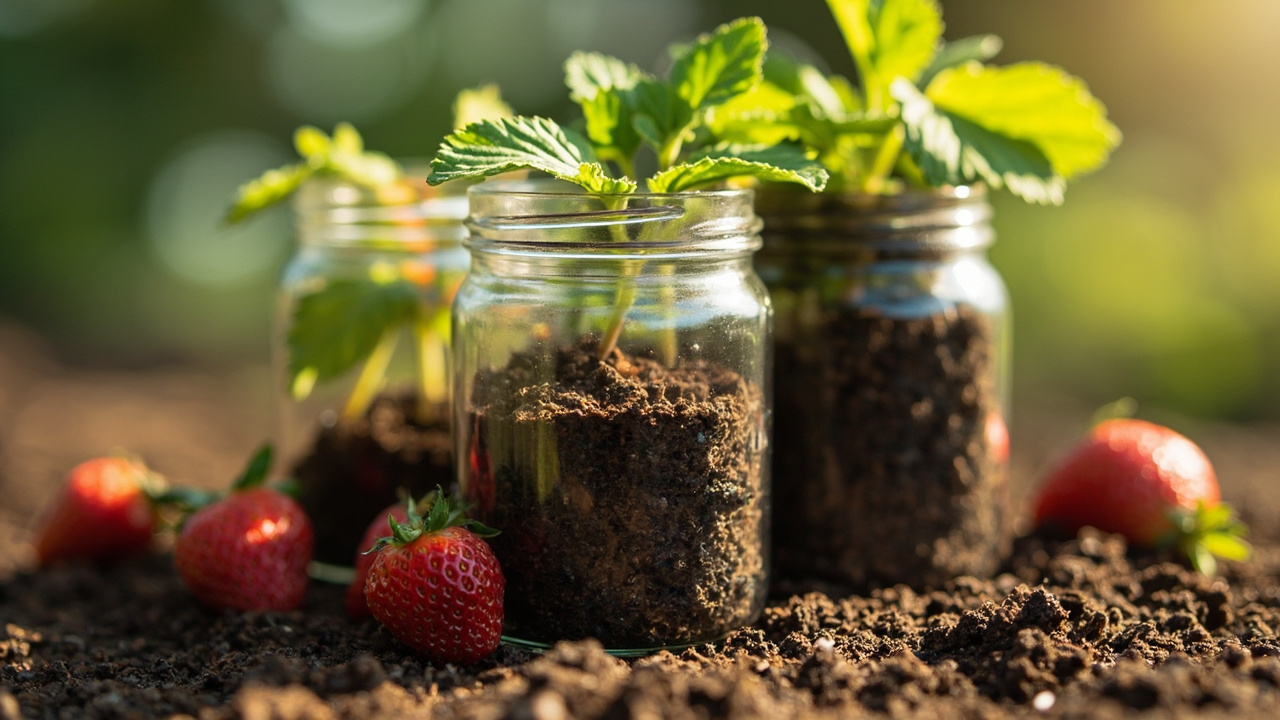
Strawberry roots are shallow — most of the root mass sits in the top 6 inches of soil. This makes containers an excellent option because you can control the mix. Use a high-quality potting mix amended with 20–30% perlite or coarse vermiculite for drainage. Avoid garden soil in pots; it compacts, waterlogs, and suffocates the crown within weeks.
If you’re planting in a bed, work the soil to a depth of 8 inches and mix in 3–4 inches of aged compost. The target soil pH is 5.5 to 7.0 — slightly acidic to neutral. Above pH 7.5, iron uptake drops and leaves develop interveinal chlorosis even when fertilizer is present. In alkaline areas, grow strawberries in large containers filled with acidified potting mix rather than trying to amend ground soil.
The crown — the thick stems from which leaves and flowers emerge — must sit precisely at the soil surface. Plant it too deep and the crown rots within days at soil temperatures above 60°F (15°C). Plant it too shallow and roots dry out, leaving the plant loose and stressed. Aim for the crown base sitting right at the soil line with roots fanned out below.
For a deep dive on soil pH, drainage, peat moss and perlite mix, and the iron chlorosis fix when alkaline native soil resists amendment, see our strawberry soil requirements guide.
How Often to Water Strawberries
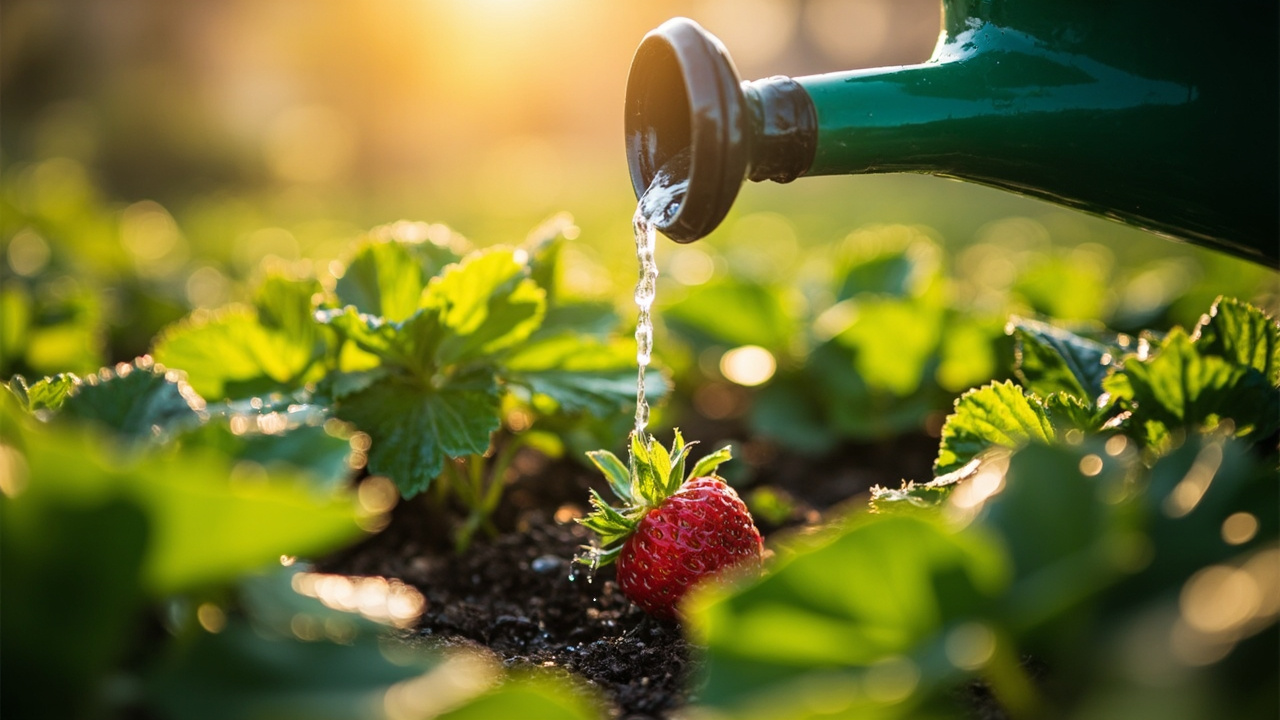
Strawberry plants need approximately 1 inch of water per week during the growing season, and closer to 1.5 inches during fruit development. Because their roots sit in the shallow topsoil, they dry out faster than deeper-rooted crops. Check the top inch of soil daily with your finger — if it feels dry to the first knuckle, water.
Water at the base of the plant, not overhead. Wet foliage invites fungal diseases like angular leaf spot and gray mold, which spread rapidly in humid conditions. If your strawberry leaves are showing spots, browning, or fuzz, check our guide on strawberry leaf problems to identify the specific issue and the fix.
Overwatering is more dangerous than underwatering. Waterlogged soil pushes out oxygen, and strawberry roots begin dying within 48 hours. The first sign is wilting despite wet soil — a confusing symptom that leads many gardeners to water more, which accelerates root rot. If you see this pattern, stop watering for 3–4 days, improve drainage, and trim back dead root mass before repotting.
For a complete stage-by-stage watering schedule, see our strawberry watering guide.
Fertilizing Strawberries for Maximum Fruit Set
Strawberries are moderate feeders. Too much nitrogen produces lush leaves at the expense of fruit; too few nutrients yield small, sparse berries. The right approach is a high-potassium liquid fertilizer applied every 2–3 weeks once flowering begins. Potassium regulates the plant’s carbohydrate-to-nitrogen ratio during fruit set — skip it and flowers drop before berries form.
In early spring, before flowering starts, apply a balanced organic fertilizer to support initial growth. Once the first flowers appear, switch to the potassium-rich formula. Stop feeding in late summer when the plant shifts energy toward runner production and winter dormancy. Feeding past September in cool climates delays hardening off and increases winter kill risk.
A common mistake is using lawn-grade high-nitrogen fertilizer near strawberry beds. The excess nitrogen leaches into the surrounding soil, pushing leaf growth while fruit production stalls. If your plants look vigorous but produce little fruit, nitrogen excess is the likely cause — flush the soil with plain water and hold off on feeding for three weeks.
Understanding Day-Neutral, Everbearing, and June-Bearing Varieties
Strawberry varieties fall into three fruiting categories, and choosing the right one determines your harvest pattern. All three produce the same quality of berry — the difference is when and how often fruit appears.
June-bearing varieties produce one concentrated harvest over 2–4 weeks in early summer. They yield the largest volume of fruit per plant, making them ideal for preserving and freezing. The trade-off is a single harvest window; miss it and you wait another full year.
Everbearing varieties produce two to three distinct flushes — typically in late spring, midsummer, and early fall. Each flush yields less than a June-bearing peak, but the extended harvest season works well for gardeners who want fresh berries across several months without preserving.
Day-neutral varieties fruit continuously from late spring through first frost, regardless of day length. Individual berries tend to be slightly smaller than June-bearing types, but the cumulative yield over a season is high. For container growers and those wanting a steady supply for the kitchen, day-neutral varieties like ‘Seascape,’ ‘Albion,’ and ‘Cabrillo’ are the practical choice. For a detailed breakdown of each variety, see our guide to strawberry varieties.
For a side-by-side comparison of strawberries and raspberries, including cane vs runner structure, pruning systems, and harvest yields, see our strawberry vs raspberry guide.
Managing Strawberry Runners: More Plants vs. Better Fruit
Runners are horizontal stems that emerge from the mother plant and produce daughter plants at their tips. This is how strawberries naturally reproduce — and it creates a management decision every grower faces.
Allowing runners to root on all sides produces a dense mat of plants within a season. The benefit: more plants, zero cost. The downside: crowded plants compete for light and nutrients, berries shrink in size, and airflow drops, increasing fungal disease pressure. For a compact container setup, 3–4 healthy daughter plants per mother is the productive maximum.
Remove runners when your goal is maximum berry size and yield on the mother plant. The energy that would have gone into runner growth redirects to flower and fruit production — typically a 30–50% increase in harvest weight per plant. Pinch runners at the base when they’re 2–3 inches long for the least energy loss to the mother.
If you want both — fruit now and more plants later — allow the first wave of runners in late spring, then cut all subsequent ones. Root the allowed runners into small pots while still attached to the mother, then sever once established. Step-by-step instructions are in our guide on strawberry runner propagation.
Harvesting and Overwintering Strawberries
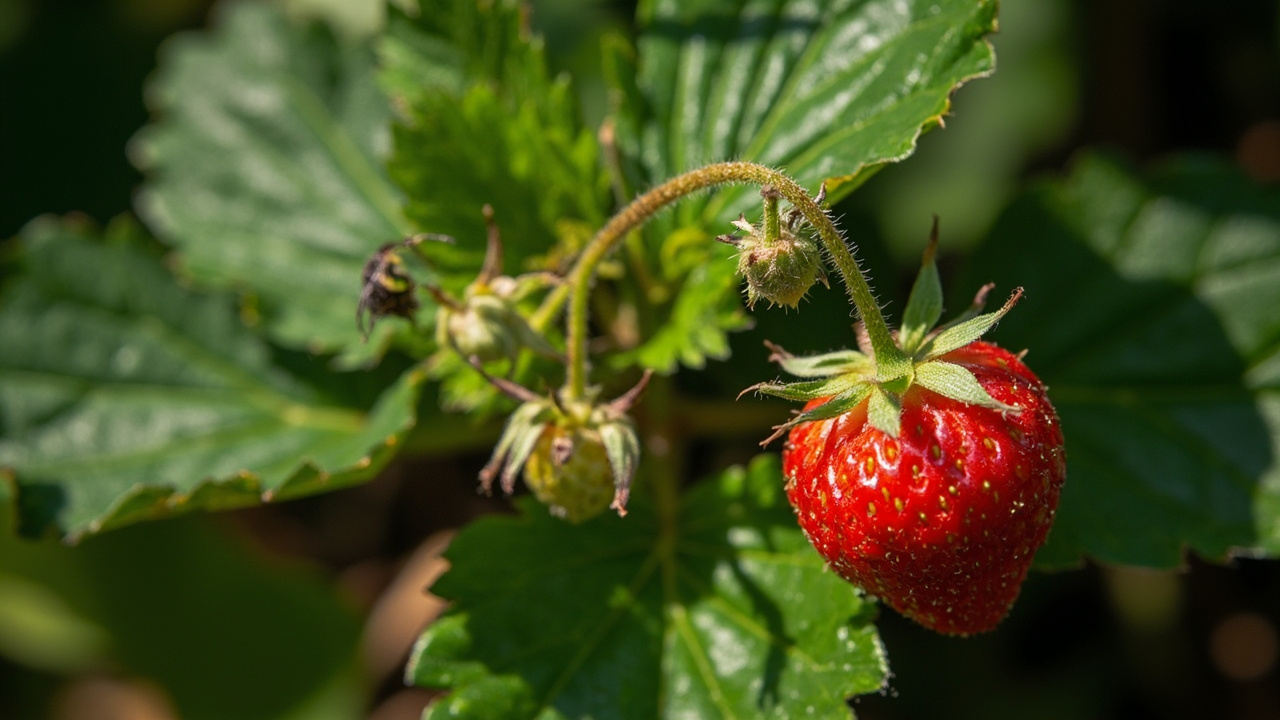
Pick strawberries when they’re fully red — no pale shoulders, no green tips. At peak ripeness, the sugar content is 2–3 times higher than on berries picked half-ripe. Harvest in the morning when berries are cool and firm; afternoon heat softens them and shortens shelf life to less than 24 hours.
Twist the stem above the berry rather than pulling the fruit directly, which bruises the flesh and damages the plant. Expect to harvest every 2–3 days during peak season. Ripe berries left on the plant attract slugs, earwigs, and fruit flies — pick promptly.
For step-by-step planting instructions, see our strawberry planting guide.
Strawberries are perennial. In zones 5–8, mulch plants with 3–4 inches of straw or shredded leaves after the first hard freeze. This insulates roots against freeze-thaw cycles that heave crowns out of the soil. In zones 3–4, add an additional layer of row cover or move containers into an unheated garage. Remove mulch in early spring when new growth appears — leaving it too long traps moisture against the crown and promotes rot.
Replace strawberry beds every 3–4 years. Plants decline in vigor and fruit size after the third year even with perfect care. Propagating from runners gives you free replacement plants without buying new stock.
Turn That PDF Into a Spreadsheet in Minutes
You've seen how to do it manually — now let the tool handle the heavy lifting. Upload your bank statement and get Excel, CSV, or QBO in a few clicks.
Try It Free