Cane begonias are the tall, architectural members of the begonia family — plants that grow in distinct, bamboolike sections with clearly visible joints, reaching 4 to 5 feet indoors under good conditions. Where most begonias grow low and rosette-like (rex and rhizomatous types), cane begonias grow up. The jointed stems — called canes — are the defining feature that sets this group apart from every other type of begonia grown indoors.
The care framework for cane begonias shares a lot with other begonia types — bright indirect light, well-draining soil, consistent moisture — but the tall growth habit introduces two additional requirements: structural support (staking) and regular pruning to keep the plant from becoming top-heavy and falling open. If you want a begonia that makes a statement in a room and grows visibly year over year, cane types are the group to focus on.
Cane begonias include several popular varieties: angel wing begonias (with their polka-dot wing-shaped leaves), Begonia superba cultivars, and a range of other tall-growing types. All share the cane structure and the same basic care requirements. This guide covers the shared framework; for detailed angel wing care see the angel wing begonia care guide.
Understanding Cane Begonia Growth Habit
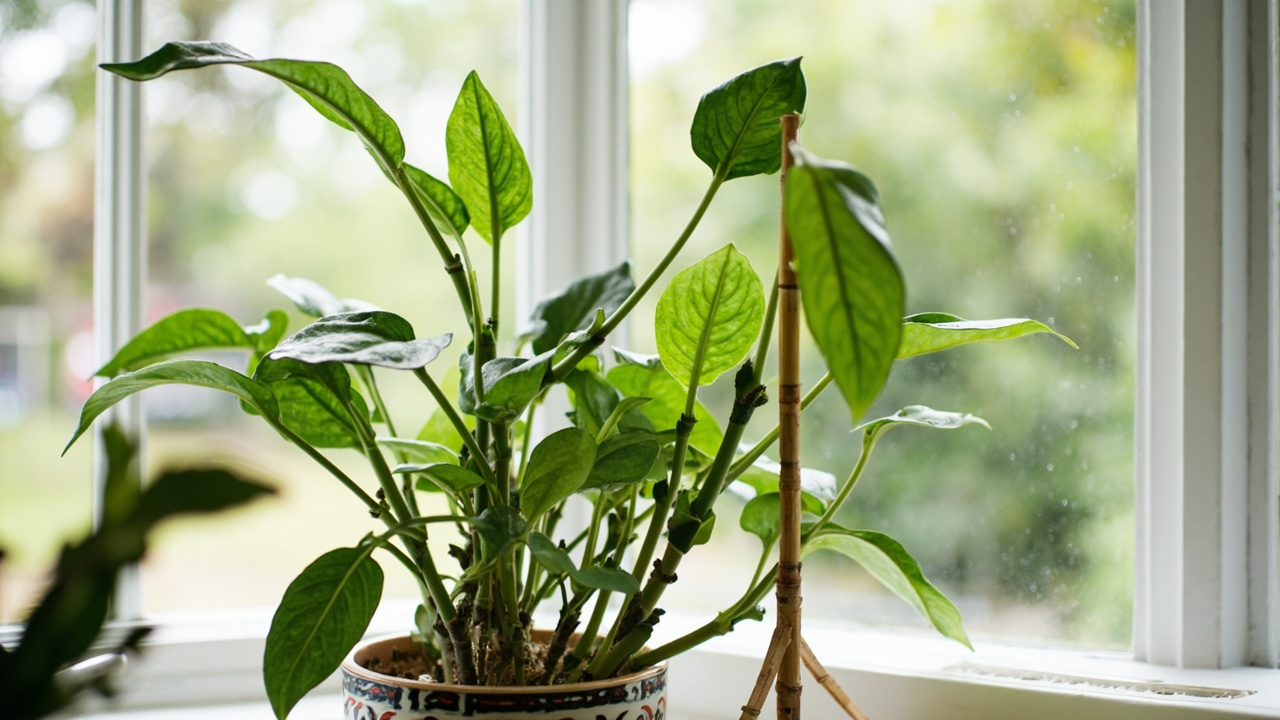
The key to understanding cane begonias is the growth habit. Unlike rhizomatous begonias, which grow flat rosettes close to the soil surface, or rex begonias with their bold foliage but compact form, cane begonias grow upward. Each stem — the cane — develops in segmented sections with visible nodes at each joint, much like bamboo. As the plant matures, it branches from these nodes, creating a tall, multibranched plant.
This growth pattern has real implications for care. The canes store some water and nutrients, which makes cane begonias somewhat more tolerant of occasional missed watering than fine-rooted rex begonias. But the tall, top-heavy structure also means the root system has to anchor the plant effectively — loose or poorly draining soil that leaves the pot unstable is a problem.
When you’re identifying a cane begonia, look for the combination of tall stems with visible knuckle-like joints, a growth habit that’s distinctly upright, and (in most varieties) relatively large asymmetrical leaves attached to the canes at each node. Compare this with rhizomatous types, which grow in flat spreading clumps close to the soil surface, or rex begonias, which form low rosettes of large, dramatically colored leaves.
For a full breakdown of begonia types and how they differ, see the begonia types and varieties compared guide.
Light: Brighter Than Most Begonias
Cane begonias need more light than most other begonia types to maintain compact, healthy growth. While rex begonias prefer medium indirect light and tolerate lower-light positions, cane types will quickly become leggy and sparse if they’re not getting enough photons.
The practical recommendation: a bright east-facing or west-facing window is ideal. South-facing windows work well too, but filter the direct midday sun with a sheer curtain — 2 to 3 feet back from the glass on a south windowsill is the right distance for most situations. Cane begonias in insufficient light produce long, stretched stems with widely spaced leaves and reduced or absent flowering.
The signs of too much light are the opposite problem: bleached, faded leaf color, and crispy brown patches where the sun has directly scorched the foliage. If your cane begonia is sitting in direct afternoon sun and showing these symptoms, move it back from the window or add a curtain filter.
More light also means faster soil drying. Plants in brighter positions will need watering more frequently than the same species in lower-light positions. Plan for that when you reposition your plant.
For a broader look at light requirements across the begonia family, see the general begonia care guide.
Watering and Feeding
The top inch rule applies to cane begonias as it does to most indoor begonias: water when the top inch of soil is dry, then water thoroughly until you see drainage from the bottom of the pot. Cane begonias are somewhat more drought-tolerant than rex or rhizomatous types because their cane structure stores some water, but they should still not be allowed to dry out completely or stay wet for extended periods.
Soil matters more than for most begonias because of the height issue: a heavy, moisture-retentive soil in a tall pot makes the whole container unstable and increases the risk of root rot. Use a well-draining mix — one part perlite or coarse sand to two parts standard potting mix — to ensure good drainage and keep the pot at a manageable weight.
For feeding, use a balanced water-soluble fertilizer (10-10-10 or similar) mixed at half strength, applied every 2 to 4 weeks during the active growing season (spring and summer). Cane begonias are slightly more hungry than rex types because their rapid vertical growth demands more nitrogen, but the half-strength rule still applies. Reduce to monthly or stop in fall and winter when growth slows.
Humidity and Temperature
Cane begonias want 50 to 70 percent humidity and temperatures in the 60 to 75°F (16-24°C) range — similar to most indoor tropicals. They’re somewhat more tolerant of average household humidity than rex begonias, which can struggle below 50 percent, but they still show crispy leaf edges and leaf drop when humidity is consistently low, particularly in winter.
Methods for raising humidity are the same as for other begonia types: humidity trays, room humidifiers, or grouping plants together. Air circulation matters too — cane begonias in stagnant air are more prone to powdery mildew, which can establish on the dense foliage of multiple canes. A small fan on low speed in the same room helps.
Temperature-wise, cane begonias are frost-tender and should be kept above 50°F (10°C) year-round. They’re more cold-sensitive than some other begonia types and will drop leaves quickly if exposed to cold drafts or temperatures below 50°F.
Staking and Pruning: Managing Tall, Jointed Stems
Once a cane begonia reaches about 24 inches, it needs support. The weight of the branching canopy makes unsupported canes prone to snapping at the nodes during drafts or when accidentally bumped. Staking is not optional for mature cane begonias — it’s essential plant care.
- Insert a support stake early: When the plant reaches 18 inches, insert a bamboo stake or wooden dowel into the pot beside the main cane. Use soft plant ties to loosely attach the cane to the stake at two or three points along its height. Waiting until the plant is already tall and flopping makes the transition harder and risks snapping a cane.
- Choose the right stake height: The stake should extend to within a few inches of the top of the cane. Stakes that are too short don’t provide useful support.
- Prune in early spring: Each spring, before new growth begins in earnest, cut back the longest canes by about one-third to one-half. Make cuts just above a node — the cut point is where the plant will branch, creating a denser, more compact form. This annual pruning also removes any canes that have become damaged, leggy, or bare over the previous year.
- Tip prune young plants: For younger cane begonias, pinch the growing tip of the main cane to encourage lateral branching from the nodes below. This builds a fuller, multi-cane plant from the start rather than a single tall stem.
Angel wing begonias — a popular cane begonia type — have specific staking and pruning requirements detailed in their dedicated angel wing begonia care guide.
Common Problems and How to Address Them
Cane begonias share most of their problem profile with other begonia types, but the tall growth habit and distinctive cane structure create a few specific failure modes worth knowing.
- Leggy, stretched growth: Insufficient light is the cause. Move to a brighter position and prune back the elongated canes. The existing stretched growth won’t recover, but new growth will be more compact.
- Leaf drop: Usually cold drafts, temperature shock, or very low humidity. Cane begonias are more sensitive to cold air movement than most houseplants. Check for positions near doors, windows opened for ventilation, or air conditioning vents.
- Powdery mildew: A white coating on leaves and stems, caused by still humid air without airflow. Improve air circulation, remove affected leaves, and treat with an organic fungicide if needed. Prevention is easier than cure — good airflow prevents most mildew problems.
- Stem collapse: If a cane suddenly collapses or looks like it’s rotting from the base, it’s almost certainly root rot from overwatering. Check the base of the affected cane — if it’s soft, black, or mushy, root rot is confirmed. Reduce watering immediately and consider repotting into fresh, well-draining soil.
- No blooms: Cane begonias bloom on new growth. If yours isn’t flowering, it’s usually because light is insufficient or the plant is too young. Mature cane begonias in bright enough light produce prolific cascading flower clusters.
For a comprehensive diagnostic guide to begonia problems, see the common begonia problems guide.
Turn any PDF statement into a clean sheet
Skip the typos and the hours of copying. Our converter handles any bank statement format and outputs Excel, CSV, or QBO for QuickBooks. No file retention, free to try.
Convert your statement