Most dying strawberry plants are saved by fixing the environment rather than treating the symptom, and the single most important step is correctly diagnosing whether the problem is in the roots, the crown, or the leaves before you apply any treatment. Home gardeners often respond to a declining strawberry plant by watering more, adding fertilizer, or replacing it entirely. These actions address the visible symptom but ignore the underlying cause, and they frequently make the problem worse.
The rescue approach used by professional growers follows the same triage protocol as emergency medicine. First, assess the patient. Second, identify the cause. Third, apply the correct treatment. This sequence prevents wasted effort and increases the chance of recovery. A plant that receives the wrong treatment dies faster than one that receives no treatment at all.
Strawberry plant decline falls into four main categories: root and crown rot, transplant shock, vascular wilt diseases, and nutrient deficiency. Each category has distinct symptoms, causes, and treatment protocols. Learning to differentiate between them is the skill that transforms a dying plant into a recovered one. This guide walks through each category and provides the exact steps needed for successful rescue.
The Rescue Triage: Diagnose Before You Act
Effective strawberry plant rescue begins with accurate diagnosis. Before applying any treatment, answer three questions that take less than five minutes to investigate. First, check soil moisture at root depth by digging down 2 to 3 inches. Wet and soggy soil points to root rot or overwatering. Dry and crumbly soil suggests underwatering or root damage. Second, examine the crown where leaves emerge from roots. A firm, green crown indicates the problem is above or below ground. A soft, brown, or black crown indicates crown rot. Third, observe the leaf pattern. Yellowing from the outside in suggests nutrient deficiency or overwatering. Wilting with green leaves suggests root problems. Wilting with brown leaves suggests vascular wilt.
These three diagnostic observations narrow the cause to one of four categories. Root and crown rot produces wilting despite wet soil, purple or bronze leaf discoloration, and soft brown crown tissue. Transplant shock causes wilting and yellowing within days of disturbance, with firm green crowns and healthy-looking roots. Vascular wilt creates sudden wilting with brown vascular tissue inside the crown and no external signs of rot. Nutrient deficiency produces yellowing leaves with firm crowns and healthy roots but poor overall growth.
Once the diagnosis is made, the rescue protocol follows a consistent sequence regardless of the cause. Remove all damaged tissue. Correct the growing environment. Support recovery with minimal intervention. Monitor for improvement over 7 to 14 days. This sequence works for every category of decline, though the specific actions vary depending on the diagnosis. Following this protocol in order prevents the common mistake of treating symptoms while ignoring causes.
The timing of intervention significantly affects recovery success. Plants in early stages of decline , showing only a few yellowed leaves or slight wilting , have the highest survival rates. Plants that are fully wilted with blackened crowns or extensive root rot rarely recover regardless of treatment. Act quickly when you first notice symptoms, and focus your rescue efforts on plants that still show signs of life rather than spending time on plants that are already beyond recovery.
Crown and Root Rot , The Most Common Killer
Root rot and crown rot are the leading causes of strawberry plant death worldwide. These diseases are caused by soil-borne pathogens including Phytophthora, Rhizoctonia, and Pythium species. These fungi and water molds attack the fibrous root system and the crown tissue where leaves emerge from roots. They thrive in wet, poorly drained soils and spread rapidly through waterlogged conditions. Infested soil can remain infectious for three to five years.
Early symptoms include wilting during the hottest part of the day even when soil moisture is adequate. Leaves may turn purple or bronze rather than yellow, which distinguishes rot from nutrient deficiency. As the disease progresses, the crown becomes soft and brown when split open lengthwise. The root system turns black and mushy with few healthy white roots remaining. In advanced crown rot, the base of each petiole turns brown and collapses, causing entire leaf clusters to fall away from the plant.
Rescue begins with immediate removal of the plant from soil and gentle washing of roots to assess damage extent. Cut away all brown, black, or soft tissue with sterilized pruning shears, leaving only firm white or tan root and crown tissue. If more than half the root system is rotted or the crown is extensively damaged, the plant is unlikely to recover and should be removed rather than treated. Plants with extensive healthy tissue remaining have the best chance of survival.
Treating the root zone with a copper-based fungicide or beneficial microbe drench such as Trichoderma helps suppress remaining pathogens and encourages healthy root regrowth. Repot or replant in fresh, well-draining soil with excellent drainage amended with coarse sand or perlite at a 1:1 ratio. If growing in ground beds, raise the planting area 4 to 6 inches above grade and amend with organic matter to improve soil structure and drainage. Container-grown strawberry plants must be repotted into containers with adequate drainage holes and a porous growing medium.
After treatment, maintain consistent but not excessive soil moisture. Consistent watering is key – water only when the top inch of soil feels dry to the touch, and ensure containers drain completely after each watering. Do not fertilize for at least two weeks after treatment, as fertilizer salts stress damaged roots and delay recovery. Mulch around the crown with straw or pine needles to conserve moisture and moderate soil temperature, but keep mulch 1 inch away from the crown to prevent moisture buildup that favors rot pathogens. New leaf growth within 7 to 14 days indicates successful treatment.
Transplant Shock , Recovery After Moving or Dividing
Transplant shock occurs when strawberry plants experience root disturbance during container-to-ground transfer, division of mature clumps or removing excess runners, or accidental root damage during weeding and renovation. The stress of root injury causes the plant to redirect energy from leaf production to root regeneration, resulting in wilting, yellowing, or growth arrest. Recovery depends on the severity of root damage and the speed of environmental correction.
Symptoms of transplant shock appear within one to three days of disturbance and include wilting and leaf drop during warm hours, yellowing of older leaves, and stunted growth and etiolation. Unlike root rot, the crown remains firm and green, and roots show no signs of decay or discoloration. The key diagnostic difference is timing , transplant shock follows a known disturbance event and improves gradually over 10 to 14 days with proper care.
Rescue begins with reducing additional stress on the plant. Provide shade using 30 to 50 percent shade cloth for three to five days to reduce transpiration while roots regenerate. Water deeply but infrequently, allowing the top inch of soil to dry between waterings to encourage deep root growth. Avoid fertilizing entirely during recovery, as fresh roots cannot absorb nutrients and fertilizer salts cause additional osmotic stress.
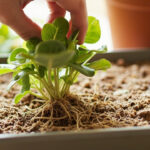
For container-grown plants with pot-bound roots, repot into a container one size larger with fresh growing medium. Gently loosen the root ball before repotting to encourage outward root growth. Water thoroughly after repotting and keep the plant in partial shade for one week before returning to full sun or grow light exposure. Plants that show no improvement after two weeks or that continue to decline likely have root rot or another or another underlying problem rather than simple transplant shock. For proper planting techniques that prevent shock, see our strawberry planting guide.
Vascular Wilt Diseases , When the Plant Cannot Be Saved
Verticillium wilt and Fusarium wilt are soil-borne fungal diseases that infect the vascular system of strawberry plants. These fungi colonize the water-conducting tissues inside the crown and stems, blocking water and nutrient transport from roots to leaves. Unlike root rot, which attacks external tissues, vascular wilt operates internally and remains invisible until symptoms become severe.
The diagnostic sign of vascular wilt is brown discoloration of vascular tissue visible when the crown is split lengthwise. Healthy crown tissue is white to pale tan. Infected tissue turns brown or reddish-brown, often in a ring pattern that follows the vascular bundles. This internal discoloration is the definitive test that distinguishes wilt diseases from root rot, transplant shock, and nutrient deficiency, all of which produce healthy white vascular tissue. For disease symptoms that mimic wilt, see our strawberry leaf problems page.
External symptoms include sudden wilting of individual leaves or entire plant clusters, often starting on one side of the plant. Leaves turn yellow then brown while remaining attached to petioles. In some cases, the plant produces a surge of small, stunted leaves before collapsing entirely. Fruit production stops completely, and any berries that form are small, pale, and underdeveloped. Plants may survive for weeks after initial symptoms but produce no marketable fruit.
Once vascular wilt is confirmed through crown dissection, there is no effective treatment. The fungus establishes permanently within the vascular system, and no fungicide can eradicate it from an infected plant. Remove and destroy the infected plant entirely, including as much of the root system as possible. Do not compost infected material, as wilt fungi survive composting temperatures and reinfect new beds. Soil infested with Verticillium or Fusarium remains infectious for three to five years and should not be replanted with strawberries, raspberries, blackberries, or other susceptible crops.
Nutrient Deficiency Recovery
Nutrient deficiency in strawberry plants is rarely the primary cause of decline but frequently serves as a secondary symptom of underlying problems such as poor drainage, incorrect pH, root damage, or vascular wilt. Understanding the difference between primary nutrient deficiency and secondary deficiency caused by environmental stress is essential for effective treatment and prevention of recurrence.
Primary nitrogen deficiency produces uniform yellowing of older leaves first, with newer leaves remaining green. The plant continues growing but at a reduced rate, and fruit set and production are diminished. Primary potassium deficiency causes yellowing and browning of leaf margins, particularly on older leaves, while the leaf center remains green. Phosphorus deficiency produces purple discoloration on leaf undersides and stems, most visible during cool weather when phosphorus uptake is slowest.
Secondary nutrient deficiency occurs when root damage or poor soil conditions prevent nutrient uptake even though nutrients are present in adequate amounts in the soil. The symptoms mimic primary deficiency but do not respond to fertilizer application. The key diagnostic test is a soil test measuring available nutrient levels and pH. If nutrients are adequate but the plant cannot absorb them, the problem is environmental rather than nutritional.
For plants with confirmed primary deficiency, apply a balanced fertilizer with slightly higher nitrogen during active growth periods. Use a fertilizer with an N-P-K ratio of 10-10-10 or 12-12-12, applied at half strength every two weeks during spring and early summer. Avoid high-nitrogen fertilizers during fruiting, as they promote excessive leaf growth at the expense of fruit production and reduce berry quality.
If the soil test reveals pH outside the optimal range of 5.5 to 6.8, adjust soil pH before fertilizing. Strawberries absorb nutrients most efficiently in slightly acidic soil. Agricultural lime raises pH, and elemental sulfur lowers it. Apply amendments according to soil test recommendations and allow four to six weeks for pH adjustment before retesting to confirm the change. Plants recovering from nutrient deficiency should be mulched and watered consistently to support new root growth and improved nutrient uptake.
The Rescue Protocol: Step-by-Step
Regardless of the diagnosed cause of decline, the rescue protocol follows a consistent five-step sequence that maximizes recovery chances while minimizing additional stress on the plant. This protocol works for all four categories of strawberry plant decline, though specific actions within each step vary depending on the diagnosis.
Step one is removing all damaged tissue. Cut away dead, dying, or diseased leaves and stems back to healthy tissue using sterilized pruning shears. For root or crown rot, remove all rotted root and crown tissue before replanting. Do not remove more than one-third of the foliage at once, as remaining leaves are needed for photosynthesis for recovery photosynthesis. Sterilize pruning tools between cuts with rubbing alcohol to prevent spreading pathogens between plants.
Step two is correcting the growing environment based on diagnosis. For root rot, improve drainage by raising the planting area, amending soil with coarse materials, or repotting into containers with excellent drainage. For transplant shock, provide shade and reduce watering frequency temporarily. For nutrient deficiency, adjust soil pH and apply appropriate fertilizer after soil testing confirms the deficiency. For vascular wilt, remove and destroy the entire plant including root system.
Step three is supporting recovery with minimal intervention. Consistent watering is key – water only when the top inch of soil is dry, and ensure containers drain completely after each watering. Do not fertilize for at least two weeks after treatment, and do not apply fungicides unless root rot is confirmed. Mulch with straw or pine needles to conserve moisture and moderate soil temperature, keeping mulch 1 inch away from the crown to prevent moisture buildup that favors rot pathogens.
Step four is monitoring for improvement over 7 to 14 days. New leaf growth within this period indicates successful treatment for most conditions except vascular wilt, which shows no improvement. Leaves that continue to yellow or wilt after two weeks suggest the diagnosis was incorrect or the problem has progressed beyond rescue. Re-diagnose and adjust the treatment plan, or remove the plant if recovery is no longer possible.
Step five is preventing recurrence once the plant recovers. Address the underlying cause that created the decline condition. Improve drainage for rot-prone plants. Rotate crops for wilt-prone beds. Maintain proper soil pH and fertility to prevent nutrient issues. A healthy growing environment supported by proper cultural practices that support dormancy and recovery is the best insurance against future decline and ensures the rescued plant remains productive for multiple seasons.
Preventing Future Decline
Saving a dying strawberry plant is only the first step. Preventing the same problem from recurring requires cultural practices that maintain plant health and reduce stress throughout the growing season. The single most important prevention strategy is proper site selection and soil preparation before planting, which eliminates many decline causes before they can affect plants.
Choose planting sites with excellent drainage and full sun exposure of at least 6 to 8 hours of at least 6 to 8 hours daily. Avoid low-lying areas where water collects after rain, and raise beds 4 to 6 inches above grade in heavy clay soils. Amend planting holes with compost and coarse sand at a 1:1 ratio to improve soil structure and drainage. Install drip irrigation or soaker hoses to water at the soil level without wetting foliage, which reduces fungal and bacterial disease pressure significantly.
Maintain proper plant spacing to ensure adequate air circulation throughout the canopy. Crowded plants create humid microclimates that favor fungal and bacterial diseases. Space plants 12 to 18 inches apart in rows 24 to 36 inches apart, and remove excess runners to prevent overcrowding. Thin plants to one crown per hill for June-bearing and day-neutral varieties and two to three crowns per hill for everbearing types to balance productivity with air flow.
Rotate strawberry beds every three to four years to reduce soil-borne pathogen buildup. If rotating is not possible in your garden layout, replace the top 4 inches of soil in the bed annually and apply beneficial microbe inoculants such as Trichoderma to suppress harmful pathogens. Use disease-resistant varieties when available, and inspect all new plants for signs of disease including wilting, discoloration, and stunting before planting them in the garden.
Regular monitoring is the most effective early warning system for plant health. Inspect plants weekly during the growing season for signs of distress including wilting, yellowing, unusual leaf patterns, or reduced fruit production. Early detection allows intervention before problems become advanced and difficult to treat. A healthy strawberry plant with strong growth, deep green leaves, and consistent fruit production indicates that the growing environment is supporting plant vitality and the rescue protocol has been successful.