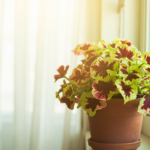
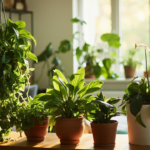
Begonia Maculata is the variety that turned begonias from grandmother’s houseplant into an Instagram staple. Those silver-white polka dots on dark green leaves are unmistakable, and the pink-red undersides add a color punch most houseplants cannot match. But Maculatas are Angel Wing types that need above-average humidity and a firm watering schedule to look their best. This guide covers the specific care this variety demands, including the legginess problem most guides ignore.
If you bought your Maculata for the spots, you already know they fade when the plant is stressed. The good news: the stress factors are predictable and fixable. For general begonia fundamentals that apply to all types, the general begonia care guide is worth a read alongside this page.
What Makes Begonia Maculata Different from Other Begonias
Begonia Maculata (also sold as Begonia Wightii or Polka Dot Begonia) is a cane-type Angel Wing begonia. It grows upright on jointed stems that reach 2 to 3 feet indoors. The leaves are large, 4 to 6 inches long, angel-wing-shaped, and covered in metallic silver-white dots that run along the veins. The leaf undersides are a deep pink-red that shows when the plant moves in a breeze.
What sets Maculatas apart from other Angel Wing types is their humidity requirement. Most Angel Wings tolerate average household humidity (40 to 50 percent). Maculatas start showing stress below 55 percent and really suffer below 45 percent. If your home runs dry in winter — and most do — a humidifier is not optional for this plant.
Light: Bright Enough for Spots, Gentle Enough for Leaves
Maculatas need bright indirect light to maintain the silver spot intensity. In too little light, the dots fade to pale specks and the leaf color shifts to plain dark green. In too much direct sun, the leaves develop bleached patches that turn brown and papery.
An east-facing window is the sweet spot: gentle morning light with bright indirect conditions the rest of the day. A south or west window works if filtered with a sheer curtain or set back 3 feet. In a north-facing room, a full-spectrum grow light 12 to 14 inches above the canopy for 10 to 12 hours a day keeps the spots visible.
The honest trade-off: Maculatas are not low-light tolerant. If your room gets less than 4 hours of bright indirect light, the plant will survive but lose the spotting that makes it worth growing. In dim conditions, the stems also stretch fast, creating a bare, leggy plant within weeks. See begonia light requirements for variety-specific ranges.
Watering Maculatas: The Firm-Rhythm Rule
When to water: Check the top inch of soil. Water when it feels dry — typically every 5 to 7 days in spring and summer, every 10 to 14 days in winter. Maculatas have thicker stems than Rex types, which means they store more water internally and can go longer between drinks. But they also have larger leaves that transpire faster, which means they use water quicker than Cane types. The finger test beats any schedule.
How much to water: Water slowly around the base until it drains from the bottom of the pot. Empty the saucer after 10 minutes. Maculatas want consistent moisture, not cycles of flood and drought. Letting the soil go bone-dry causes leaf drop; keeping it soggy causes root rot.
The winter reduction: From November through February, growth slows and water needs drop by about half. Water only when the top 1.5 inches of soil feel dry. Overwatering in winter is the number one killer of Maculatas because the plant is not actively growing and cannot use the excess moisture. For a complete watering breakdown, see when to water begonias.
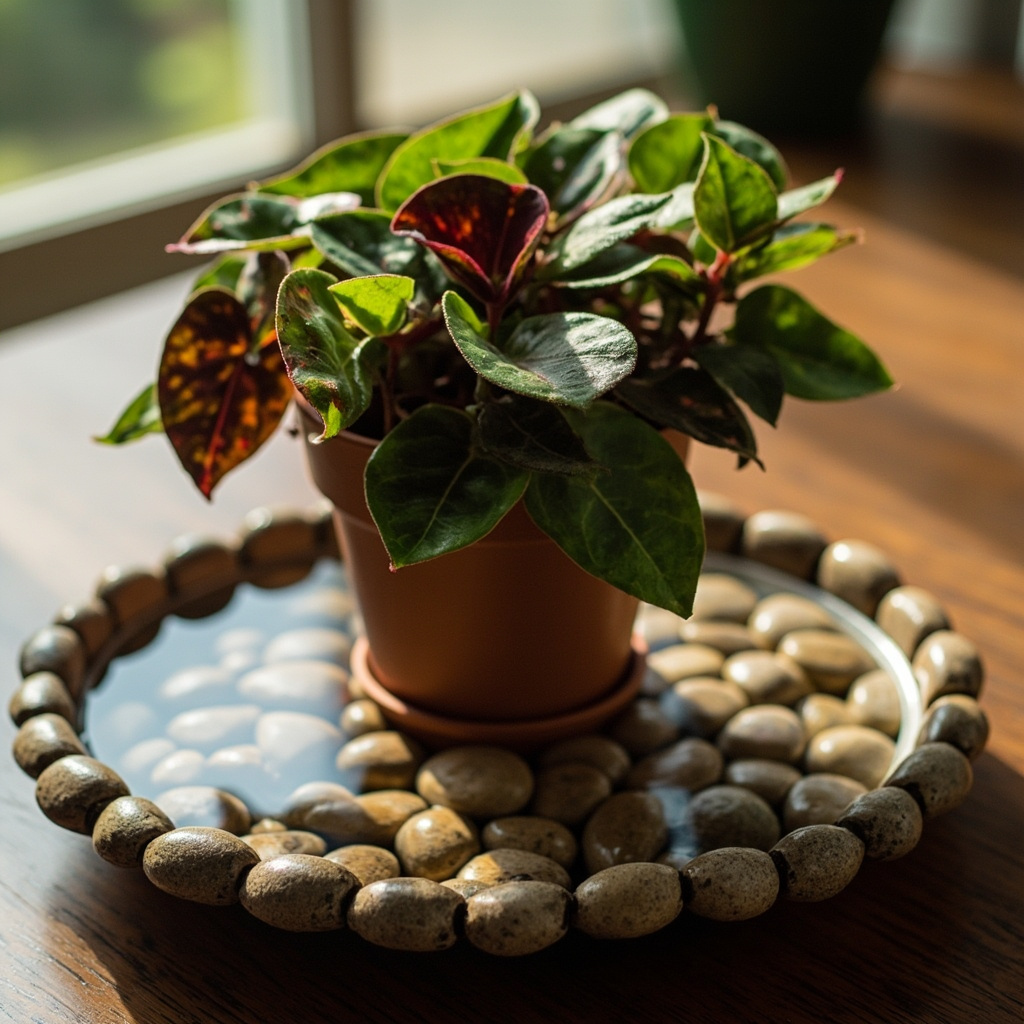
Humidity Above 60 Percent: The Non-Negotiable
Why Maculatas are more demanding: Maculatas come from humid tropical environments where ambient humidity sits between 65 and 80 percent. Their large, thin leaves lose moisture faster than the thicker leaves of Cane or Wax types. Below 55 percent humidity, the leaf edges brown within days. Below 45 percent, the plant drops leaves from the bottom up, often going bare-stemmed in two to three weeks.
Three practical humidity solutions:
- Humidifier: The most effective and most consistent solution. A small cool-mist humidifier set 3 to 4 feet away, running 8 to 10 hours a day, maintains 55 to 65 percent in most rooms. This is the only reliable option in heated winter air.
- Humidity tray: Fill a wide shallow tray with pebbles and water. Set the pot on the pebbles (not in the water). This raises local humidity by 5 to 10 percent immediately around the plant. Effective for mild dryness but insufficient in very dry rooms (below 35 percent ambient).
- Grouping: Place your Maculata near other humidity-loving plants. A cluster of four or five plants in close proximity creates a microclimate that can raise local humidity by 5 to 8 percent. Works well in kitchens and bathrooms where ambient humidity is already higher.
For more detail on reaching the right range and measuring humidity accurately, see begonia humidity requirements.
Pruning and Managing Leggy Growth
Why Maculatas get leggy: Two things cause legginess: insufficient light (the plant stretches toward the light source) and overwatering (the stems grow fast and weak, with long gaps between leaf nodes). Once a stem goes leggy, it will not produce new leaves along the bare section. The only fix is pruning.
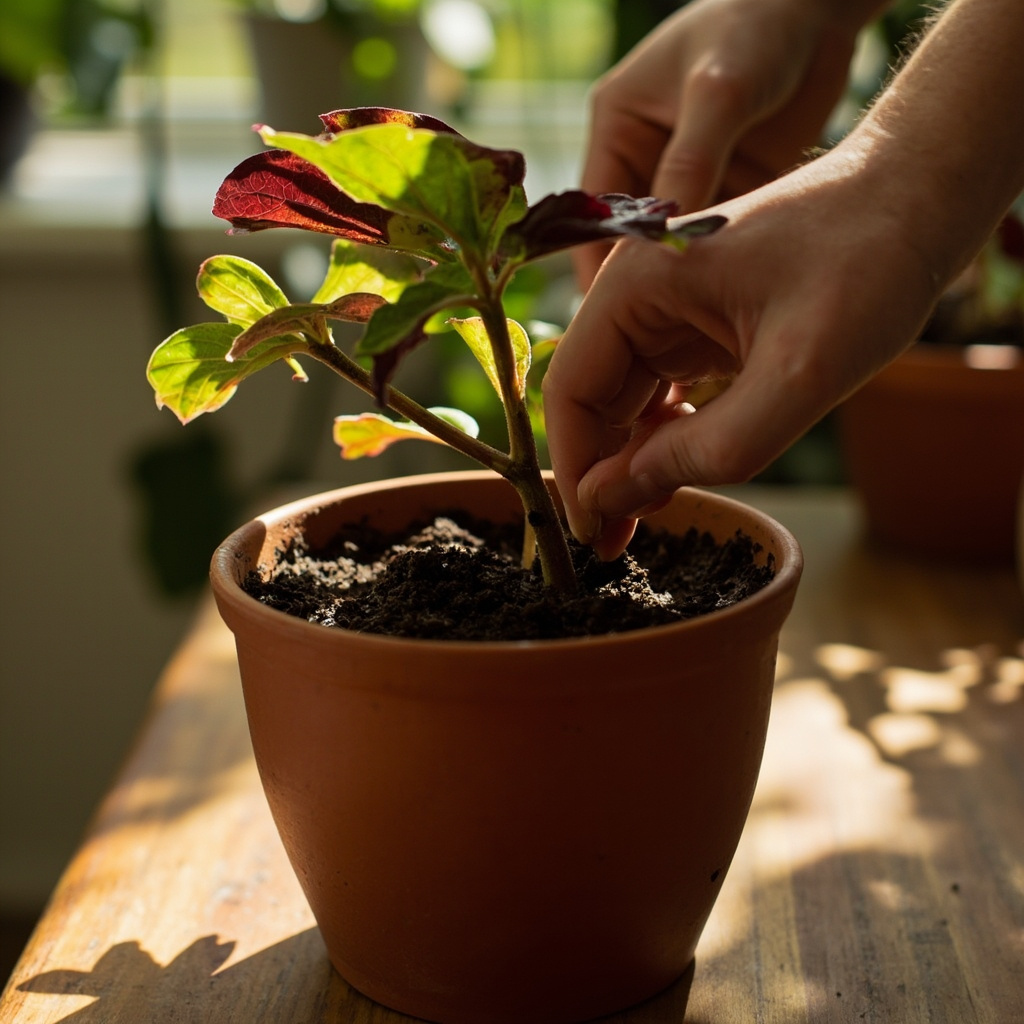
How to prune for bushiness: In early spring (March or April), prune leggy stems back to just above a visible node — the small bumps along the stem where leaves emerge. Cut at a 45-degree angle with clean sharp scissors. New growth will sprout from the node below the cut within two to three weeks. Prune no more than one-third of the total stem length at a time to avoid shocking the plant.
Pruned stem sections can be rooted in water or moist perlite for new plants. Use a fast-draining soil mix once roots reach 2 inches.
Soil, Fertilizer, and Repotting
Maculatas need a light, airy, fast-draining mix. A combination of 50 percent high-quality potting mix, 30 percent perlite, and 20 percent orchid bark works well. The mix should feel fluffy and drain within 30 seconds of watering. Heavy, compacted soil holds too much moisture around the roots and triggers rot within weeks.
Fertilize at half strength once a month from March through September. Use a balanced liquid fertilizer (10-10-10) or a foliage-focused formula with slightly more nitrogen. Maculatas are moderate feeders — too much fertilizer causes leaf edge burn and salt buildup. Skip feeding entirely in winter.
Repot in spring when roots start circling the inside of the pot or growing from the drainage holes. Move up only one pot size at a time (for example, from a 6-inch to an 8-inch pot). Too large a pot holds excess soil that stays wet too long, which invites rot.
When Spots Fade or Leaves Drop
Fading silver spots: The most common complaint. Usually caused by insufficient light — the plant produces less silver pigment when it is not getting enough bright indirect light to power the metabolic cost of variegation. Move the plant closer to the light source and wait for the next three to four new leaves. If spots do not return, the plant may be a Maculata hybrid that reverts to plain green under stress.
Leaf drop on lower stems: Some lower-leaf drop is normal as the plant ages and the bare cane develops. But rapid leaf drop — more than two leaves per week — signals a problem. The most common causes are: cold draft exposure (Maculatas dislike temperatures below 60°F / 15°C), sudden humidity change (moving the plant to a much drier room), or root rot from overwatering. Address the cause and the plant usually recovers within four to six weeks.
Turn any PDF statement into a clean sheet
Skip the typos and the hours of copying. Our converter handles any bank statement format and outputs Excel, CSV, or QBO for QuickBooks. No file retention, free to try.