Tomatoes need at least 8 hours of direct sunlight per day. Not bright indirect light, not dappled shade — direct sun. This is the one variable you cannot fix with fertilizer, water, or better soil. If your planting spot does not get enough sun, the plant will grow tall and leggy, produce few flowers, and set almost no fruit.
Light is the foundation everything else builds on. You can have perfect soil and water on schedule, but without adequate sunlight the plant simply cannot produce the energy it needs to grow fruit. Before you plant anything, track the sun in your garden for a full day and find the spot that gets the most uninterrupted direct light.
This guide covers exactly how much light tomatoes need, how to measure it, and what happens when you get it wrong in either direction.
Why 8 Hours of Direct Sun Is the Minimum
Tomatoes are sun-hunting plants. In their native South American habitat, they evolved in open, bright conditions with no canopy shade. Modern varieties have been bred for fruit size and disease resistance, but their light requirements have not changed. A tomato plant needs enough photosynthetic energy to support both vegetative growth and the massive carbohydrate demand of fruit production.
At 8 or more hours of direct sun, the plant produces enough sugars to grow stems, set flowers, ripen fruit, and store energy for continued production. Below 6 hours, the plant enters survival mode — it grows taller searching for light (etiolation), drops flowers to conserve energy, and any fruit that does set ripens slowly and tastes bland.
The 8-hour minimum applies to container and in-ground plants equally. A tomato on a sunny balcony gets the same benefit as one in an open garden bed. The key metric is hours of direct beam sunlight hitting the plant, not ambient brightness.
How to Measure Sun in Your Garden
The most reliable method is observation. Pick a day in late spring or early summer and check your potential planting spot every hour from 8 AM to 6 PM. Count the hours when the spot is in direct sun — not filtered through tree canopy, not reflecting off a bright wall, but direct beam sunlight. If you get 8 or more hours, plant there.
Phone apps like Sun Surveyor or Sun Seeker can help by showing the sun’s path for your exact location and date. They are useful for planning but not a substitute for actual observation — nearby buildings, fences, and trees create shadows that apps do not always account for.
A shadow test works too. At solar noon (when shadows are shortest), place a stake where you plan to plant. If the stake casts a sharp, dark shadow, you have direct sun. If the shadow is faint or diffuse, the light is too weak for tomatoes. This is the same principle used when starting seeds indoors — seedlings need the brightest spot you can provide.
Not Enough Light: Leggy Plants and No Fruit
Insufficient light produces a recognizable pattern. The plant grows tall quickly but the stem is thin and weak. Leaves are smaller than normal and pale green. Flowers appear late, if at all, and the few fruit that set take weeks longer to ripen. The plant looks like it is stretching — because it is.
If your tomato is already in the ground and showing these signs, there is not much you can do mid-season. You cannot move a mature tomato plant without damaging the root system. Focus on keeping the watering consistent and accept a reduced harvest. Next season, plant in a sunnier spot.
For container tomatoes, the fix is easy — move the pot to a sunnier location. Even moving from a spot that gets 5 hours to one that gets 8 hours can transform the plant’s production within two weeks.
Too Much Light: Sunscald and Heat Stress
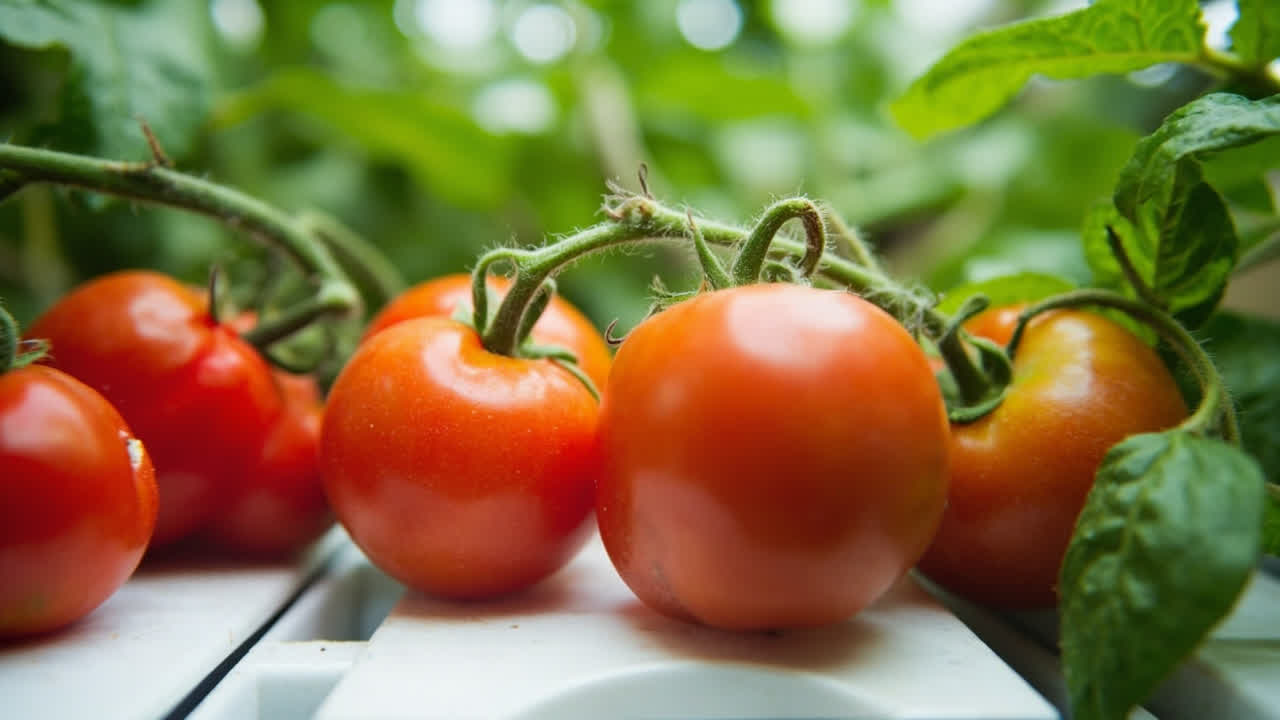
In most climates, more sun is better. But in extreme heat (above 38 °C / 100 °F), the fruit itself can suffer. Sunscald shows up as a white or yellowish patch on the side of the fruit facing the sun. The tissue becomes papery and sunken, and the affected area is prone to secondary fungal infection.
Sunscald is more common on plants that have lost foliage coverage — either from disease, over-pruning, or nutrient deficiency. The leaves shade the fruit naturally, and when they are gone, the fruit is exposed. In very hot climates, afternoon shade cloth (30 to 40 percent shade) can reduce sunscald without sacrificing too much photosynthesis.
Heat stress is different from sunscald. When temperatures stay above 35 °C (95 °F) for extended periods, tomato flowers drop without setting fruit. The pollen becomes non-viable. There is no fix other than waiting for cooler weather. Variety selection helps — heat-tolerant types like ‘Solar Fire’, ‘Heatmaster’, and ‘Phoenix’ set fruit at higher temperatures than heirloom varieties.
For most growers, the problem is too little sun, not too much. If you are choosing between a spot with 6 hours and one with 9 hours, take the 9 hours every time.
Turn any PDF statement into a clean sheet
Skip the typos and the hours of copying. Our converter handles any bank statement format and outputs Excel, CSV, or QBO for QuickBooks. No file retention, free to try.
Convert your statement