A ZZ plant only needs fertilizer during active growth, which in most homes means spring and summer, at half the label strength, every four to six weeks, and not at all in fall and winter. The plant is naturally slow, and a ZZ grown in a low-light corner can stay in a near-dormant state for months at a time. Feeding it on a calendar schedule rather than a growth-driven schedule is the most common cause of leaf-tip burn, salt-loaded soil, and rhizome stress on a plant that was otherwise doing fine.
The key misconception is that more fertilizer produces faster growth. A ZZ is built to thrive on very little. Its rhizome stores both water and nutrients, and its leaves are slow to push new growth even in ideal conditions. Doubling the recommended dilution does not double the growth rate; it pushes soluble salts into the medium faster than the plant can use them, and those salts accumulate around the rhizome. The symptom shows up first as small brown tips on the newest leaves, then as a white crust on the soil surface, and over months as a soft patch on the rhizome. The right approach is a calm, minimal plan that respects the plant’s natural rhythm.
This page covers the ZZ’s growth cycle and what it means for feeding, the safest fertilizer type and NPK ratio, the year-round schedule in calendar form, the dilution and application mechanics, how low light and low temperature change the plan, and the signs of over-fertilization and how to recover. For the broader care picture, the care guide covers watering rhythm, light, and soil in parallel.
What a ZZ Plant’s Growth Cycle Means for Feeding
ZZ plants are evergreen perennials with a slow but real growth pattern. In a typical home, the plant produces new stems from the rhizome in spring and pushes leaf expansion through summer, then either slows dramatically or stops pushing new growth in fall and winter. A ZZ kept in a warm, bright room year-round may keep a low growth rate through winter, but it is not the same flush of growth that spring brings. The plant’s energy budget is small. Each new stem is built from rhizome reserves plus whatever the leaves can photosynthesize, and feeding the plant when it is not actively building anything just loads the soil with unused nutrients.
The practical implication is that the feeding schedule should be tied to visible growth, not to a fixed date. If the plant has pushed a new stem or two in the last six weeks, the rhizome is active and a light feeding is appropriate. If the plant has been quiet for two months, no amount of fertilizer will restart growth; it will only add salt to the medium. For most homes in temperate climates, the active window runs from early April to mid-September, which is the window the rest of this page assumes. In tropical or fully climate-controlled homes, that window can extend, but the same logic applies: feed only when the plant is building, never on a calendar.
The Best Fertilizer Type and NPK Ratio for a ZZ
The safest fertilizer for a ZZ plant is a balanced liquid houseplant formula with an NPK ratio close to 3-1-2 or 4-1-2, diluted to half the strength on the label. The nitrogen drives leaf and stem growth, the smaller phosphorus share supports root and rhizome development, and the potassium supports overall cell function. A general-purpose balanced 6-6-6 works in a pinch at quarter strength, but a low-nitrogen formula is closer to what the plant actually uses. Slow-release spike or granular fertilizers are riskier on a ZZ because the release rate is hard to control and the salts tend to spike around the rhizome if the medium dries out between waterings.
Two products to avoid on a ZZ. High-nitrogen “greening” formulas, which push fast leaf growth that the rhizome cannot sustain and leave the plant structurally weak. Foliar feed sprays, which can scorch the waxy leaf surface if applied to a plant in direct sun or one that is even slightly drought-stressed. For a ZZ in a low-light spot, the feeding rate should be even gentler: a quarter-strength dilution of the same 3-1-2 formula, fed only on the weeks the plant is actively growing. The honest trade-off is that a ZZ in low light grows slowly, and a smaller dose respects that. For how light changes the feeding math, the light requirements page covers the ranges.
Turn That PDF Into a Spreadsheet in Minutes
You've seen how to do it manually — now let the tool handle the heavy lifting. Upload your bank statement and get Excel, CSV, or QBO in a few clicks.
The Year-Round Feeding Schedule
The year-round schedule below assumes a ZZ in a typical home with bright indirect light and indoor temperatures between 65 and 80 degrees Fahrenheit (18 to 27 degrees Celsius). The dilution column shows how much of a standard liquid fertilizer to use per gallon (3.8 L) of water; “half strength” means half the dose on the label. If the plant is in a low-light corner, extend the interval and reduce the dose; if it is in a bright sunroom, hold to the schedule but watch for salt buildup.
| Season | Feeding Frequency | Dilution | Notes |
|---|---|---|---|
| Early spring (March-April) | Every 6 weeks | Half strength | Resume only when the first new stem appears |
| Spring to mid-summer (April-July) | Every 4 weeks | Half strength | Peak growth window; this is when feeding has the most effect |
| Late summer (August) | Every 6 weeks | Half strength | Begin tapering as light levels fall |
| Fall (September-October) | Skip | No feeding | Most homes see growth slow or stop |
| Winter (November-February) | Skip | No feeding | Resume only if new growth appears, then half strength only |
The same logic applies to a ZZ in a south-facing window that keeps growing through winter. In that case, a single half-strength feeding in late January is enough to support the new growth without loading the medium. The point of the schedule is not to feed on every possible date; it is to feed only when the plant is using the nutrients.
Dilution, Timing, and Application Method
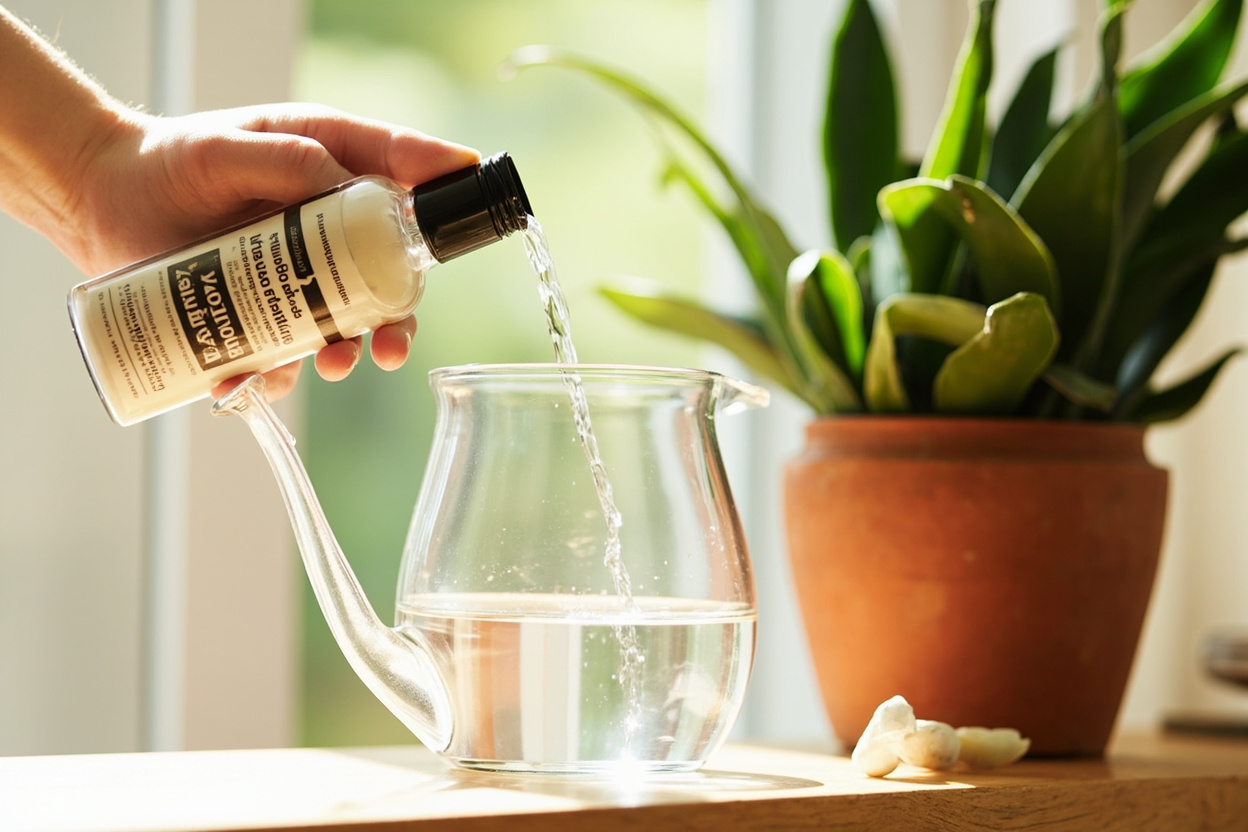
The right dilution is half the dose printed on the label, mixed into a full watering can of water. Most liquid fertilizers print a teaspoon-per-gallon rate for “constant feed” or a stronger rate for “weekly feed.” Use the constant-feed number and halve it; the plant sees half the dose per feeding but the medium stays well within its salinity comfort zone. The safest way to apply is into already-moist soil. Water the plant normally the day before, then apply the fertilizer solution the next morning. Feeding into dry soil forces the concentrated nutrients directly into the root zone and burns the fine feeder roots that sit at the rhizome surface.
Time the feeding for a morning when the plant will get several hours of bright indirect light afterward. The plant moves the diluted nutrients through its system during photosynthesis, and feeding in low light means more of the solution sits in the medium overnight. For most homes, this just means applying before midday. The other mechanic to keep in mind is to water normally the next time the medium dries, not to “rinse” the fertilizer out with extra water; the medium needs the nutrients to stay available, and flushing them away is wasted feeding. For the watering rhythm that pairs with this feeding plan, the watering guide covers the timing.
How Low Light and Low Temperature Change the Schedule
A ZZ kept in a low-light room or below 65 degrees Fahrenheit (18 degrees Celsius) for most of the year grows even more slowly than the typical schedule assumes. In that situation, the right adjustment is to stretch the feeding interval to every eight to ten weeks at half strength, and to consider pausing entirely through the months when the plant is not pushing new stems. Feeding a slow-growth plant on a normal spring schedule leads to salt accumulation in the medium, and the first symptom is leaf-tip burn, not new growth. The plant is not hungry; it is just slow.
The plant itself is the best signal. If a stem has emerged in the last four to six weeks, the rhizome is active and a light feeding is appropriate. If no new stem has appeared and the existing leaves look healthy, the plant is in maintenance mode and does not need feeding. The honest trade-off is that this approach is more nuanced than a fixed calendar, but it is also the one that prevents salt damage on a slow-growth plant. For the temperature range that supports active growth, the temperature tolerance page covers the safe band.
Over-Fertilization Signs and How to Recover
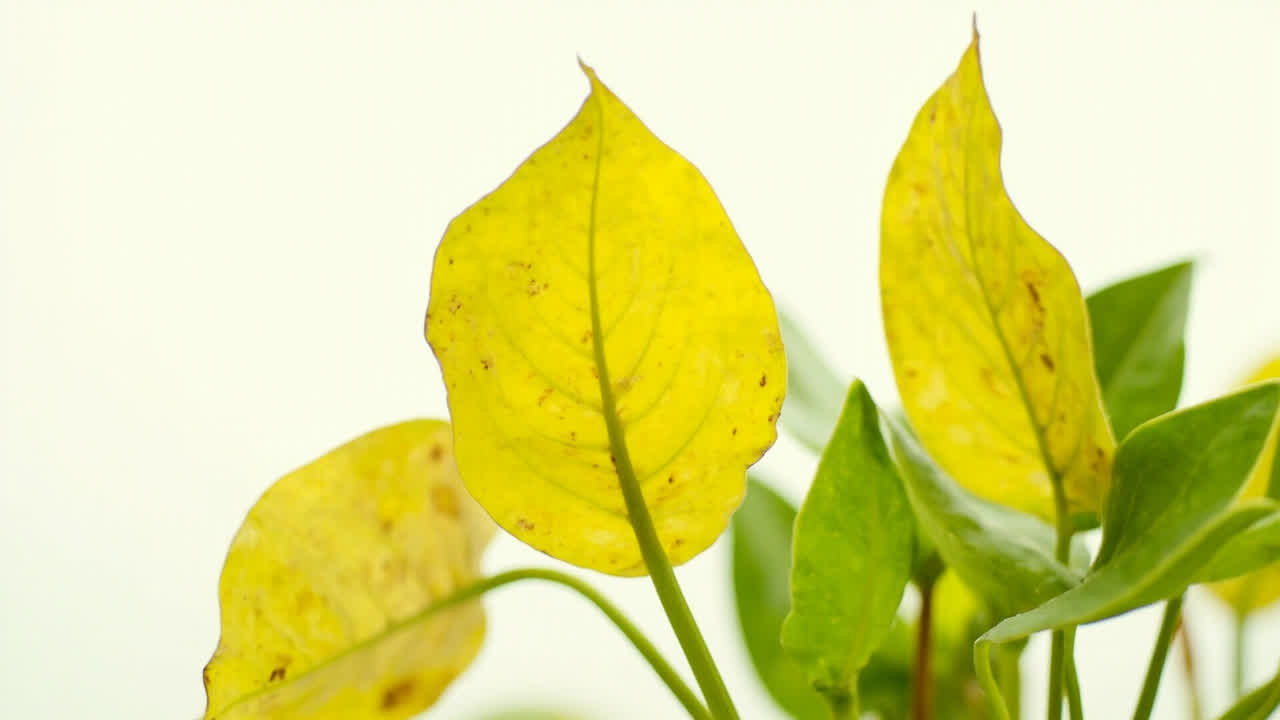
Over-fertilization on a ZZ shows up in three stages. The first is leaf-tip burn: small brown patches on the newest leaves, especially on the lower half of the leaflet. The second is a white or pale-yellow crust on the surface of the medium, which is dried salt from the fertilizer solution. The third, which usually follows several months of accumulated salts, is a sudden yellowing of multiple stems and a soft patch on the rhizome near the soil line. None of these are reversible on the affected leaves, but the plant can be saved if the medium is flushed and the schedule is reset.
The recovery step is to flush the medium with plain water. Take the plant to a sink, water it slowly with a full pot-volume of water, let it drain, and repeat three times. This pulls the accumulated salts out of the root zone. After flushing, hold off on fertilizer for at least eight weeks and let the plant push new growth as the signal that it is ready to be fed again. If the rhizome has gone soft, flushing alone is not enough; the plant needs to come out of the pot, the affected tissue has to be cut back to firm rhizome, and the plant has to be repotted into a fresh chunky mix. For the soil refresh that pairs with that recovery, the soil requirements page covers the medium to use.